Baise Travel Guide: The Uprising Memorial, the Youjiang River and the Karst Counties
Baise is the westernmost city in Guangxi, a Zhuang-majority region bordering Vietnam, Yunnan and Guizhou, and the place where Deng Xiaoping helped lead the Baise Uprising of December 1929. In the city, give half a day to the uprising memorial and the old guild hall that served as the rebels' headquarters, then walk the Youjiang River in the evening. The bigger draws are out in the counties: the giant karst sinkholes of Leye and the Tongling Grand Canyon in Jingxi, each a long day trip or an overnight. Two days covers the city and one of these; three lets you add the other.
A young city with one famous moment
Baise was founded as a town only in 1730, as an administrative post on the upper You River. Its name comes from the Zhuang Baksaek, usually explained as "a blocked mountain pass". About three quarters of the people in the prefecture are Zhuang.
The Baise Uprising began on 11 December 1929. Communist organisers led by Deng Xiaoping, then working under the name Deng Bin, and Zhang Yunyi took over troops in Nanning, shipped weapons up the river to Baise, and declared the Seventh Red Army and a soviet government in the You River valley. They drew on an existing Zhuang peasant movement led by Wei Baqun. The soviet lasted until late 1931 before it was suppressed and the survivors marched to Jiangxi. The episode is central to Deng's official biography, though historians and his own critics have long debated its quick defeat.
When to come to Baise
The city sits in a hot river valley: January averages about 13°C, July over 28°C, and the rain falls mostly from May to August. October to April is the most comfortable time to visit, with dry, mild days. The western counties are higher, above 500 metres and over 1,000 metres around Longlin and Xilin, and are noticeably cooler, with weather more like central Yunnan. Summer brings the mango harvest but also heat and storms; if you come then, start early.
Getting in and where to stay
Baise is about 266 kilometres west of Nanning on the high-speed and conventional railways, and the line continues toward Kunming. The city also has an airport. For Leye and Jingxi, take a long-distance bus or hire a car; both are a few hours from the city on mountain roads. Stay near the Youjiang in the city centre, where the memorial, the guild hall and the evening riverside are all within reach.
Places worth visiting
The Youjiang riverfront
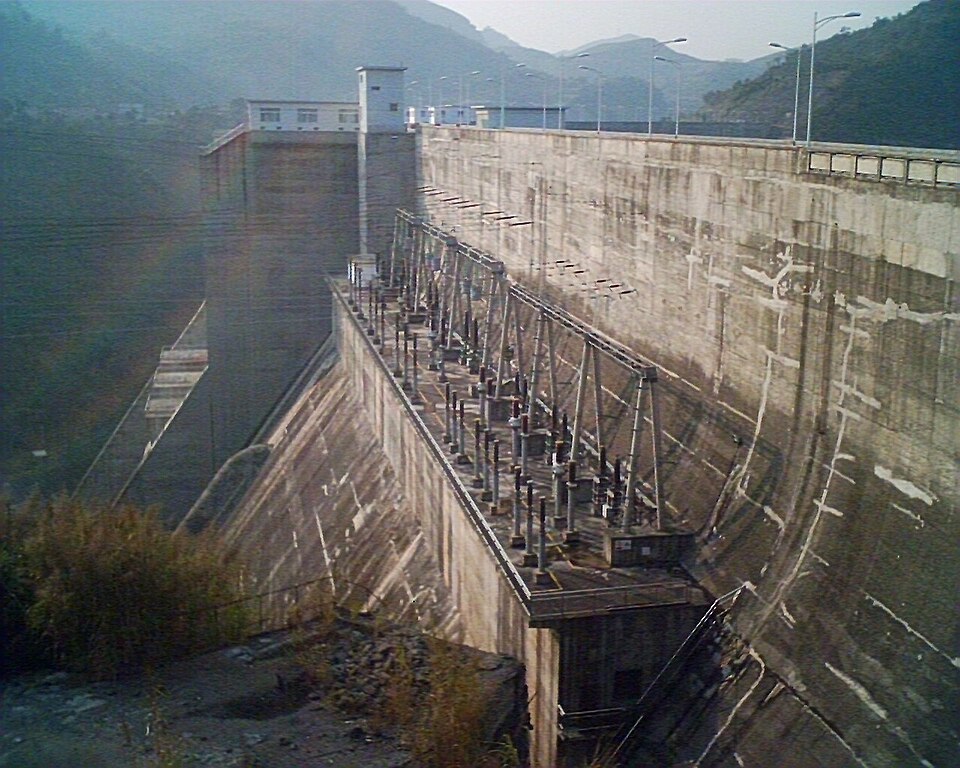
The You River, called the Tuoniang upstream, runs through the middle of town and is joined here by the Chengbi River. The embankment is where the city comes out in the evening, to walk, dance in the squares and eat. It is a good first evening after a long journey.
Baise Uprising Memorial and the guild hall
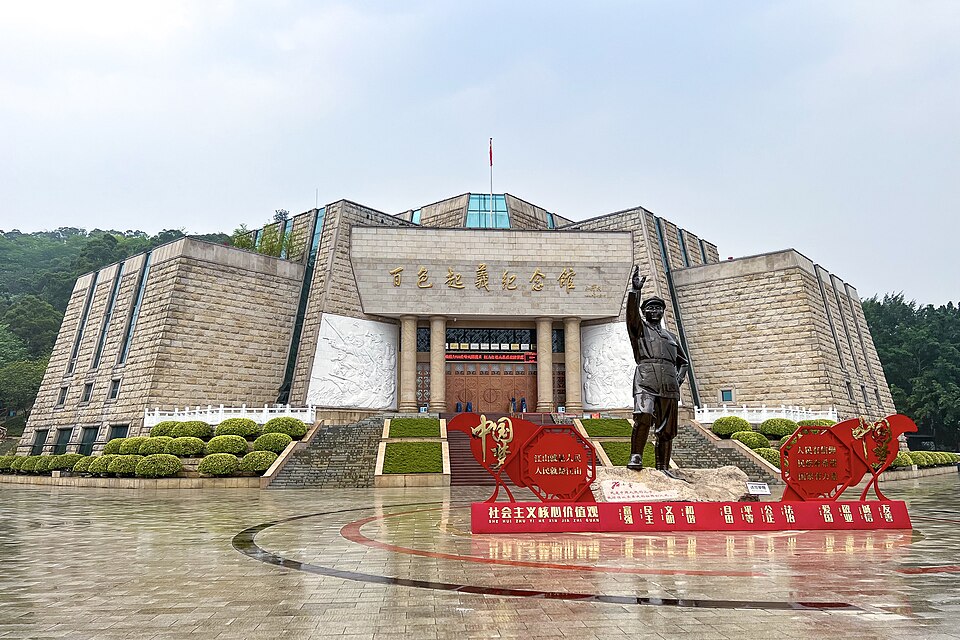
The memorial hall tells the story of the uprising and the Seventh Red Army through documents, photographs and weapons, with the official emphasis you would expect. In town, the Yuedong Guild Hall, built by Cantonese merchants, is where Deng and Zhang Yunyi lodged when they arrived in October 1929 and planned the rising. It is the more atmospheric of the two. Allow half a day for both, in the morning before the heat. Bring your passport, which may be checked at entry. Opening days and booking rules are set by the memorial's official notices.
Zhongshan Bridge
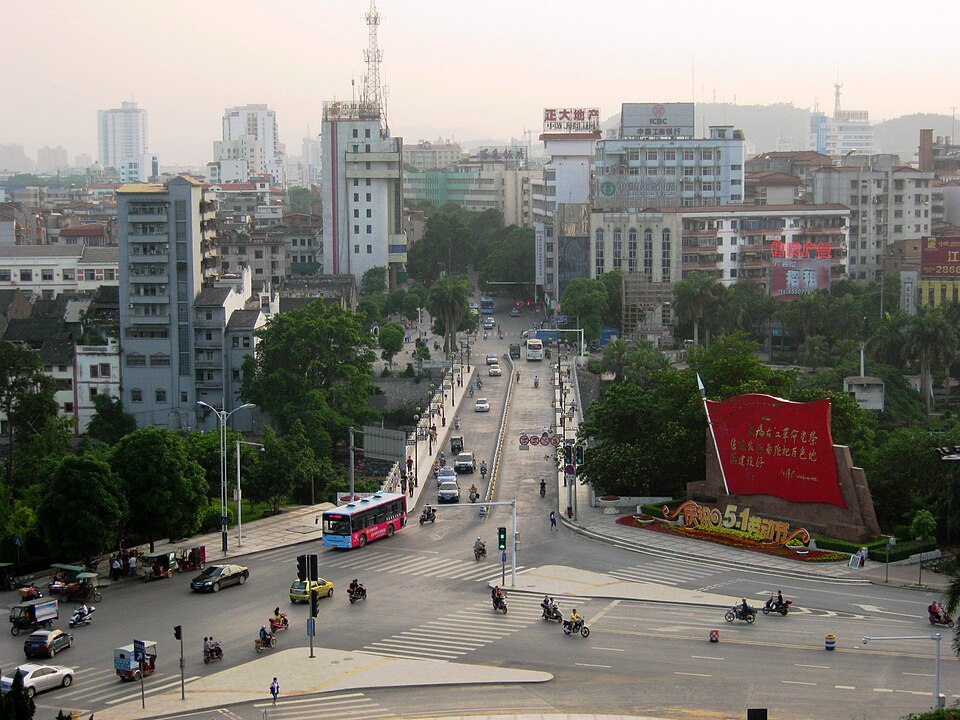
The Zhongshan Bridge crosses the Youjiang in the city centre and makes a good point to start or finish the riverside walk, especially at dusk when the lights come on.
Leye sinkholes
Leye County, in the north of the prefecture, has one of the world's largest clusters of karst sinkholes (tiankeng), some with forests growing on their floors, and it is part of a UNESCO Global Geopark. Explorers found another giant sinkhole with a hidden forest in 2022. Only some are developed for visitors, with stairs and viewing platforms. Expect a steep climb back up. Plan an overnight in Leye.
Tongling Grand Canyon
In Jingxi, near the Vietnamese border and about an hour by road from the Detian waterfall in neighbouring Chongzuo, the Tongling Grand Canyon is a gorge around 300 metres deep and 2.8 kilometres long, carved by an underground river, with a waterfall that drops 188 metres. It fits well into a trip that also takes in Detian.
Eating in Baise
The food is Zhuang and western Guangxi: rice noodles in many forms, five-colour sticky rice at festivals, sour bamboo shoots, and pork and chicken cooked with herbs. Baise is famous for mangoes, grown here for more than 300 years and now a protected regional product, sold everywhere in summer. Breakfast rice-noodle shops near the river are the easiest place to start.
How to arrange the route
- Day 1: arrive from Nanning, evening on the Youjiang and Zhongshan Bridge.
- Day 2: memorial and guild hall in the morning, then a bus or car to Leye for the night.
- Day 3: Leye sinkholes, then back to Baise or on toward Guizhou.
Alternatively, go south from Baise to Jingxi for the Tongling Grand Canyon and continue to Detian and Chongzuo, a natural route back toward Nanning.
What to cut if short on time
With one day, do the memorial, the guild hall and the riverfront. Choose Leye or Jingxi rather than trying both in one trip; they are in opposite directions. Skip extra red-tourism sites around the prefecture unless they are your main interest.
Things to confirm before you go
- Opening days and booking rules at the memorial hall and guild hall.
- Bus times and road conditions to Leye and Jingxi, especially after heavy rain.
- Which Leye sinkholes are open to visitors, and their tickets.
- Tongling Grand Canyon tickets and hours; this guide does not quote 2026 prices because they could not be confirmed.
Frequently asked questions
How many days do I need for Baise?
One day for the city; two or three if you add Leye or Jingxi.
What is the Baise Uprising?
A communist uprising launched on 11 December 1929 that set up the Seventh Red Army and a short-lived soviet in the You River valley. Deng Xiaoping was the party's leading representative.
When is mango season in Baise?
Mainly summer. Markets in the city are full of mangoes from mid-year.
Sources
The facts in this article were checked against the following Wikipedia and encyclopedia entries, retrieved September 25, 2026, and rechecked on October 14, 2026.
- Baise https://en.wikipedia.org/wiki/Baise
- Baise (Chinese) https://zh.wikipedia.org/wiki/百色市
- Baise Uprising https://en.wikipedia.org/wiki/Baise_Uprising
- Baise Uprising (Chinese) https://zh.wikipedia.org/wiki/百色起义
- Leye County https://en.wikipedia.org/wiki/Leye_County
- Tongling Grand Canyon (Chinese) https://zh.wikipedia.org/wiki/通灵大峡谷
Ticket prices change; check the official notices before you go.
All photos are from Wikimedia Commons, used under CC licenses or public domain; re-use requires attribution.
- baise-youjiang.jpg from File:Youjiang, Baise, Guangxi, China - panoramio.jpg, by lcy5460, CC BY 3.0
- baise-memorial.jpg from File:Baise Uprising Memorial Hall (20230403093423).jpg, by N509FZ, CC BY-SA 4.0
- baise-bridge.jpg from File:百色市右江區中山橋 2013.jpg, by PanShiBo, CC BY-SA 3.0