Beihai Travel Guide: Silver Beach, Weizhou Island and the Beibu Gulf
Beihai sits on the northeastern shore of the Beibu Gulf in southern Guangxi, a peninsula with the sea on three sides. The name comes from an old fishing village on the north-facing harbor; locals also call the place Pearl City, after the Hepu pearls that have been fished here since the Han. It was one of the early ports on the maritime Silk Road, opened as a treaty port in 1876 under the Chefoo Convention, and in 1984 it joined China's first fourteen coastal open cities. In 2010 it was named a National Historical and Cultural City. The five stops below — Silver Beach, Weizhou Island, Zhuhai Road, Qiaogang Town and Guantou Ridge — are what most short trips actually use.
When to come to Beihai
Beihai sits on the edge of the tropics, averaging about 22.6°C a year with roughly 1,670 millimeters of rain. November to April is the dry, comfortable stretch, when the air is clear and the water still swimmable. May through October is wetter and hotter, with sudden downpours and the chance of a typhoon; July and August are peak swimming season on Silver Beach and the busiest weeks on the Weizhou ferry. The May and October holidays pack the beach and the boats. Book the island crossing ahead in season, and carry an umbrella either way.
Getting in and where to stay
Use the airport or high-speed rail into the city, then metro or taxis for urban sights. Stay near the main cluster you will walk most; confirm hotel distance to stations on arrival night.
Places worth visiting
Silver Beach
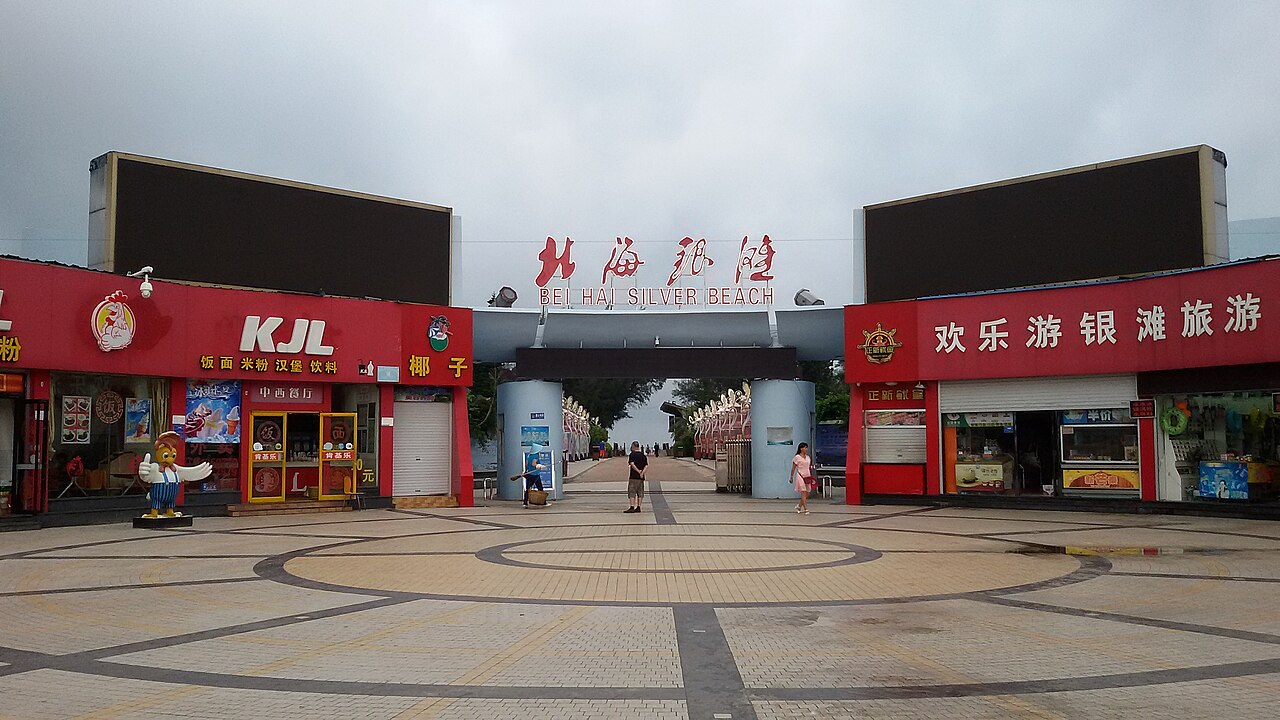
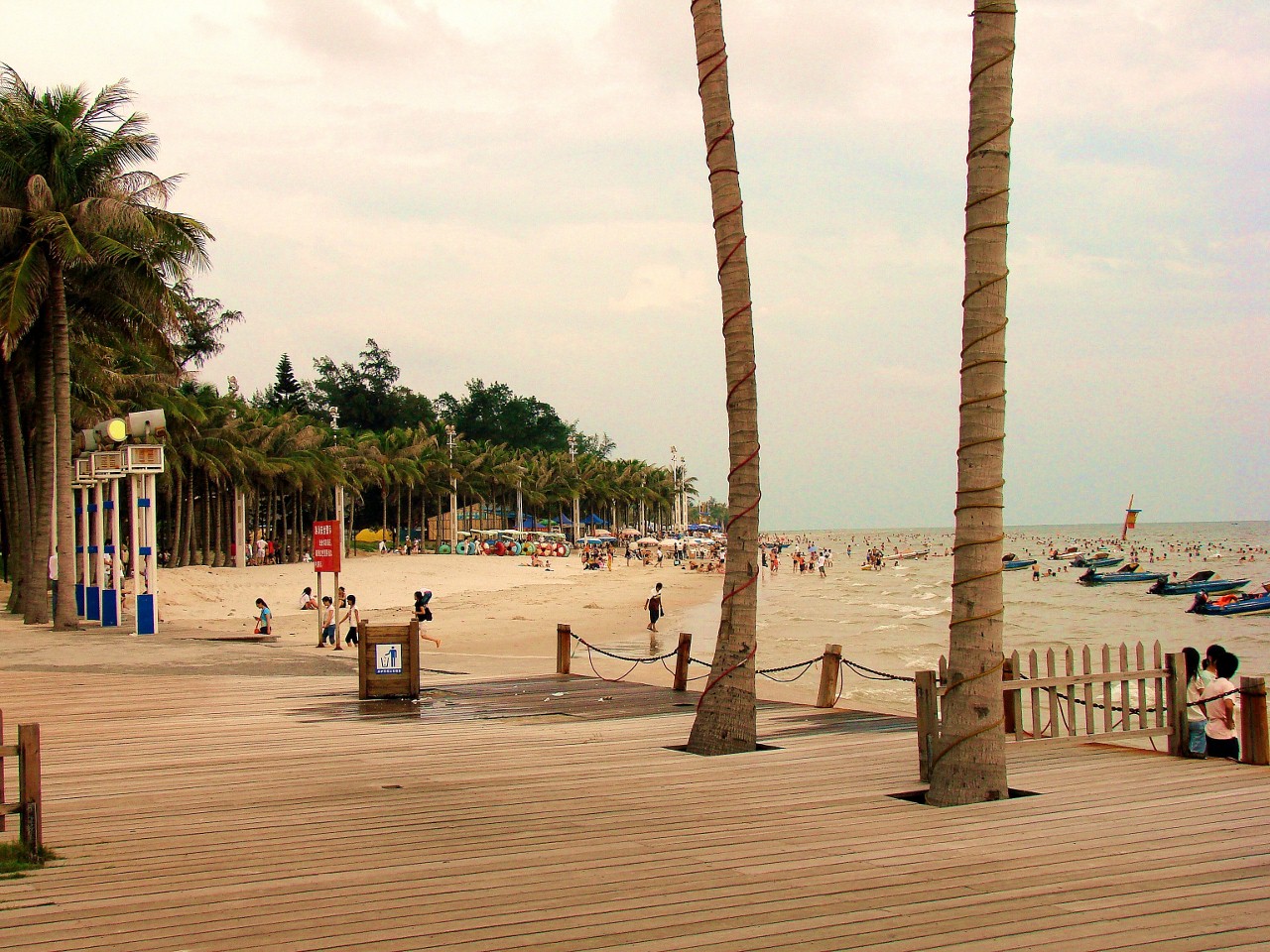
Silver Beach runs along the south side of the peninsula, from Qiaogang in the west toward Daguansha in the east, about twenty-four kilometers of quartz sand that flashes silver in the sun. The resort covers some 38 square kilometers. The old name of the main stretch was Baihutou, White Tiger Head, after the shape of the shore. In 1990 the city put money into a proper beach park; it opened in June 1991, became one of the first national tourist resorts in 1992, and was rated a national 4A scenic area in 2002. Admission is free.
The water is shallow and the slope gentle, which is why families treat it as a day-long bath rather than a viewpoint. The landmark on the sand is Chao, Tide, a hollow steel sphere ringed by pearl divers, designed by the Beihai-born sculptor Wei Xiaoming and first put up in 1993 for the city's pearl festival, about twenty-three meters high. Salt air ate the original; it was taken down and rebuilt in 2019. Yang Shangkun visited in 1997 and wrote the phrase locals still quote, "the first beach under heaven." Come late in the day for the light on the sphere, and stay off the wet rocks when the tide turns. Hours, swimming times and the sculpture's history are on the Silver Beach page.
Weizhou Island
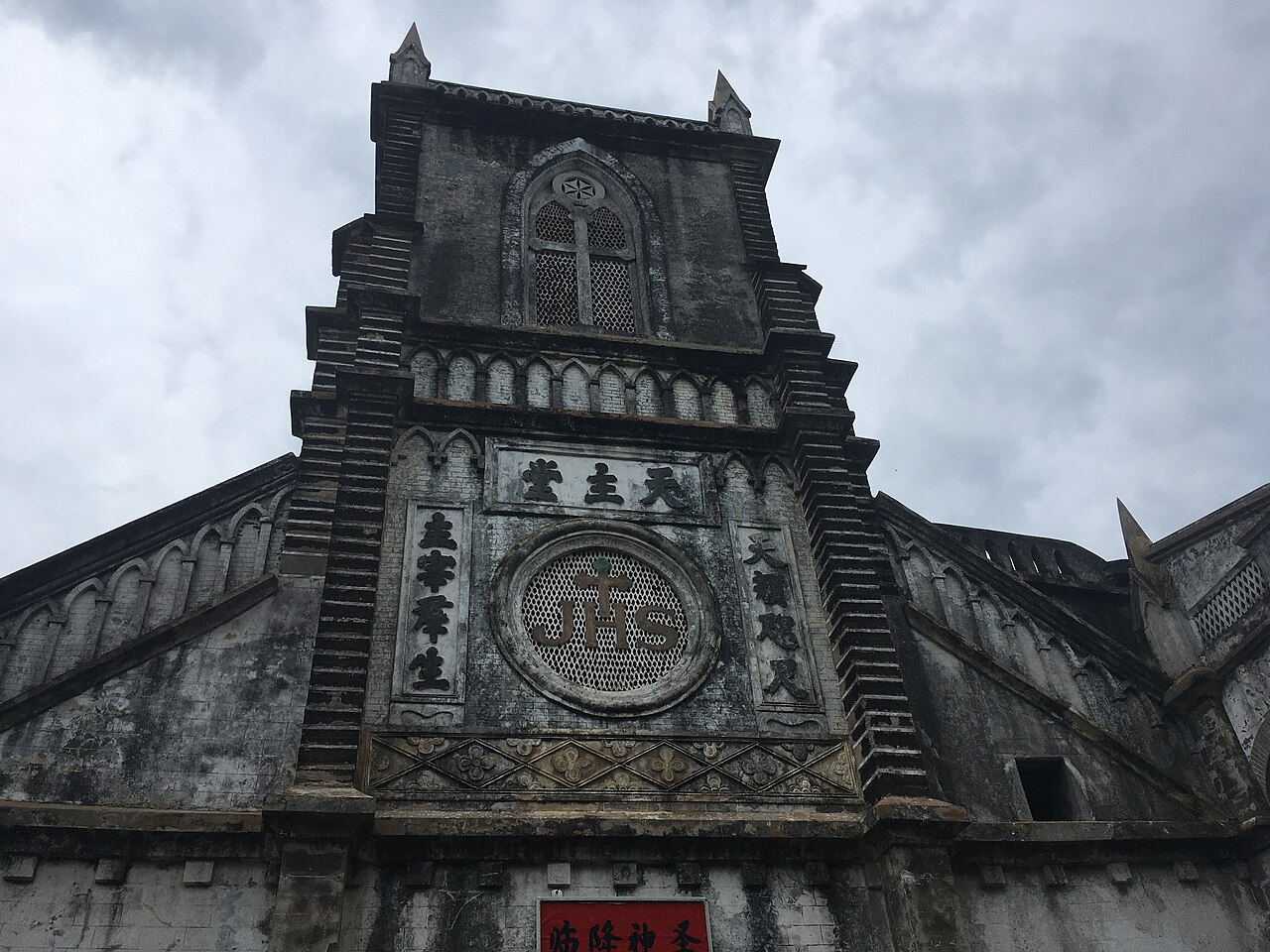
Weizhou lies in the middle of the Beibu Gulf, about thirty-six nautical miles south of the city, China's largest and youngest volcanic island. It covers 24.74 square kilometers, six and a half kilometers north to south, with a 36-kilometer shoreline and a high point of 79 meters on the south coast. The rock piled up in the Quaternary; the north is lava hills, the south an old crater bay where most people live. In 1993 it was named a Guangxi tourist resort, and on March 19, 2004 it became a national geopark in the third batch.
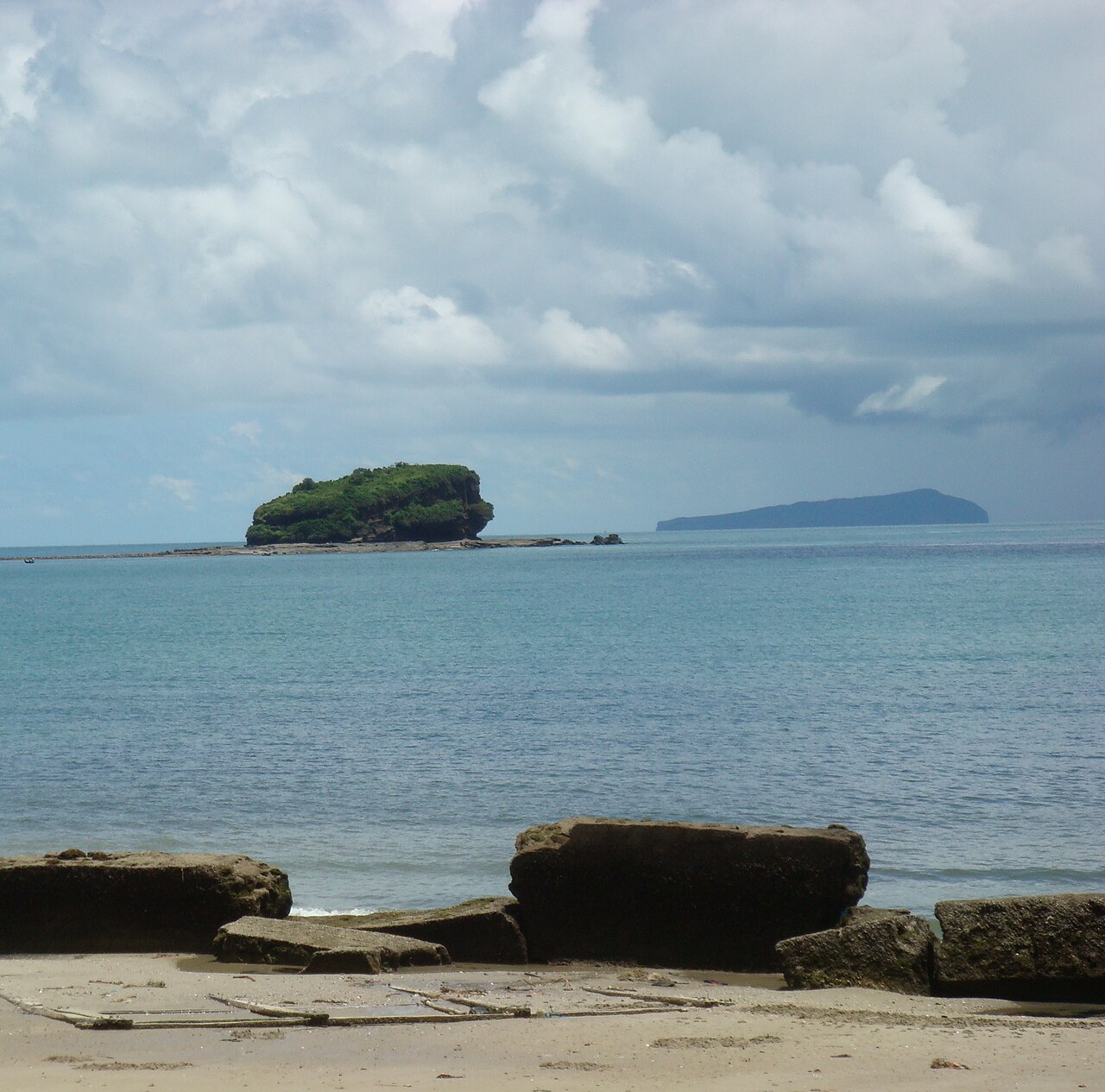
The island has been on the books since the Han, under Hepu Commandery. French missionaries arrived after the island reopened in 1867; they finished the Catholic church at Shengtang village in 1880 and another at Chengzai in 1882, coral-stone buildings that still stand. Crocodile Hill, the volcanic park, Dishui Danping at sunset, and Pig Rock looking toward Xieyang Island are the usual circuit. The crossing from Beihai takes an hour and a half to three hours depending on the boat. Give the island a full day at least; an overnight is more comfortable if you want sunrise on the colored beach. Tickets and sailings follow official notices; the Weizhou Island page covers the ferry booking window, the island ticket and the usual circuit.
Weizhou volcanic coast
Beihai Old Street
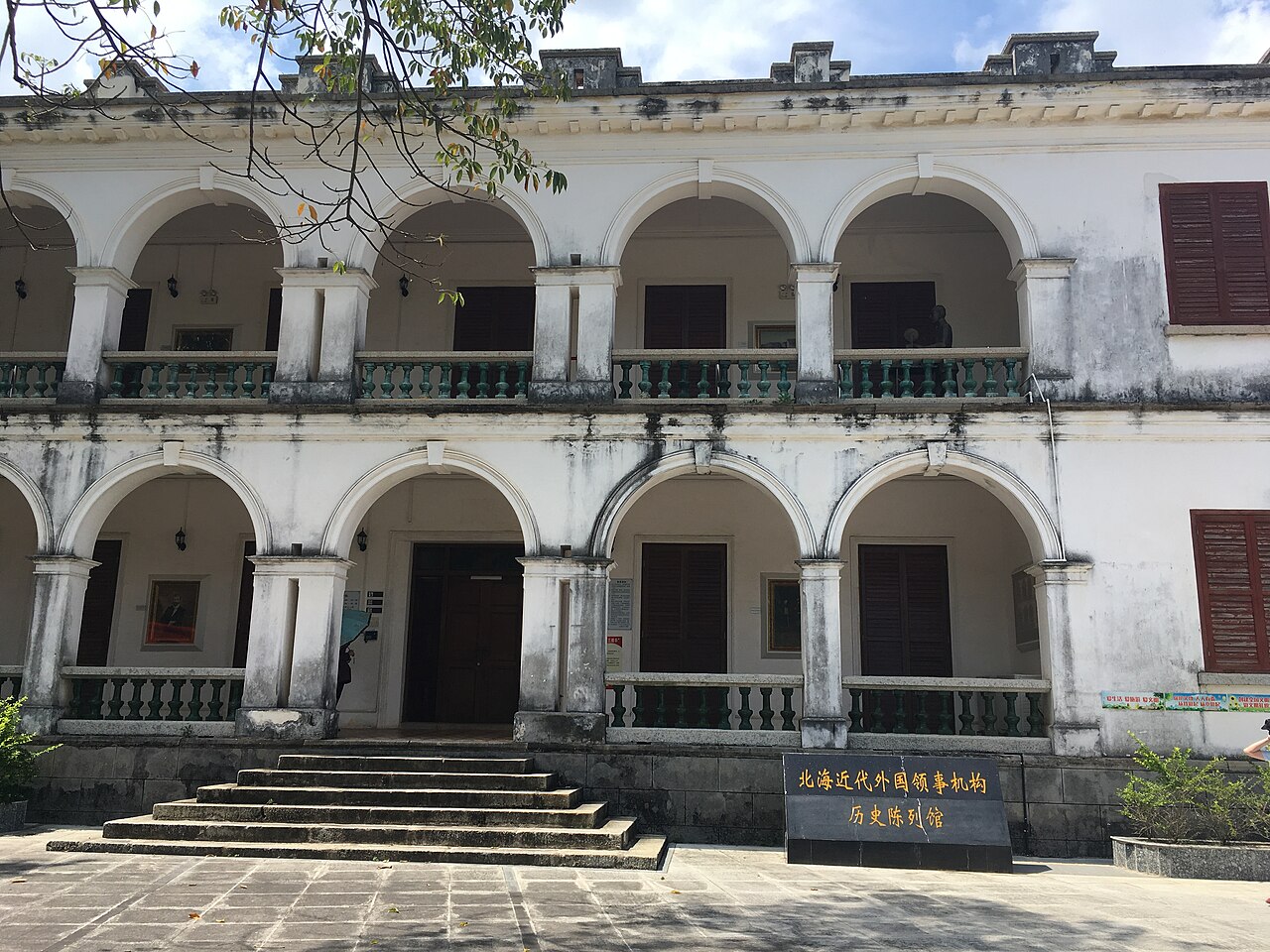
The old town is the city's starting point, three streets (Zhuhai Road, Shaji Street, and Zhongshan Road) with Zhuhai Road as the main arcade. It began in 1821 as Shengping Street, a couple of hundred meters long; it now runs a little over a kilometer, nine meters wide, lined with two- and three-story arcades that mix Lingnan shops with Western window arches and baroque gables. After 1876, when Beihai became a treaty port, British, French, and German consulates went up nearby, and the street became the place to buy silk, dried seafood, and fishing gear.
Fifteen of those Western buildings, including the British Consulate, the 1883 customs house, and the old postal office, were listed together in 2001 as the Beihai Modern Architectural Complex, a nationally protected site. Restoration of the arcade block started in 2005. The street is free and liveliest in the evening, when the lanterns come on and shrimp cakes appear in the doorways. Walk it slowly; the value is in the facades and the remaining shops, not in covering ground.
Qiaogang Town
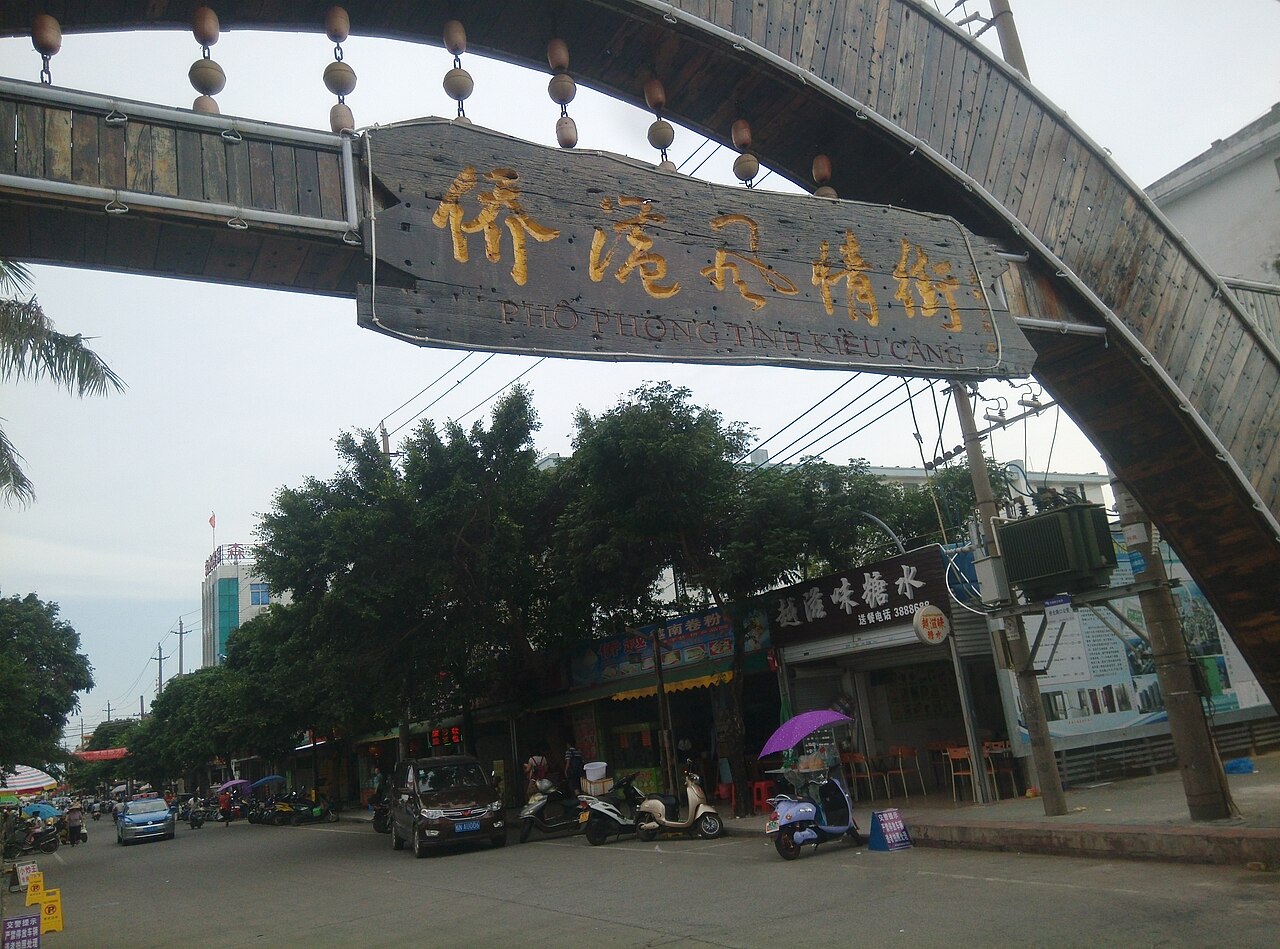
Qiaogang sits at the west end of Silver Beach, a strip of harbor only about 1.1 square kilometers. In 1978 and 1979, thousands of ethnic Chinese fishermen came back from Vietnam by small boat; on June 2, 1979 the state set up a fishery commune here as a single settlement for them, later a town, still the only township in the country created to house returned overseas Chinese who kept fishing. About 7,700 people were placed at the start.
The Qiaogang Style Street runs a little over a kilometer along the harbor, shrimp cakes, Vietnamese rice rolls, crab noodle soup, and sugar water in shop after shop. The boats come in at the adjacent pier; buy fish there and have it cooked, or eat on the street at dusk, which is when the place wakes up. It is a working port first and a food street second, and that is the point.
Guantou Ridge
Guantou Ridge is the western tip of the city, a three-kilometer sandstone ridge "domed like a crown," its main peak Wanglou Ridge at 120 meters, the highest point in the urban area. The seaward face is cut into cliffs and platforms; "Dragon Rock Tide Sound" is the old name for the noise under the wall. In the eighth year of Ming Hongwu, 1375, a coastal battery was built on the peak against pirates; the remains entered the sixth batch of national protected sites in 2006. The square lighthouse on the ridge went up in 1933 and ended the years when ships had to feel their way into the harbor after dark.
In 1988 the Ministry of Forestry approved a national forest park here, later surveyed at 245.7 hectares of mostly pine. There is no Chinese Wikipedia page with any substance, so the dates above follow local government and cultural-relic accounts. Sunset from the ridge is the usual reason to come; wear shoes with grip on the wet rock, and check current access notices, because parts of the park sit on an ecological red line. Pair it with Silver Beach the same afternoon if the light is good.
Eating in Beihai
The table is the gulf. Sandworms, cuttlefish, and all the small shrimp that go into the cakes are the everyday catch; Hepu pearls are the old luxury, more souvenir than supper. Qiaogang is the easiest place to eat well in one walk, shrimp cakes first, then a bowl of crab-roe noodles or Vietnamese rolls, sugar water if you still have room. On Zhuhai Road the same cakes turn up in the arcades. For a proper seafood dinner, pick live fish at the harbor and pay the cooking charge before the pan goes on. The taste runs fresh and lightly sweet, not heavy with chili; people from inland Sichuan sometimes add their own.
How to arrange the route
Three days covers the beach, the island, the old street, and the harbor.
Day one stays in the city: Zhuhai Road in the morning, Silver Beach from early afternoon through sunset at Chao, then Qiaogang for dinner.
Day two is Weizhou. Take an early boat, walk Crocodile Hill and the church, stay for Dishui Danping if the sky is clear, and come back on the last sailing, or sleep on the island and watch sunrise from the colored beach.
Day three goes to Guantou Ridge in the morning for the lighthouse and the cliffs. If you have a car and a half day left, Xingdao Lake in Hepu County, the Hongchaojiang Reservoir finished in 1964, was the outdoor set for the 1995 television Water Margin; it is a slower, greener close to a trip that has been all salt. In three days you have the sand, the volcano, the treaty-port street, and the fishing town that still feeds the city.
Beihai is often tagged onto a Guilin trip, karst first and sea after. Nanning is the inland capital stop if you are chaining Guangxi by rail. Neighbor gulf cities Qinzhou and Fangchenggang are softer bay and border stops, not Silver Beach substitutes. Sanya is the other southern beach city if you are comparing Hainan with the Beibu Gulf.
What to cut if short on time
Keep Silver Beach and Zhuhai Road if you only have one city day. Keep Weizhou as its own day when the sea is calm. Cut Guantou Ridge if legs are spent after the beach. Cut Xingdao Lake unless you have a car and a quiet half day left.
Things to confirm before you go
- Weizhou sailings depend on weather; typhoon season can cancel the crossing with little notice. Buy tickets through official channels and keep a spare half day.
- Silver Beach is free; water sports and umbrellas are extra, priced on the sand.
- Qiaogang is a working harbor. Watch your step around the pier, and agree on the cooking charge before you hand over a fish.
- Guantou Ridge paths are steep and slick after rain; the battery and lighthouse hours follow posted notices.
- Summer sun on the beach is fierce. Hats, sunscreen, and water are not optional.
Frequently asked questions
How many days for Beihai?
Three is comfortable, the city and the beach one day, Weizhou one day, Guantou and a slow meal one day. Just the beach plus the old street can be done in two if you skip the island.
Is Weizhou Island worth the boat?
Yes, if the sea is calm. It is a volcanic island with coral stone churches and a coastline you will not get on Silver Beach. A day trip works; an overnight is better.
Can you swim at Silver Beach?
From roughly May to October, when the water is warm. The slope is gentle and the beach is long, so even peak days have quieter stretches if you walk east or west of the sculpture.
Old street or Qiaogang for food?
Old street for a walk and a snack. Qiaogang for dinner. Do both; they are not the same meal.
Sources
The facts in this article were checked against the following Chinese Wikipedia entries, retrieved September 1, 2026, and rechecked on October 15, 2026.
- Beihai (city) https://zh.wikipedia.org/wiki/北海市
- Silver Beach https://zh.wikipedia.org/wiki/北海银滩
- Weizhou Island https://zh.wikipedia.org/wiki/涠洲岛
- Xingdao Lake (Hongchaojiang Reservoir) https://zh.wikipedia.org/wiki/星岛湖
The Chinese Wikipedia entries for Beihai Old Street and Guantou Ridge are missing. Facts on Zhuhai Road, the 2001 listing of the Beihai Modern Architectural Complex, and the 1883 customs house were verified against Guangxi news and cultural-relic reports. Guantou Ridge's 1375 battery, 1933 lighthouse, 1988 forest park, and 2006 national protection follow local government and Baike accounts cross-checked against more than one public source. Qiaogang Town has no Wikipedia page; its founding date, the 1979 settlement, and the style street follow People's Daily and official Qiaogang reporting.
All photos are from Wikimedia Commons, used under CC licenses; re-use requires attribution.
- beihai-yintan.jpg from File Beihai Silver Beach.jpg, by PQ77wd, CC BY-SA 4.0
- beihai-weizhou.jpg from File Front view of Weizhou Shengtang Catholic Church 1.jpg, by Sevgonlernassau, CC BY-SA 4.0
- beihai-weizhou-coast.jpg from File Weizhou island rock of pig and xieyang island.jpg, by Icefox06, CC BY-SA 3.0
- beihai-laojie.jpg from File Former site of the Beihai British Consulate.jpg, by Sevgonlernassau, CC BY-SA 4.0
- beihai-qiaogang.jpg from File 广西壮族自治区北海市的侨港风情街.jpg, by 热血小亮, CC BY-SA 4.0
- beihai-city.jpg from File Beihai-Silver-Beach-2007-08-27.jpg, by Gbrlhtclcq, CC BY-SA 3.0