Baiyangdian, North China's Largest Freshwater Lake
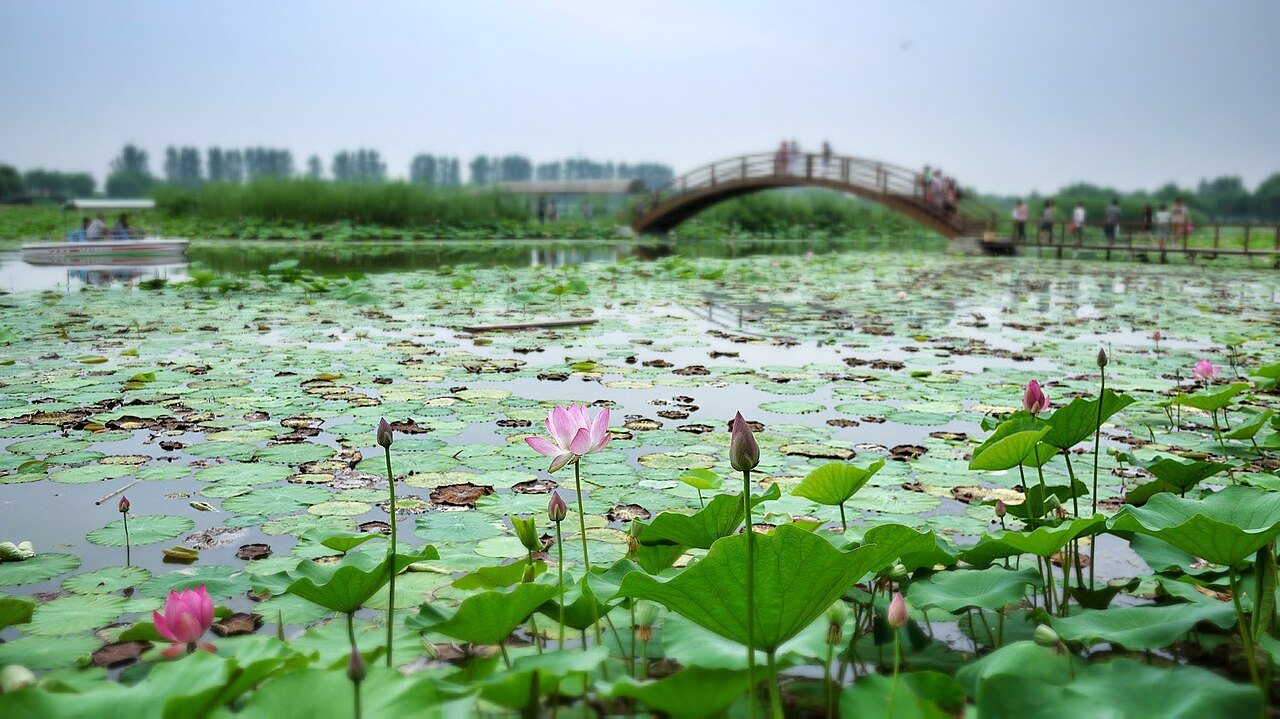
Baiyangdian is the largest freshwater lake in north China, a shallow tangle of open water, reed beds and lotus ponds east of Baoding. It lies across Anxin, Xiong and Rongcheng counties, all now part of the Xiong'an New Area. Most visitors come for a boat trip through narrow channels walled by reeds, a lunch of lake fish on an island village and, in summer, wide fields of lotus in flower. It needs a full day, and it is a summer and early autumn destination, since the main scenic areas close for the cold months.
How the lake system works
Baiyangdian is really a network of lakes. Chinese Wikipedia describes 146 larger and smaller lakes joined by more than 3,700 ditches and channels, with a total area of about 366 square kilometres. Nine rivers flowing down from the Taihang foothills feed it, and the water leaves through Zaolinkou into the Daqing River and on to the Hai River system. Thirty-six villages sit on islands and along the shores.
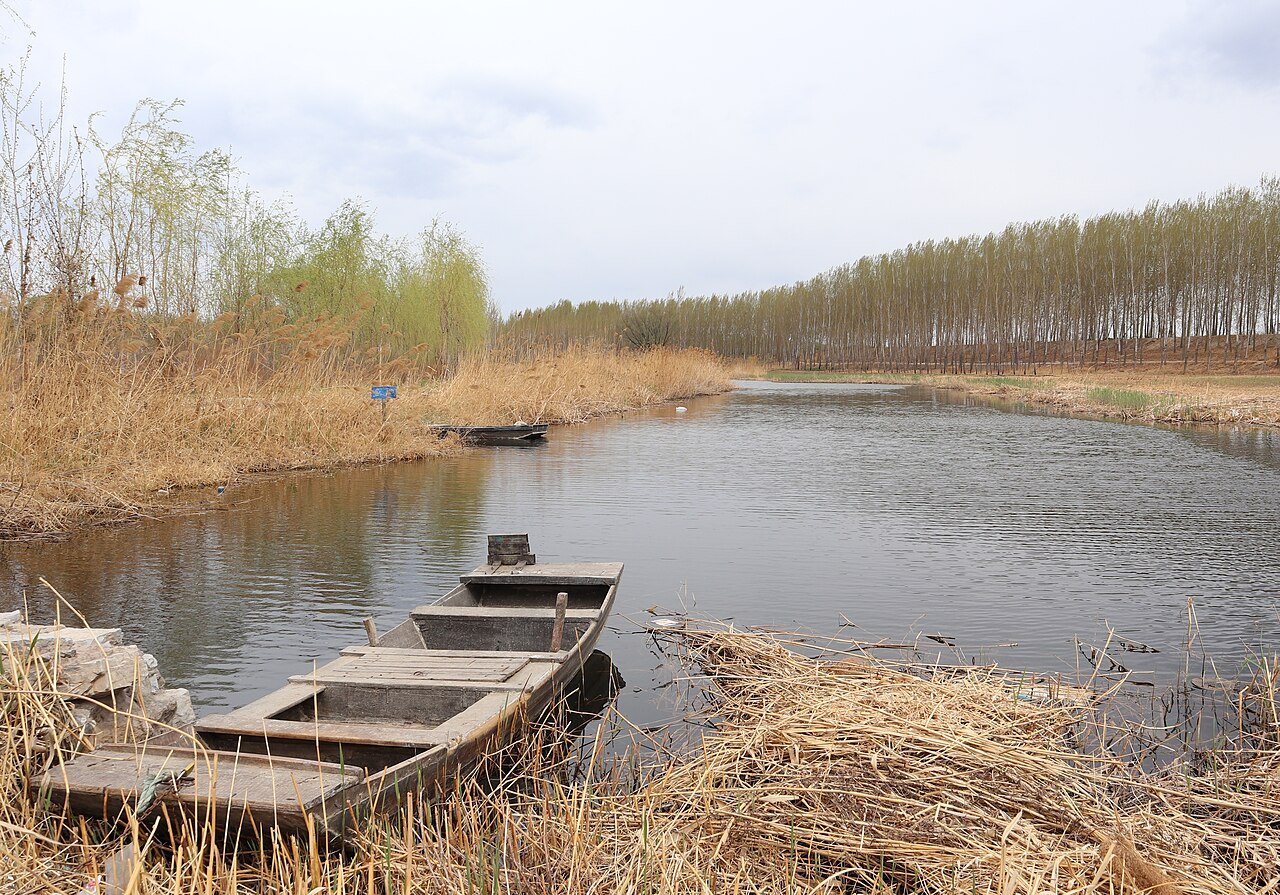
Away from the channels the water is shallow, so much of the surface is reed beds and lotus ponds. The reeds are tall and thick, and in summer the channels between them become a maze of green walls. Local people have long woven reed mats as a side trade, and fishing families once kept cormorants. In late autumn the reeds are cut, and in winter the lake freezes. Chinese Wikipedia notes a period at freeze-up and thaw when neither boats nor ice sledges can move and island families stock up on food and fuel.
Drought, pollution and recovery
The lake has come close to disappearing. Upstream reservoirs, heavy use of groundwater and industrial waste from the 1980s onward all took their toll. Chinese Wikipedia records six dry spells in about twenty years from the 1960s, including five dry years in a row from 1983 to 1988, until heavy rain in 1988 refilled it. Since 2000, water has been transferred in from the Yuecheng Reservoir and from the Yellow River.
The founding of Xiong'an in 2017 brought a much larger clean-up. Water quality improved from worse than China's lowest grade in 2017 to grade III in 2021, and by early 2022 the lake had 237 recorded wild bird species, including the critically endangered Baer's pochard. In December 2018 the live water surface was measured at about 310 square kilometres.
The wartime story
Many Chinese visitors know Baiyangdian from books and films set during the war against Japan. Local guerrillas, the Yanling Team or Wild Goose Feather unit, used the reed mazes and lotus ponds for cover and ambush. The writer Sun Li set his story Lotus Pond here, and a whole school of fiction took its name from it. Xu Guangyao's children's classic Little Soldier Zhang Ga is also set on the lake. A memorial museum to the guerrillas and village sites linked to these stories are part of the standard boat routes.
Piers, booking and seasons
The main scenic area is reached from the Anxin Baiyangdian tourist pier, and its two best-known stops are the Culture Park and the Lotus Grand View Garden. Xiong County runs the East Pier and the Dakouzi Pier, and there are also smaller piers for village tours. Local reports in May 2026 said tickets are sold with real-name booking through the official Baiyangdian and Xiong'an mini programs or by scanning a code at the piers, and that village-pier tickets do not include entry to the main scenic area. Check which pier your ticket names before you set out.
Seasons matter more than at most sights. Anxin announced that the main scenic area would close for maintenance from 15 October 2026, and Xiong County closed the East Pier, the Dakouzi Pier and the village piers for the season on the same date. Reopening dates were left to a later notice. In 2026 the piers reopened for the season around 1 May. Ticket prices, boat fees and hours vary by pier and season, so check the day's notice. In practice the best window is late spring to early October, and July and August bring the lotus.
Getting there and a day plan
Baiyangdian station on the Tianjin to Baoding line serves the lake area, and the lake is also reachable by car or taxi from Baoding or Xiong'an. Start early, take a boat through the reed channels in the cool of the morning, stop at an island village for a fish lunch, and spend the afternoon at the Lotus Grand View Garden or the guerrilla memorial before heading back. Pair it with a morning at the Zhili Governor's Office in the city on another day. The Baoding travel guide has transport and food notes.
Before you go
- Wear the life jacket provided on boats and keep an eye on children.
- Bring sun protection and insect repellent in summer.
- Storms and high wind can halt boats, so leave slack in your plan.
- Confirm the season's opening notice before travelling outside summer.
Frequently asked questions
When is the best time to visit Baiyangdian?
July and August for lotus, and late spring or September for milder weather. The main scenic area and several piers closed for the season from 15 October 2026.
How long do I need?
A full day, including travel from Baoding and at least half a day on the water.
Can I visit in winter?
The lake freezes and the main boat routes close, so winter visits are limited to the shore and any ice activities the county announces.
Do I need to book?
Local reports describe real-name ticketing through official mini programs or at the piers. Carry ID.
Sources
Facts in this article were checked against the following sources, retrieved 18 October 2026.
- Baiyangdian, Chinese Wikipedia
- Baiyang Lake, English Wikipedia
- Xiong County seasonal closure notice, China Youth Net, October 2026
- Baiyangdian piers reopen for May Day, Hebei Great Wall Net, May 2026
- Baoding travel guide on this site
Photos are from Wikimedia Commons under the licences shown in each caption.