The Zhili Governor's Office, Baoding's Qing Yamen
For most of the Qing dynasty the province around Beijing was called Zhili, meaning directly ruled, and its governor-general worked from a compound on what is now Yuhua West Road in central Baoding. That compound, the Zhili Governor's Office, is described by Chinese sources as the only Qing provincial yamen to survive intact. It is smaller and plainer than the palaces of Beijing, and that is the appeal. Here you can walk through the rooms where a working provincial government received edicts, met officials and kept its files, with exhibitions on the men who ran it.
From prefecture office to viceroy's seat
The site has housed government for a very long time. The museum traces it to a hall built in the Yuan dynasty's Zhiyuan era, when the area was the seat of the Shuntian circuit. Under the Ming it served as the Baoding prefecture office and then as the headquarters of the Daning regional military command, and in the early Qing as the office of a regional commander. The governor-general's yamen opened here in 1729, and in 1730 the governor Tang Zhiyu moved the office onto the old Ming site and left a stele recording the new buildings.
Zhili was the most sensitive province in the empire because it surrounded the capital. By the Qianlong reign its governor-general ranked first among the eight governors-general, and over time the post gathered military command, civil government, the salt monopoly, river works and, later, the role of Commissioner for the Northern Ports. According to the museum, 74 men held the post across 99 terms between the Yongzheng and Xuantong emperors. They include Li Wei, a favourite of Yongzheng, the river engineer Fang Guancheng, and the late Qing statesmen Zeng Guofan, Li Hongzhang and Yuan Shikai. The office closed with the end of the dynasty in 1911, after nearly two centuries.
The central axis, hall by hall
The compound faces south and is split into east, central and west routes. The Hebei cultural heritage bureau gives its size as about 130 metres east to west and 220 metres north to south, more than 26,000 square metres in all. The buildings are grey-tiled, single-storey and solid, built to the Qing rules for a provincial office.
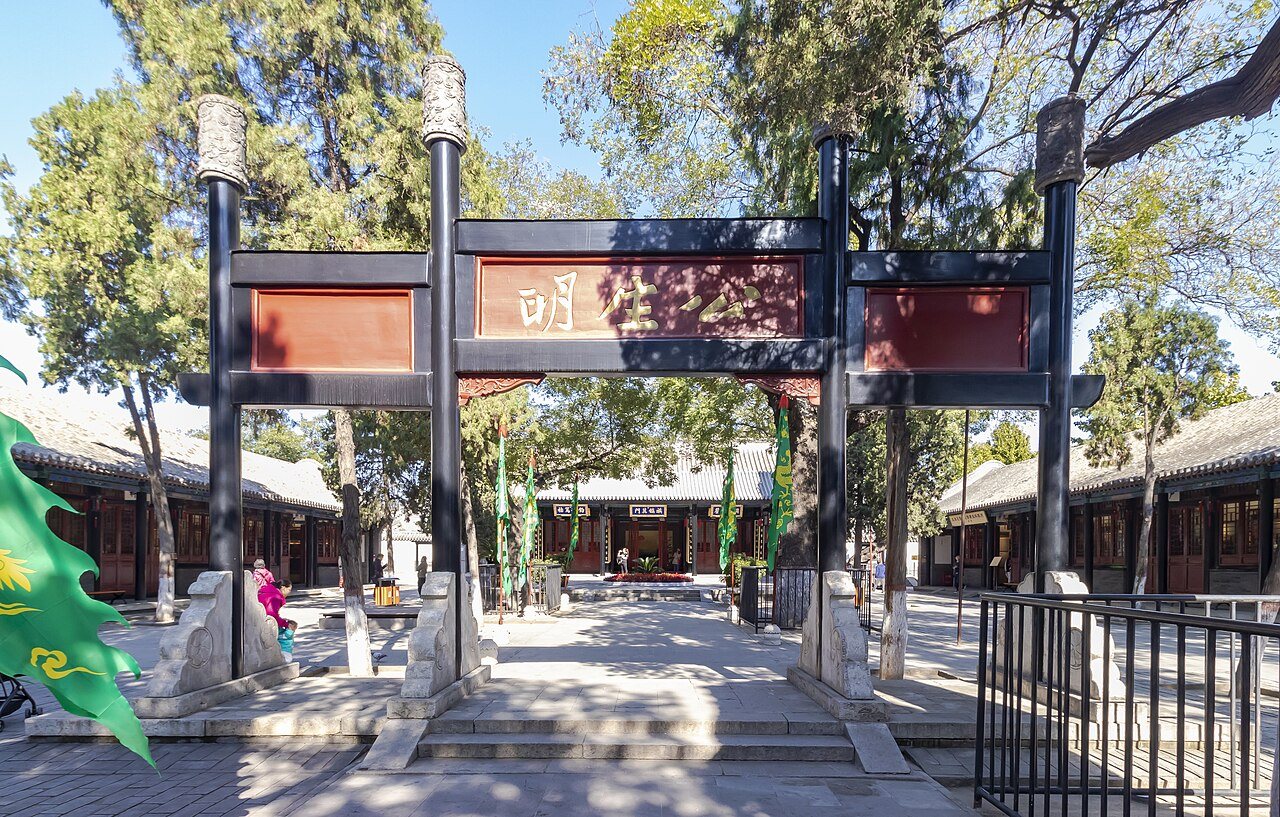
The central route runs through five courtyards. You pass the main gate and then the Yimen, the ceremonial gate used to greet and see off guests. Next comes the Gongshengming archway, an admonition gateway. Its north face carries a sixteen-character warning in the calligraphy of the Song poet Huang Tingjian, reminding officials that their salaries come from the people and that Heaven sees what they do. The governor could read it every time he looked up from his seat.
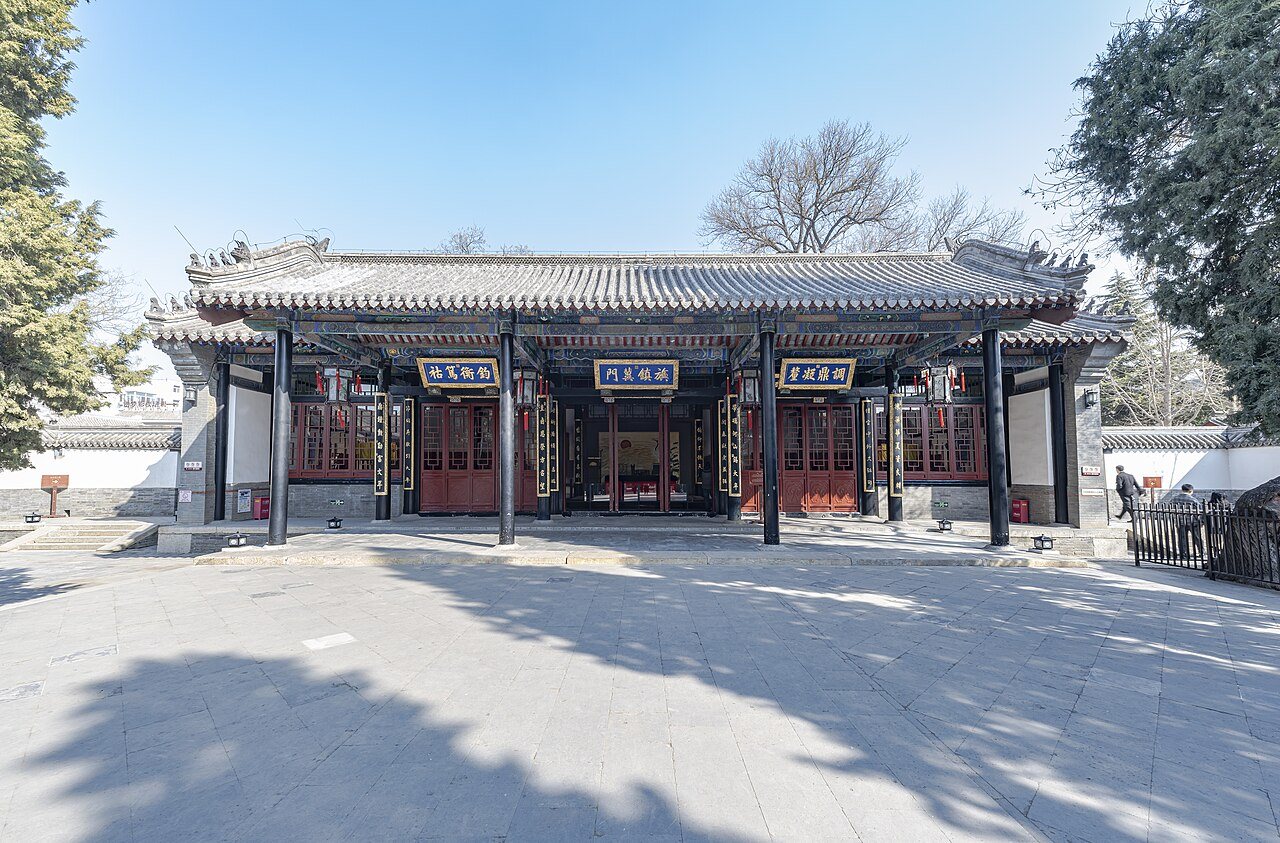
The Grand Hall beyond is five bays wide with a three-bay porch. It was used for receiving imperial edicts, holding ceremonies and major state business, and it was never a courtroom like the halls of a county yamen. The Second Hall behind it, also five bays, is where the governor met visiting officials, with a council room on one side and a records room on the other. A couplet written by Zeng Guofan when he held the post hangs at its door. The Third Hall, called the official residence, held the governor's inner office and his study, and Zeng Guofan is recorded as writing an exhortation to students of the Lianchi Academy here in 1869. The Upper Rooms at the back were the family quarters.
Side courtyards and exhibitions
Along the Grand Hall courtyard are six offices that mirrored the six ministries of the central government, with personnel, revenue and rites on the east and war, justice and works on the west. The east route holds the courtyards where the governor's private secretaries lived and worked, and a flower hall used for banquets. The west route has an archery path, a stele corridor and exhibition courtyards.
The halls on the central axis are furnished as period rooms. Side galleries explain how Zhili was governed and tell the stories of individual governors, with themed shows on Fang Guancheng, Qing anti-corruption culture and the secretarial system. Temporary exhibitions rotate through the west courtyards. Old cypresses line the central route, some said to be more than 400 years old, and local reports note that owls roost in them in winter.
Tickets, hours and getting there
The museum's official site lists opening hours of 8:30 to 18:00 from 16 March to 14 November, with the last tickets at 17:30, and 9:00 to 17:00 from 15 November to 15 March, with the last tickets at 16:30. It is closed on Mondays except public holidays. The listed prices are 35 yuan for adults, 28 yuan per person for groups and 17.5 yuan at the half-price rate. Hours can change around holidays and special events, so check the day's notice before you go.
The address is 301 Yuhua West Road. City buses 1, 4, 6, 8, 12, 26, 35 and 39 stop at Gulianhuachi, the Ancient Lotus Pond, which sits right next door. From Baoding East high-speed station a taxi into the centre is the simplest option.
Pairing it with the rest of Baoding
Allow about two hours for the yamen. The Ancient Lotus Pond garden beside it takes another hour and makes an easy pair for a half-day in the old centre. A full day on the water at Baiyangdian works well as the second day of a Baoding stop. The Baoding travel guide covers food, transport and the Western Qing Tombs.
Before you go
- Arrive at opening on weekends to beat school groups.
- Most halls have thresholds and uneven paving, so watch your step.
- The museum is closed on Mondays outside public holidays.
- Combine it with the Ancient Lotus Pond next door.
Frequently asked questions
Why is this yamen considered special?
Chinese sources describe it as the only Qing provincial-level government office to survive intact, with its central axis complete from gate to family quarters.
How long should I spend inside?
About two hours covers the central axis and the main exhibitions.
Is it a day trip from Beijing?
Yes. Baoding East is roughly 40 minutes from Beijing by high-speed train, so the yamen and the Lotus Pond fit easily into a day.
What else is nearby?
The Ancient Lotus Pond, a classical garden that was once a Qing travelling lodge, is next door on the same road.
Sources
Facts in this article were checked against the following sources, retrieved 18 October 2026.
- Zhili Governor's Office Museum, official site
- Viceroy of Zhili's Office (Baoding), English Wikipedia
- Zhili Governor's Office, Chinese Wikipedia
- Baoding municipal government, history of the Zhili Governor's Office
- Hebei Cultural Heritage Bureau, museum profile
- Baoding travel guide on this site
Photos are from Wikimedia Commons under the licences shown in each caption.