Jiujiang Travel Guide: Mount Lu, the Yangtze Waterfront and Poyang Lake
Jiujiang is the Yangtze port at the foot of Mount Lu (Lushan), the misty mountain of temples, academies and colonial-era villas that has been a UNESCO World Heritage Site since 1996. The mountain is the reason to come, and it deserves a night up top in the resort town of Guling, because fog decides what you'll see and a same-day dash often sees nothing. The city below is worth an evening for Xunyang Tower and the river, and in winter Poyang Lake, China's largest freshwater lake, fills with migrating cranes. Plan three days for all of it, or two if you skip the lake.
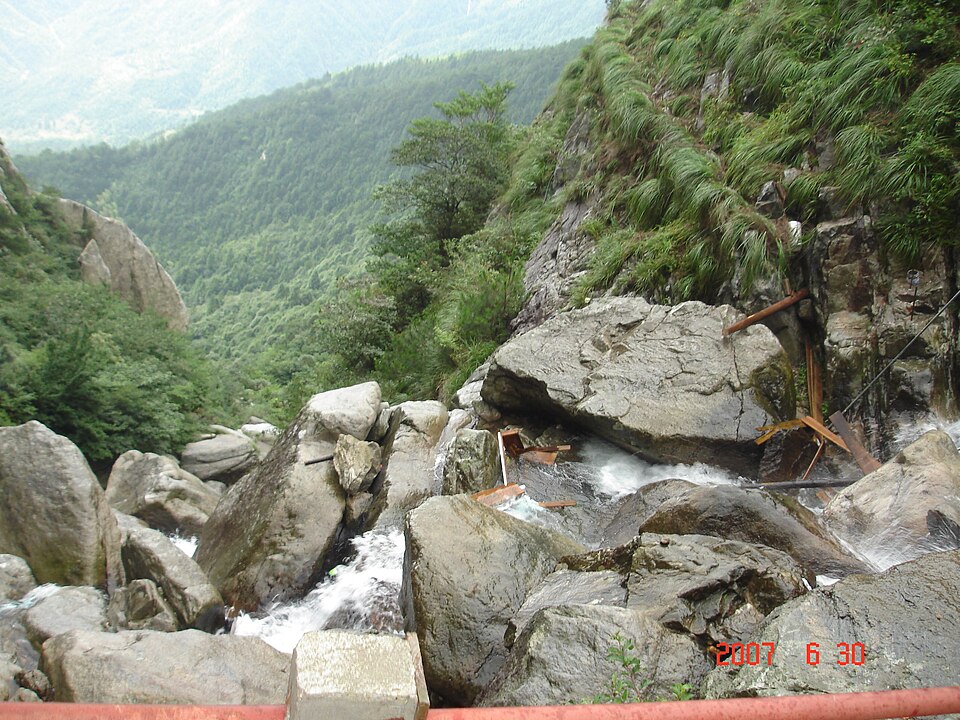
Mount Lu
The massif is an oval about 25 km long and 10 km wide, rising steeply between the Yangtze and Poyang Lake. Its history is unusually layered. Huiyuan founded Donglin Temple on its slopes around the turn of the 5th century and with it the Pure Land school of Buddhism. Zhu Xi made the White Deer Grotto Academy one of the most famous schools of the Song. Su Shi wrote the line every Chinese visitor knows, that he couldn't see Lushan's true face because he was standing inside it. In the late 19th century missionaries built the summer resort of Kuling, now Guling, where more than 4,000 foreigners lived each summer at its peak. Chiang Kai-shek later made it his summer capital, and Mao held three party conferences here, including the 1959 meeting that purged Peng Dehuai.
Guling and the villas
Guling sits above 1,000 metres among three peaks and is the base for everything. Walk its lanes of stone villas, including Meilu Villa, the house associated with Chiang Kai-shek and Soong Mei-ling, and the old Catholic church. The film Romance on Lushan Mountain (1980), with one of the first kisses in post-1949 Chinese cinema, has been screened daily in a Guling cinema since its release and holds a Guinness record for it.
Viewpoints and walks
Popular stops include the Immortal's Cave, the Five Old Men Peaks, the Sandiequan triple waterfall, Lulin Lake with the Mount Lu Museum on its shore, and the botanical garden. The scenic area runs shuttle buses between them, which saves hours. The Sandiequan waterfall involves a long staircase down and back up, so leave it for a morning when your legs are fresh. The White Deer Grotto Academy lies below the Five Old Men Peaks on the lower slopes.
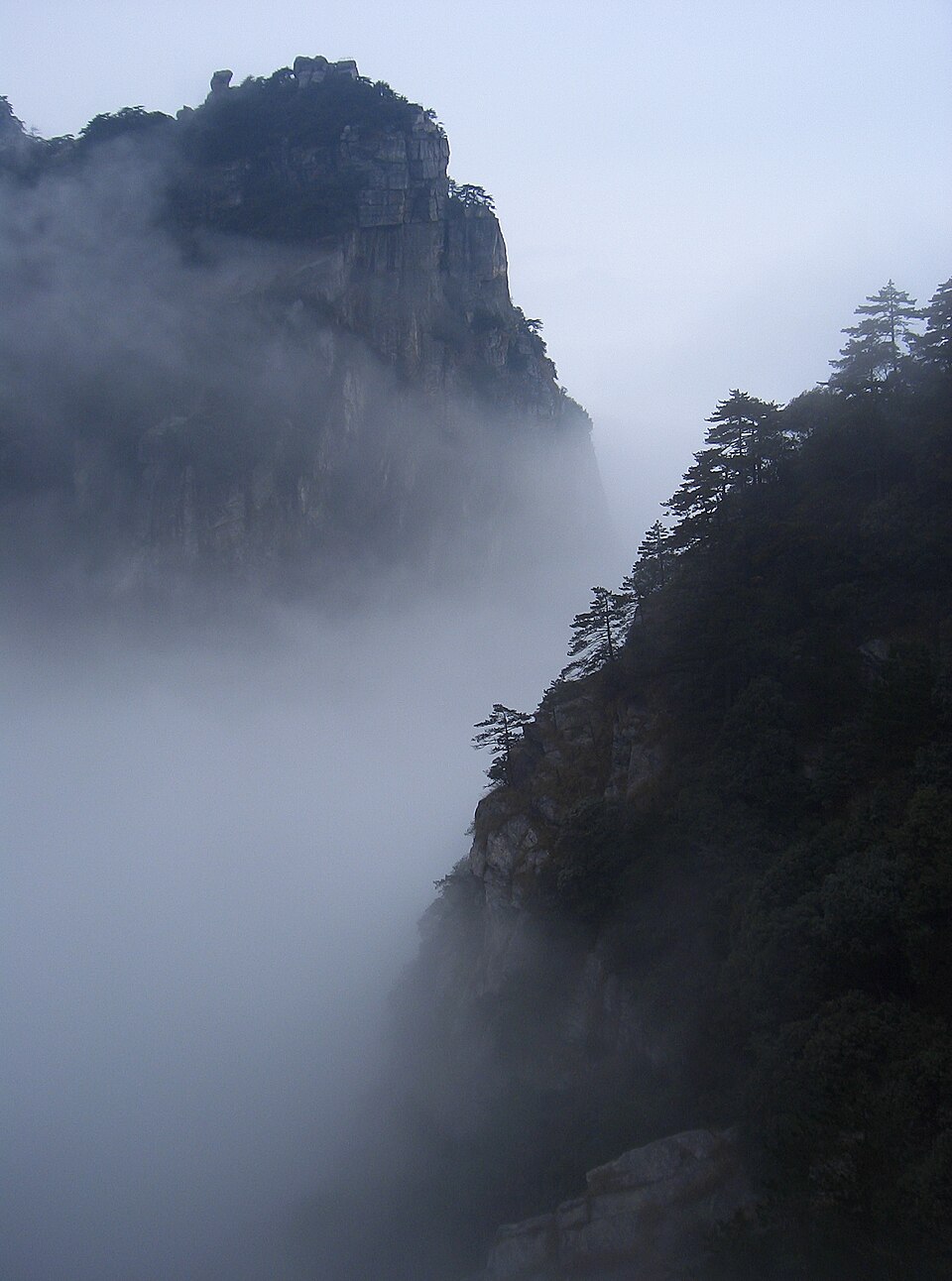
Fog and timing
Lushan is famous for its clouds, which means many days are spent inside them. Plan two nights if the views matter, and use a foggy day for the villas, museum and Guling's lanes, saving viewpoints for the clear morning. Summer is the cool season on the mountain and its busiest. Check the scenic area's notice for tickets and shuttle prices; they aren't quoted here.
Jiujiang city
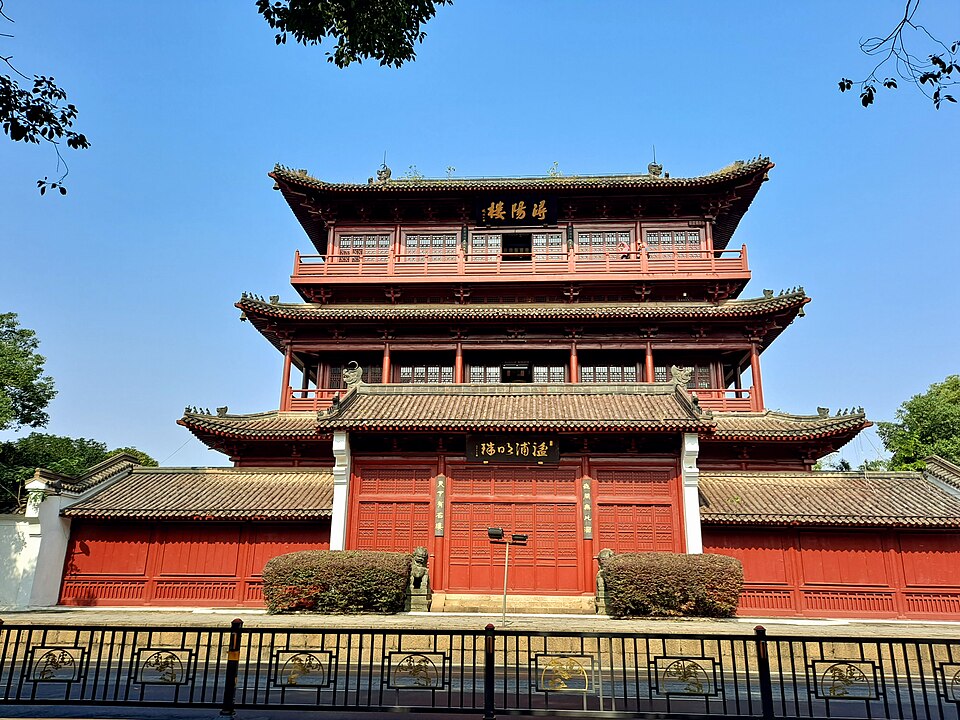
The Tang poet Bai Juyi served here as a demoted official and wrote his Song of the Pipa Player about a night on the river. Xunyang Tower, on the Yangtze bank, appears in Tang poetry and in Water Margin, where Song Jiang writes a rebellious poem on its wall. The present 21-metre tower was rebuilt in 1989. The riverside promenade around it is the city's best evening walk. In the old centre, Yanshui Pavilion sits on an island in Gantang Lake.
Poyang Lake in winter
Poyang's area swings hugely between wet and dry seasons, averaging about 3,500 square kilometres but shrinking dramatically in drought years. In winter it shelters around half a million migratory birds, including most of the world's critically endangered Siberian cranes. December to February is birding season; the best spots are scattered around the lake and need a car and ideally a local guide. In summer it is just a big lake.
When to come to Jiujiang
April to June and September to November for the mountain, with summer for escaping the lowland heat (expect crowds and storms). Winter is cold and quiet on the summit, sometimes with snow and rime ice, and it is the only season for Poyang's cranes. Check road and park notices after heavy rain.
Getting in and where to stay
- High-speed rail: Jiujiang sits on the Wuhan–Jiujiang and Hefei–Anqing–Jiujiang high-speed lines and the Nanchang–Jiujiang intercity line, so trains run often to Wuhan, Nanchang and Hefei. Lushan station on the intercity line is closer to the mountain's southern side.
- Air: Jiujiang Lushan Airport has a few domestic routes; Nanchang Changbei is the bigger airport, about an hour away.
- Up the mountain: Buses and taxis climb the mountain road to Guling.
Sleep in Guling for the mountain. A riverside hotel in Jiujiang works for a city night before an early train.
Eating in Jiujiang
Jiangxi food is spicy. Jiujiang adds Yangtze and lake fish, often braised with chilli. On the mountain, try dishes with "three stones" (stone fish, stone ear fungus and stone frog are Lushan's traditional delicacies, though the frog is now protected in the wild, so ask whether it's farmed) and drink Lushan cloud-and-mist tea, grown on the slopes. Restaurants in Guling cost more than in town.
How to arrange the route
Day 1: Arrive in Jiujiang, walk the riverside at Xunyang Tower in the evening, then take a bus or taxi up to Guling (or go up in the afternoon and do the river on day 3).
Day 2: Lushan viewpoints on the shuttle in the morning, Guling villas and the museum in the afternoon, sunset from a viewpoint if the sky is clear.
Day 3: Sandiequan or White Deer Grotto Academy, then down to Jiujiang for a train. In winter, swap this day for Poyang Lake.
What to cut if short on time
Keep one night on Lushan. Drop Poyang Lake outside the winter season, and drop city sights if you arrive late. Don't try Lushan between two trains on the same day.
Things to confirm before you go
- Lushan ticket and shuttle bus rules, and road status after storms.
- The weather forecast for the summit, which can differ completely from the city.
- Which station your train uses, Jiujiang or Lushan.
- Bird reserve access and viewing points at Poyang in winter.
Frequently asked questions
How many days do I need for Mount Lu?
Two nights on the mountain gives you a good chance of one clear morning. One night is the minimum.
Is Lushan worth it in fog?
Partly. Guling's villas, the museum and the forest paths are still worthwhile, and fog moves fast, so a cloudy morning can clear by afternoon.
Can I see Mount Lu as a day trip from Nanchang?
It's possible by early train and taxi, but you'll spend much of the day on the road and risk fog. An overnight stay is far better.
Sources
The facts in this article were checked against the following sources, retrieved September 19, 2026, and rechecked on October 18, 2026.
- Jiujiang https://en.wikipedia.org/wiki/Jiujiang
- Mount Lu https://en.wikipedia.org/wiki/Mount_Lu
- Poyang Lake https://en.wikipedia.org/wiki/Poyang_Lake
- Xunyang Tower (Chinese) https://zh.wikipedia.org/wiki/浔阳楼
Tickets change; this article does not quote yuan amounts.
All photos are from Wikimedia Commons, used under CC licenses; re-use requires attribution.
- jiujiang-lushan.jpg from File:Mount Lu.jpg, by Pauloleong2002, CC BY-SA 4.0
- jiujiang-xunyang.jpg from File:Xunyang Lou, Jiujiang.jpg, by 钉钉, CC BY-SA 4.0
- jiujiang-lushan-fog.jpg from File:Mount Lushan - fog.JPG, by pfctdayelise, CC BY-SA 2.5