Old Dragon Head, Where the Great Wall Meets the Sea
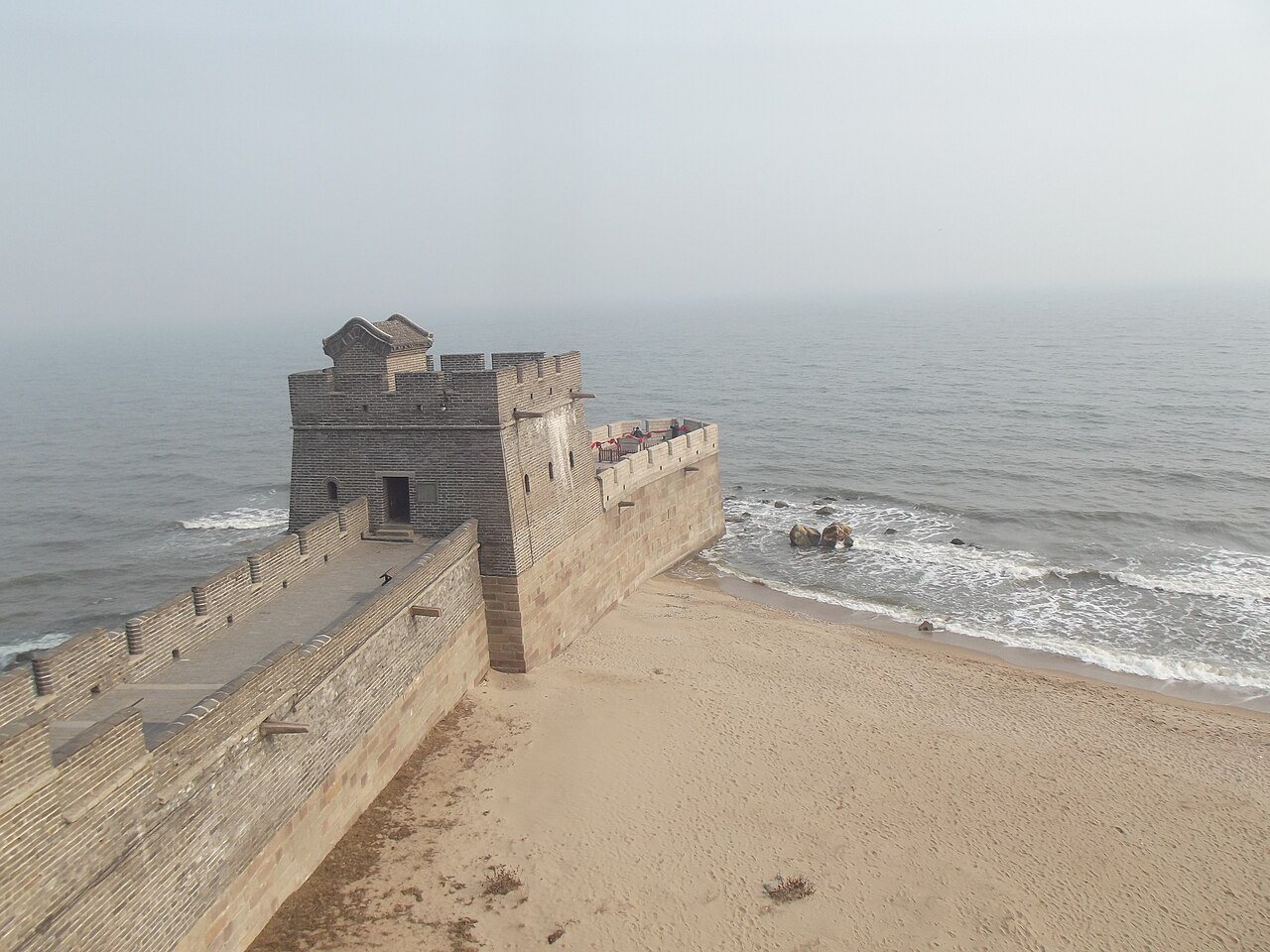
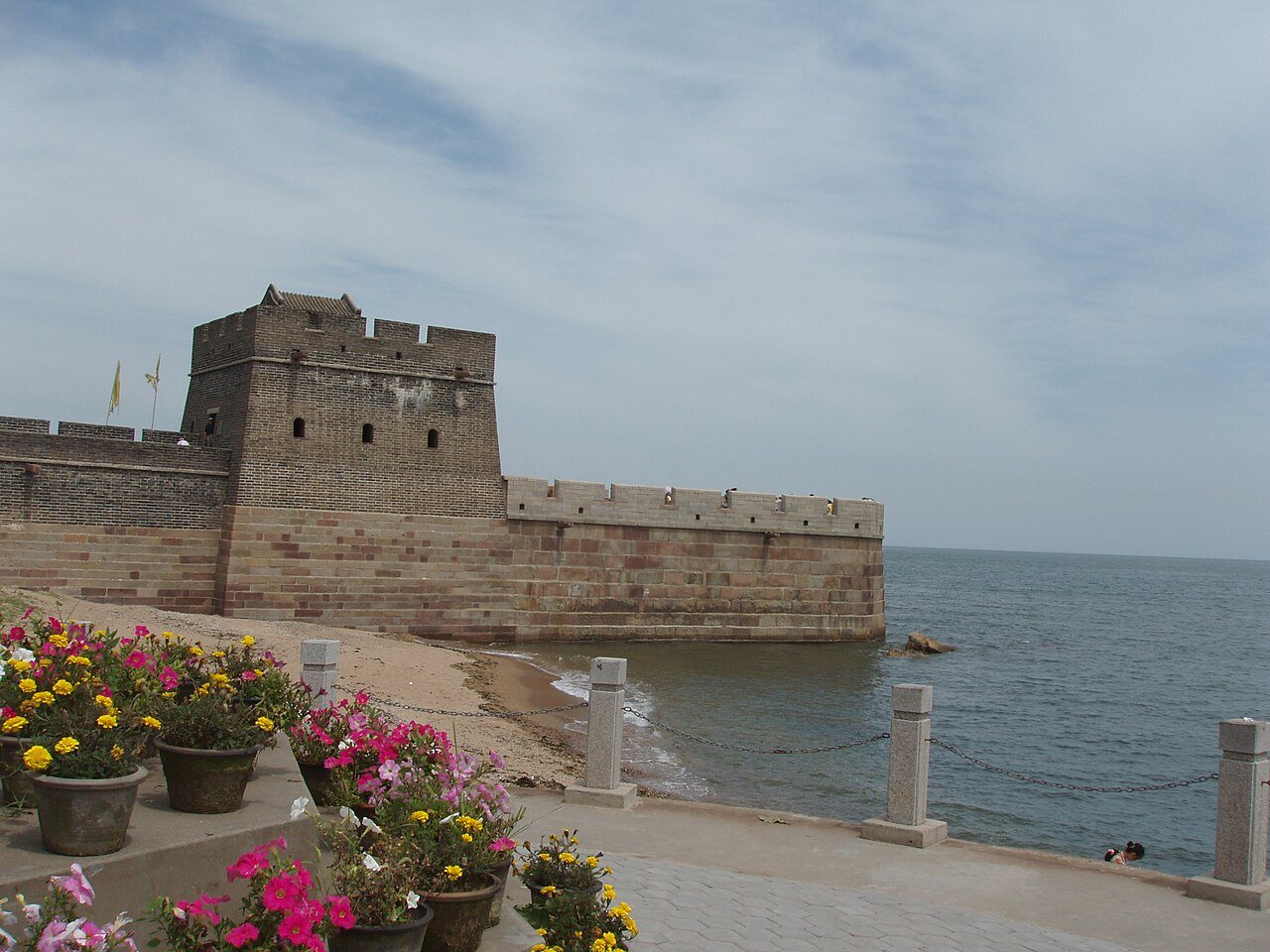
Old Dragon Head, Laolongtou in Chinese, is the short stretch of Ming wall that leaves the beach and runs out onto the rocks of the Bohai Sea, about four kilometres south of the walled town of Shanhaiguan. Chinese sources call it the only place where the Great Wall enters the sea, and the name comes from the way the wall's end seems to dip its head into the water like a drinking dragon. Today it is a park attached to the Shanhaiguan scenic area in Qinhuangdao, with a restored sea fort, a two-storey viewing tower and the stone platform at the tip.
How the wall reached the water
The Ming wall line reached this shore soon after the pass was founded in 1381, and Chinese Wikipedia's article on Old Dragon Head dates its completion to that year. The detailed history of Shanhaiguan adds that the stone section pushed into the sea, the Ruhai Shicheng, was built in 1579 under Qi Jiguang, the commander who strengthened this whole sector. The sea wall is short. It measures about 22.4 metres long, 8.3 metres wide and 9.2 metres high, and it stands on natural reef. At its tip is the Jinglu Platform, a tower base roughly 13 by 11.5 metres with a watchtower on top. Its job was to stop raiders from simply walking round the end of the wall at low tide.
In the 1630s the Ming added Ninghai City just behind the shore, a small fort with walls about five to six metres high and a circuit of some 600 metres. Its east and south walls are part of the Great Wall line itself. On its south wall the defenders turned an older seaside pavilion into Chenghai Tower, a two-storey building with a hipped and gabled roof. The Kangxi Emperor came here to watch the sea, and the tower carries a plaque in the Qianlong Emperor's hand and another with the words Xiong Jin Wan Li by the Ming minister Sun Chengzong.
War, foreign barracks and rebuilding
In the 1880s the Qing built coastal batteries around Shanhaiguan, including the Dingyuan battery beneath Chenghai Tower, and a stretch of its rammed earth wall still survives. These defences did not hold in 1900. On 2 October that year the forces of the Eight-Nation Alliance landed at Old Dragon Head and burned Chenghai Tower. After the Boxer Protocol several foreign powers kept barracks around Shanhaiguan until 1945, and British troops occupied Ninghai City. While building a magazine they knocked down an old stele carved Tian Kai Hai Yue. The warlord Zhang Xueliang found it lying on the ground in 1927 and had it set upright again.
The late Qing railway also took its toll, since building the line through Shanhaiguan meant demolishing the South Water Gate and 245 metres of wall. Much of what you see today is reconstruction. Chenghai Tower was rebuilt on its old plan in 1978, and the stretch running into the sea was restored in the 1980s. The stones are new, but the site and its outline follow the Ming plan.
What to see in order
Enter through the park and walk first to Ninghai City, where the barracks layout, gates and parapets give a sense of how a small Ming coastal garrison worked. Climb Chenghai Tower for the classic view down the wall to the sea, then follow the wall out to the Jinglu Platform. From the platform you can see both the wall heading inland toward the pass and the long sandy shore on either side. Below the wall there is a beach where most people pause for photos of the stonework meeting the waves.
The light is best early in the morning, when the sun rises over the sea to the east and the crowds have not yet arrived. Late afternoon also works, with the sun behind you as you face the water. Summer haze often softens the view, and clear autumn days give the sharpest outline of the wall against the sea.
Pairing it with the pass
Most visitors combine Old Dragon Head with the First Pass Under Heaven in one day. A practical order is the pass in the morning, lunch in the walled town and Old Dragon Head in the afternoon. Taxis and local buses link the two in a short ride. If you are also planning a beach day at Beidaihe, the Qinhuangdao travel guide explains why it is easier to stay near one end of the city per night.
Tickets, hours and access
Old Dragon Head has its own ticket, and combined tickets with other parts of the Shanhaiguan scenic area are often sold. Prices and opening hours vary between peak and off seasons, so check the day's notice at the entrance or on the official booking channel before you set out. Carry ID for purchase.
The site is a short taxi ride from Shanhaiguan railway station and the walled town. From central Qinhuangdao or Beidaihe, allow more time, as the road runs the length of the city.
Before you go
- Stone surfaces on the wall can be slippery after rain or sea spray.
- Bring a windproof layer, since the tip of the wall is exposed even on mild days.
- Keep the visit to two hours or so and use the rest of the day for the pass.
- See the Qinhuangdao guide for the three-day plan.
Frequently asked questions
Is Old Dragon Head original Ming work?
The site and plan are Ming, but most of the visible structure was rebuilt. Chenghai Tower dates from 1978 and the sea wall from restoration in the 1980s.
Can you walk to the very end?
Normally yes, out to the Jinglu Platform at the tip, unless weather or works close the wall.
Is there a beach?
There is sand on both sides of the wall. Rules on swimming are set by the park, so follow the signs on the day.
How far is it from the First Pass Under Heaven?
About four kilometres, a short taxi ride.
Sources
Facts in this article were checked against the following sources, retrieved 18 October 2026.
- Old Dragon Head, Chinese Wikipedia
- Shanhaiguan, Chinese Wikipedia
- Shanhai Pass, English Wikipedia
- Qinhuangdao travel guide on this site
Photos are from Wikimedia Commons under the licences shown in each caption.