Baoji Travel Guide: Famen Temple, the Bronze Ware Museum and Mount Taibai
Baoji, at the western end of the Guanzhong plain about an hour from Xi'an by high-speed train, is where the Zhou and Qin states began. For visitors it offers three very different days. Famen Temple, in Fufeng County, guards a finger bone of the Buddha found in a sealed Tang crypt in 1987, with one of the richest hoards of Tang treasure ever excavated. The Baoji Bronze Ware Museum, the largest museum in China devoted to bronzes, holds the He zun, whose inscription is the earliest known use of the word "China". And Mount Taibai, south of the city, is the highest peak in the Qinling at 3,767 metres. Give each its own day.
The land of the Zhou
The plain around Baoji, especially Zhouyuan near Qishan and Fufeng, was the homeland of the Zhou before they conquered the Shang, and it is full of buried bronze hoards. Many are thought to have been buried by Zhou noble families when the court abandoned the region and moved east in 771 BC, and never recovered. Later the Qin rose from the same region. Local tradition also makes Baoji the home of the Yan Emperor, one of China's legendary ancestors. The city is a rail junction between the Wei River valley, Gansu to the west and Sichuan to the south across the Qinling.
When to come to Baoji
April to May and September to October are the most comfortable months on the plain. Summer is hot at Famen, and July to September is the rainy season, with long wet spells in autumn. Mount Taibai is a different climate altogether: the upper mountain is cold even in summer, and the high trails are only practical from about late spring to early autumn. Winter is cold and dry in the city, and the mountain is snowbound. Check the scenic area's notices before planning a summit attempt.
Getting in and where to stay
Baoji South is on the Xi'an–Lanzhou high-speed line, and the older Baoji station is on the Longhai railway. Famen Temple is about 120 kilometres west of Xi'an, closer to Xi'an than to Baoji city, so many visitors see it on the way between the two. Tourist buses and taxis run there. For Mount Taibai, the main entrance to the national forest park is at Tangyu in Mei County. Stay in Baoji city for the museum and onward trains, or near Tangyu if you are climbing.
Places worth visiting
Famen Temple
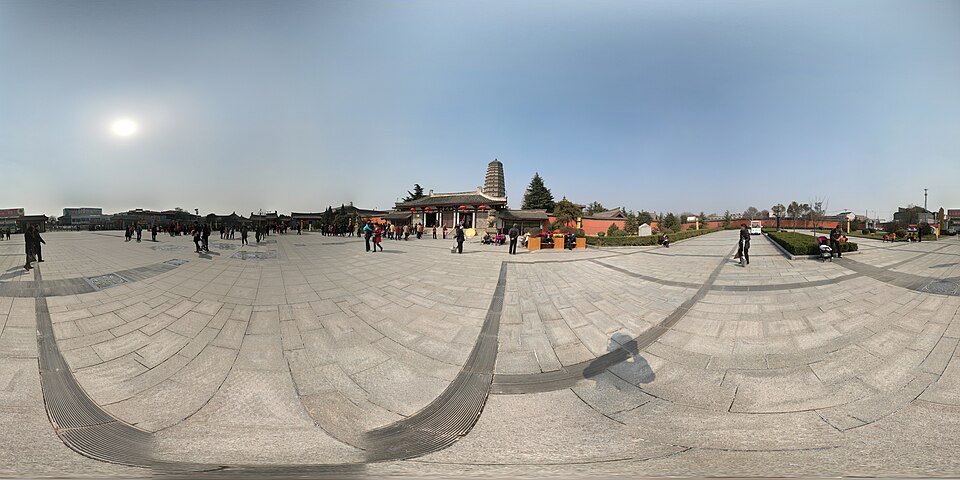
Famen Temple dates back at least to the Northern Wei and reached its height under the Tang, when emperors brought its Buddha relic to the capital seven times with lavish gifts. The Ming rebuilt its pagoda in brick in 1579 after an earthquake. In August 1981, heavy rain brought down half of that pagoda. When the ruins were cleared, archaeologists opened the sealed underground palace in April 1987 and found a finger bone of the Buddha inside a nest of eight caskets of gold, silver and jade, along with Tang silver, glass, silk and a gilded silver tea set among the earliest royal tea wares known. The pagoda was rebuilt by 1988, and the museum opened the same year.
Today the visit has two parts. The old temple, with the rebuilt pagoda and the crypt, sits next to a huge cultural park opened in 2009, which is dominated by the 148-metre Namaste Dagoba where the relic is now enshrined. Allow most of a day. The museum treasures are the highlight; the new park involves long walks.
Mount Taibai
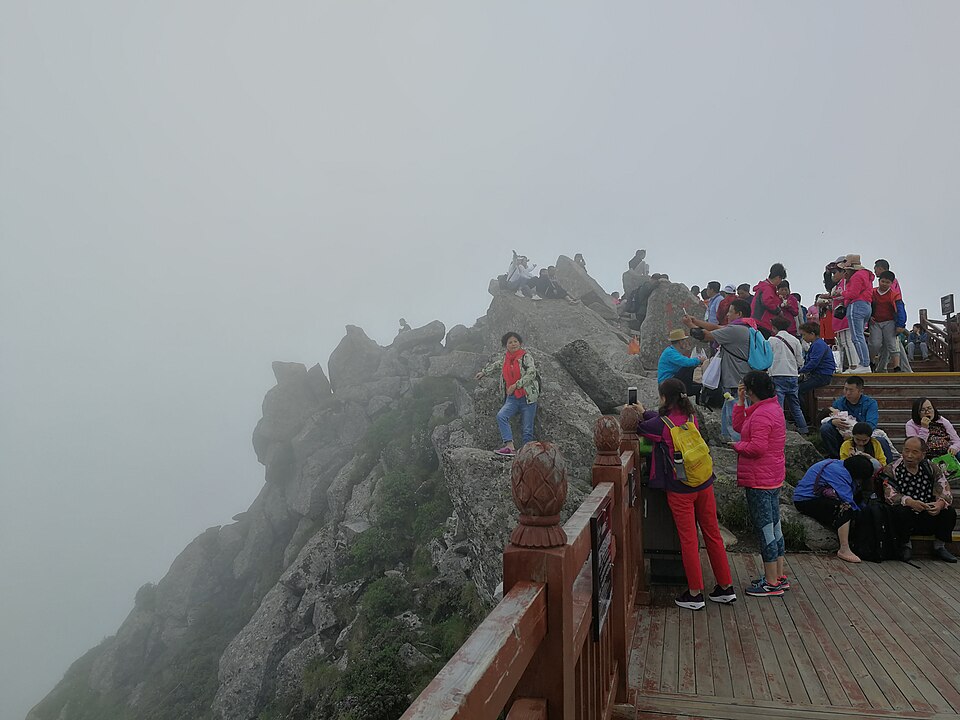
Taibai's summit, Baxiantai, is 3,767.2 metres high, the highest point in mainland China east of the Tibetan Plateau and the watershed between the Han and Wei rivers. Li Bai wrote of it as rising "three hundred li from heaven". The mountain has been a nature reserve since 1965. Climbing it takes you from warm-temperate forest through birch and fir to bare glacial cirques and ridges near the top, with more than 1,500 kinds of seed plants. Most visitors enter at Tangyu in Mei County and use the scenic area's buses and cable car to reach the upper slopes. The weather changes fast at altitude. Carry warm layers and rain gear, and watch for signs of altitude sickness near the summit.
Baoji Bronze Ware Museum
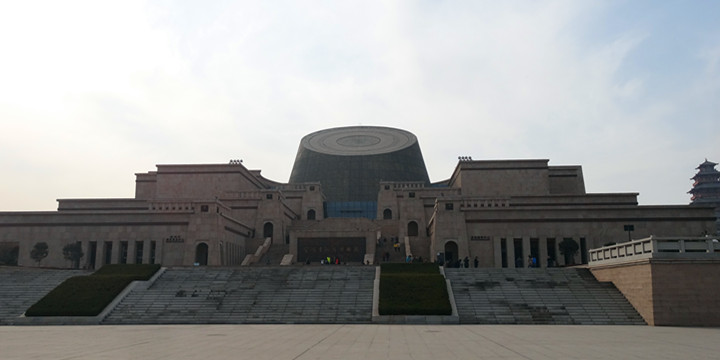
On Shigu Hill above the Wei River, the museum moved into its present building in 2010 and is a national first-class museum. Most of its collection is Shang and Zhou bronze. The star is the He zun, a Western Zhou wine vessel whose inscription contains the phrase zhongguo, "the central state", the earliest known use of the word now used for China. Other highlights include the Shi Qiang pan and the Qin Gong bells. Entry has been free since 2010, but check whether you need to reserve and which days it is closed. Allow two to three hours, and pair it with the Zhonghua Shigu park around it.
Eating in Baoji
Baoji's famous dish is Qishan saozi noodles: thin noodles in a sour, spicy broth with diced pork, egg and vegetables, served in small bowls you are expected to finish several of. Look also for Guanzhong breads, cold noodles and steamed dishes. Noodle shops near the stations and in the old centre are quick and good value.
How to arrange the route
- Day one: Famen Temple, either from Xi'an on the way west or as a day trip from Baoji.
- Day two: the Bronze Ware Museum in the morning, then an afternoon train or move to Tangyu.
- Day three: Mount Taibai, if the weather is clear, then back toward Xi'an.
Baoji also pairs with Xianyang and Xi'an to the east, and with Hanzhong over the Qinling to the south.
What to cut if short on time
Keep Famen Temple. Drop Mount Taibai first, since it needs a full clear day and good fitness. Fit the Bronze Ware Museum into a half day if you are passing through Baoji by train. Do not try to do Famen and Taibai in one day; they are in different counties.
Things to confirm before you go
- Famen Temple ticket prices and opening times for the old temple, the museum and the cultural park; this guide could not confirm 2026 rates.
- Bronze Ware Museum opening days and any reservation requirement.
- Mount Taibai weather, cable car times and which upper trails are open.
- Train station: Baoji South for high-speed services, Baoji for conventional ones.
Frequently asked questions
Can I visit Famen Temple as a day trip from Xi'an?
Yes. It is about 120 kilometres west of Xi'an, and many people go by tour bus or car and return the same day.
What is special about the He zun?
Its inscription includes the phrase zhongguo, the earliest known written use of the term that became the name for China.
How hard is Mount Taibai?
The upper mountain is high and cold. Cable cars cover part of the climb, but the summit area still requires a long walk at altitude.
Sources
The facts in this article were checked against the following Wikipedia and encyclopedia entries, retrieved September 29, 2026, and rechecked on October 14, 2026.
- Baoji https://en.wikipedia.org/wiki/Baoji
- Baoji (Chinese) https://zh.wikipedia.org/wiki/宝鸡市
- Famen Temple https://en.wikipedia.org/wiki/Famen_Temple
- Mount Taibai (Chinese) https://zh.wikipedia.org/wiki/太白山
- Baoji Bronze Ware Museum https://en.wikipedia.org/wiki/Baoji_Bronze_Ware_Museum
- Baoji Bronze Ware Museum (Chinese) https://zh.wikipedia.org/wiki/宝鸡青铜器博物院
Ticket prices change; check the official notices before you go.
All photos are from Wikimedia Commons, used under CC licenses or public domain; re-use requires attribution.
- baoji-famen.jpg from File:扶风 法门寺全景.jpg, by Liuxingy, CC BY-SA 4.0
- baoji-taibai.jpg from File:太白山风景 20.jpg, by Liuxingy, CC BY-SA 4.0
- baoji-bronze.jpg from File:Baoji Bronze Ware Museum.jpg, by Baomi, CC BY-SA 4.0