Hinggan Travel Guide: Arxan's Forests, Crater Lakes and Lava Fields
For travellers, Hinggan League in northeastern Inner Mongolia means Arxan: a small, high town (about 1,000 m) in the Greater Khingan range with a national forest park full of crater lakes, solidified lava and larch forest. The league capital, Ulanhot, is mainly where trains and flights connect. Base yourself in Arxan, give the forest park at least one full day, and come between June and early October unless you want serious winter.
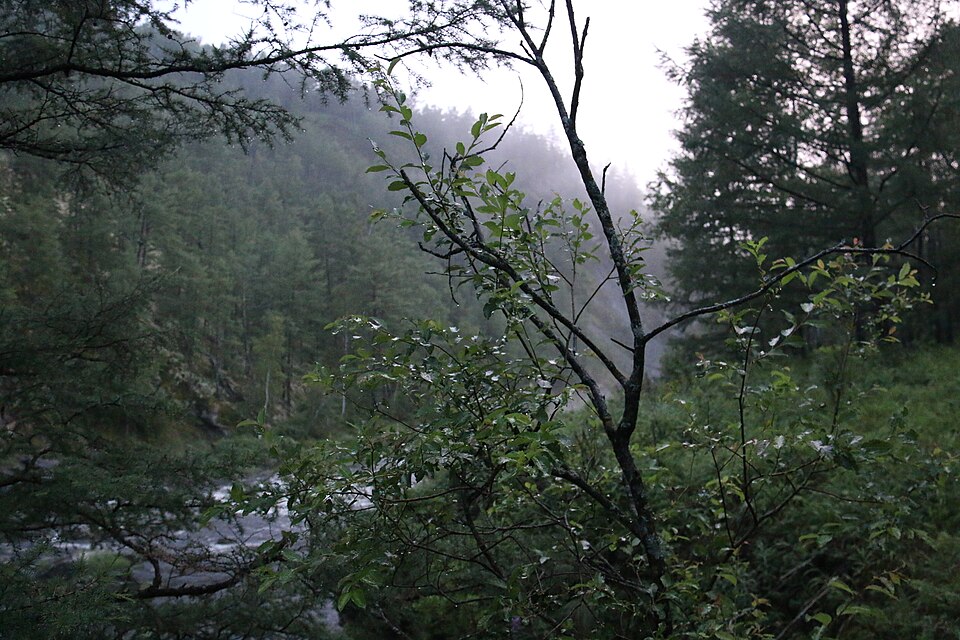
Arxan National Forest Park
The park is the reason to make the trip. Volcanic activity left a landscape that is unusual for China: crater lakes sitting on hilltops, rivers dammed by lava, and broad fields of black lava rock slowly being colonised by moss and trees, all under dense forest.
The scenic core is a long way from town and spread out, so most visitors use the park's sightseeing bus system, getting off at a series of stops. Names to look for:
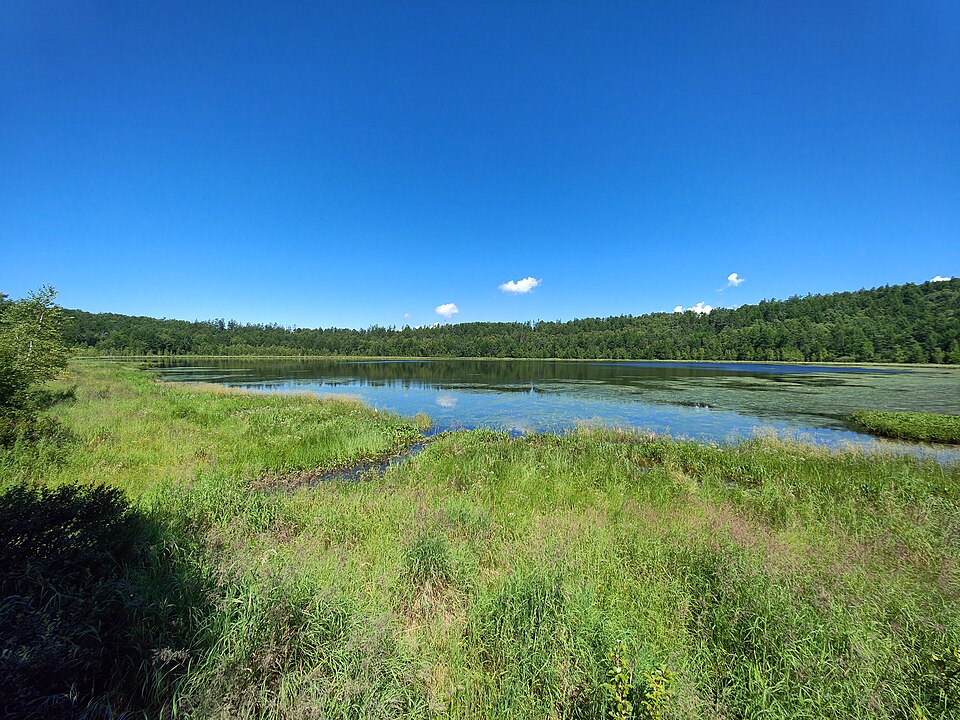
- Tianchi (Heavenly Lake): a crater lake reached by a long flight of steps. It's the park's postcard view and its busiest stop.
- Tuofengling Tianchi: another crater lake, larger and usually quieter, with a boardwalk.
- Dujuan (Azalea) Lake: a lava-dammed lake that is at its prettiest in late spring when the azaleas bloom, and in autumn.
- Shitang Forest: a lava field with trees growing out of the rock, walked on boardwalks.
Allow a full day from first bus to last, and start early: in peak season the queues build by mid-morning. Bus routes, ticket prices and opening dates for 2026 aren't confirmed here, so check the park's official notice. Some roads and stops close in winter or after storms.
Is one day enough? For the highlights, yes. A second day lets you walk more slowly or revisit in better light if the first was rained out, which happens often in summer.
Arxan town
Arxan means "hot springs" in Mongolian, and the town grew up around them. Hot spring hotels are the obvious way to recover after a long park day.
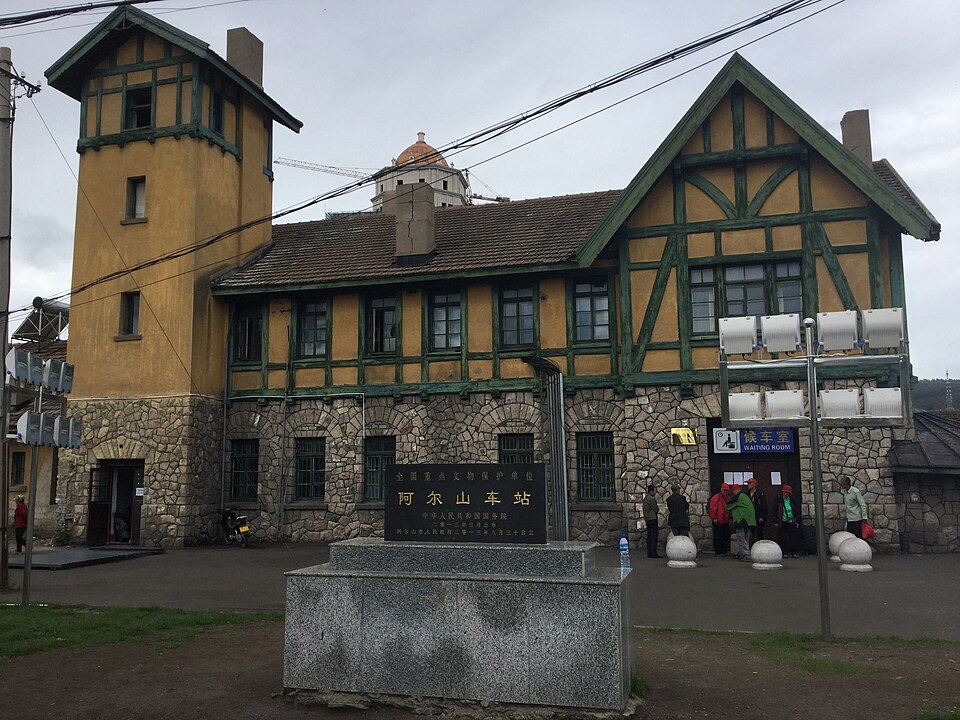
The other sight is the railway station, a steep-roofed building from the 1930s that has become one of the most photographed stations in China. It takes 20 minutes, best in the evening light, and it's a short walk from the town centre. Rose Peak (Meigui Feng), a rock outcrop near town, is a common half-day add-on if weather allows.
Ulanhot: the logistics city
Ulanhot is the league's capital and the place you may arrive, especially in winter when Arxan's connections thin out. It has the Genghis Khan Temple, a hilltop memorial temple that is worth an hour if you're passing through. Otherwise, move on to Arxan the same day if schedules allow; sleeping in Ulanhot and commuting to the park is impractical.
When to come to Hinggan
Arxan is subarctic. January averages around −25 °C and July only about 17 °C, with big day-night swings. Practical seasons:
- June to August: green forest, wildflowers, cool days, frequent afternoon rain. Bring a waterproof.
- Mid-September to early October: the famous autumn colour, often short-lived, and the busiest time. Book rooms early, especially around National Day.
- Winter: snow, frozen waterfalls and hot springs. Spectacular, very cold, and some park areas close.
Getting in and where to stay
Arxan Yi'ershi Airport has seasonal and year-round domestic flights; check current routes, which change with the season. By rail, conventional trains run to Arxan via Ulanhot and Baicheng in Jilin. Ulanhot also has an airport and more frequent connections. Self-driving is common among Chinese visitors; carry offline maps and keep the tank full, as fuel stops are sparse.
Stay in Arxan town. It has the most choice and puts you closest to the park buses. In the autumn peak, rooms sell out and prices jump.
Eating in Hinggan
Expect northeastern Chinese food and Mongolian staples: hand-pulled mutton, milk tea, stews, and wild mushrooms and forest greens in season. Restaurants in Arxan town crowd during autumn weekends, so eat early. Inside the park, food options are limited; carry snacks and water.
How to arrange the route
Day 1: Arrive in Arxan, station at dusk, hot spring in the evening.
Day 2: Full day in the forest park: Tianchi early, then Tuofengling, Dujuan Lake and Shitang Forest.
Day 3: Second park visit or Rose Peak, then depart via Ulanhot.
Neighbours: Hulunbuir to the north for open grassland, Tongliao to the south, and Hohhot far to the west for the region's capital and temples.
What to cut if short on time
Cut Ulanhot sightseeing first, then Rose Peak. Never cut the park day. With two days, you can see the park and the station.
Things to confirm before you go
- Park bus routes, ticket prices and seasonal closures on the official notice.
- Flight and train timetables, which change by season.
- Accommodation in Arxan for autumn and National Day.
- Weather: summer storms and early snow can close roads.
Frequently asked questions
How many days do I need in Arxan?
Three days including travel: arrival, a full park day and a buffer day.
Is Hinggan the same as Hulunbuir?
No. Hulunbuir is the grassland region to the north; Hinggan is mainly about Arxan's forests and volcanic lakes. They combine well on a longer trip.
Should I stay in Ulanhot or Arxan?
Arxan. Ulanhot is only practical as a transit stop.
When is autumn colour in Arxan?
Usually mid-September to early October, but it varies yearly and can be over within days. Watch local reports.
Sources
The facts in this article were checked against public encyclopedia and Inner Mongolia travel summaries, retrieved October 1, 2026, and rechecked on October 17, 2026.
- Hinggan League / Arxan summaries (cross-checked)
- Arxan National Forest Park visitor notes (hours and roads change)
- Arxan https://en.wikipedia.org/wiki/Arxan
Tickets change; this article does not invent yuan amounts.
All photos are from Wikimedia Commons, used under CC licenses; re-use requires attribution.
- hinggan-arxan.jpg from File:Aershan Scenic Area in Inner Mongolia 2015 75.jpg, by Tomskyhaha, CC BY-SA 4.0
- hinggan-tianchi.jpg from File:阿尔山天池 全景.jpg, by 維基小霸王, CC BY-SA 4.0
- hinggan-station.jpg from File:Arxan railway station.jpg, by S7w4j9, CC BY-SA 4.0