Hohhot Travel Guide: Temples, Tombs and Mongolian Food in the Inner Mongolia Capital
Hohhot is a city of monasteries rather than open steppe. The Inner Mongolia capital grew up around Dazhao Temple, founded by the Mongol ruler Altan Khan in 1579–1580, and its old southern quarter still holds a cluster of Tibetan Buddhist temples, a Qing mosque and the city's best food streets. Two days covers the temples, Five Pagoda Temple, Zhaojun Tomb and the Inner Mongolia Museum. Grassland needs a third day and a drive of a couple of hours out of town.
Day one: the old town on foot
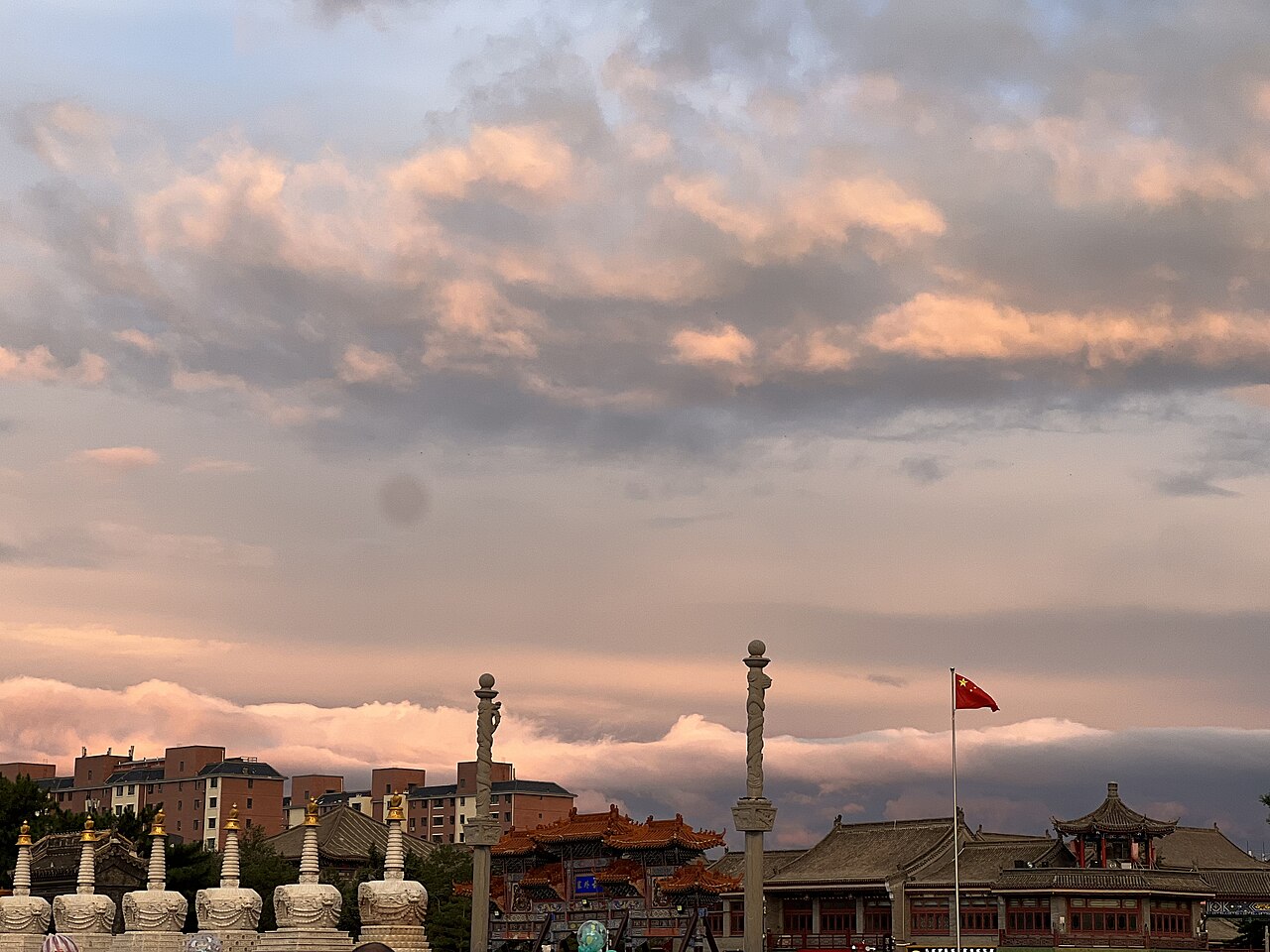
Start at Dazhao. It's the oldest building in Hohhot and older than the city itself: the town that grew around it was known as the "Blue Town" (Kökeqota), which became Hohhot. The temple belongs to the Gelug school and is still active, so expect chanting monks alongside the visitors. The things to look for are the silver Shakyamuni, cast by Nepalese craftsmen and nearly 3 m tall; the pair of iron lions from 1623, one inscribed in Mongolian and one in Chinese; and the Jade Spring well outside the gate, which gave Yuquan District its name. Follow staff instructions about photography inside the halls. The Dazhao Temple page has the full history, festival dates and practical details.
Then Xilitu Zhao, the neighbouring monastery, if you have energy for one more set of halls. The lanes between the two are lined with shops selling silverware, prayer flags and Mongolian souvenirs.
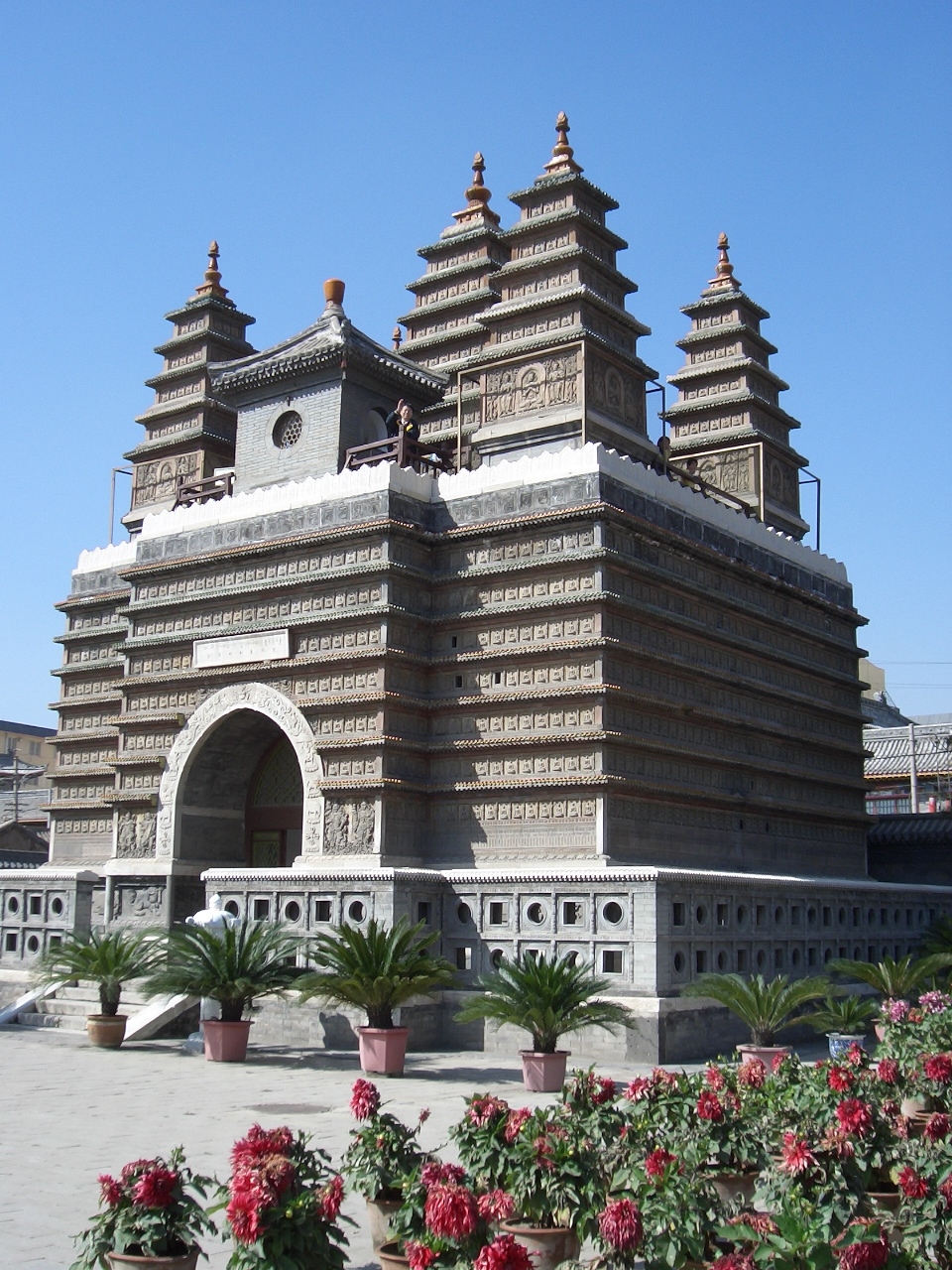
Five Pagoda Temple is a short taxi ride away. The draw is its Diamond Throne pagoda, finished in 1732 (the halls in front are a 2006 rebuild), with more than a thousand small gilded Buddhas in its niches, and at the back is a rare Mongolian star chart carved in stone. It runs as a free museum: bring ID to register, and note that it is closed on Tuesdays. An hour is plenty. See the Five Pagoda Temple page for the carvings in detail.
Evening: walk up Tongdao Road, the old-town street with Islamic and Mongolian facades, to the Great Mosque, built in the Qing dynasty outside the old north gate of Guihua. The Hui quarter around it is where to eat.
Day two: Zhaojun Tomb and the museum
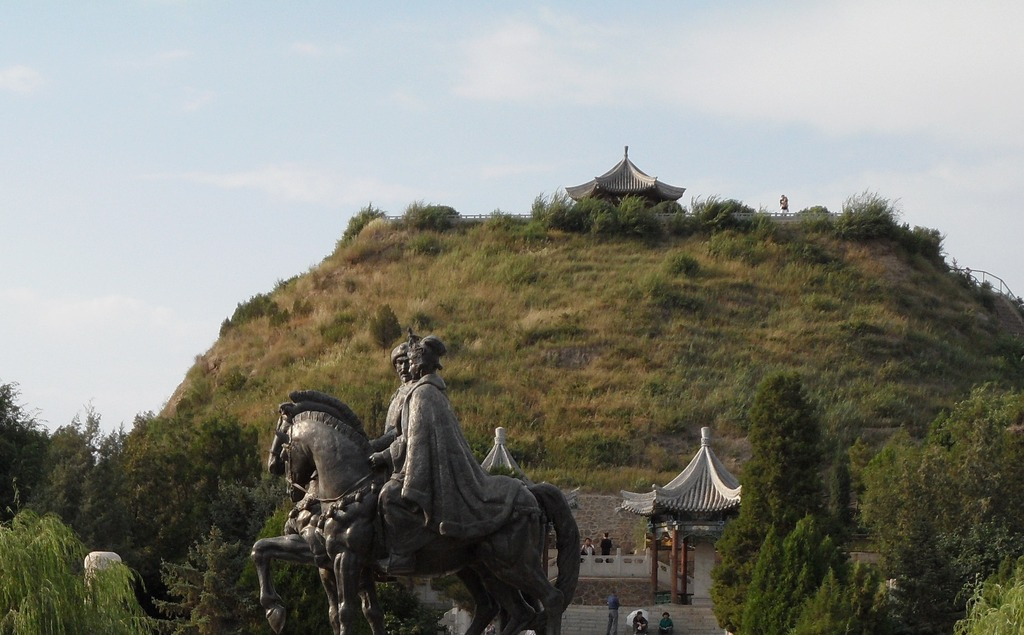
Zhaojun Tomb stands by the Dahei River about 9 km south of the centre. It honours Wang Zhaojun, the Han dynasty woman who married a Xiongnu chanyu, a story every Chinese schoolchild knows as a symbol of peace on the frontier. The 33 m mound is honorary: her real burial place is unknown. Its nickname, the Green Mound, comes from the legend that its grass stays green when everything else has withered. The landscaped park and museum take two to three hours. Taxis make it easy; check the closing time and current ticket price on the official notice before you go.
Inner Mongolia Museum in the newer part of the city is one of the better regional museums in China: dinosaur fossils, artefacts from the steppe empires, and the culture of nomadic life. It's the obvious afternoon after the tomb, and the best choice on a windy or rainy day.
Should you do a grassland day?
Tour operators sell day trips to Xilamuren, in Ulanqab's Siziwang Banner, about two hours' drive north. Expect a tourist camp with yurts, horse riding and performances, which is fun if you go in with the right expectations. If you only have two days, skip it and keep the temples. If you want wilder, larger grassland, plan a separate trip to Ulanqab for Huitengxile and Gegentala, to Xilingol for open steppe and the Shangdu ruins, or north-east to Hulunbuir. Desert trips belong to Alxa.
When to come to Hohhot
The climate is semi-arid and continental. May to June and September to early October are the most comfortable. July and August are the busy summer season, with afternoon storms and peak grassland crowds. Winters are cold and dry but fine for indoor sights. Spring brings strong winds and sometimes dust; sunglasses and a mask help.
Getting there and where to stay
High-speed trains from Beijing arrive at Hohhot East in a little over two hours on the fastest services. Hohhot station in the centre handles conventional trains on the Beijing–Baotou line, including overnight services. Baita International Airport is about 14 km east of the centre and links to most big Chinese cities and to Ulaanbaatar. Metro Lines 1 and 2 cover the main east–west and north–south axes; taxis are cheap for everything else.
Stay near Dazhao and the old town for walking access to temples and food. Stay by Hohhot East only if you have an early train.
Eating in Hohhot
Breakfast in Hohhot means Mongolian milk tea with a plate of shaomai, the open-topped lamb dumplings the city is proud of. Shaomai shops sell them by the liang (weight of dough), so check the board for how much one portion is. Hand-pulled noodles and lamb dishes fill the Hui quarter. Whole roast lamb banquets are mostly for groups. Hohhot is home to dairy giants Yili and Mengniu, and milk snacks make good train food.
How to arrange the route
- One day: Dazhao, Xilitu Zhao and Five Pagoda; dinner in the Hui quarter.
- Two days: add Zhaojun Tomb and the Inner Mongolia Museum.
- Three days: add a grassland day trip, or continue by train to Datong or Baotou. Yinchuan makes a good next capital going west.
What to cut if short on time
Cut the grassland day first, then the museum on a fine day. If Dazhao takes longer than expected, drop Five Pagoda. Don't skip Dazhao.
Things to confirm before you go
- Dazhao and Zhaojun Tomb tickets and opening hours; no 2026 prices are quoted here.
- Five Pagoda Temple's Tuesday closure and ID registration.
- Whether your train uses Hohhot or Hohhot East.
- Pickup points and inclusions for any grassland tour.
Frequently asked questions
How many days do I need in Hohhot?
Two days for the city sights. Add a third for a grassland trip.
Can I see grassland from Hohhot?
Only on a day trip. The nearest tourist grasslands are around two hours away by road.
Dazhao or Five Pagoda if I only have time for one?
Dazhao. It is the city's founding temple and still active. Five Pagoda is a quick, rewarding addition.
Is Wang Zhaojun really buried at the tomb?
No. The mound is a memorial; where she was actually buried is unknown.
Sources
The facts in this article were checked against the following Wikipedia and encyclopedia entries, retrieved September 16, 2026, and rechecked on October 17, 2026.
- Hohhot https://en.wikipedia.org/wiki/Hohhot
- Hohhot (Chinese) https://zh.wikipedia.org/wiki/呼和浩特市
- Dazhao Temple https://en.wikipedia.org/wiki/Dazhao_Temple
- Zhaojun Tomb https://en.wikipedia.org/wiki/Zhaojun_Tomb
- Five Pagoda Temple (Hohhot) https://en.wikipedia.org/wiki/Five_Pagoda_Temple_(Hohhot)
Tickets change; this article does not invent yuan amounts.
All photos are from Wikimedia Commons, used under CC licenses; re-use requires attribution.
- hohhot-dazhao.jpg from File:Dazhao Temple 20230730.jpg, by Huangdan2060, CC BY 4.0
- hohhot-zhaojun.jpg from File:Statue at the Wang Zhaojun Tomb.jpg, by Derik van Zuetphen, CC BY-SA 2.0
- hohhot-wuta.jpg from File:Five Pagoda Temple, Huhhot, Inner Mongolia.JPG, by pfctdayelise, CC BY-SA 2.5