Huaihua Travel Guide: Hongjiang Old Town and Western Hunan's Rail Gateway
Huaihua is Hunan's largest prefecture and the junction where high-speed lines from Changsha, Guiyang, Chongqing and Zhangjiajie meet. The city itself is a transit hub. What makes it worth a stop is the Hongjiang ancient commercial city, a Qing-era river trading town of merchant houses, guild halls and stone lanes, about an hour or more by road to the southeast. Give Hongjiang a full day, and add Qianyang or Zhijiang if you have another.
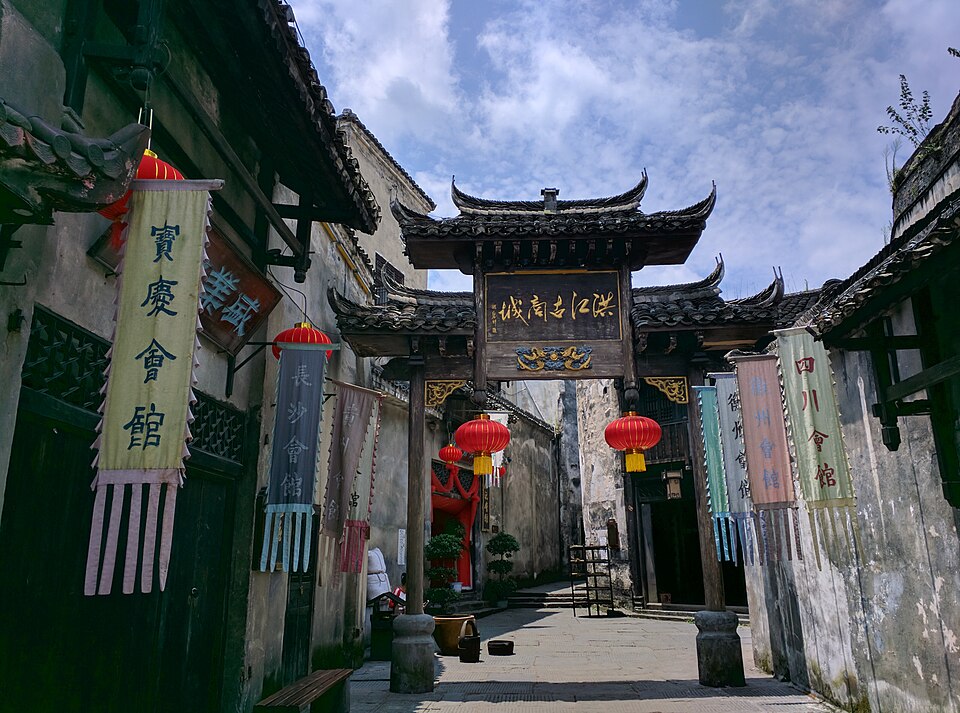
Two Hongjiangs: don't get the wrong one
This trips up a lot of visitors. Hongjiang ancient commercial city (Hongjiang Gushangcheng) is in Hongjiang District, at the meeting of the Yuan and Wu rivers. Hongjiang City is a separate county-level city whose seat is Qiancheng town, home of the Qianyang ancient town. Both are worth seeing, but they're different places. When booking buses, drivers or hotels, say "Gushangcheng" for the trading town.
Hongjiang ancient commercial city
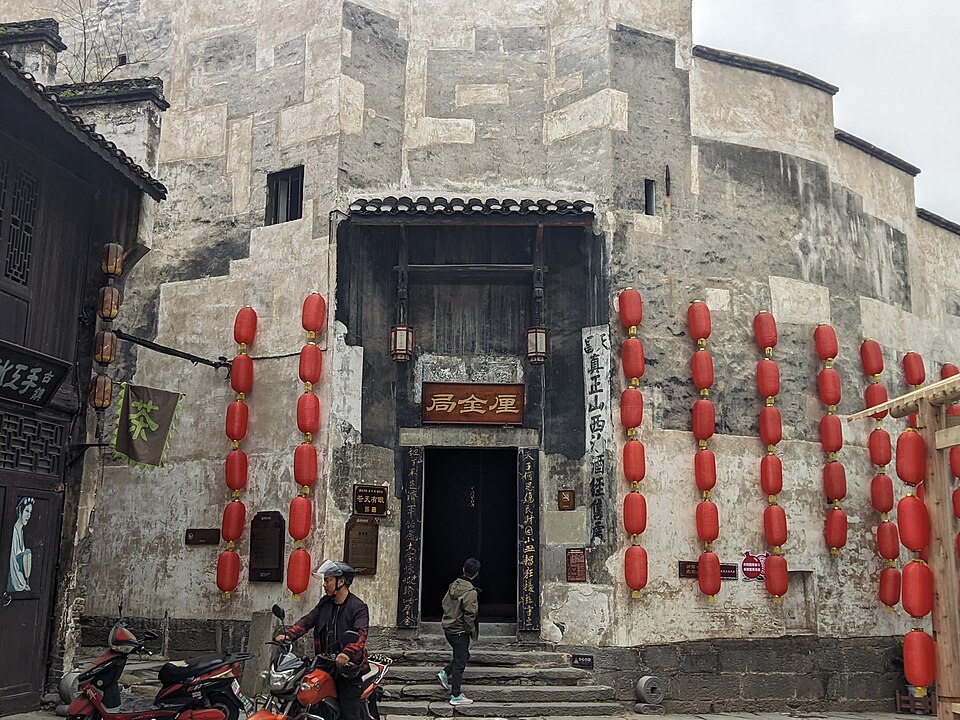
In the Ming and Qing dynasties, Hongjiang was a boom town. Timber, tung oil, salt and other goods moved through its river docks, and merchants from across China built guild halls, banks, shops and fortified family compounds up the hillside. Much of that fabric survives as a dense warren of high walls, stone stairs and courtyards, less polished than better-known old towns, which is part of its appeal.
How to visit:
- Start at the riverside and work uphill; the main lanes lead past guild halls and old shopfronts, and the side alleys are where it gets atmospheric.
- Pick up a map at the entrance. The lanes are steep and confusing, which is part of the fun, but it's easy to miss the main halls.
- Allow most of a day. Rain makes the stone steps slippery; wear shoes with grip.
Ticket prices and opening arrangements for 2026 aren't confirmed here, so check the scenic area's official notice before you go.
Qianyang ancient town
Qianyang, in Qiancheng town, is a smaller walled river town with old streets and the Furong Pavilion, associated with the Tang poet Wang Changling, who served here in exile. It's quieter than Hongjiang and makes a good half day, either on the way to or from the commercial city or on its own.
Zhijiang: where the war ended
In August 1945, Japanese envoys came to Zhijiang to arrange the surrender of their forces in China, and the town has a memorial museum at the site. It's also linked to the American volunteer pilots of the Flying Tigers, who used the airfield. It's a specialist stop, strongest for those interested in the Second World War. Zhijiang is west of the city, near Huaihua's airport.
Dong country
The south of the prefecture, especially Tongdao Dong Autonomous County, has Dong villages with wooden drum towers and covered "wind and rain" bridges. They need at least one overnight and a car, and they suit travellers continuing south toward Guangxi or Guizhou.
When to come to Huaihua
Western Hunan has a humid subtropical climate: hot, wet summers with the plum rains in early summer, and short, cold, damp winters. March to May and September to November are best for walking the old towns. Weekdays are noticeably quieter in Hongjiang than weekends and holidays.
Getting in and where to stay
Huaihua is one of the best-connected rail junctions in southern China. High-speed trains on the Shanghai–Kunming line and the Zhangjiajie–Huaihua line serve Huaihua South, and conventional lines (Shanghai–Kunming, Jiaozuo–Liuzhou, Chongqing–Huaihua) converge on Huaihua station. Huaihua Zhijiang Airport is about 31 km from the city.
From Huaihua, buses and hired cars run to Hongjiang and Qianyang; the road trip is well over an hour, so confirm return times. Sleep in Huaihua city near the station for an early start, or stay in Hongjiang itself to see the lanes in the evening and at dawn.
Eating in Huaihua
This is chilli country, with smoked and cured pork, sour pickles, river fish and duck dishes. In the Dong areas, look for oil tea (youcha), a savoury tea soup with puffed rice and peanuts. Food stalls in Hongjiang thin out after dark, so eat before the lanes empty. Ask prices for river fish before ordering.
How to arrange the route
Day 1: Arrive in Huaihua, evening walk by the Yuan River.
Day 2: Full day at Hongjiang ancient commercial city, with Qianyang on the way back if you leave early.
Day 3: Zhijiang for war history, or on by train toward Zhangjiajie, Changde, Yiyang or Guizhou (Guiyang is close by high-speed rail).
What to cut if short on time
Drop Zhijiang first unless the war history is your interest, then Qianyang. Keep Hongjiang. With only one day, go straight from the station to the commercial city and back.
Things to confirm before you go
- Scenic area tickets and opening times at Hongjiang; none are quoted here.
- Bus or car times to Hongjiang and the last return.
- That your driver understands which Hongjiang you want.
- Museum opening days in Zhijiang.
Frequently asked questions
How many days do I need in Huaihua?
Two days covers Hongjiang plus travel. Three lets you add Qianyang or Zhijiang.
Is Huaihua like Zhangjiajie?
No. There are no sandstone pillars here. Huaihua's interest is in old trading towns, war history and minority villages. Zhangjiajie is a quick high-speed train away if you want both.
Can I visit Hongjiang as a day trip?
Yes, from Huaihua city. Start early, because the road trip takes time each way.
Sources
The facts in this article were checked against the following Wikipedia and encyclopedia entries, retrieved September 23, 2026, and rechecked on October 17, 2026.
- Huaihua https://en.wikipedia.org/wiki/Huaihua
- Hongjiang ancient commercial city summaries (cross-checked)
- Qianyang / Zhijiang framing (cross-checked)
Tickets change; this article does not invent yuan amounts.
All photos are from Wikimedia Commons, used under CC licenses or public domain; re-use requires attribution.
- huaihua-hongjiang.jpg from File:洪江古商城.jpg, by Ninedyz, CC BY-SA 4.0
- huaihua-street.jpg from File:Hongjiang Ancient Architectural Complex0267.jpg, by FreeePedia, CC BY-SA 4.0
- huaihua-lane.jpg from File:Hongjiang Ancient Architectural Complex1921.jpg, by FreeePedia, CC BY-SA 4.0