Changsha Travel Guide: Mount Yuelu, Orange Isle and the Hunan Museum
The Qin dynasty set up Changsha Commandery here, and during the Western Han it was the Kingdom of Changsha. The relics unearthed from the Han tombs at Mawangdui make Changsha's place in archaeological history irreplaceable. Changsha is the capital of Hunan, one of the first batch of National Historical and Cultural Cities, nicknamed Star City, with the Xiang River running through it. Mount Yuelu is one of the seventy-two peaks of Mount Heng (the Southern Sacred Peak); Yuelu Academy has a history of over a thousand years; Orange Isle (Juzizhou) stands the young-Mao-Zedong sculpture; and the Hunan Museum keeps the two-thousand-year-old, un-decayed body of a Han-dynasty noblewoman.
When to come to Changsha
Changsha's annual average temperature is 17.7°C. It is one of the "four great furnaces" of the Jiangnan region: hot in summer, and in winter, because it sits in a basin, slightly colder than places at the same latitude. Spring and autumn are the most comfortable. April to May for the fresh green on Mount Yuelu, October to November for the red maples at Aiwan Pavilion. Changsha food is famous for being spicy; if you come in summer to eat chili, remember to pair it with herbal tea. Mount Yuelu and Orange Isle draw big crowds on holidays; go off-peak if you can.
Sights in the city worth a visit
Mount Yuelu
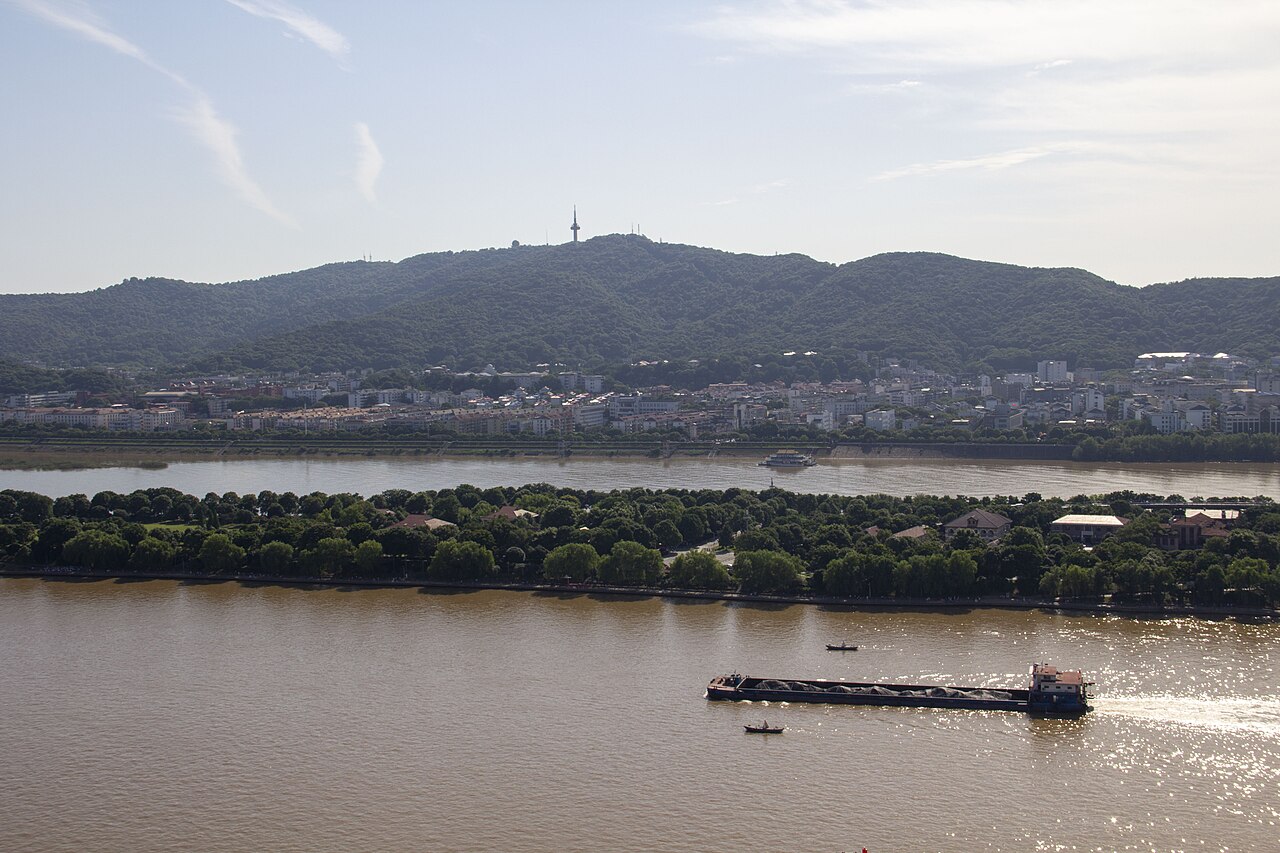
Mount Yuelu stands on the west bank of the Xiang River, 300.8 meters above sea level, one of the seventy-two peaks of Mount Heng (the Southern Sacred Peak). The "Record of the Southern Sacred Peak" from the Northern and Southern dynasties says that the Southern Sacred Peak stretches eight hundred li around, with Huiyan as its head and Yuelu as its foot. Mount Yuelu is the stretch of Mount Heng that reaches into Changsha. In 2002, the State Council designated Mount Yuelu a National Key Scenic Area. The sights on the mountain are dense: the Lushan Temple from the Jin dynasty, the Sarira Pagoda from the Sui, the Lushan Temple Stele from the Tang, Yuelu Academy from the Song, and Aiwan Pavilion from the Qing, walking through is like flipping through a history of Chinese architecture.
Aiwan Pavilion is the mountain's most famous pavilion, set in Qingfeng Gorge, at its best when the maples turn red in autumn. There are two routes up: entering by the south gate lets you pass Yuelu Academy along the way, while the east gate goes straight to the summit for views of the Xiang River and the city. Old trees are plentiful on the mountain; spring and autumn are the most comfortable; the whole walk takes about half a day.
Yuelu Academy
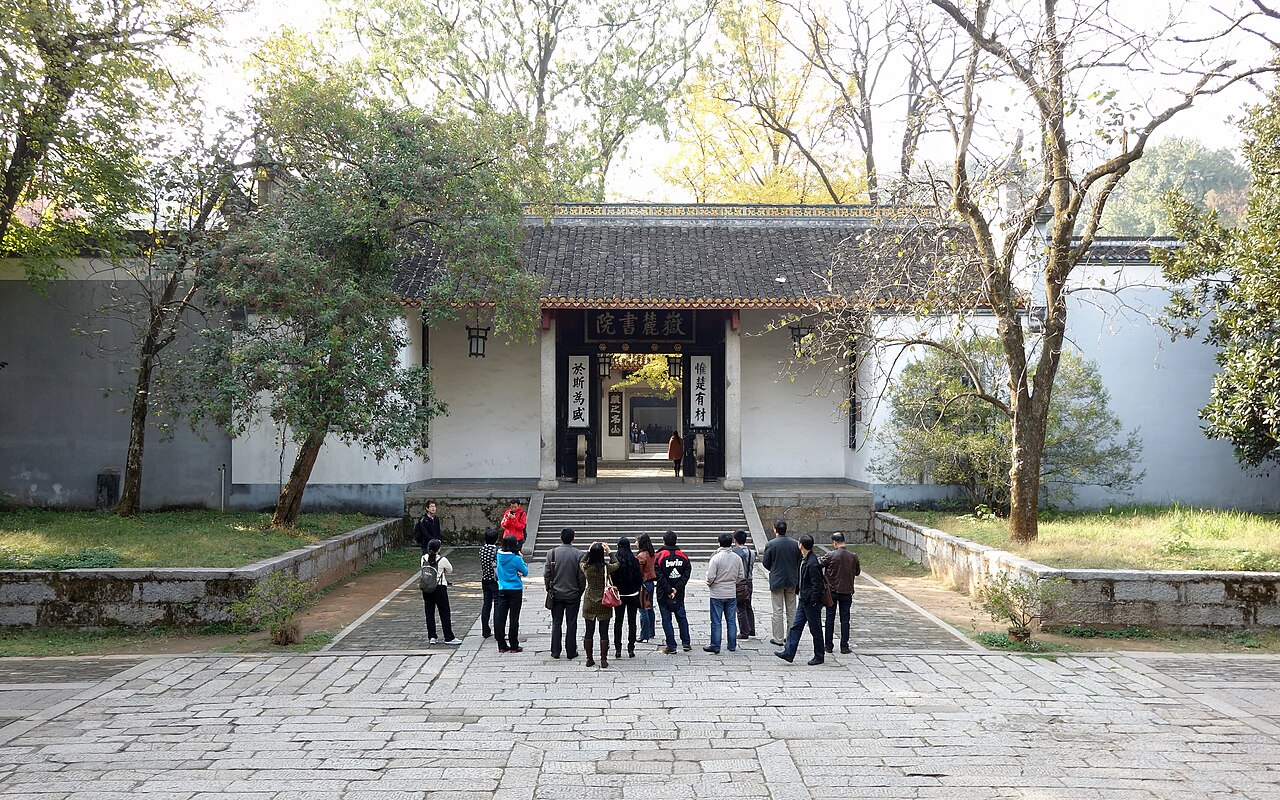
Yuelu Academy stands on the eastern foot of Mount Yuelu and is one of the Four Great Academies of ancient China, founded in the ninth year of the Kaibao era of the Northern Song (976). It survived through the Song, Yuan, Ming, and Qing; in 1903 it became Hunan Institute of Higher Learning, and today it still operates as part of Hunan University, over a thousand years of continuous teaching, a millennium academy in the truest sense. The couplet on the main gate, "Only Chu has talent, and here it flourishes most," was composed jointly by the Qing-era headmaster Yuan Mingyao and the tribute student Zhang Zhongjie, capturing the academy's history of producing one outstanding figure after another.
The academy preserves a Qing-dynasty building complex, lecture halls, a Confucian temple, and a library collection are all intact. Zhu Xi and Zhang Shi once held their famous joint lectures here, a major event in Song intellectual history. The stele gallery also holds inscriptions by many eminent figures across the dynasties. A visit takes about two hours; entering the mountain by the south gate passes right by it.
Orange Isle (Juzizhou)
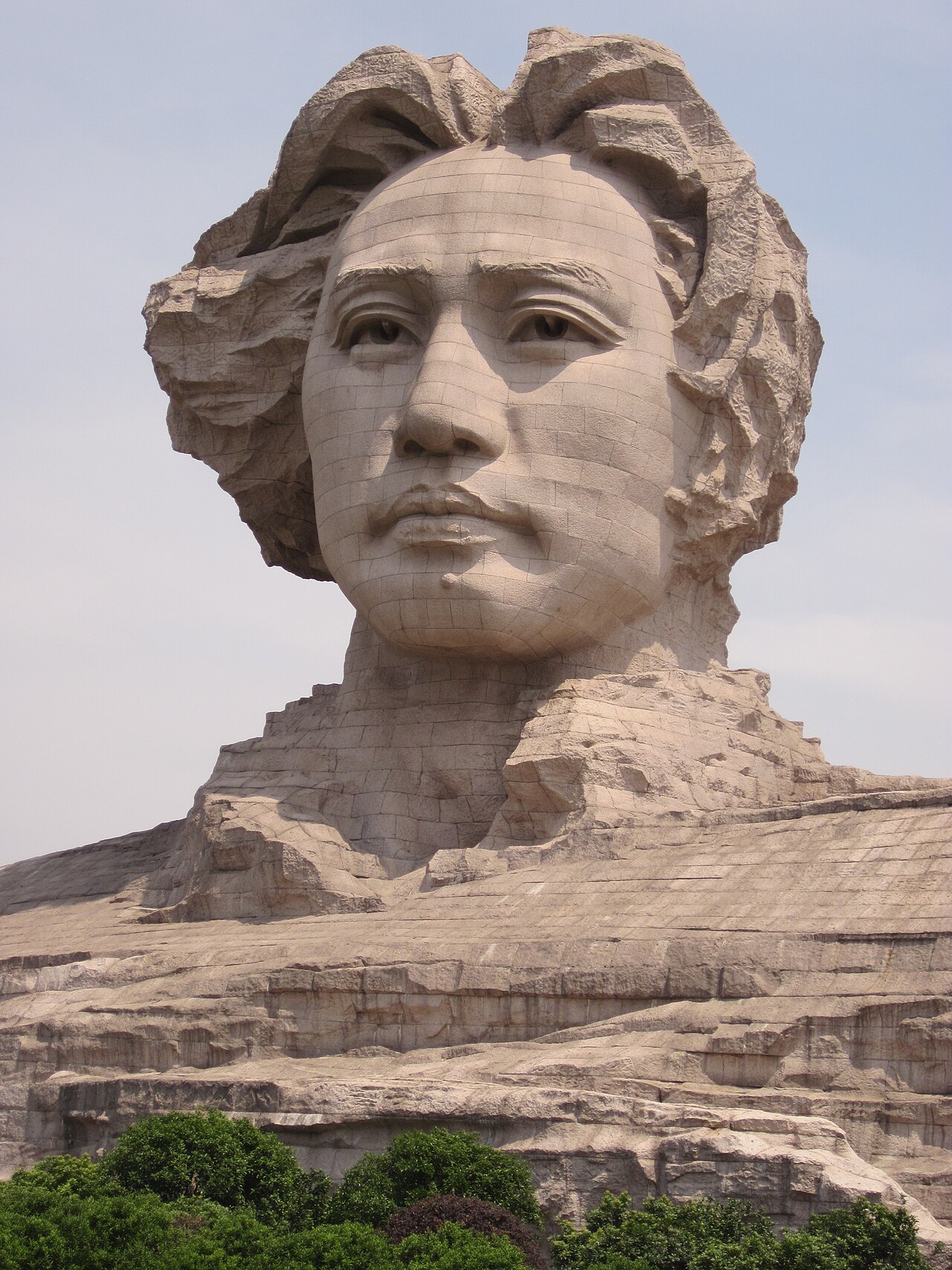
Orange Isle is a long, narrow sandbar in the middle of the Xiang River, about 5 kilometers long north-to-south and at most 320 meters wide east-to-west, also called Shuilu Isle. Mao Zedong came to Orange Isle many times from his youth until after the founding of the People's Republic (to take in the view and to swim) and his poem "Qin Yuan Chun · Changsha" was written about this very place. In 1982 Juzhou Park was completed, and on the isle you'll find the inscription "Juzizhou Tou" and a stele bearing the poem "Qin Yuan Chun · Changsha." In December 2009, the young-Mao-Zedong art sculpture was unveiled at the head of the isle. 32 meters tall and 83 meters long, assembled from more than 8,000 granite blocks, the landmark of Orange Isle.
The most practical way to see Orange Isle is to ride the sightseeing mini-train from the head of the isle to the tail and back. Orange groves cover the isle in patches, and in autumn the ripe fruit can be picked. Standing at the head at dusk looking over the Xiang, Mount Yuelu rises to the west and the city to the east, the moment the lights come on along both banks is the finest view.
Hunan Museum
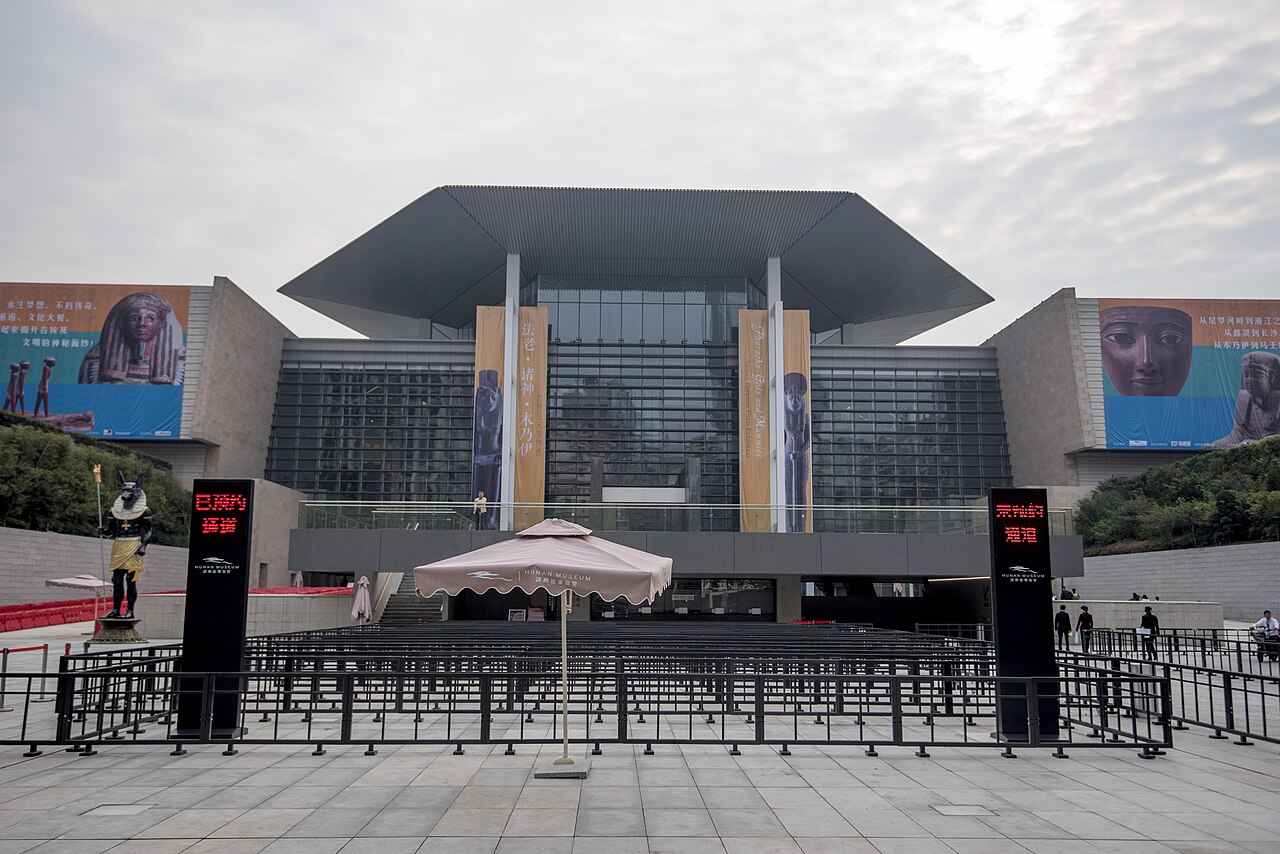
The Hunan Museum is in Kaifu District, Changsha. It was formally founded in 1956 and in 2008 became part of the first batch of national first-grade museums. Its heaviest holdings are the relics excavated from the Han tombs at Mawangdui. From 1972 to 1974, three Western Han tombs at Mawangdui in Changsha were excavated; the tomb occupant Xin Zhui's body had not decayed in two thousand years, the longest-preserved undecayed wet corpse known in the world. The "plain yarn gauze garment" unearthed in the same tomb is as thin as cicada wings, and the T-shaped silk painting depicts the life of Western Han aristocrats, both national-treasure-grade relics.
The museum's permanent exhibitions are free; you enter with your ID card and need to reserve in advance. The focus of the visit is the Mawangdui Han Tomb exhibition hall, where Xin Zhui's body, the gauze garment, the silk painting, and the silk manuscripts all are. Crowds are heavy; aim to arrive when the doors open in the morning and allow a full three hours.
Tianxin Pavilion
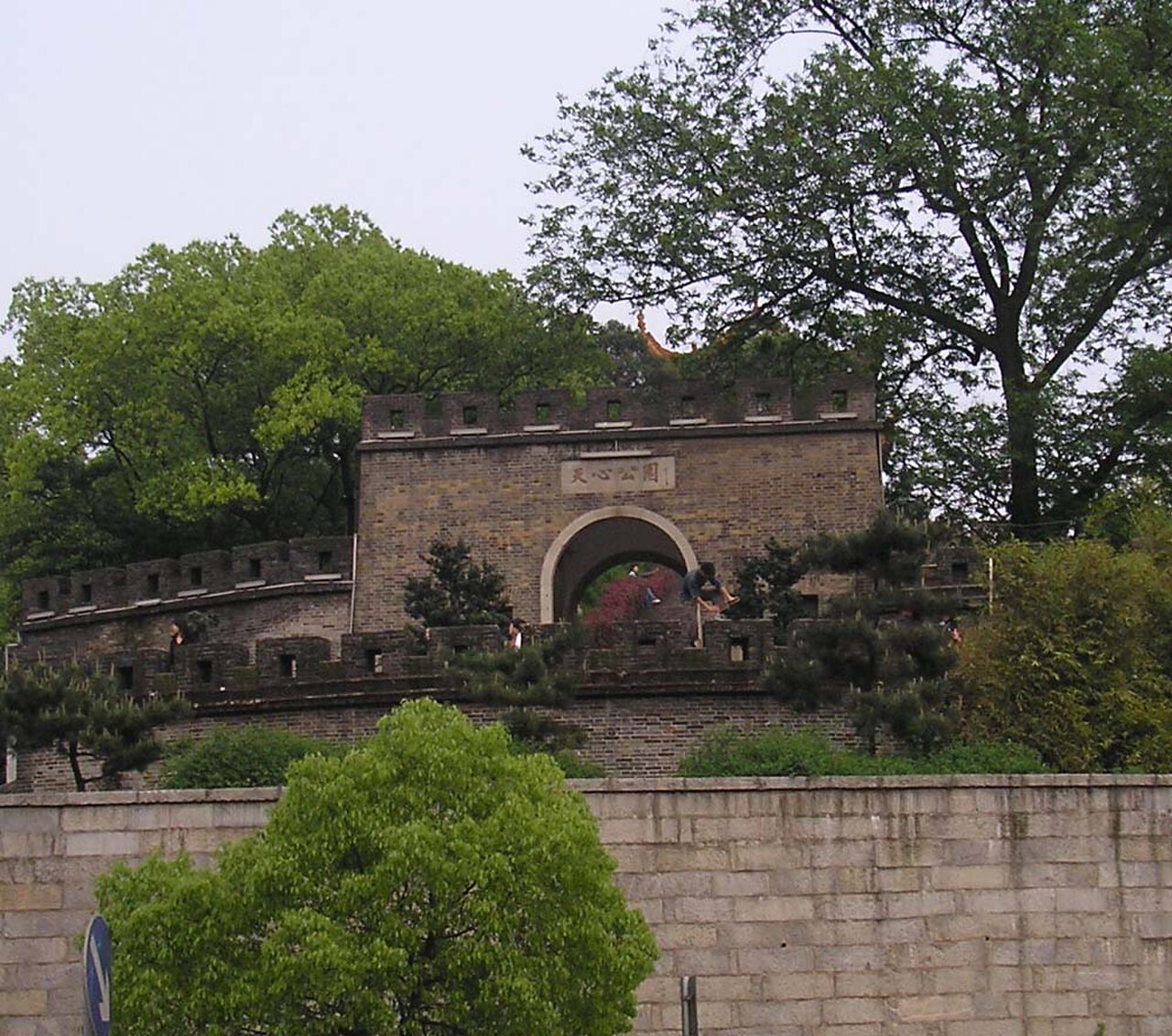
Tianxin Pavilion is in the south of Tianxin District, originally called Tianxing Pavilion, and is an important ancient building of Changsha. The pavilion is joined to a stretch of old city wall, the only section preserved after Changsha dismantled its walls following the 1911 Revolution. Tianxin Pavilion was built on the highest ground in the old city, where in ancient times people observed the stars. By the theory of astral correspondences, Tianxin Pavilion corresponded to the Changsha star in the sky, which is how it got its name.
Tianxin Pavilion Park connects to the pavilion; you can walk up onto the wall and make out the outline of old Changsha. The pavilion is a Ming-Qing-style building, rebuilt after the great Changsha fire during the War of Resistance. It's not far from Pozi Street, so you can head there for a meal after. Ticket prices and opening hours are subject to official announcements.
Pozi Street
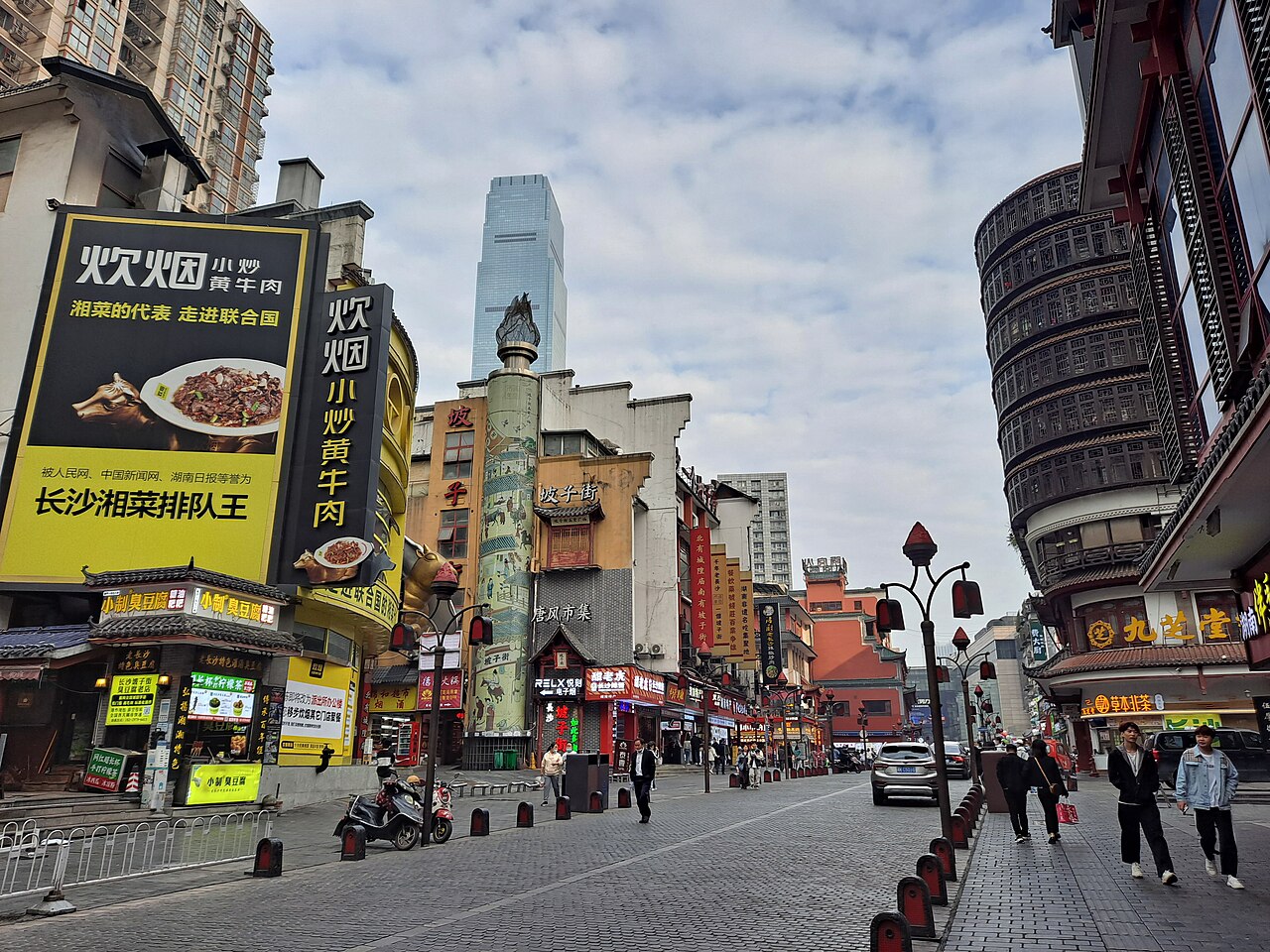
Pozi Street is in Tianxin District, running east from Huangxing South Road to the Xiang River Avenue in the west, about 1,000 meters long. Changsha's folk-custom and famous-food commercial street. As early as the Warring States period this was the city's core. The 1938 Wenci Great Fire burned the entire street to the ground; it was rebuilt after the war, and at the end of the 20th century it was renovated wholesale in Ming-Qing style, old name-brand shops brought in, and it became the snack street of today. The stinky tofu, sugar-oil baba, and kouwei crayfish that Changsha people love can all be found on this street.
Pozi Street connects to the Huangxing Road pedestrian street, shopping by day, snacks by night, the heart of Changsha's nightlife. Crowds are thick, lines at snack stalls are the norm, so pick the time-honored shops. Pozi Street is about a ten-minute walk from Tianxin Pavilion, so the two can share a day.
Eating in Changsha
Changsha eating is built on Hunan cuisine, with chili as the keynote. Stinky tofu is Changsha's calling card, black stinky tofu fermented in brine, fried crisp outside and tender inside, then drenched in chili oil and garlic juice. Sugar-oil baba is a small glutinous-rice sweet, and kouwei crayfish is the king of summer late-night food. For a proper meal, try the Hunan classics like chopped-chili fish head and stir-fried pork with chili. Changsha restaurants are uniformly spicy, if you can't take the heat, ask for "mildly spicy," and keep a bowl of iced mung-bean soup handy to cool the burn. Pozi Street and Wenheyou are popular eating spots; lines are long at meal times, so grab a number early.
How to arrange the route
For a city tour, three days is comfortable.
Day one, Mount Yuelu: enter by the south gate in the morning, see Yuelu Academy, have lunch on or near the mountain, climb to the summit in the afternoon for the Xiang River view, and come down at dusk.
Day two: Orange Isle in the morning (ride the sightseeing car around it) then the Hunan Museum in the afternoon, and snacks on Pozi Street in the evening.
Day three: Tianxin Pavilion in the morning, the Huangxing Road pedestrian street in the afternoon, and find food around Taiping Street in the evening. With time to spare, move the Hunan Museum to the morning to dodge the peak crowds.
Zhangjiajie is the usual next stop in Hunan, a high-speed rail ride into the Wuling Mountains. Wuhan is the other direction, across the provincial line.
What to cut if short on time
Keep Mount Yuelu with Yuelu Academy on one day, and the Hunan Museum on another. Cut Tianxin Pavilion if the wall walk is not a priority. Cut a second snack street if Pozi Street already filled the evening. Orange Isle pairs well with the museum day if you use the sightseeing car.
Things to confirm before you go
- The Hunan Museum requires advance reservation; book through official channels before setting out. Quotas are tight on holidays.
- Mount Yuelu and Orange Isle are crowded on holidays; lines for the metro and scenic-area shuttle buses are long, so leave a buffer.
- Changsha is hot in summer and damp-cold in winter; spring and autumn are most comfortable. Avoid summer vacation and the National Day holiday.
- Pozi Street and the Huangxing Road pedestrian street are hot spots for pickpockets and price-gouging; watch your belongings and favor shops with clearly marked prices.
Dongting-fringe tea days sit in Yiyang toward Anhua. Central Hunan terrace days continue in Loudi; western Yuan corridor lanes sit in Huaihua.
Frequently asked questions
How many days for Changsha?
The main city sights can be done in three days; with the surrounding area, four is more relaxed.
How do I reserve the Hunan Museum?
Reserve through the official WeChat public account or mini-program. Admission is free; enter with your ID card.
How to fit Mount Yuelu and Yuelu Academy?
Yuelu Academy is right on the eastern foot of Mount Yuelu; entering the mountain by the south gate passes it, so do both the same day.
How to get to Orange Isle?
Take Metro Line 2 to Juzizhou station, then walk or take the scenic-area sightseeing car. The isle is long and narrow; walking the whole thing takes a while, so the sightseeing car saves effort.
Sources
The facts in this article were checked against the following Chinese Wikipedia entries, retrieved August 11, 2026, and rechecked on October 15, 2026.
- Changsha (city) https://zh.wikipedia.org/wiki/长沙市
- Mount Yuelu https://zh.wikipedia.org/wiki/岳麓山
- Yuelu Academy https://zh.wikipedia.org/wiki/岳麓书院
- Orange Isle https://zh.wikipedia.org/wiki/橘子洲
- Hunan Museum https://zh.wikipedia.org/wiki/湖南省博物馆
- Tianxin Pavilion https://zh.wikipedia.org/wiki/天心阁
- Pozi Street https://zh.wikipedia.org/wiki/坡子街
All photos are from Wikimedia Commons, used under CC licenses; re-use requires attribution.
- changsha-yuelushan.jpg from File 岳麓山 橘子洲.jpg, by 維基小霸王, taken in 2021, CC BY-SA 4.0
- changsha-yuelushuyuan.jpg from File Entrance of Yuelu Academy 20131120.jpg, by 颐园新居, taken November 20, 2013, CC BY-SA 3.0
- changsha-juzizhou.jpg from File Mao Zedong youth art sculpture 4.jpg, by Li Ming, taken July 5, 2011, CC BY 3.0
- changsha-museum.jpg from File Entrance of Hunan Museum, 2018-09-28.jpg, by Siyuwj, taken September 28, 2018, CC BY-SA 4.0
- changsha-tianxinge.jpg from File Changsha-Tianxinge.jpg, by Cncs wikipedia, taken April 15, 2006, GFDL
- changsha-pozijie.jpg from File 长沙坡子街.jpg, by EditQ, taken October 30, 2022, CC BY-SA 4.0