Guiyang Travel Guide: Five Stops in the Forest City
Guiyang is the capital of Guizhou, abbreviated Zhu and nicknamed the Forest City: a provincial capital held in the folds of karst hills, with forest climbing the slopes and about 6.6 million people living among them. The climate is subtropical monsoon (annual average about 15°C with roughly 1,094 millimeters of rain), and summer heat is nearly unknown here, which is why travellers come to escape it. Five places anchor a short stay: Qianlingshan Park, Jiaxiu Tower, Qingyan Ancient Town, the Guizhou Provincial Museum, and Tianhetan.
Give priority to one signature half-day and one buffer for transport. Cut malls and duplicate viewpoints if the calendar is tight. A cut list beats a checklist when time runs short. Metro, buses, and ride-hailing cover most of the city; reserve half-days for Qingyan and Tianhetan south of the centre. Pair onward trips with Anshun for Huangguoshu, Bijie, Liupanshui, or Tongren when you leave the capital.
When to come to Guiyang
May through October is the best window, especially July and August: while much of China steams, Guiyang evenings often need a light blanket, and summer visitors fill the hotels. Winters are damp-cool without real cold. Rain arrives suddenly in any season; carry an umbrella rather than trusting the forecast. The city sits around 1,100 meters, so UV is sharper than the latitude suggests. Soft morning mist on Qianling Lake is a local gift when it appears.
Getting in and where to stay
Guiyang Longdongbao International Airport and high-speed stations serve the capital. Read station names carefully. Stay central for Jiaxiu Tower and Qianlingshan evenings; Qingyan and Tianhetan are day trips for most. Far suburban hotels look cheap until the taxi to Jiaxiu eats the morning. Bring a light rain shell year-round.
Places worth visiting
Qianlingshan Park
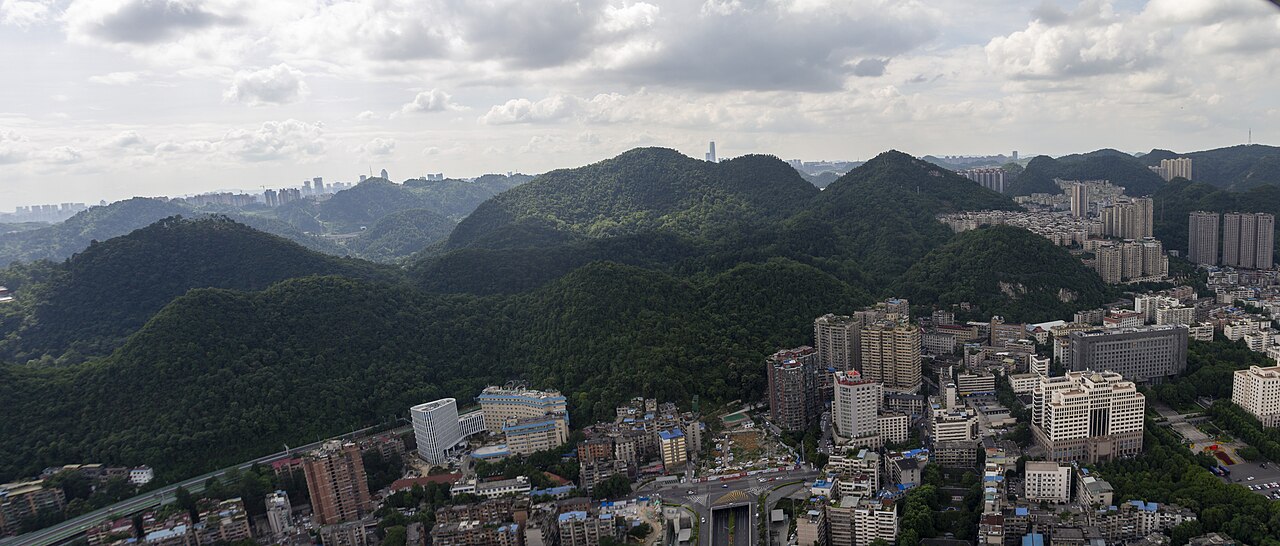
Qianlingshan Park sits inside the city, built around Mount Qianling with dense forest on the slopes and Qianling Lake at the foot. The park's most famous residents are troops of wild macaques: they perch along the paths, and relieving visitors of plastic bags is a daily routine. Zip your backpack and keep food out of hand. The Nine-Bend Path climbs past stone inscriptions to Hongfu Temple, honored as the foremost temple of central Guizhou, with Ming origins and continuous incense. Halfway up, Qilin Cave holds heavier history: it was one of the places where Zhang Xueliang was held under house arrest after late 1936. Ticket policies have shifted in recent years; follow the official notice for the day. Early morning is the park's best hour: mist on the water, tai chi groups under the pines, and macaques coming down for breakfast.
Jiaxiu Tower
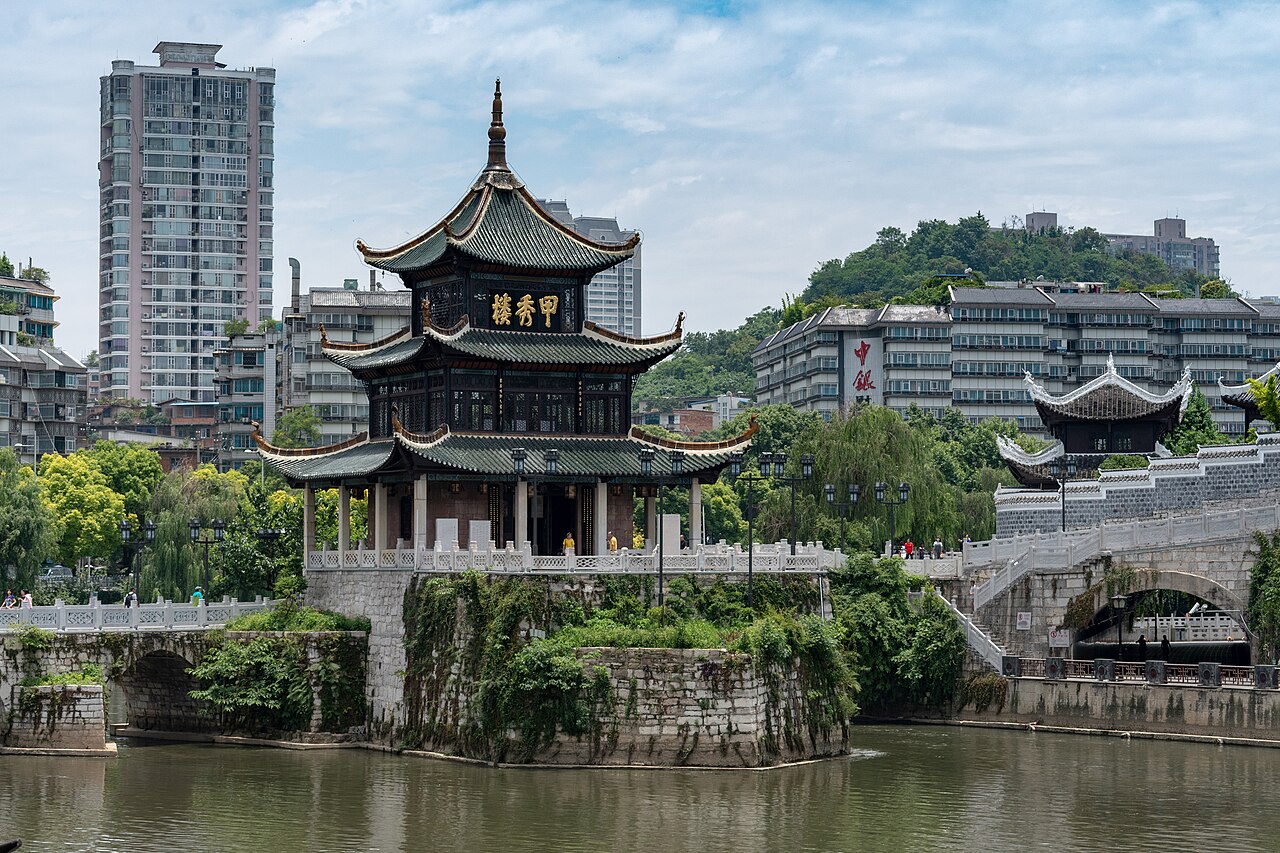
Jiaxiu Tower stands on the Nib Rock in the middle of the Nanming River, built in 1598 by Guizhou governor Jiang Dongzhi; the name means "first in the examinations," a wish for the province's scholars. It is a small three-story pavilion with white balustrades and dark tiles, and the floating Fuyu Bridge ties the banks together. In May 2006 it was listed among nationally protected Ming-era buildings. The tower is not large; its trick is position. Come by day for anglers and strollers; come by night for outline lamps. The Fuyu Bridge, Cuiwei Garden, the long couplet, and current opening days are on the Jiaxiu Tower page.
Qingyan Ancient Town
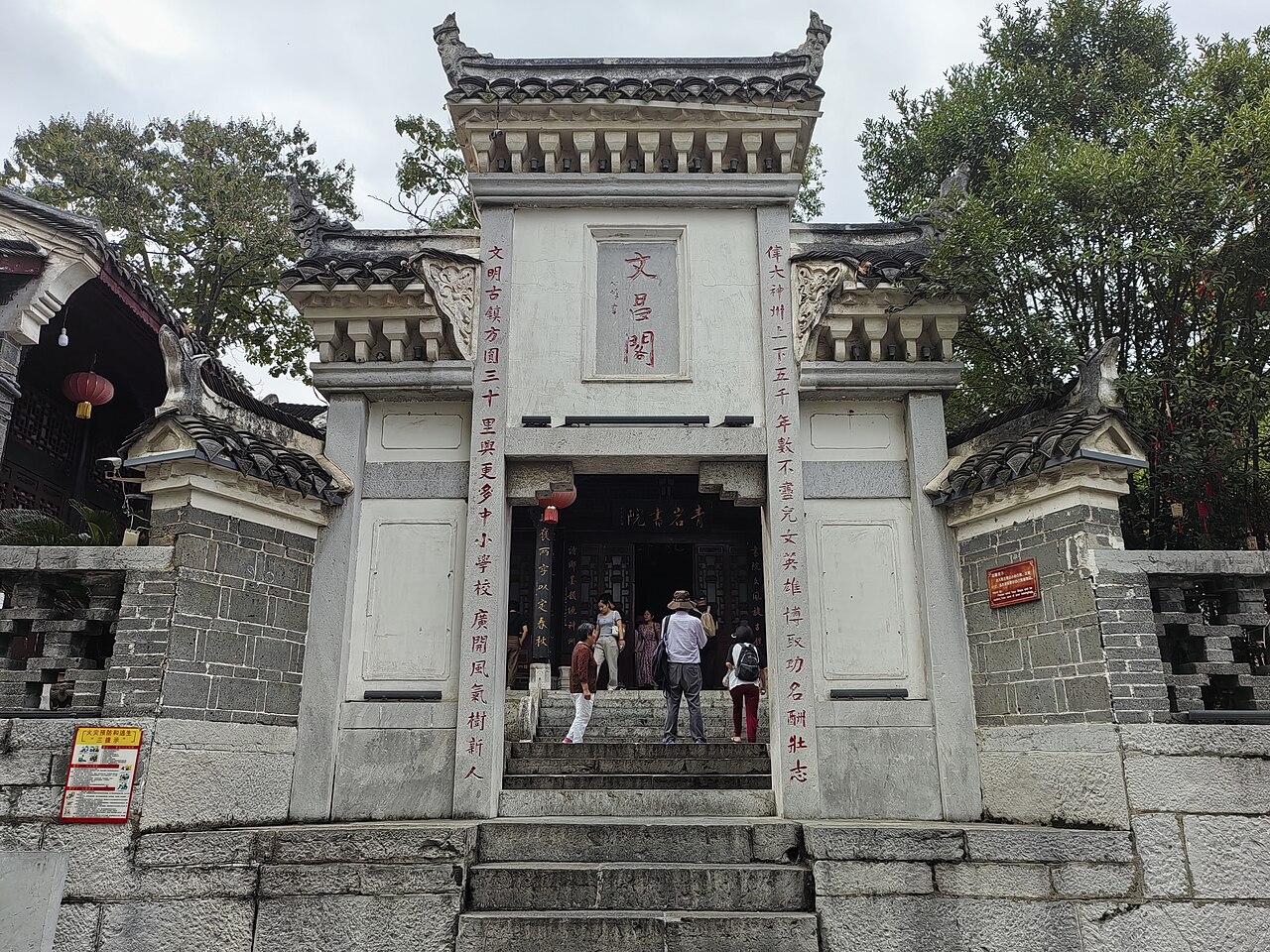
Qingyan lies about twenty-nine kilometers south of the city in Huaxi District. Set up as a garrison under Ming Hongwu, it was a military stronghold of early Guizhou history. Gates and walls are built of stone; blue-slate lanes rise and fall with the slope, nothing like Yangtze delta water towns. Inside the walls, Ciyun Temple, Wanshou Palace, Longquan Temple, and memorial arches repay a slow pace. Zhao Yijiong, Guizhou's first zhuangyuan in the imperial examinations, came from here. Food is its own school: braised pig trotters nicknamed zhuangyuan hooves, plus rose candy, chicken chili, and rice tofu. The town is a national 5A scenic area; come early in season. Gates, temples, ticket tiers, and bus notes are on the Qingyan Ancient Town page.
Guizhou Provincial Museum and Tianhetan
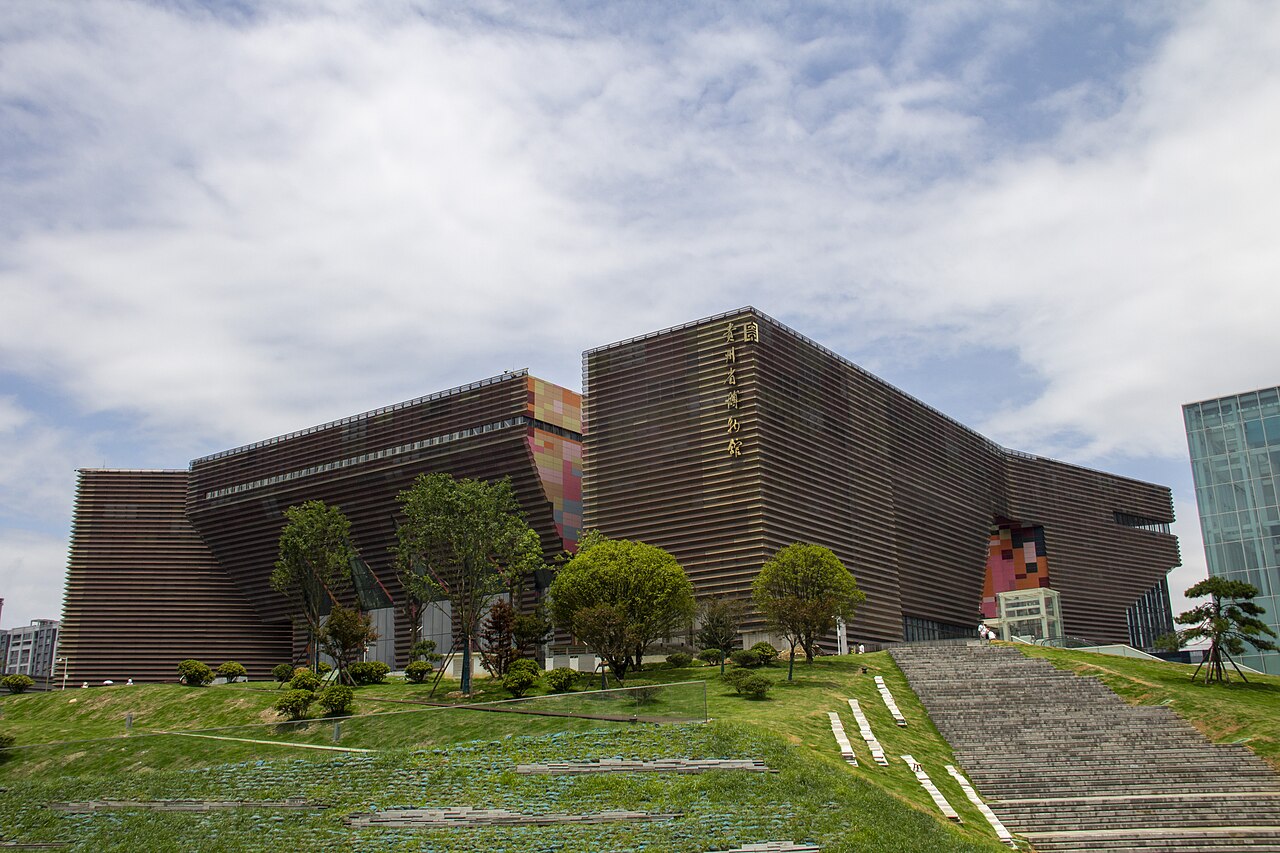
The Guizhou Provincial Museum was prepared from 1953 and opened in 1958; its new building opened in January 2015. It is a first-class national museum. The permanent exhibition Colorful Guizhou covers ethnic crafts (including Miao embroidery, batik, and silver), historic Guizhou, and paleontology. On a rainy day, give the museum your half day; understanding the mountains first makes Qianlingshan and Qingyan read deeper. Hours and free/paid notices follow the official board.
Tianhetan southern suburb
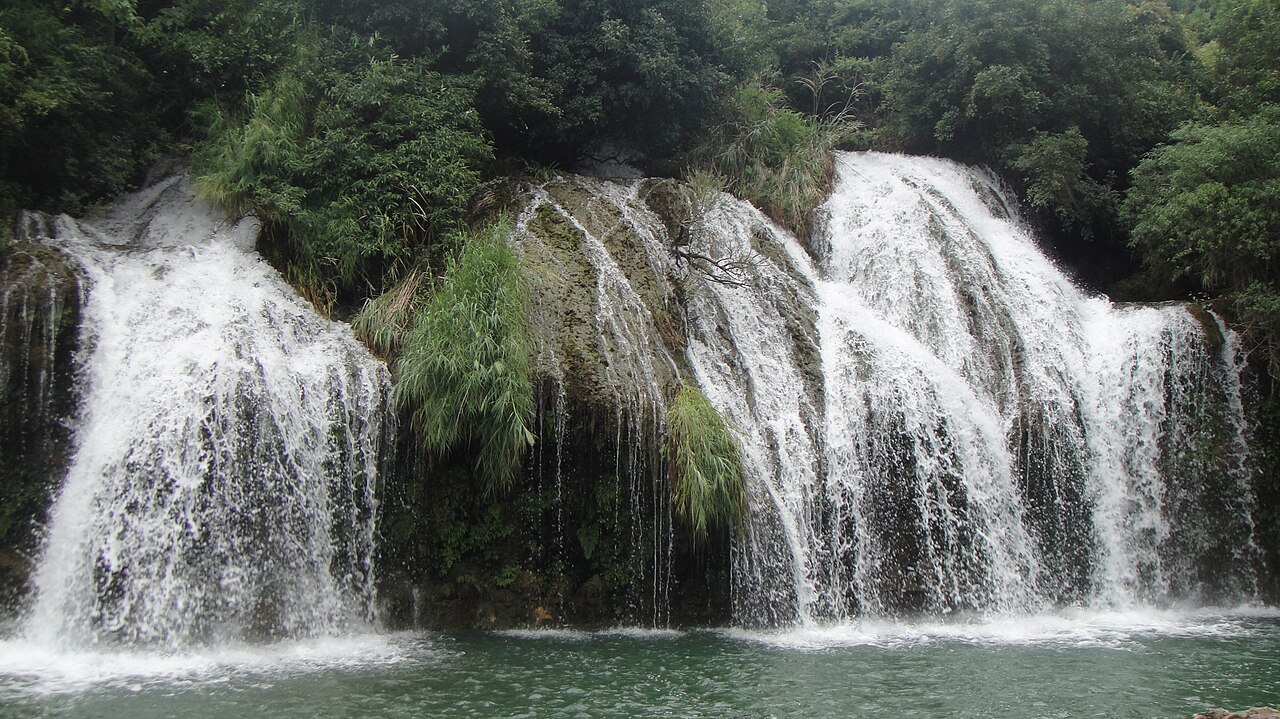
Tianhetan is a southern suburb karst-and-water half-day: caves, gorge edges, and water activities depending on the season's open list. It needs road time; stacking it after a full Qingyan morning usually means a rushed afternoon. Keep it when you want scenery beyond city parks, and confirm boat or cave openings the day before.
Eating in Guiyang
Guizhou flavors run sour, spicy, and aromatic: fish in sour soup, silk-doll wraps, rice tofu, and chili-forward street snacks. Qingyan's trotters are a fair once-only order if you like rich braises. Follow packed local rooms over empty hotel buffets. Milder first meals help if the chili level surprises you.
How to arrange the route
- Day one: Qianlingshan morning; Jiaxiu Tower evening lamps.
- Day two: Qingyan Ancient Town; return for river food.
- Day three: Provincial Museum if rain, or Tianhetan if clear; then rail onward.
Three days covers the five stops without constant rushing. Two days means Qianlingshan, Jiaxiu, and either Qingyan or the museum.
What to cut if short on time
Cut Tianhetan first if Qingyan already filled the suburb half-day. Cut duplicate river viewpoints after Jiaxiu night lamps. Keep Qianlingshan and Jiaxiu as the minimum honest Guiyang city core; add Qingyan when you have a clear second day.
Things to confirm before you go
- Qianlingshan monkey caution and ticket notice for the day.
- Qingyan and Tianhetan transport timing.
- Museum closed days and reservation rules if any.
- Rain shell and UV protection at altitude.
- Ticket prices change; confirm on official notices.
Frequently asked questions
How many days for Guiyang?
Two days for city parks, Jiaxiu, and one suburb; three to fit museum and Tianhetan comfortably.
Qingyan or Tianhetan if only one suburb day?
Qingyan for stone-town culture and food; Tianhetan for karst-and-water scenery.
Is Guiyang only a transit city to Huangguoshu?
It works as a cool summer capital stop on its own. Use Anshun when waterfalls are the thesis.
What should you eat?
Sour-spicy fish or a silk-doll snack once; Qingyan trotters if you want the town specialty.
Sources
The facts in this article were checked against the following Chinese Wikipedia entries, retrieved September 3, 2026, and rechecked on October 16, 2026.
- Guiyang (city) https://zh.wikipedia.org/wiki/贵阳市
- Qianlingshan Park https://zh.wikipedia.org/wiki/黔灵山公园
- Jiaxiu Tower https://zh.wikipedia.org/wiki/甲秀楼
- Qingyan town https://zh.wikipedia.org/wiki/青岩镇
- Guizhou Provincial Museum https://zh.wikipedia.org/wiki/贵州省博物馆
- Tianhetan https://zh.wikipedia.org/wiki/天河潭
Qianlingshan Park's ticket policy has changed in recent years, so no fare is stated; the Tianhetan entry is brief, and the site's make-up follows the scenic area's public information.
All photos are from Wikimedia Commons, used under CC licenses; re-use requires attribution.
- guiyang-city.jpg from File Guiyang Skyline.jpg, by Ryedamien, CC BY-SA 4.0
- guiyang-qianlingshan.jpg from File 黔灵山.jpg, by 維基小霸王, CC BY-SA 4.0
- guiyang-jiaxiu.jpg from File Jiaxiu Pavilion, Guiyang.jpg, by xiquinhosilva, CC BY 2.0
- guiyang-qingyan.jpg from File 20231003 Qingyan Wenchang Ge.jpg, by Yumeto, CC BY-SA 4.0
- guiyang-bowuguan.jpg from File 贵州省博物馆 远.jpg, by 維基小霸王, CC BY-SA 4.0
- guiyang-tianhetan.jpg from File 天河潭 - panoramio.jpg, by 吴长江, CC BY-SA 3.0