Huizhou Travel Guide: West Lake, Luofu Mountain and the Daya Bay Coast
Huizhou is a big, spread-out city in eastern Guangdong, about an hour from Shenzhen, with three distinct reasons to visit: West Lake in the old centre, a city lake with a Song-dynasty poet's fingerprints all over it; Luofu Mountain, one of Taoism's sacred mountains, an hour or so northwest; and the beaches around Daya Bay to the south. One day covers the lake. Add a day each for Luofu or the coast.
West Lake: the Su Dongpo connection
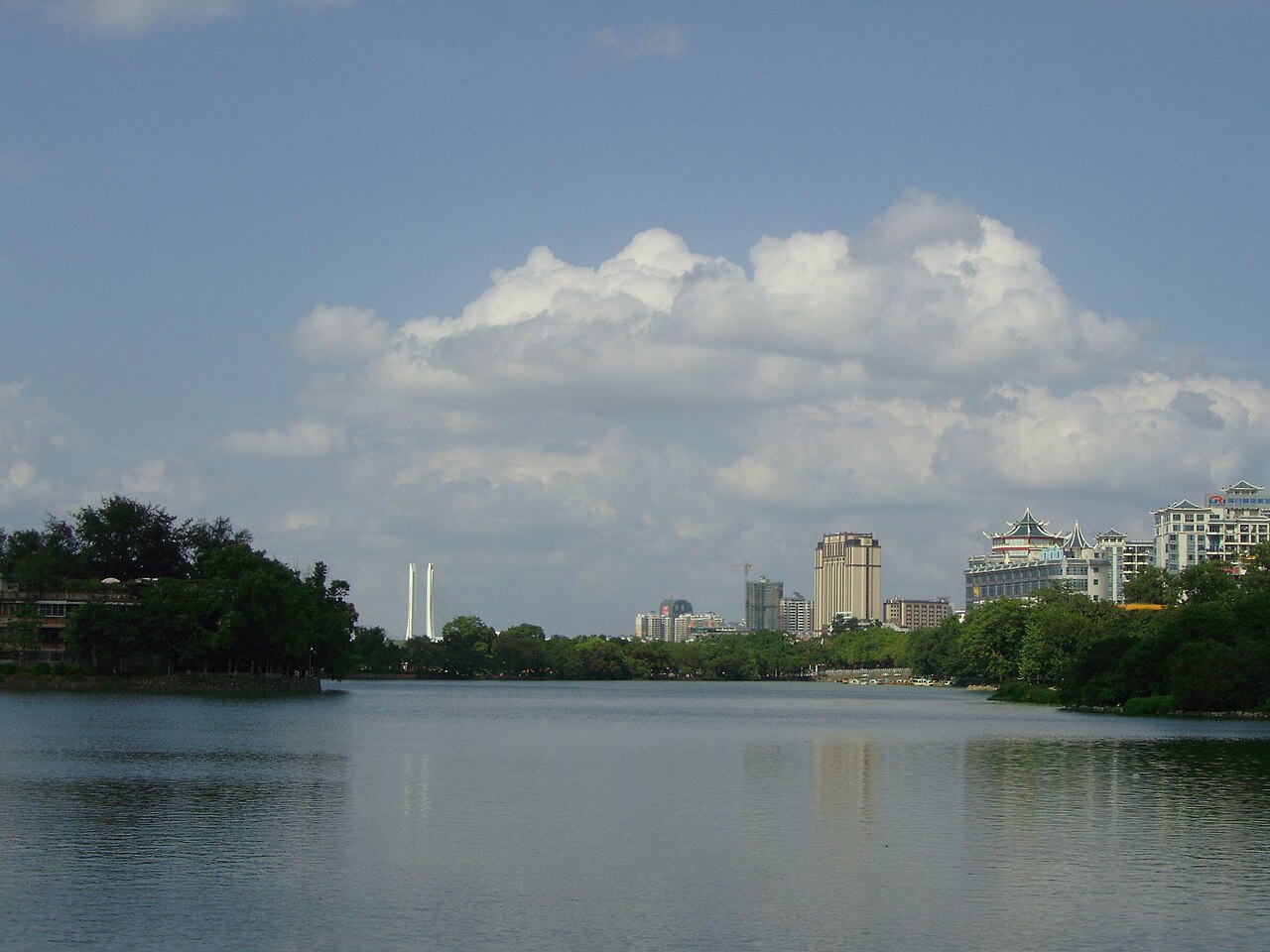
The lake used to be called Feng Lake. In 1094, at the age of 59, the poet and official Su Shi (Su Dongpo) was exiled to Huizhou. Finding a lake on the west side of the city that reminded him of Hangzhou's, he called it West Lake, and he helped pay for two bridges across it, remembered as the Su Causeway. He also wrote here the much-quoted couplet about eating three hundred lychees a day and happily staying in the south forever.
What to see: walk the causeways and the shoreline paths around the main lake. On Gushan, the small hill by the water, stands the tomb of Wang Zhaoyun, Su Shi's companion who followed him into exile and died here. Above it rises Sizhou Pagoda, the lake's landmark, best seen from across the water in late afternoon. A circuit at an easy pace takes two to three hours.
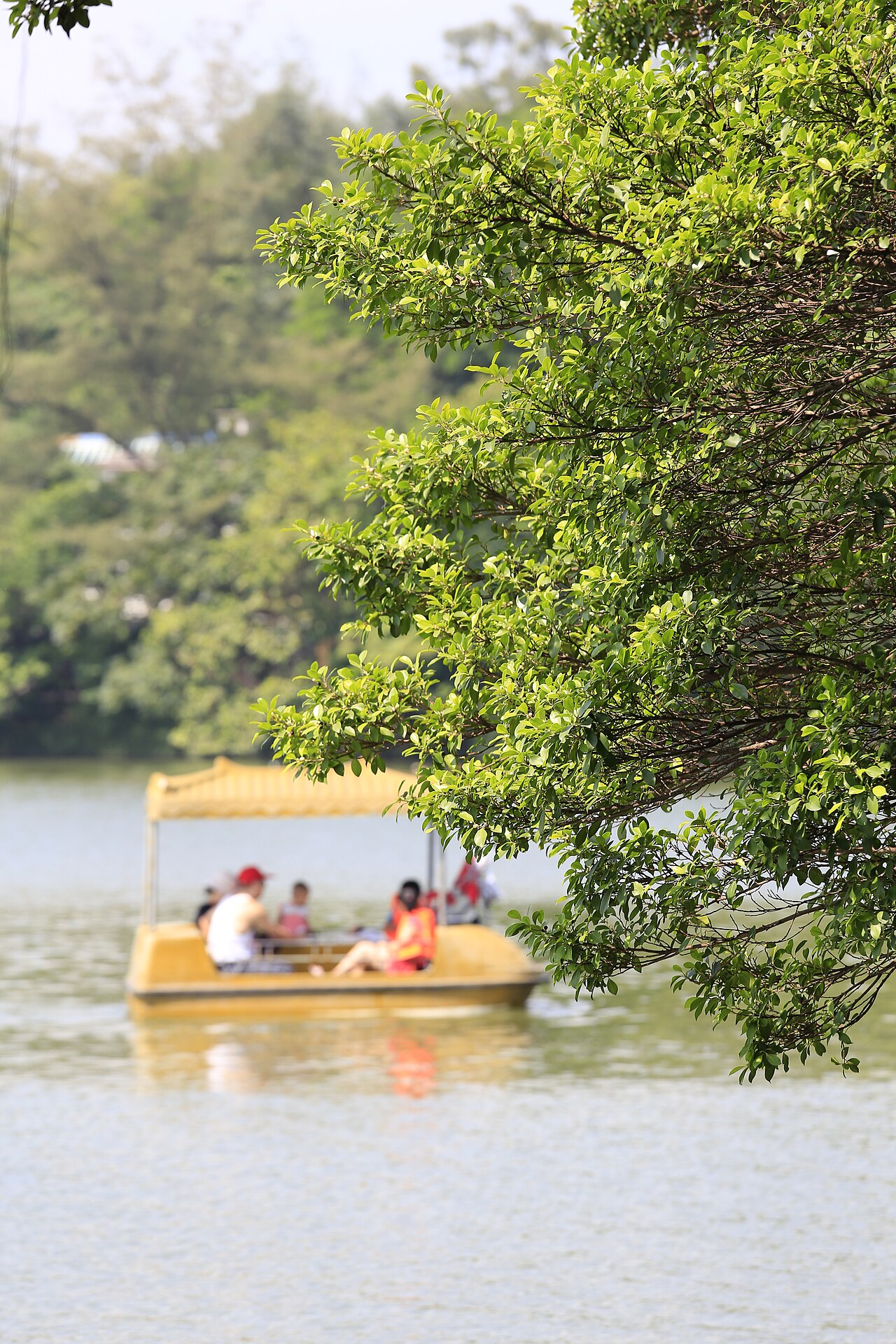
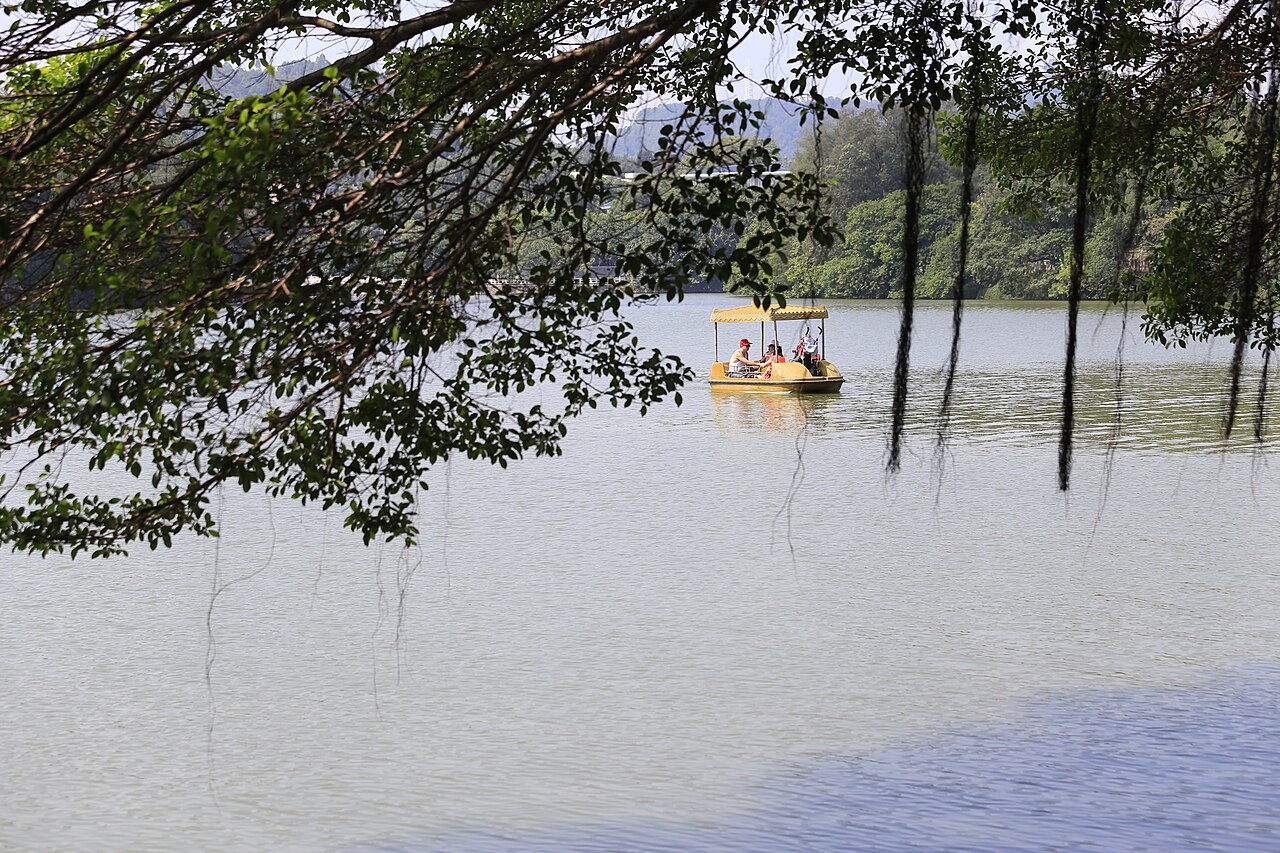
Much of the lakeside is open parkland; boats and some enclosed gardens may charge. Check current arrangements and prices on the official notice. Evenings are lively, with locals walking, dancing and fishing, and the lake is lit after dark.
Luofu Mountain
Luofu, in Boluo County on the north bank of the Dongjiang, is counted among the ten great "grotto heavens" of Taoism. Its fame goes back to Ge Hong, the Eastern Jin alchemist and author who refined elixirs here in the 4th century. Of the many temples that once stood on the mountain, five Taoist temples remain, including the Temple of Emptiness (Chongxu Guan), a nationally important Taoist temple, and the Temple of the Yellow Dragon. You can still see relics associated with Ge Hong, such as his well and the pond where he washed his elixirs. The mountain is also tied to southern Chinese martial-arts lineages.
Visiting: the temples near the foot are the easiest part, and a cable car or long stair climb leads higher for views. Allow a full day including the road trip from Huizhou. Check transport, cable car and ticket arrangements before setting out; this guide doesn't quote 2026 prices. Weekends are crowded with visitors from the Pearl River Delta.
The coast: Daya Bay and beyond
Huizhou's coastline faces Daya Bay, a bay of almost 500 km² dotted with nearly a hundred islands and reefs. The beaches popular with weekenders are further east in Huidong County, notably Shuangyue Bay, where two crescent bays meet, and Xunliao Bay. They're a summer and weekend thing and make sense only with a car or a booked transfer; skip them on a culture-focused trip.
When to come to Huizhou
The climate is subtropical: mild winters, long, hot, humid summers, and typhoon risk from roughly June to October. October to December is the best time for West Lake and Luofu: clear skies, comfortable walking. Spring is pleasant but often wet. Summer is beach season, with the heat and storms that come with it.
Getting in and where to stay
Huizhou has several stations. High-speed trains on the Xiamen–Shenzhen line stop at Huizhou South, in Huiyang, which is far from the old centre. Huizhou North, on the Ganzhou–Shenzhen line, is closer to the city. Conventional Beijing–Kowloon trains use Huizhou station and Huizhou West. Huizhou Pingtan Airport has domestic flights, and Shenzhen Bao'an Airport is about an hour and a half by road. Check which station your ticket uses before booking a hotel.
Stay near West Lake in Huicheng District, the old centre, for walking access to the lake and the best food streets.
Eating in Huizhou
Huizhou is a centre of Dongjiang (Hakka) cooking. Look for salt-baked chicken, stuffed tofu, and pork belly braised with Huizhou's famous preserved mustard greens (meicai kourou); dried meicai makes a good souvenir. Lychees, in early summer, are a nod to Su Shi. Near the coast, seafood is the draw; confirm prices for seafood sold by weight before it's cooked.
How to arrange the route
Day 1: West Lake: causeways, Gushan and Sizhou Pagoda; evening food near the lake.
Day 2: Luofu Mountain: Chongxu Guan and the Ge Hong sites, cable car if running.
Day 3 (optional): Beach day at Shuangyue Bay, or move on to Shenzhen, Guangzhou or Heyuan for Wanlu Lake. For Hakka walled houses, continue to Meizhou.
What to cut if short on time
Drop the beaches first, then Luofu. West Lake is the one sight that works as a quick stop from Shenzhen.
Things to confirm before you go
- Boat and garden prices at West Lake; none are quoted here.
- Luofu transport, cable car and ticket arrangements.
- Typhoon warnings in summer and early autumn.
- Which station your train uses.
Frequently asked questions
How many days do I need in Huizhou?
One day for West Lake, two with Luofu, three with a beach day.
Is Huizhou's West Lake like Hangzhou's?
Su Shi thought so, which is how it got the name. It's smaller and much less crowded, with its own history centred on his exile.
Can I visit Huizhou as a day trip from Shenzhen?
Yes, for West Lake. Luofu and the beaches are better with an overnight.
Sources
The facts in this article were checked against the following Wikipedia and encyclopedia entries, retrieved September 16, 2026, and rechecked on October 17, 2026.
- Huizhou https://en.wikipedia.org/wiki/Huizhou
- Huizhou West Lake https://en.wikipedia.org/wiki/Huizhou_West_Lake
- Mount Luofu https://en.wikipedia.org/wiki/Mount_Luofu
Tickets change; this article does not invent yuan amounts.
All photos are from Wikimedia Commons, used under CC licenses; re-use requires attribution.
- huizhou-1.jpg from File:West Lake in Huizhou.jpg, by Chintunglee, CC BY-SA 4.0
- huizhou-2.jpg from File:Huizhou Xihu 2013.09.20 10-24-46.jpg, by Zhangzhugang, CC BY-SA 4.0
- huizhou-3.jpg from File:Huizhou Xihu 2013.09.20 10-24-05.jpg, by Zhangzhugang, CC BY-SA 4.0