Guangzhou Travel Guide: Three Days in Old Canton and on the Pearl River
Guangzhou fits neatly into three days, one for each of three districts. On the first, see Liwan: the carved Chen Clan Ancestral Hall, the colonial lanes of Shamian Island and the restored arcades of Yongqing Fang. On the second, Yuexiu: the Five-Ram Statue and Zhenhai Tower in Yuexiu Park, the 2,000-year-old Nanyue king's tomb and the granite Sacred Heart Cathedral. On the third, the riverfront, with the Canton Tower and the Pearl River after dark. The metro reaches almost everything, most sights cost 10 yuan or nothing, and the best meal of the day is morning tea. Add a fourth day for Baiyun Mountain, or Chimelong if you have children.
Planning: three districts, three days
Guangzhou is big, but the parts visitors come for are close together. Group the sights by district so you aren't crossing the city several times a day:
| Day | District | Main sights | Typical spend |
|---|---|---|---|
| 1 | Liwan (old Xiguan) | Chen Clan Ancestral Hall, Shamian, Yongqing Fang and Enning Road | About 10 yuan plus food |
| 2 | Yuexiu | Yuexiu Park, Zhenhai Tower, Nanyue King Museum, Sacred Heart Cathedral, Beijing Road | About 20 yuan plus food |
| 3 | Pearl River | Canton Tower, Haixinsha, night cruise | 150 yuan for the tower deck at the gate |
Several museums close on Mondays, and the Chen Clan Ancestral Hall closes on Tuesdays, so put Liwan on a Monday if your dates allow.
When to come to Guangzhou
Guangzhou's annual average temperature is between 21.7 and 23.1°C, so winter rarely gets truly cold, while summer is long and hot. April to June is the rainy season, with frequent heavy downpours. July to September is the hottest stretch, and typhoons are a risk, so watch the forecast. October and November are the best months, sunny and mild. December to February is cool and often overcast, with the occasional cold snap, and a light jacket is enough.
In early spring, usually around March, watch out for huinantian, the "returning south" weather, when damp air makes walls and floors sweat and laundry never dries.
How to get in and where to stay
By air: Guangzhou Baiyun International Airport (CAN) is north of the city, with metro Line 3 into the centre.
By train: Guangzhou South is the main high-speed station, for trains to Shenzhen, Hong Kong West Kowloon, Guilin and beyond, and is on metro Lines 2 and 7. Some trains use Guangzhou Station, Guangzhou East or Guangzhou North, so check your ticket.
Where to stay: for the old city, Yuexiu, around Beijing Road or Gongyuanqian, or Liwan near Shamian. Both put you close to the metro and the morning-tea restaurants. Zhujiang New Town and Tianhe are modern, with river views and easy access to the Canton Tower, but less to see on foot.
Places worth visiting
The Canton Tower
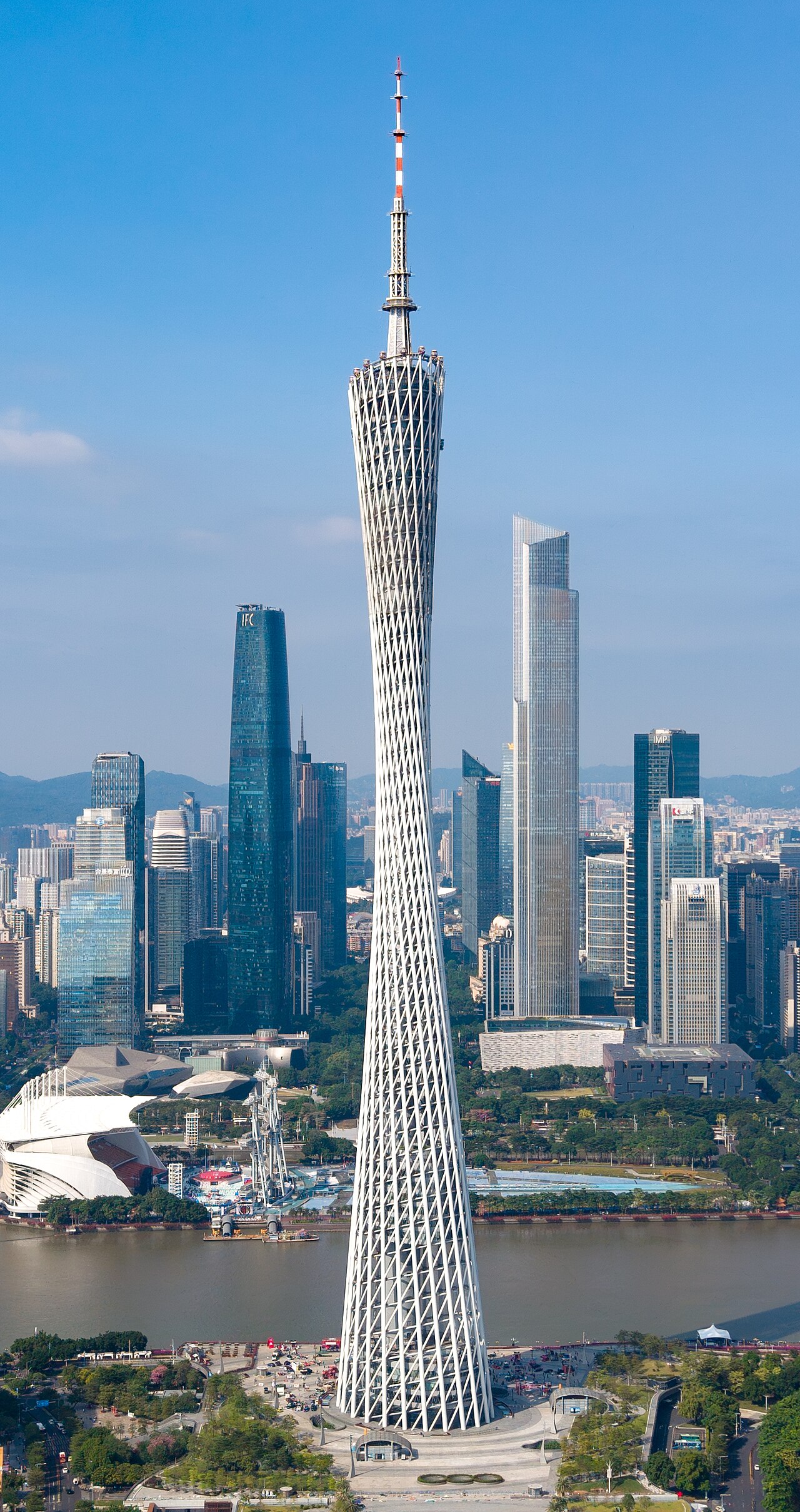
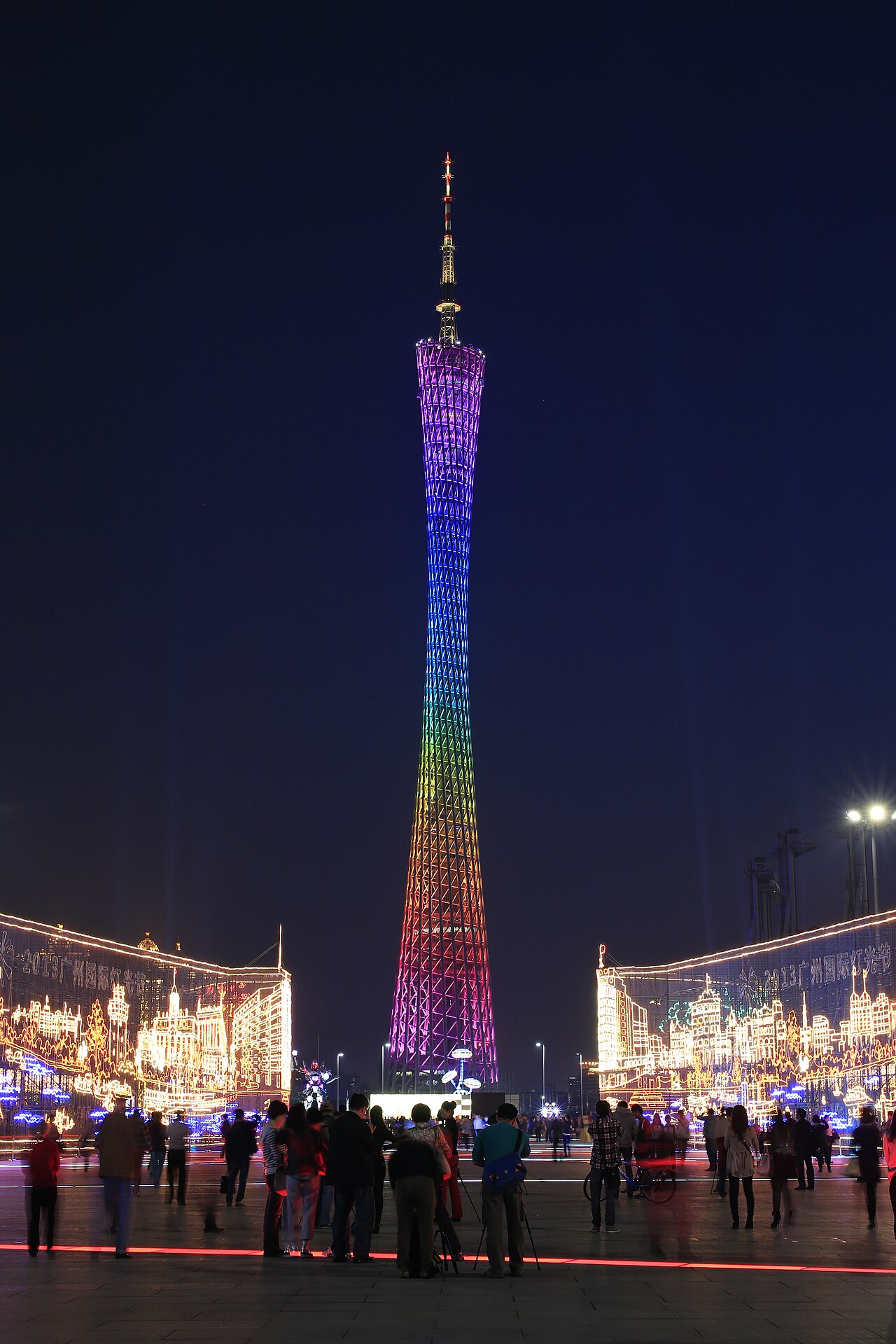
Nicknamed the "slender waist", the tower is 600 metres tall: a 454-metre body topped by a 146-metre mast. It is the world's second-tallest tower after the Tokyo Skytree. It stands in Haizhu district, about 125 metres from the south bank, and opened on 1 October 2010, just before the Guangzhou Asian Games.
The indoor observation hall is at 428 to 433 metres. An open-air platform and drop-seat ride are at 450 metres, and a revolving restaurant is at 407 to 423 metres. Two 500-tonne water tanks at the top slide against the wind to reduce sway by up to 40 percent. After dark, 1,080 LED nodes change colour all over the tower.
In 2026 an adult ticket for the 433-metre deck is 150 yuan at the gate, about 135 yuan booked in advance. The tower is open 09:30 to 22:30, with last entry at 22:00. You choose a two-hour entry slot, and the ticket expires if you miss it. Go up about an hour before sunset to see the city by day and by night. You don't have to go up: the tower looks best from Haixinsha, across the river, where the whole curve fits in the frame for free. See Canton Tower.
The Chen Clan Ancestral Hall
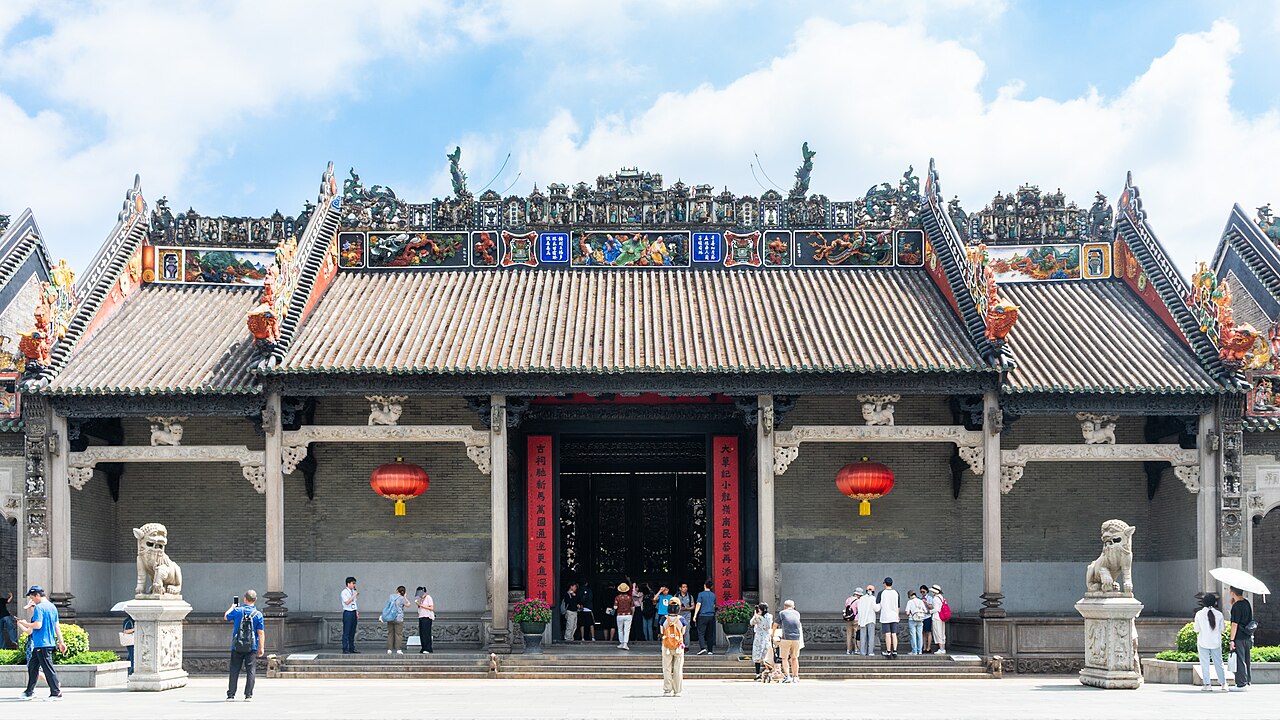
Built between 1888 and 1894 with money from Chen-surnamed families in 72 Guangdong counties, the hall was also a lodging for Chen sons coming to the provincial capital for exams or business. The complex covers more than 15,000 square metres, laid out as "three courtyards, nine halls and two wings". The central Juxian Hall is 14.5 metres high.
The decoration is what you come for. Seven crafts cover almost every surface: wood, stone and brick carving, ceramic and plaster sculpture, murals, and cast iron and bronze. The plaster sculpture alone runs 2,562 metres. The roof ridges are crowded with ceramic and plaster figures, and the teak screens in the second courtyard are carved on both sides with scenes from Romance of the Three Kingdoms. The hall has housed the Guangdong Folk Arts Museum since 1959 and has been a national heritage site since 1988. When Guo Moruo visited in 1959 he wrote that its craftsmanship surpassed nature.
In 2026 entry is 10 yuan (5 yuan for students), booked by real name on the 广东民间工艺博物馆 WeChat account. It's open 09:00 to 18:00 from 15 April to 15 October and 09:00 to 17:30 the rest of the year, with last entry half an hour before closing. It is closed on Tuesdays, except public holidays. Take metro Line 1 to Chenjiaci station. Allow 90 minutes, and bring binoculars or use your phone's zoom for the roofs. See Chen Clan Ancestral Hall.
Shamian Island
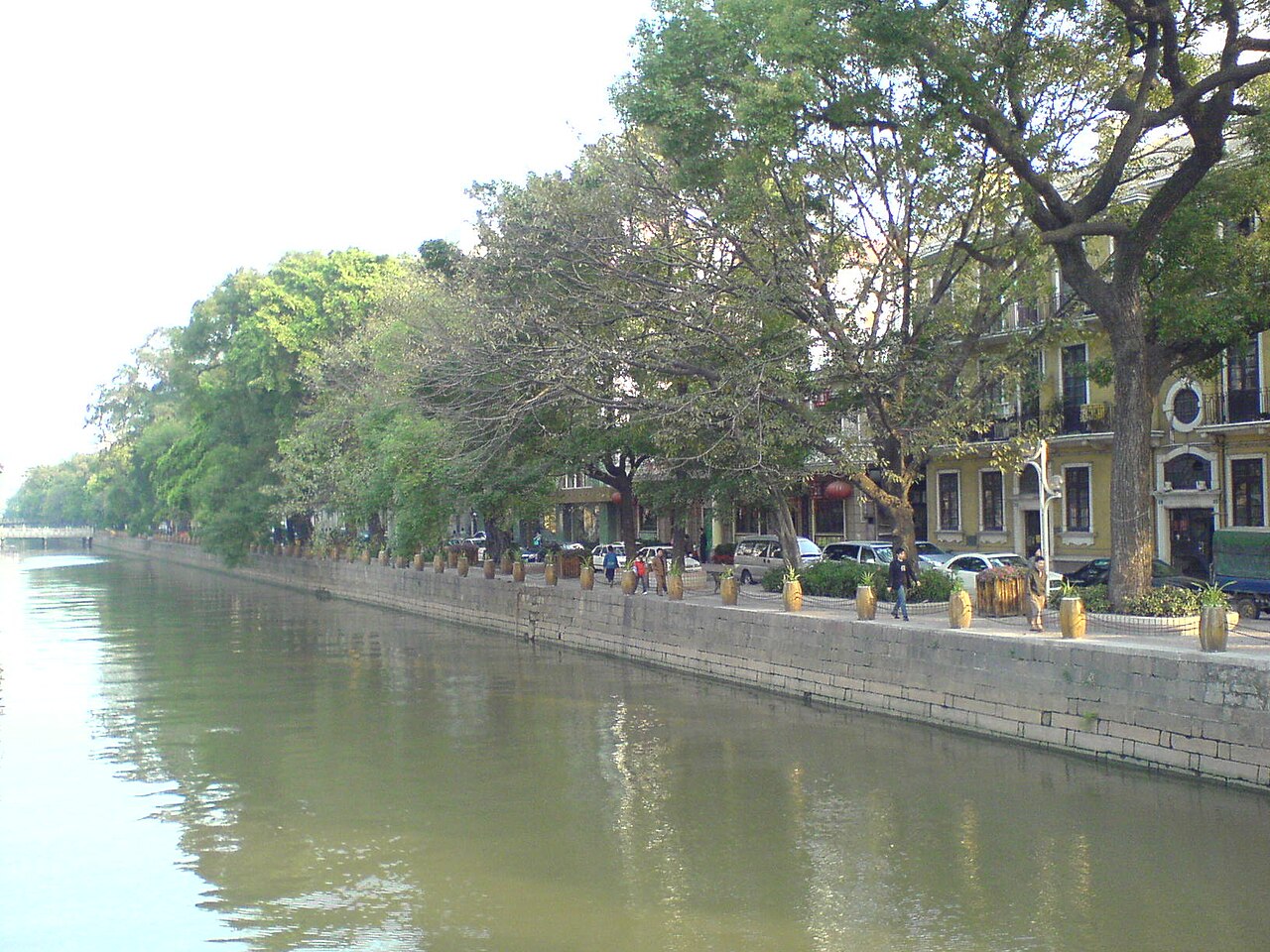
Shamian is a small island in the Pearl River, only 0.3 square kilometres, reached by bridge from Liu'ersan Road in Liwan. It was once a sandbank called Shicui Shoal. In 1859 Britain and France leased it and built it up into an island, and under an 1861 agreement Britain took the western four-fifths and France the eastern fifth. Consulates, trading houses and banks followed.
Today 54 of those buildings survive, mostly Western-style from the late nineteenth and early twentieth centuries, and the whole island has been a national heritage site since 1996. More than 150 old trees shade the streets. It is free, quiet and flat, and a slow loop takes about an hour. The White Swan Hotel, a Guangzhou landmark, is also here. See Shamian Island.
Yongqing Fang and Enning Road
Enning Road, in the old Xiguan district, was widened into a street in 1931 and runs 1,115 metres. Its arcaded qilou buildings link up with those on Shangxiajiu and Dishifu roads to form the longest and most complete arcade street in Guangzhou. Redevelopment began in 2007. After years of debate, the demolition area was redrawn in 2012 to save 221 arcade and historic buildings. The Yongqing block was restored by Vanke, renamed Yongqing Fang, and opened in October 2016.
Today the lanes hold cafés, shops, studios and exhibitions, as well as Bruce Lee's ancestral home and the Cantonese Opera Art Museum, with its garden courtyards. The nearby Bahe Guild was the old headquarters of the Cantonese opera trade. Weekends are busy, so come on a weekday for quiet. See Yongqing Fang.
The Sacred Heart Cathedral
This cathedral at 56 Yide Road took 25 years to build, from 1863 to 1888. Guangzhou has no granite, so the stone for its walls and columns came from quarries in Kowloon. It was shipped up the river by junk and cut and set by hand, and quarrying alone took eight years. The master builder was Cai Xiao, a stonemason from Jiexi in eastern Guangdong, who stayed on the job from start to finish. It is one of China's largest Gothic Revival buildings, with twin spires 52.76 metres high, and has been a national heritage site since 1996. The stained glass, 98 windows covering more than 710 square metres, was replaced during restoration between 2004 and 2006.
Visiting is free but limited to set hours. In 2026 listings these were late mornings and mid-afternoons from Tuesday to Sunday, with no visits on Mondays. The times were adjusted again in September 2026, and visitors aren't admitted during mass or on major feast days. Check the parish notice on the day. See Sacred Heart Cathedral.
Yuexiu Park and Zhenhai Tower
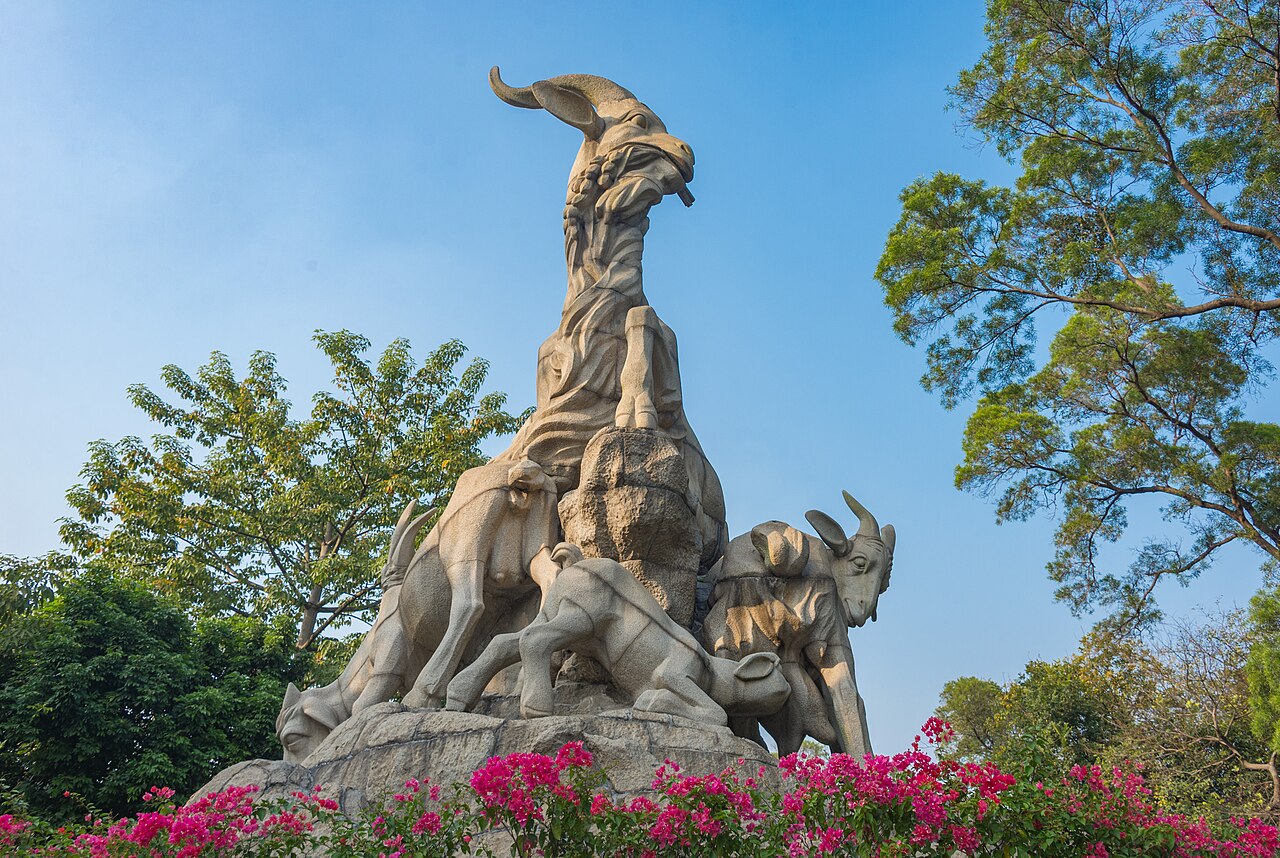
Yuexiu Park covers 860,000 square metres of Yuexiu Hill, which rises 70 metres above sea level, with seven small hills and three artificial lakes. Sun Yat-sen proposed making it a park in 1921, and it is free. The Five-Ram Statue on Mukegang hill is the city's emblem. Legend says five immortals rode into the city on rams of five colours, bringing grain, which is why Guangzhou is still called the City of Rams.
On the hilltop, Zhenhai Tower was built in 1380, when the Ming rebuilt the city walls, and a stretch of Ming wall survives in front of it. It is now an exhibition hall of the Guangzhou Museum. In 2026 it costs 10 yuan and is open 09:00 to 18:00, with last entry at 17:30, closed on Mondays. Take Line 2 to Yuexiu Park station, exit B2. See Yuexiu Park.
The Nanyue King Museum
At 867 Jiefang North Road, across the road from Yuexiu Park, the museum is built over the tomb of Zhao Mo, the second king of Nanyue, and opened in 1988. Its best-known pieces include the gold seal of "Emperor Wen", a jade rhyton and a gold-inlaid tiger tally, all from the kingdom that ruled this coast over 2,000 years ago. This is the beginning of Guangzhou's history as a city.
In 2026 the tomb section costs 10 yuan (5 yuan concession) and is open Tuesday to Sunday, 09:00 to 17:30, with last entry at 17:00. It is closed on Mondays except public holidays. Book on the 南越王博物院 WeChat account. Entry to the lower tomb chamber needs a separate, free reservation. See Nanyue King Museum. For more history, the Guangdong Provincial Museum in Zhujiang New Town covers 41,000 square metres and holds about 172,700 items.
Beijing Road
The Beijing Road pedestrian street is the commercial heart of the old city. In 2016 it became Guangdong's first fully open, free 4A scenic area. In the Song dynasty part of it was called Shuangmendi. In the Republican era it was Yonghan Road, and it has been Beijing Road since 1966. The Guangzhou Daily calls it the city's "thousand-year trade road". It has several bookshops, including a Xinhua bookstore from 1952 and a children's bookstore from 1954. Long-established restaurants nearby include Jubao roast pigeon, Taipingguan and Yinji rice rolls. Side streets serve cheap wonton noodles, beef brisket noodles and rice rolls.
Baiyun Mountain
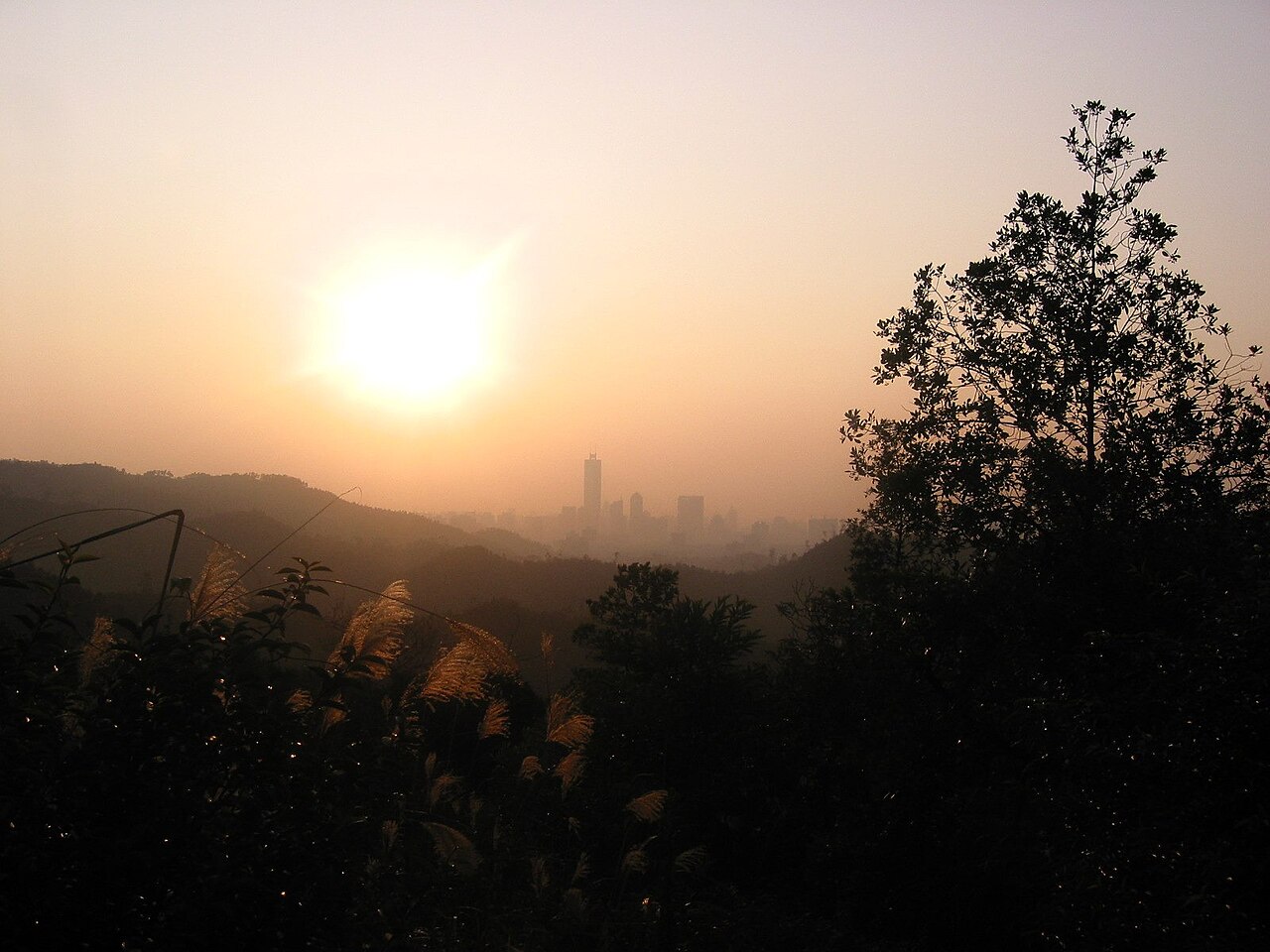
On the north side of the city, Baiyun Mountain's thirty-odd peaks cover about 28 square kilometres. Its highest point, Moxing Ridge at 382 metres, is the top of urban Guangzhou. Locals pair it with the river as "Cloud Mountain, Pearl Water". In 2026 entry is 5 yuan, and Moxing Ridge is another 5 yuan. The cable car costs 25 yuan up (no separate entry ticket needed) and 20 yuan down. Since February 2024, a free sightseeing escalator has run to Moxing Ridge from 10:00 to 19:00. Metro Line 11 stops at Yuntai Garden, near the south gate. See Baiyun Mountain.
Chimelong Tourist Resort
Chimelong, in Panyu district, is a group of theme parks and needs at least a full day. The oldest is Chimelong Safari Park, which opened on 26 December 1997. Its first phase covered 133 hectares with more than 300 species and nearly 10,000 animals. It was then Asia's largest private zoo and was among China's first 5A scenic areas. You ride a small open train through the drive-through section, which takes about an hour, then walk the rest. More than ten giant pandas live here, including the triplets Mengmeng, Shuaishuai and Kuku.
Chimelong Paradise opened in 2006, designed by the Canadian firm Forrec, and the Water Park, open in summer, covers more than 400,000 square metres. The Chimelong International Circus is one of the world's largest circus venues. Metro Lines 3 and 7 stop at Hanxi Changlong station. Check prices and park hours on Chimelong's official channels, as they change with the season.
Eating in Guangzhou
Locals talk of "three teas, two meals and a late-night snack": morning, afternoon and evening tea, as well as lunch, dinner and a late-night bite. Something is open almost around the clock.
Morning tea is the one meal not to miss. Order a pot of tea and a few baskets of dim sum. There are "dry" items, such as dumplings, fen guo, buns and pastries, and "wet" ones, such as congee, guilinggao herbal jelly and tofu pudding. A good Guangzhou morning tea can run from 08:00 to noon. Go before 09:00 at the famous teahouses, as by mid-morning on weekends you'll queue.
Cantonese cooking uses a huge range of ingredients. At a 1965 exhibition of Guangzhou dishes, 5,457 were shown. Slow-simmered soups, roast suckling pig and winter-melon soup are local favourites. Because of the hot, humid climate, people drink herbal tea (liangcha) all year. The street stalls brew real medicinal herbs, and it is bitter.
How to arrange the three-day route
Day 1, Liwan. Morning tea, then the Chen Clan Ancestral Hall when it opens at 09:00. Remember it's closed on Tuesdays. Take the metro or a taxi to Shamian for a late-morning walk, then Yongqing Fang and Enning Road in the afternoon. Dinner in Xiguan.
Day 2, Yuexiu. Yuexiu Park and Zhenhai Tower in the morning, then the Nanyue King Museum across the road. Both are closed on Mondays. Take the metro or a taxi to the Sacred Heart Cathedral in time for an afternoon visiting slot, then walk to Beijing Road for dinner.
Day 3, the river. A slow morning. Go up the Canton Tower in the late afternoon, then cross to Haixinsha for the view back as the lights come on, or take a Pearl River night cruise. Families can swap this day for Chimelong.
Day 4, Baiyun Mountain. The cable car up and a walk down in the morning, then back to the city for a late lunch.
Onward travel. Foshan, with its Zumiao temple and martial-arts heritage, is next door on the metro. Shenzhen and Hong Kong are under an hour by high-speed train from Guangzhou South. For the Kaiping watchtowers, head to Jiangmen, and for Sun Yat-sen's birthplace, Zhongshan. West along the Xijiang river, Zhaoqing and Wuzhou make easy overnight trips. Shantou, another old treaty port, is a few hours east by high-speed rail, and Guilin is to the north-west.
What to cut if short on time
- Chimelong, unless you're travelling with children.
- Baiyun Mountain, on a three-day trip. Yuexiu Park gives you a small hill in the centre.
- The Canton Tower deck, if the budget is tight or it's hazy. The free view from Haixinsha is the better photo anyway.
- Beijing Road, if you'd rather spend the evening at a teahouse.
Keep: morning tea, the Chen Clan Ancestral Hall and Shamian.
Things to confirm before you go
- Closing days: the Chen Clan Ancestral Hall closes on Tuesdays. The Nanyue King Museum and Zhenhai Tower close on Mondays. The Sacred Heart Cathedral has no visitor hours on Mondays.
- Bookings: real-name booking on the WeChat accounts of the Chen Clan Hall and the Nanyue King Museum. Book the Canton Tower in advance for a cheaper ticket and your preferred slot.
- Cathedral hours, which change around masses and feast days and were adjusted in September 2026.
- Baiyun Mountain cable-car and escalator hours, and whether they're running.
- The weather: typhoon warnings from July to September, huinantian in early spring.
Frequently asked questions
How many days do you need in Guangzhou?
Three days for the old city and the river, one day each. Add a day for Baiyun Mountain or Chimelong.
Is the Canton Tower worth going up?
For a city panorama, yes: 150 yuan at the gate in 2026, less online, and best timed for sunset. If you only want a photo of the tower, the view from Haixinsha is free and better.
When is the best time to visit Guangzhou?
October and November. April to June is rainy, and July to September is hot, with typhoons.
What should I do in Guangzhou with children?
Chimelong, the Safari Park for the pandas, and a full day at Chimelong Paradise. In the city, Yuexiu Park is free and Baiyun Mountain costs 5 yuan.
Sources
Historical and descriptive facts were checked against these Chinese Wikipedia entries, retrieved 10 August 2026.
- Canton Tower https://zh.wikipedia.org/wiki/广州塔
- Chen Clan Ancestral Hall https://zh.wikipedia.org/wiki/陈家祠
- Shamian Island https://zh.wikipedia.org/wiki/沙面岛
- Enning Road https://zh.wikipedia.org/wiki/恩宁路
- Yongqing Fang https://zh.wikipedia.org/wiki/永庆坊
- Sacred Heart Cathedral https://zh.wikipedia.org/wiki/石室圣心大教堂
- Yuexiu Park https://zh.wikipedia.org/wiki/越秀公园
- Nanyue King Museum https://zh.wikipedia.org/wiki/南越王博物院
- Beijing Road (Yuexiu District) https://zh.wikipedia.org/wiki/北京路_(越秀区)
- Baiyun Mountain (Guangzhou) https://zh.wikipedia.org/wiki/白云山_(广州)
- Chimelong Tourist Resort https://zh.wikipedia.org/wiki/长隆旅游度假区
- Guangzhou (city) https://zh.wikipedia.org/wiki/广州市
Prices and opening hours were rechecked on 10 October 2026 against the Baiyun Mountain scenic area's site (baiyunshan.com.cn), the Nanyue King Museum (nywmuseum.org.cn), the Guangzhou Museum (guangzhoumuseum.cn), the Chen Clan Ancestral Hall's 2026 opening-hours notice, and 2026 listings for the Canton Tower and the Sacred Heart Cathedral. Chimelong prices were not rechecked. The official notice on the day takes priority.
All photos are from Wikimedia Commons, used under CC licenses; re-use requires attribution.
- guangzhou-tower.jpg from File Canton Tower 20241027 (cropped), by Tim Wu, CC BY-SA
- chen-clan-hall.jpg from File Chen Clan Ancestral Hall 2025.06 02, by Shujianyang, CC BY-SA
- shamian.jpg from File ShamianIsland, by David Wong, taken January 24, 2007, CC BY-SA 3.0
- five-ram-statue.jpg from File Five-Ram Sculpture 03290-Guangzhou, by Xiquinho Silva, CC BY
- baiyun-mountain.jpg from File Guangzhou BaiyunShan, by Popolon, CC BY-SA 3.0
- pearl-river-night.jpg from File Canton Tower 2013.11.15 18-12-45, by Zhangzhugang, CC BY-SA