Liaoyang Travel Guide: The White Pagoda and Nurhaci's First Capital
Liaoyang, on the Taizi River just south of Shenyang, is one of the oldest cities in northeast China, and its centre has stood on the same site for more than two thousand years. The highlight is the White Pagoda, a 70.3-metre Liao or Jin brick pagoda in Baita Park, with the rebuilt Guangyou Temple beside it. Add the site of Nurhaci's 1621 capital and the Dongjing tombs of his family, and you have a full, easy day, best as a day trip or a stop on the high-speed line between Shenyang and Dalian.
Why Liaoyang matters
Under the Han it was Xiangping, capital of Liaodong Commandery. The Liao made it their eastern capital, Dongjing, and the Jurchen Jin kept it as one. In 1621 the Manchu leader Nurhaci took the city from the Ming, made it his capital and built a new walled city, before moving to Shenyang a few years later. In 1904 the Battle of Liaoyang was one of the big clashes of the Russo-Japanese War.
Places worth visiting
The White Pagoda
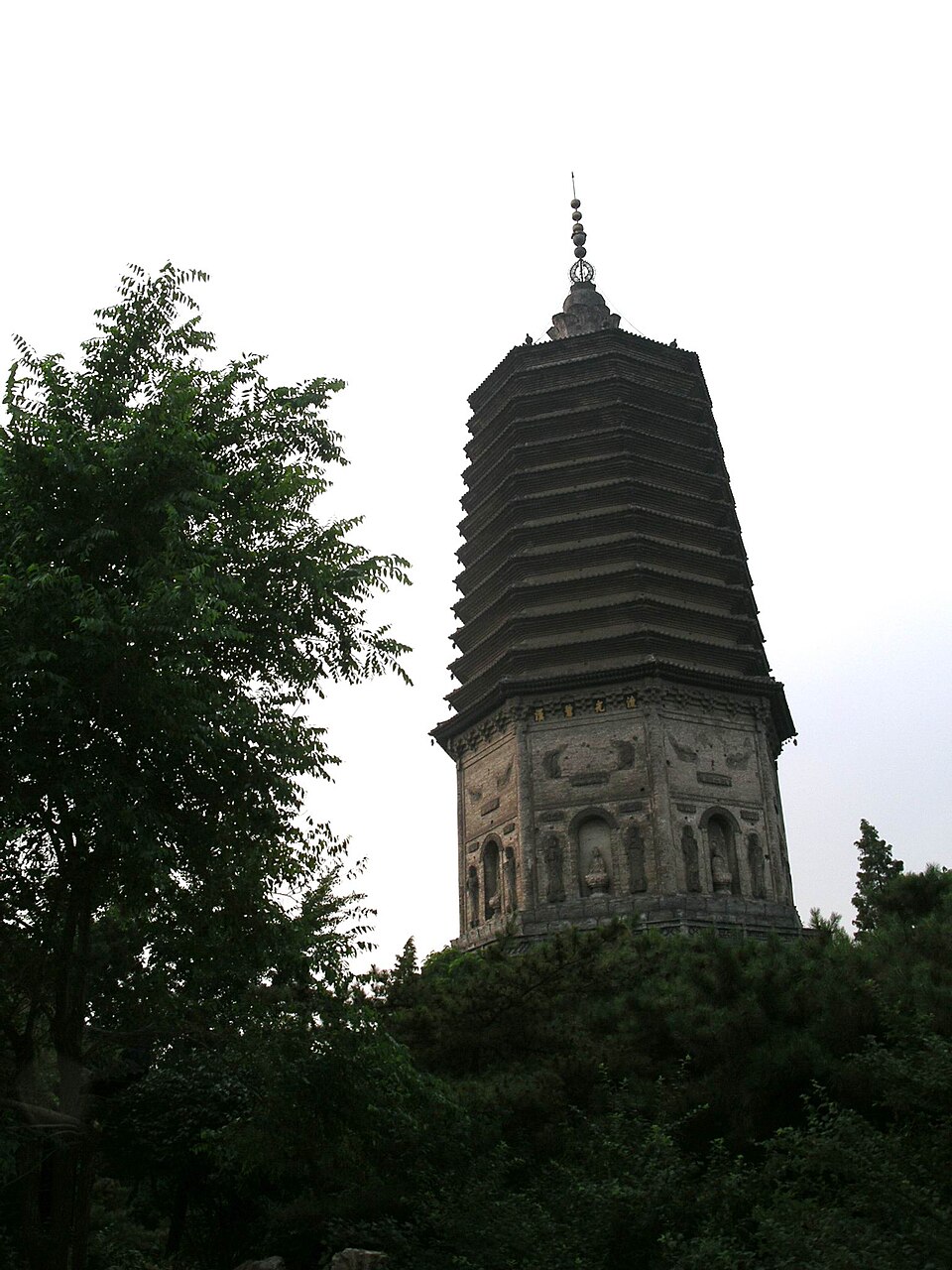
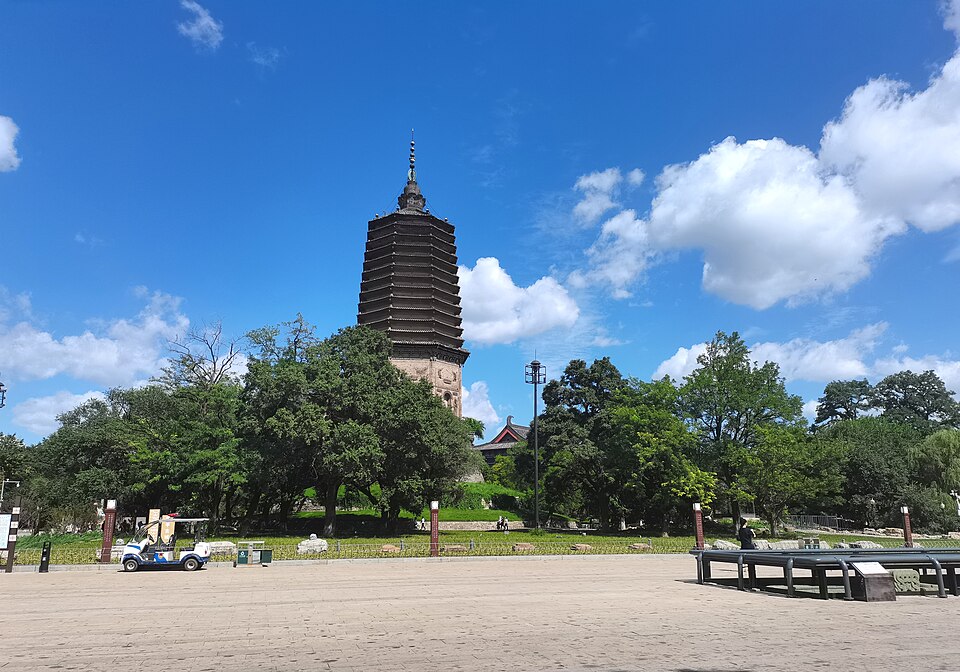
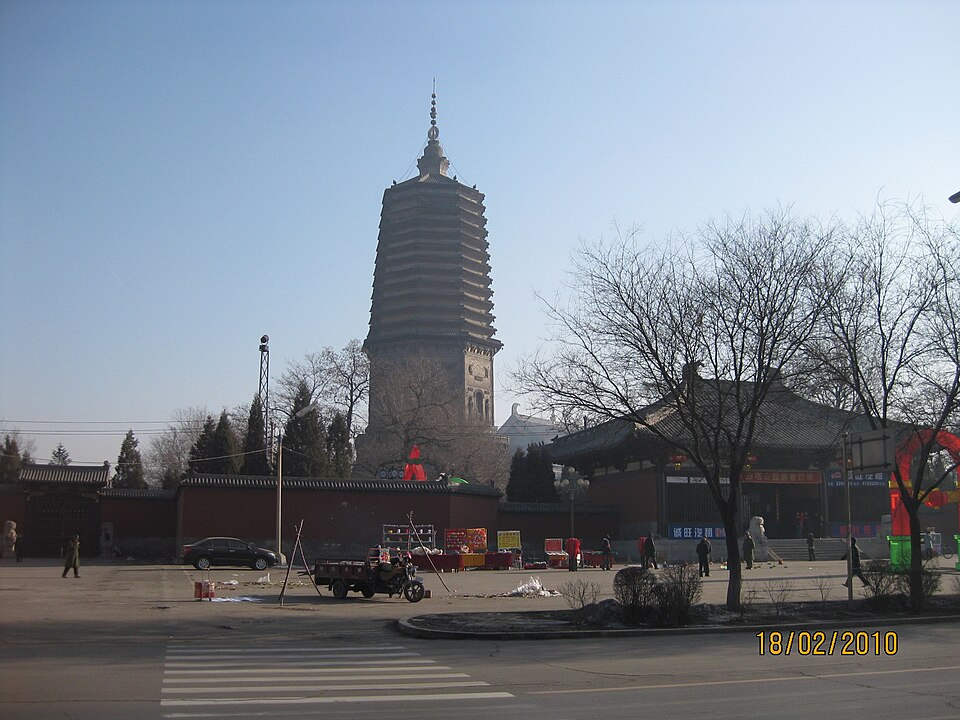
The pagoda is a solid, octagonal brick tower with thirteen tiers of close-set eaves, coated in white lime, which gives it its name. At 70.3 metres it rises on a tall stone base, with carved lions on the base and a seated Buddha flanked by bodhisattvas in a niche on each face of the main storey. Its date is disputed: inscriptions variously point to the Liao or the Jin (English sources often give 1189), and it was repaired under the Yuan, Ming and Qing. It originally belonged to Guangyou Temple, which Russian troops burned in 1900; the Japanese laid out Baita Park around the surviving pagoda in 1908, and the district is named after it. Morning light on a clear autumn day gives the best contrast against the sky.
Guangyou Temple
Next to the park, Guangyou Temple has been rebuilt on a large scale, covering about 60,000 square metres. The first temple on the site dates to 1145. It's now one of the city's main attractions, with a giant sandalwood Buddha. Check whether a combined ticket with the park is sold; this guide doesn't quote prices.
Dongjing City and the Dongjing tombs
East of the centre in Wensheng District, the Dongjing City site is the remains of the capital Nurhaci built in 1622. About 1.5 km further east, Dongjingling holds the tombs of members of his family moved here from Hetu Ala in 1624. Most were moved again to Yongling in 1658, but three tomb enclosures survive: those of his brother Shurhaci, his eldest son Cuyen, and his half-brother Murhaci with his son. Shurhaci's enclosure has a stele pavilion with a 1654 tablet in Manchu and Chinese. It became a national protected site in 2013. It's quiet and small, best for people interested in early Qing history, and a taxi from the pagoda is easiest.
Liaoyang Museum
The new museum, open since 2009, is the place to go on a rainy day, with finds covering the city's long history.
Liaoyang isn't a substitute for Shenyang's Mukden Palace and Qing tombs. Think of it as the prologue: where the Manchu state first set up a capital before moving north.
When to come to Liaoyang
May to October for comfortable walks; September and October are clearest. Winters are long and cold, with icy paths and short days, though the white pagoda in snow is striking.
Getting in and where to stay
- Rail: Liaoyang station, rebuilt in 2012, serves both the old Shenyang–Dalian railway and the Harbin–Dalian high-speed line, with about 98 trains a day. Trains from Shenyang are frequent and quick. A new west station building opened on 1 January 2025.
- Road: Shenyang is about an hour by car.
- Local: Baita Park is in the centre near the station; use taxis for the Dongjing sites.
Most people day-trip from Shenyang. If you stay, choose the centre near Baita Park.
Eating in Liaoyang
Northeastern food: dumplings, stews, pickled cabbage with pork, and big portions. Look for noodle and stew houses around the centre. Prices are modest and usually posted.
How to arrange the route
One day from Shenyang: Morning train to Liaoyang, the White Pagoda and Baita Park, Guangyou Temple, lunch, then a taxi to Dongjing City and Dongjingling in the afternoon, and back to Shenyang.
As a stop on the line: Break the journey between Shenyang and Anshan, where the Qianshan mountains are next, with a half day for the pagoda and temple.
What to cut if short on time
Keep the pagoda and Guangyou Temple, which are next to each other. Cut the Dongjing sites unless early Qing history is your interest, and keep the museum for rain.
Things to confirm before you go
- Ticket arrangements for Baita Park and Guangyou Temple.
- Dongjingling opening, as it's small and may have limited hours.
- Train times back to Shenyang.
- Icy paths in winter.
Frequently asked questions
How long do I need in Liaoyang?
A half day for the pagoda and temple, a full day with the Dongjing sites.
Is Liaoyang worth a day trip from Shenyang?
Yes, if you've already seen Shenyang's palace and tombs and want the older story. The pagoda is one of the finest in the northeast.
How old is the White Pagoda?
It dates from the Liao or Jin dynasty, 11th to 12th century, with later repairs; the exact year is disputed.
Sources
The facts in this article were checked against the following sources, retrieved September 28, 2026, and rechecked on October 18, 2026.
- Liaoyang https://en.wikipedia.org/wiki/Liaoyang
- Liaoyang White Pagoda (Chinese) https://zh.wikipedia.org/wiki/辽阳白塔
- Dongjing tombs (Chinese) https://zh.wikipedia.org/wiki/东京陵
- Liaoyang (Chinese) https://zh.wikipedia.org/wiki/辽阳市
- Liaoyang station (Chinese) https://zh.wikipedia.org/wiki/辽阳站
Tickets change; this article does not quote yuan amounts.
All photos are from Wikimedia Commons, used under CC licenses; re-use requires attribution.
- liaoyang-baita.jpg from File:Wahrzeichen von Liaoyang.JPG, by Martin Kiechle, CC BY-SA 3.0
- liaoyang-baita-park.jpg from File:辽阳白塔公园09.jpg, by 红烧腰果, CC BY 4.0
- liaoyang-city.jpg from File:辽阳白塔 - panoramio.jpg, by 东京村子, CC BY-SA 3.0