Shenyang Travel Guide: The Qing Capital, the Warlord Years and the Factory City
Shenyang, capital of Liaoning, tells three histories in three days. The Mukden Palace and the Zhaoling and Fuling tombs, all on the World Heritage list, are where the Qing dynasty began. Marshal Zhang's Mansion and the 9.18 Historical Museum cover the warlord era and the Japanese invasion of 1931. The China Industrial Museum in Tiexi shows the factory city that followed. The metro reaches all of them, and the fastest trains from Beijing Chaoyang take about two and a half hours.
Three layers of one city
Shenyang sits on the Hun River in central Liaoning and has been called Shengjing and Fengtian across 2,300 years of city history. In 1625 the Later Jin khan Nurhaci moved his capital here from Liaoyang, and in 1636 his son Hong Taiji proclaimed the Qing dynasty in this palace. After the Qing took Beijing, Shenyang stayed its secondary capital for nearly three centuries. In the early twentieth century it was the base of the Zhang family warlords, then the place where Japan's seizure of the Northeast began on September 18, 1931. After 1949 the factories of Tiexi made it the "cradle of New China's industry". One sight per layer per day is a good rhythm.
When to come to Shenyang
Shenyang has a temperate monsoon climate, with an annual mean of 8.8°C and about 570 mm of precipitation. May to September is the comfortable stretch, with cool evenings along the Hun River. Winter is long and properly cold, but indoor heating is strong, and snow on the palace's red walls and glazed roofs is worth dressing up for. Golden Week brings queues at the palace and the mansion; avoid it if you can.
Getting in and around
- By high-speed rail: fastest trains from Beijing Chaoyang to Shenyang North take about 2 hours 30 minutes. Shenyang has three main stations, Shenyang North, Shenyang and Shenyang South; check yours.
- Mukden Palace: Metro Line 1 to Huaiyuanmen, exit B, then about 550 m on foot; or Zhongjie, exit B2, about 900 m.
- Beiling Park (Zhaoling): Metro Line 2 to Beiling Park station.
- 9.18 Historical Museum: Metro Line 10 to Beita, exit A, or Line 4 to Beidaying, exit C, each about a 15-minute walk.
- China Industrial Museum: Metro Line 1 to Qigong Jie, exit B, then bus 300; or Line 10 to Tawan Jie, exit C, then bus 175.
- Where to stay: around Zhongjie, within walking distance of the palace and the mansion.
Places worth visiting
Mukden Palace
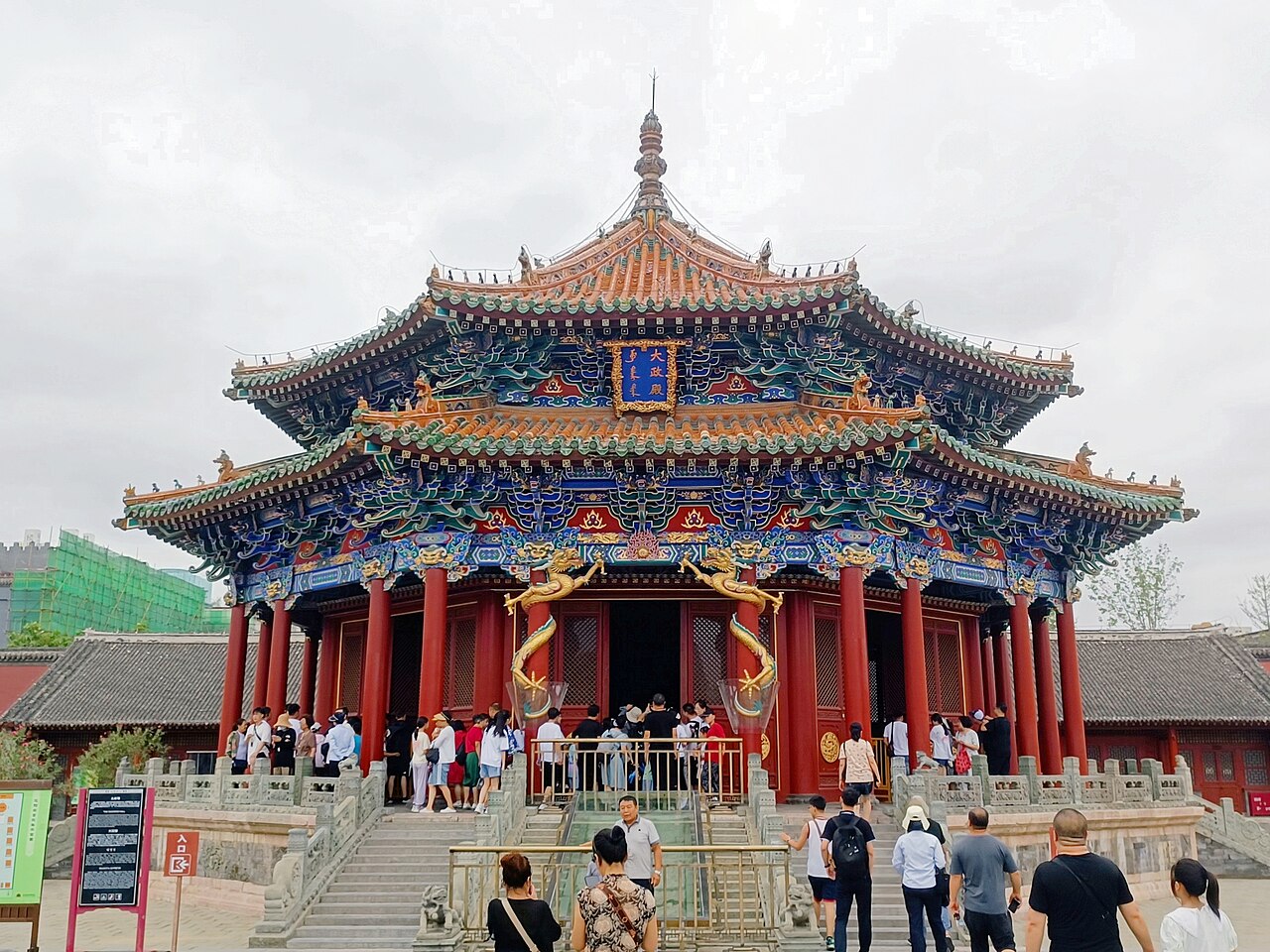
Construction began in the third month of 1625, the year Nurhaci moved his capital, and the compound now covers about 60,000 square metres. It is a fraction of the size of Beijing's Forbidden City, but one of only two complete imperial palace complexes left in China. In 1636 Hong Taiji declared the Qing here and named the main buildings, Qingning Palace, Chongzheng Hall and the Daqing Gate, names they still carry.
The palace has three sections, and the eastern court is the one to see first. Dazheng Hall, an octagonal double-eaved pavilion on a stone base, faces two rows of ten royal pavilions, an arrangement modelled on the tent camps of the Eight Banners on campaign; here the khan held council and ceremonies. The central court follows the Manchu principle of "palace high, hall low": the empress's Qingning Palace stands on a 3.8 m platform above the emperor's audience hall, and behind it the three-storey Phoenix Tower was once the tallest building in town, later used to store imperial seals and portraits. The western court was added under Qianlong, with a theatre stage at Jiayin Hall and Wensuge, built to house a copy of the Complete Library of the Four Treasuries.
The palace became a museum in 1955, joined the first batch of national protected sites in 1961, was added to the World Heritage list in July 2004 as an extension of the Imperial Palaces of the Ming and Qing, and was rated a first-class national museum in 2017. Allow half a day.
Marshal Zhang's Mansion
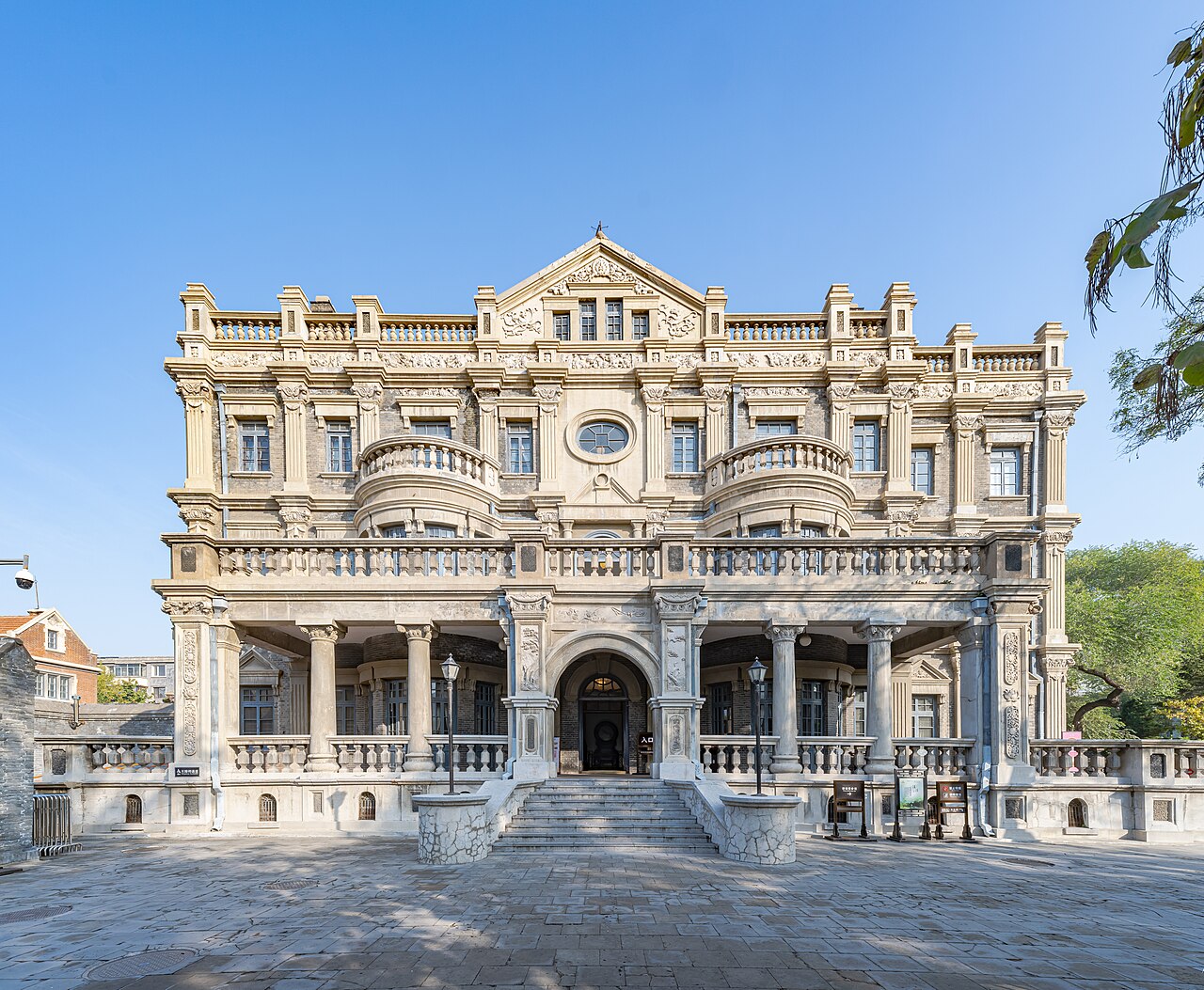
Zhang Zuolin began building the mansion in 1914, and for two decades it was the real seat of power in the Northeast. The compound covers about 29,000 square metres: a traditional three-courtyard house in the centre, the three-storey Western-style Great Green Building where father and son worked, the Small Green Building, a group of red-brick houses in the west court, and the residence of Zhao Yidi, Zhang Xueliang's companion, just outside. Chinese, Western and Japanese styles stand side by side.
The stories are what make it. On June 4, 1928, Zhang Zuolin's train was blown up by explosives planted by the Japanese at Santongqiao, where the Beijing–Fengtian and South Manchuria lines crossed, and he died of his wounds here. On December 29 that year his son Zhang Xueliang announced the Northeast's allegiance to the Nationalist government. On the night of January 10, 1929, Yang Yuting and Chang Yinhuai were executed on Zhang Xueliang's orders in the Tiger Hall of the Great Green Building. The mansion became a national protected site in 1996 and the Zhang Family Marshal's Mansion Museum in 2002. It is a walk from the palace.
Zhaoling at Beiling Park
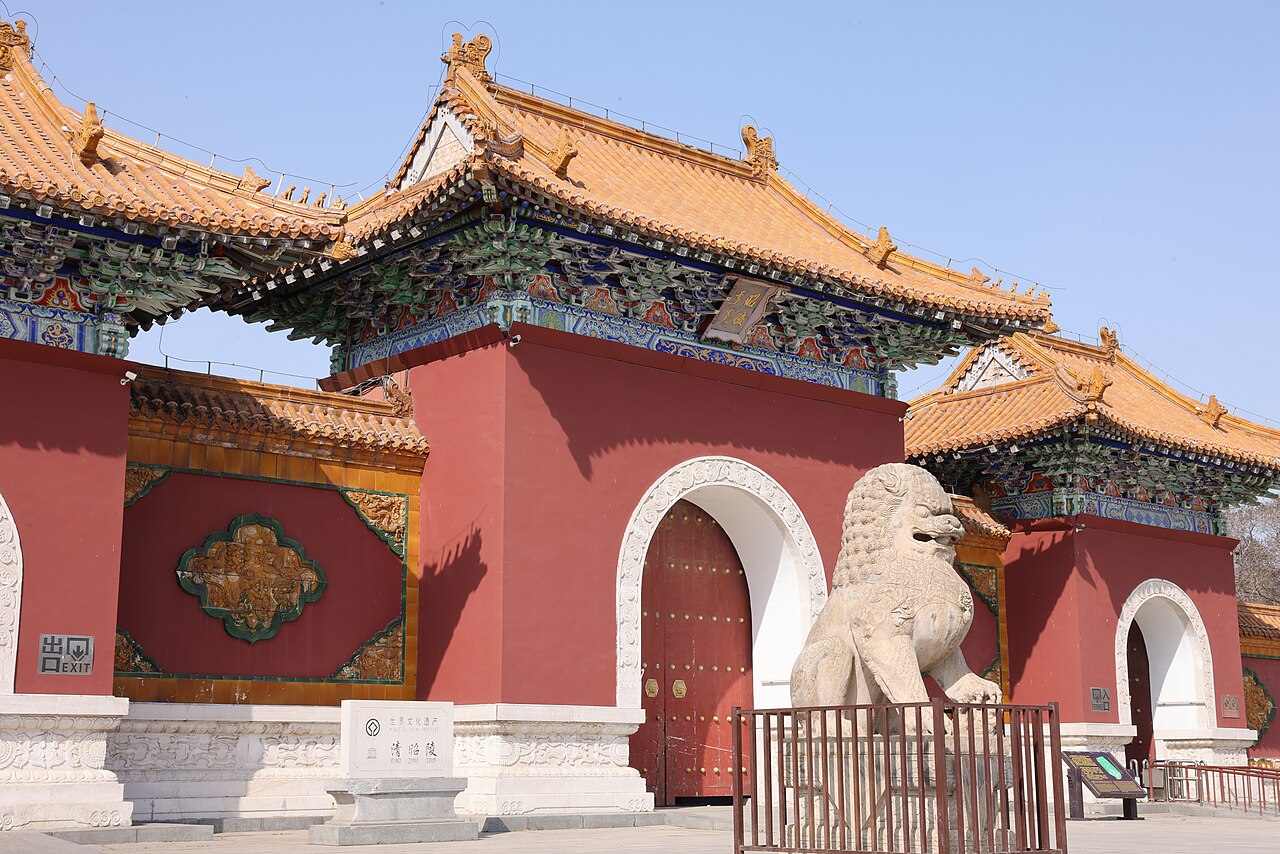
Zhaoling, the North Tomb, holds Hong Taiji and Empress Xiaoduan. Work started in 1643 and was largely finished by 1651. The layout runs south to north in three parts: dismounting steles, huabiao columns, stone lions and a stone archway; the Red Gate and a sacred way lined with stone animals; and finally the walled Square City with Long'en Hall, the crescent wall and the burial mound, a complete early Qing tomb.
In 1927 the Fengtian provincial government turned the grounds into Beiling Park, now about 3.3 million square metres. The tomb takes only the middle; the rest is pine woods and lakes where local people walk every day. Fangxiu Garden flowers in spring, and in winter the halls are quiet under snow. Zhaoling was added to the World Heritage list in July 2004 with the Imperial Tombs of the Ming and Qing. Allow a couple of hours for the central axis.
Fuling Tomb
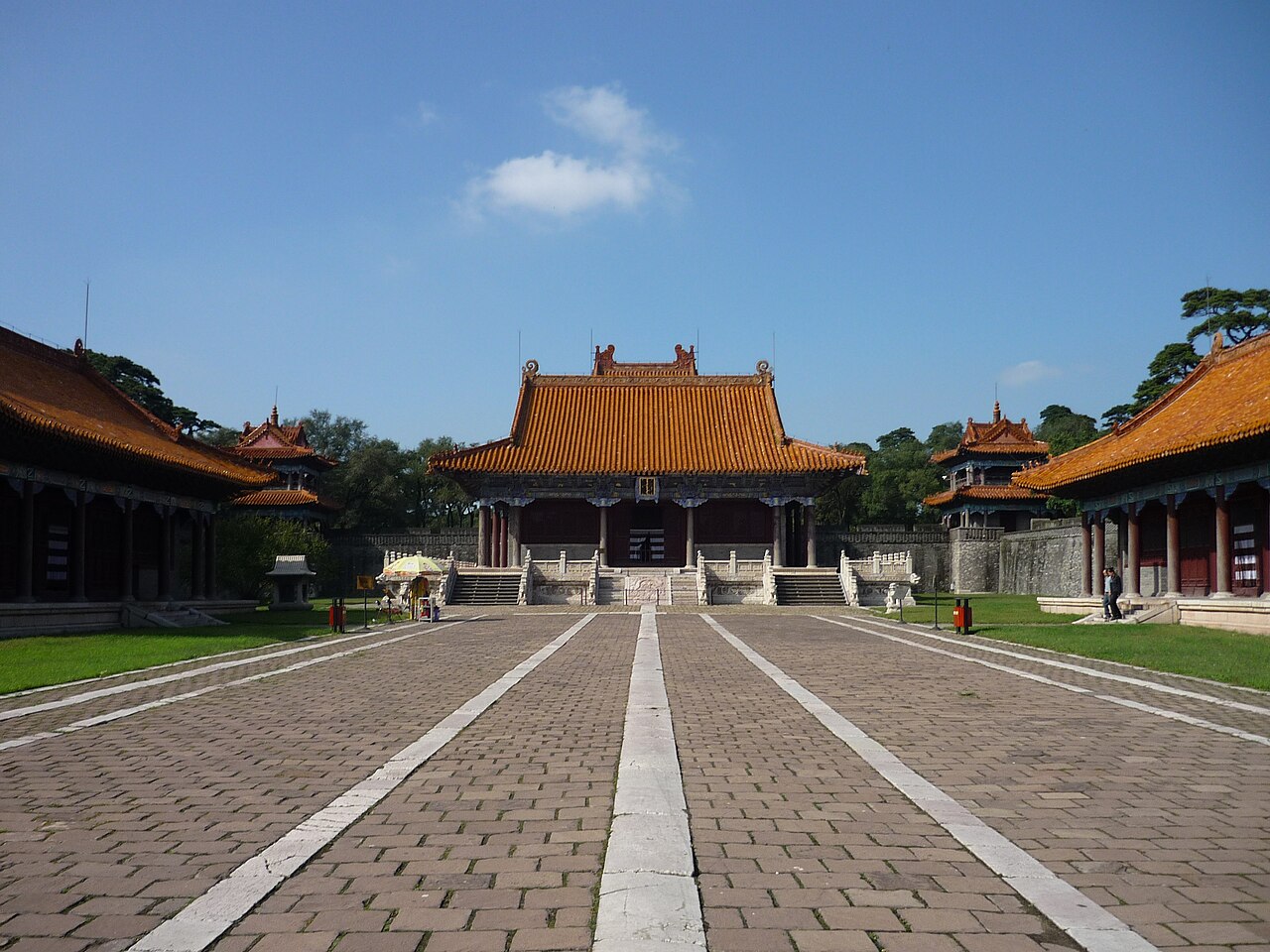
Fuling, the East Tomb, stands on Tianzhu Hill in the northeast of the city, above the Hun River, and holds Nurhaci and Empress Xiaocigao. First called simply the Khan's Tomb, it was renamed Fuling, "lasting good fortune", in 1636. Unlike Zhaoling, it climbs: the front court, the Square City and the treasure city rise terrace by terrace inside red walls 900 m long and 340 m wide.
At the end of the sacred way come the 108 steps, then a bridge and the stele pavilion of 1688 with an imperial inscription in three languages. Long'en Hall stands at the centre of the Square City; behind it the Bright Tower holds the tomb stele, and under the mound lie the emperor, the empress and three consorts who followed them in death. The grounds became a park in 1929, and "green Tianzhu" was one of the old Eight Views of Shengjing; autumn colours the pines best. Fuling joined the World Heritage list with Zhaoling in 2004. Taxis are the easiest way there.
The 9.18 Historical Museum
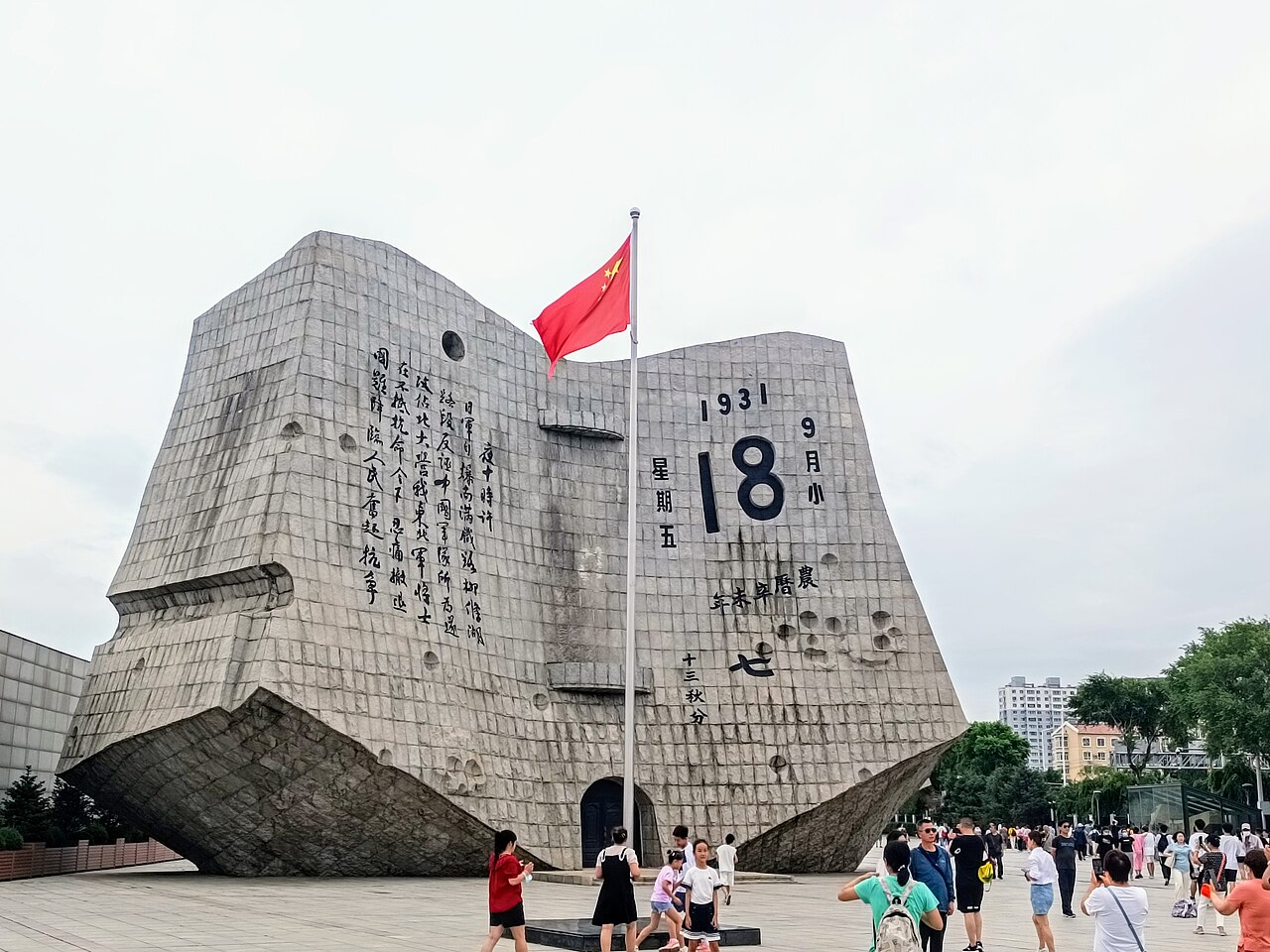
On the night of September 18, 1931, Japanese troops blew up a section of the South Manchuria Railway near Liutiao Lake, blamed Chinese soldiers and used it to attack the Beidaying garrison, the start of fourteen years of occupation of the Northeast. The museum stands near the site on Wanghua South Street in Dadong District. In front is the Calendar Stele, a huge stone desk calendar open at the date of the incident, its surface scarred with shell holes and skulls. It was designed by the sculptor He Zhongling of the Lu Xun Academy of Fine Arts and completed in 1991 for the sixtieth anniversary; the museum was later expanded into a first-class national museum.
The exhibition runs from the Liutiao Lake explosion through the whole of the fourteen-year resistance, mostly with real objects and photographs. In the grounds is the Stele of Gratitude to Chinese Foster Parents, unveiled in 1999 with money raised by 1,450 Japanese war orphans left behind in the Northeast, to honour the Chinese families who raised them. Give it two quiet hours. Entry is free; on holidays you may need to reserve, so bring ID.
The China Industrial Museum
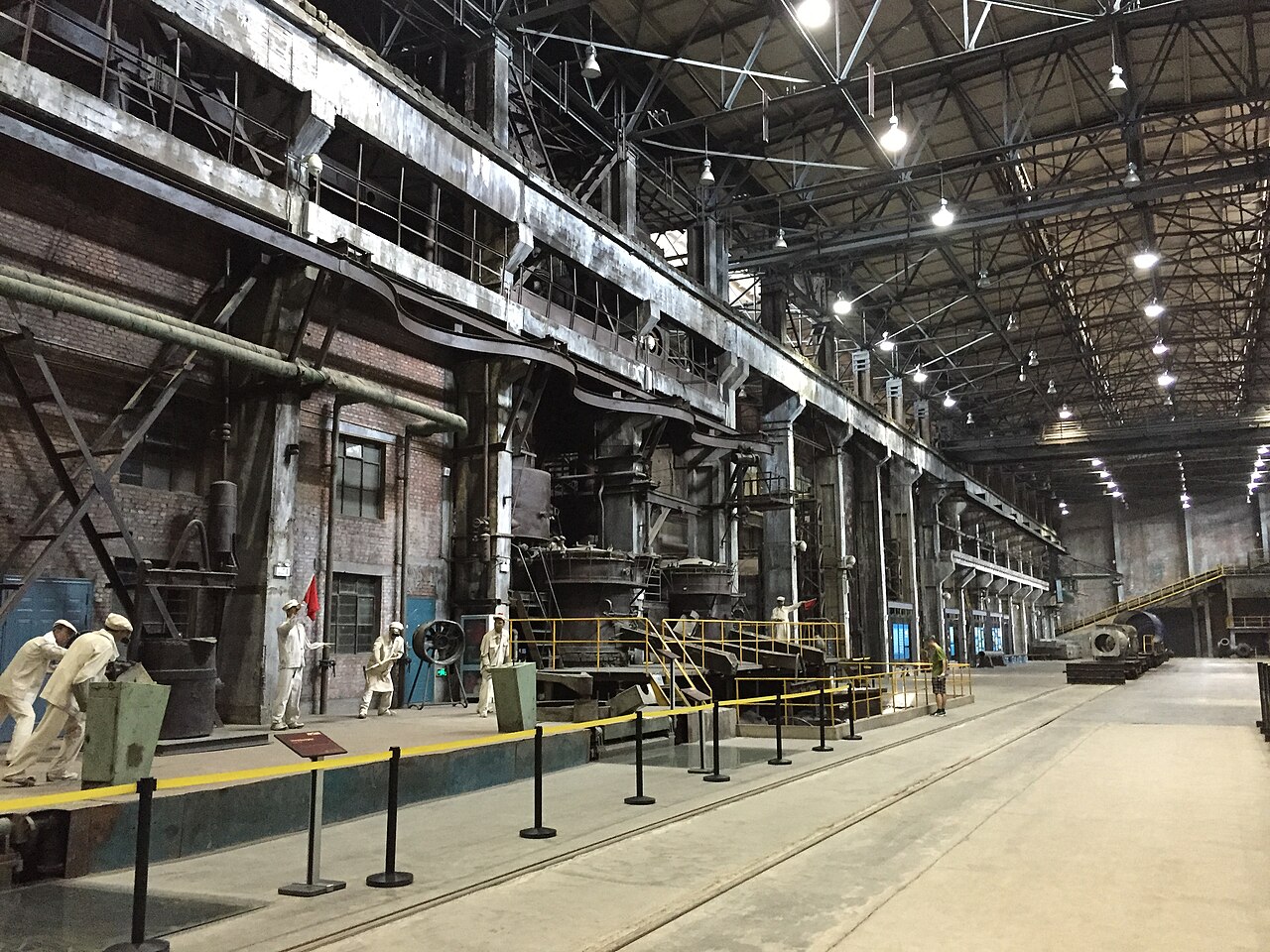
The museum fills the old foundry workshop of the Shenyang Casting Plant in Tiexi; the workshop dates from 1956, the plant from 1939. The plant poured its last molten iron on April 17, 2007, and moved out. The workshop was listed as a Liaoning protected site in 2008, and the museum opened on May 18, 2012, after an initial investment of 550 million yuan, covering 80,000 square metres of land and 53,000 of floor space.
The foundry hall keeps the workshop as it was, with cupola furnaces, overhead cranes and sand moulds in place. The general history hall, 2,300 square metres on one floor, traces modern Chinese industry from its beginnings, with machine tools, cars and metallurgy exhibits in other halls. Tiexi was once China's largest industrial district, and this is where that past is easiest to picture.
Eating in Shenyang
Laobian dumplings, with fillings fried before they are wrapped and steamed, are the city's oldest name. Majia Shaomai, an old Hui restaurant, makes beef shaomai pleated like flowers. Li Lianwei's smoked meat comes wrapped in baked pancakes. What locals really love is chicken frames, smoked, fried or stir-fried, eaten with a bottle of beer late at night. On Xita Street, Korean-style cold noodles, sour and icy, have fans even in winter. Zhongjie's food streets are easy for dinner. Portions are big; order less than you think.
How to arrange the route
Day 1, the Qing capital: Mukden Palace in the morning, walk to Marshal Zhang's Mansion, lunch near Zhongjie, the mansion and Zhao Yidi's residence in the afternoon.
Day 2, tomb and museum: Beiling Park and Zhaoling in the morning, the 9.18 Historical Museum in the afternoon, arriving at least two hours before closing.
Day 3, east and west: Fuling and the 108 steps early, then across to Tiexi for the China Industrial Museum, and chicken frames and beer nearby in the evening.
Dalian and the sea are two hours south; Harbin, further north, is the usual winter pairing. Around Shenyang, Fushun has the Manchu origin sites at Hetuala, Benxi the Water Cave boat trip, Liaoyang the White Pagoda, Tieling Longshou Mountain, Anshan the Qianshan temples and Dandong the Yalu border. West and south, Chaoyang has Phoenix Mountain, and Jinzhou, Huludao with the walled town of Xingcheng, Panjin, Yingkou and Fuxin cover the Bohai coast and the industrial west.
What to cut if short on time
With one day, do the Mukden Palace and Marshal Zhang's Mansion, which are within walking distance. With two, add Zhaoling and the 9.18 Historical Museum. Fuling and the China Industrial Museum are the first to drop, since they sit at opposite ends of the city.
Things to confirm before you go
- Opening hours at the palace, the mansion and both tombs, which change with the seasons.
- Reservations for the 9.18 Historical Museum on holidays; bring ID.
- Winter clothing: a proper down coat, hat, gloves and shoes with grip. Keep off frozen lakes in the tomb parks.
- Quiet, respectful behaviour at the tombs and the museum.
Frequently asked questions
How many days do I need in Shenyang?
Three days covers the palace, both tombs, the mansion and the two museums at an easy pace. The palace and mansion alone fit in one day.
How does the Mukden Palace compare with the Forbidden City?
It was the Qing palace before the conquest of China, is about a twelfth the size of Beijing's, and has a stronger Manchu, Mongol and Tibetan character. Both are on the same World Heritage listing.
What does "one palace, two tombs" mean?
The Mukden Palace plus the tombs of Hong Taiji (Zhaoling) and Nurhaci (Fuling), all three World Heritage and the core of Shenyang's historic sights.
Is winter a good time to visit Shenyang?
Yes, if you dress for it. Snow on the palace is beautiful, the indoor sights are warm, and shorter days just mean a looser schedule.
Sources
The facts in this article were checked against the following sources, retrieved September 1, 2026, and rechecked on October 20, 2026.
- Shenyang (city) https://zh.wikipedia.org/wiki/沈阳市
- Mukden Palace https://zh.wikipedia.org/wiki/沈阳故宫
- Zhang Xueliang's Former Residence https://zh.wikipedia.org/wiki/张学良旧居
- Huanggutun Incident https://zh.wikipedia.org/wiki/皇姑屯事件
- Northeast Flag Replacement https://zh.wikipedia.org/wiki/东北易帜
- Zhaoling (Qing) https://zh.wikipedia.org/wiki/清昭陵
- Fuling (Qing) https://zh.wikipedia.org/wiki/清福陵
- Yang Yuting https://zh.wikipedia.org/wiki/杨宇霆
- Metro routes to Shenyang sights (Shenyang Bendibao) https://m.sy.bendibao.com/xiuxian/80600.shtm
- Shenyang traffic police holiday travel guide, October 2025 https://www.shenyang.gov.cn/zwgk/zwdt/bxgz/202510/t20251004_4916144.html
- Beijing Chaoyang to Shenyang North timetable https://www.gaotie.com.cn/lieche/beijingchaoyang-shenyangbei.html
The Chinese Wikipedia entry for the 9.18 Historical Museum is incomplete; its founding history, the Calendar Stele's design and the later expansion were verified against the museum's official introductions and media reports. The China Industrial Museum entry follows the entry text as retrieved.
All photos are from Wikimedia Commons, used under CC licenses; re-use requires attribution.
- shenyang-city.jpg from File 沈阳浑河大桥天际线.jpg, by KangTyngrwey, CC BY-SA 4.0
- shenyang-gugong.jpg from File 沈阳故宫大政殿.jpg, by KangTyngrwey, CC BY-SA 4.0
- shenyang-shuaifu.jpg from File 沈阳张氏帅府大青楼2024.10 (2).jpg, by ScareCriterion12, CC0
- shenyang-zhaoling.jpg from File Zhao Mausoleum (Qing Dynasty)-清昭陵正门-北陵公园.jpg, by 名字长的让人受不了, CC BY-SA 4.0
- shenyang-fuling.jpg from File Shenyang Fuling Tomb2.jpg, by Suikotei, CC BY-SA 4.0
- shenyang-918.jpg from File 沈阳九一八纪念馆1.jpg, by KangTyngrwey, CC BY-SA 4.0
- shenyang-industry.jpg from File 中国工业博物馆内部铸造馆2.jpg, by Tonyxy1992, CC BY-SA 4.0