Qiqihar Travel Guide: Zhalong Cranes, Wetlands and Barbecue
Qiqihar, in western Heilongjiang, is the base for Zhalong Nature Reserve, one of the most important breeding grounds of the red-crowned crane. The reserve's visitor area is about 30 km from the city, roughly 30 to 40 minutes by car or an hour on bus 306, and semi-wild cranes are flown several times a day for visitors. Wild birds are the bigger prize in spring and autumn migration. Back in town, Qiqihar barbecue is the meal that made the city famous across China. Two days is a good length.
Zhalong in brief
Zhalong is a vast reed marsh on the Wuyu'er River, listed as a Wetland of International Importance under the Ramsar Convention. Red-crowned cranes breed here along with several other crane species, plus swan geese, herons and many ducks. Most visitors see two different things:
- The flight demonstrations. Cranes raised at the reserve are released to fly over the visitor area at fixed times. In 2025 the peak-season schedule (16 April to 31 October) was 9:30, 11:00, 14:00 and 15:30, and from 1 November it dropped to three flights at 10:00, 12:30 and 15:00. Check the current timetable for your date.
- Wild birds. Truly wild cranes are shyer and more scattered. Spring (around late March to April) and autumn (September to October) migration bring the largest numbers. Binoculars and patience are more useful than a long lens.
Places worth visiting
Zhalong red-crowned cranes
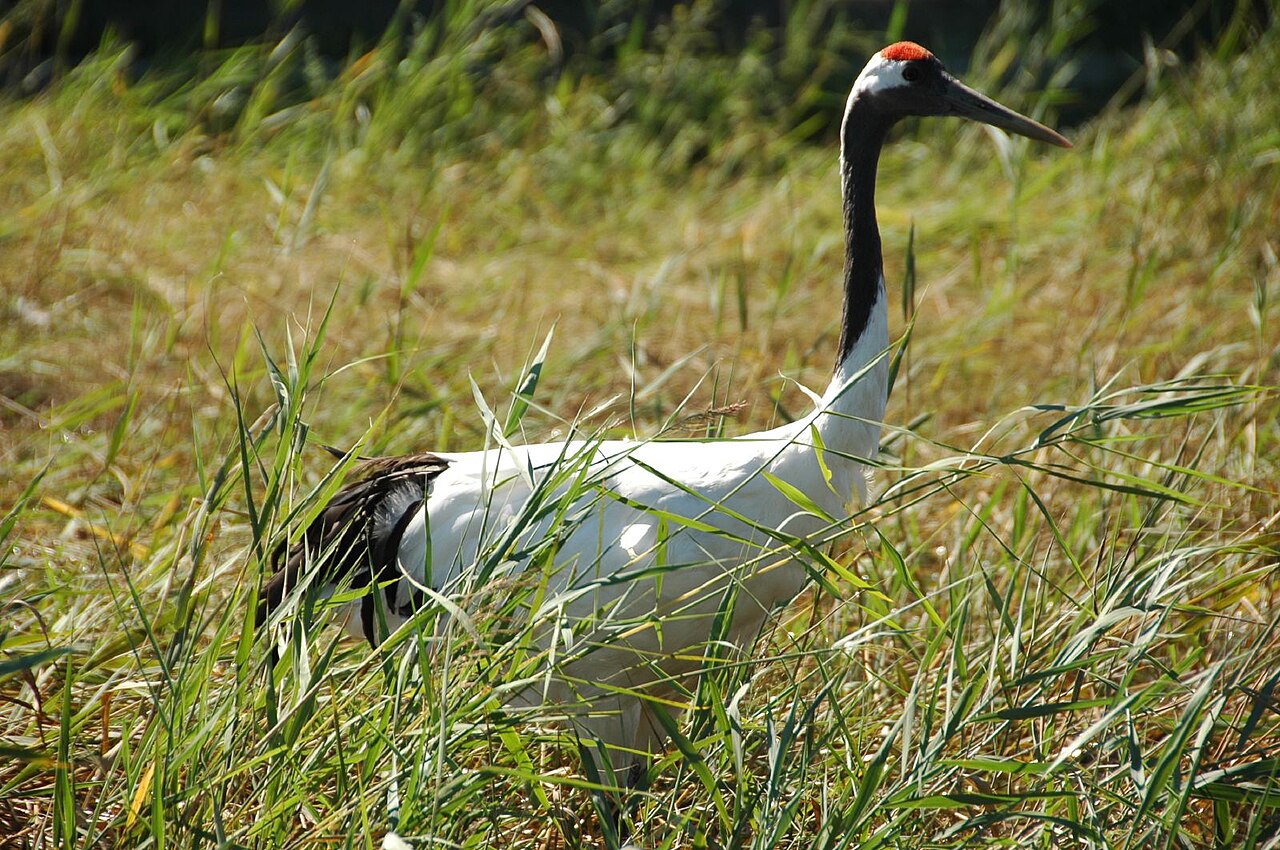
Arrive before the first flight of the morning, when the light is soft and the boardwalks are quiet. After the flight, walk out along the boardwalks and the viewing tower into the reeds, where you are more likely to spot wild birds. Keep to the paths, keep your voice down and do not try to approach nesting birds in spring. Ticket rules follow the reserve's own notice.
Swan geese and the wider marsh
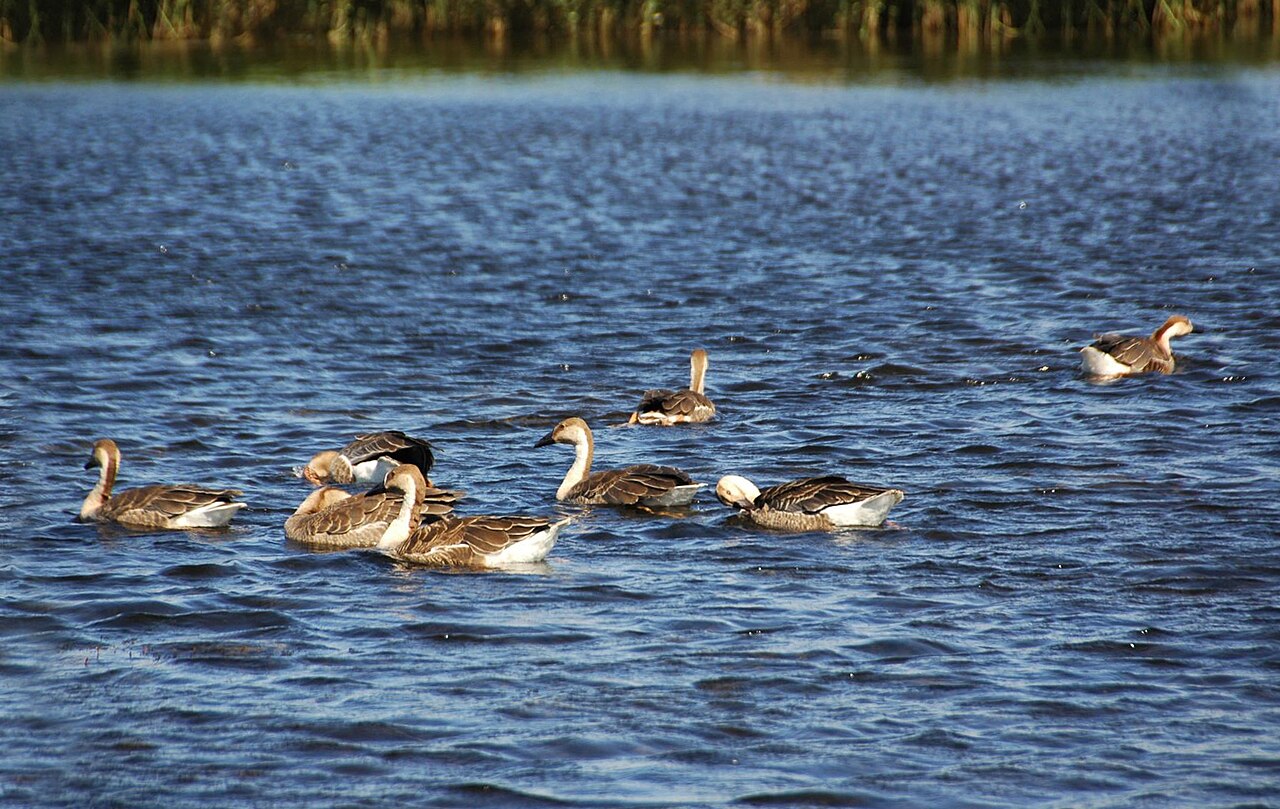
Zhalong's waterbirds are not only cranes. Swan geese, a species of conservation concern, gather in the open water, and in migration season the skies fill with ducks and geese. Serious birders hire local guides who know where the birds are feeding on the day.
Qiqihar city
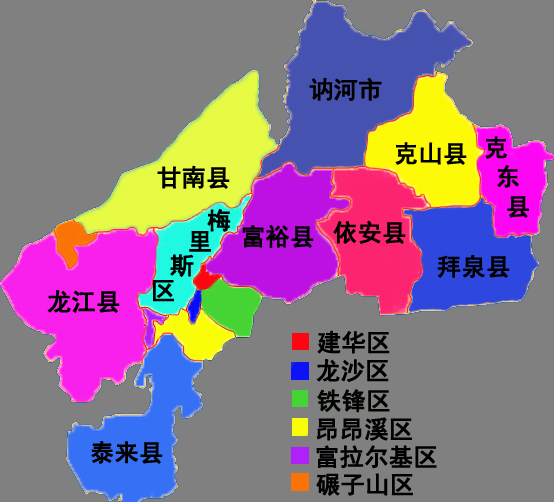
The city is mainly a base, but Longsha Park makes an easy hour, and the old Bukui mosque, named after the city's historic name, reflects the long Hui presence here. Evenings are about food.
Waterbirds through the seasons
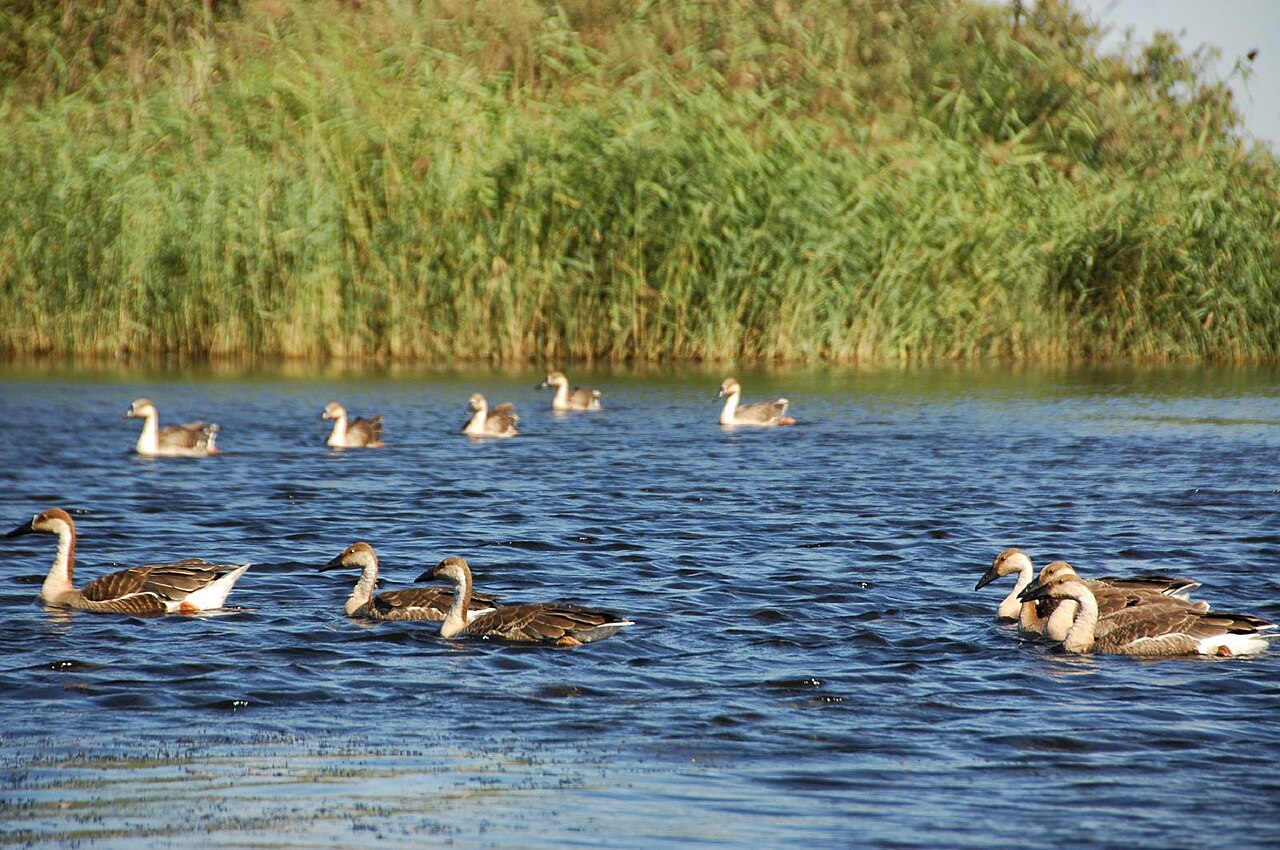
In summer the marsh is green and breeding is underway; in winter it freezes, and only the reserve's resident cranes remain, standing out against the snow. Winter photographs can be striking, but the cold is severe, so plan for short sessions outdoors.
When to come to Qiqihar
For wild birds, late March to May and September to October. For green marsh and comfortable walking, June to August, with mosquitoes as the price. Winter, from November to March, is very cold but still offers the demonstration flights on a shorter timetable. Whatever the season, the morning is the best time at Zhalong.
Getting in and where to stay
- From Harbin: high-speed trains link Harbin with Qiqihar South in well under two hours; Harbin has the main international airport.
- Air: Qiqihar Sanjiazi Airport has domestic flights.
- To Zhalong: bus 306 runs from the Darunfa stop in the city to the reserve in about an hour, with more frequent returns after the flight times on peak-season weekends. A taxi or car takes 30 to 40 minutes.
- Where to stay: in the city for restaurants and transport. A few farm stays near the reserve suit dawn birders.
Daqing lies between Qiqihar and Harbin; Heihe on the Amur and Hulunbuir's grasslands are longer journeys north and west.
Eating in Qiqihar
Qiqihar barbecue is the local pride: marinated beef and other meats grilled yourself at the table over a hotplate, with dipping sauces and side dishes. It is a social meal and best with a group. Northeastern stews and dumplings fill the rest of the menu, and they are very welcome after a cold morning on the marsh.
How to arrange the route
Day 1: arrive by train from Harbin, Longsha Park, barbecue dinner.
Day 2: bus or taxi to Zhalong for the first flight, walk the boardwalks, stay for a second flight or return to the city by mid-afternoon.
Day 3 (birders): a second, earlier morning at Zhalong with a local guide, then onward.
What to cut if short on time
A day trip from Harbin is possible if you take an early train and go straight to Zhalong by taxi. Cut the city sights first. Do not cut the morning at the reserve.
Things to confirm before you go
- The current crane flight timetable; it changes on 1 November and 16 April.
- Reserve ticket prices and opening hours on the official notice.
- Bus 306 times for your return.
- Mosquito repellent in summer and serious cold-weather clothing in winter.
Frequently asked questions
How do I get from Qiqihar to Zhalong?
Take bus 306 from the Darunfa stop, about an hour, or a taxi of 30 to 40 minutes. The reserve is about 30 km from the city.
Are the cranes at Zhalong wild?
The cranes in the flight demonstrations are raised at the reserve. Wild red-crowned cranes also breed in the marsh but are harder to see.
What time are the crane flights?
In 2025 they ran at 9:30, 11:00, 14:00 and 15:30 from mid-April to October, and at 10:00, 12:30 and 15:00 in winter. Check the schedule for your date.
Sources
The facts in this article were checked against the following sources, retrieved September 16, 2026, and rechecked on October 20, 2026.
- Qiqihar https://en.wikipedia.org/wiki/Qiqihar
- Zhalong Nature Reserve https://en.wikipedia.org/wiki/Zhalong_Nature_Reserve
- Zhalong ecological tourism area crane flight schedule change (Beijing News) https://www.bjnews.com.cn/detail/1729779064168132.html
- Zhalong visitor guide 2025 (Dahe Piao) https://www.dahepiao.com/lvyounews1/20250611516451.html
- Zhalong and the wetlands, Qiqihar summer feature (Tencent News, June 2025) https://new.qq.com/rain/a/20250620A08XR500
Tickets change; this article does not quote yuan amounts, so check the official notice for your date.
All photos are from Wikimedia Commons, used under CC licenses; re-use requires attribution.
- qiqihar-3.jpg from File:Grus japonensis Qiqihar.jpg, by KongFu Wang, CC BY-SA 2.0
- qiqihar-1.jpg from File:Anser cygnoides Qiqihar 1.jpg, by KongFu Wang, CC BY-SA 2.0
- qiqihar-city.jpg from File:Qiqihar City.jpg, by Geezer, CC BY-SA 3.0
- qiqihar-2.jpg from File:Anser cygnoides Qiqihar 2.jpg, by KongFu Wang, CC BY-SA 2.0