Heihe Travel Guide: The Amur Riverfront Facing Russia
Heihe sits on the south bank of the Amur (called the Heilong River in Chinese), directly across from the Russian city of Blagoveshchensk. The reason to come is the view and the history: a riverfront promenade where Russia is close enough to read the buildings, and, about 30 km south, the old town of Aigun where the 1858 treaty that moved this border was signed. Two days covers both comfortably. Crossing into Russia is a separate project that depends on your passport, so plan the trip so it works without it.
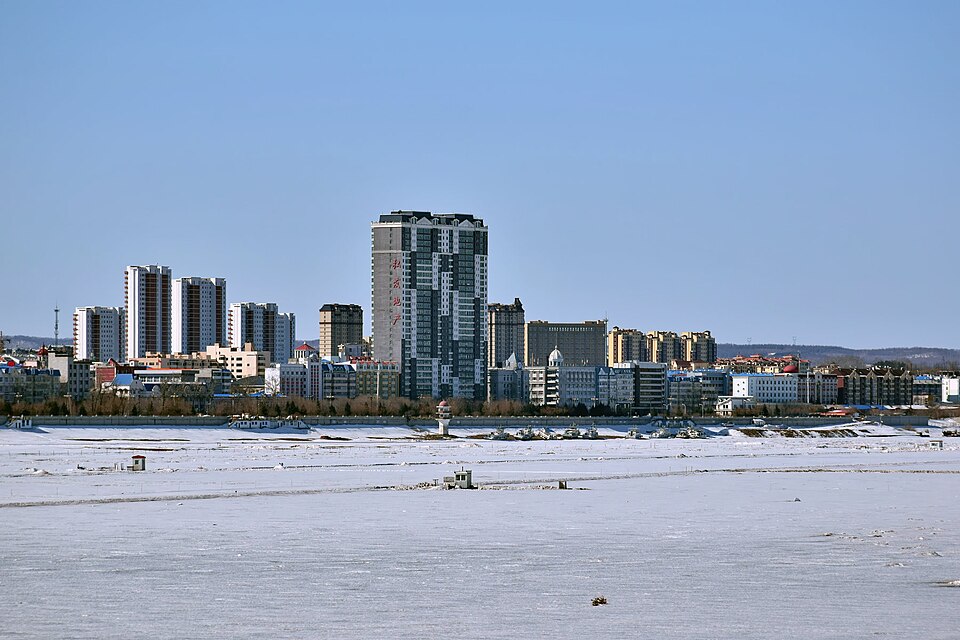
The riverfront: what you actually do
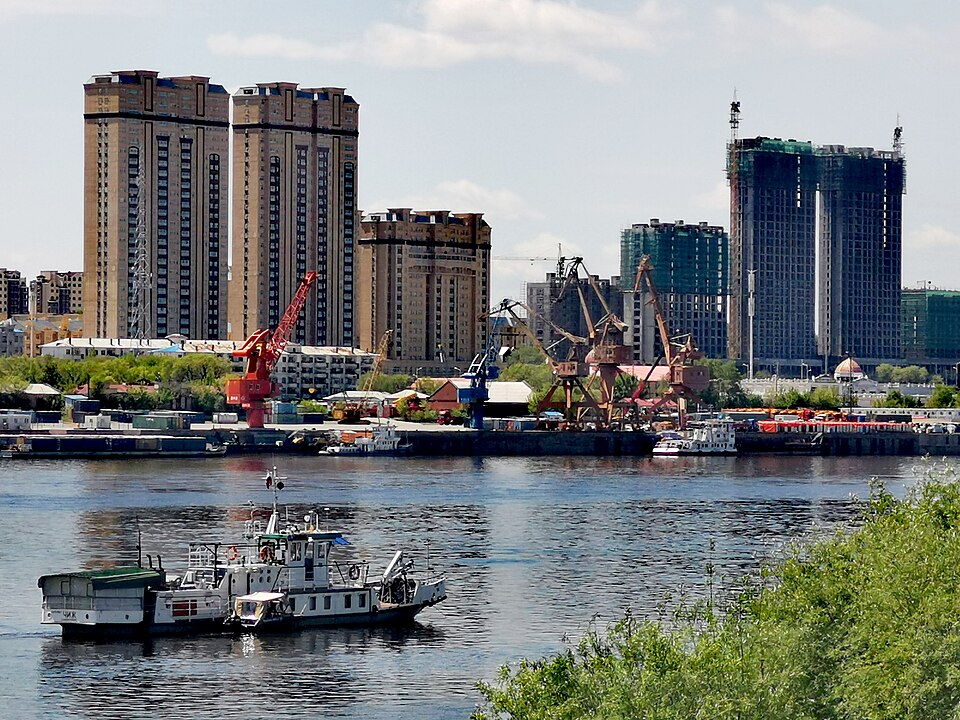
Most of a Heihe visit happens on the long embankment park along the Amur. Walk it twice if you can: once in daylight, when you can pick out Blagoveshchensk's waterfront and churches across the water, and again after dark, when both banks light up. Summer evenings are the liveliest, with locals out walking, dancing and fishing.
Russian influence shows up in the shops near the river, which sell chocolate, bread, cosmetics and souvenirs imported from the other side. These streets are fine for an hour; they don't need a whole afternoon.
Boat trips on the river run in the warm months when demand allows. Operators, routes and prices change from season to season, and this guide does not quote them. Ask at the port or your hotel on the day.
Aigun and the border history
Heihe used to be Aigun (Aihui), one of the oldest towns in Heilongjiang. The Qing used it as a base against the Russian fort at Albazin in the 1680s, and it was briefly the seat of Heilongjiang's military governor. In 1858 the Treaty of Aigun handed the left bank of the Amur to Russia, and the river has marked the frontier ever since.
The historic site at Aihui town, south of the modern city, is the best half-day outing beyond the riverfront for anyone who wants to understand why the border sits where it does. Take a taxi or arrange a car, since connections are infrequent, and check the exhibition hall's opening days before you go: in winter some sites shorten their hours.
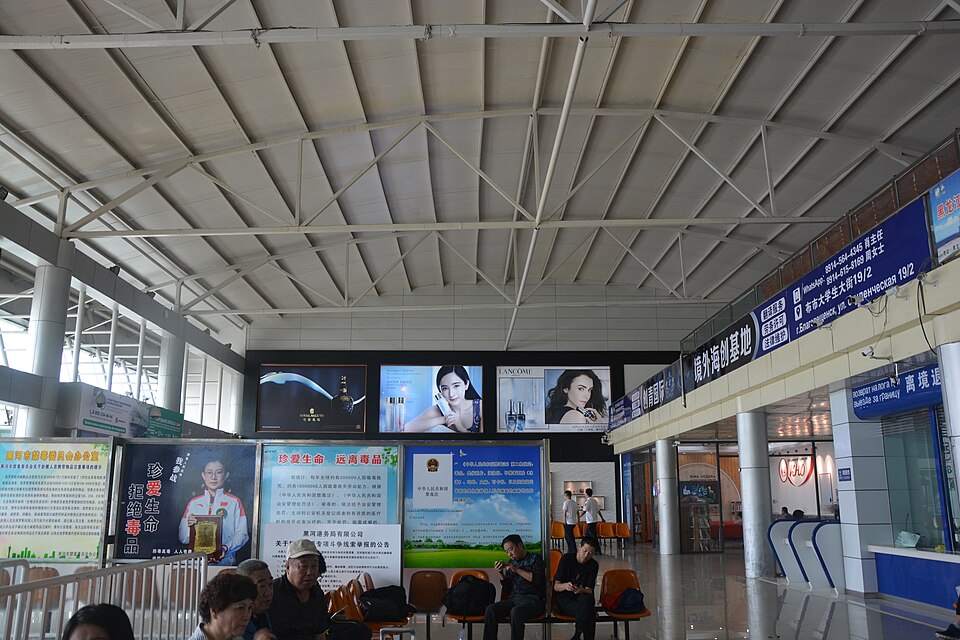
Crossing to Blagoveshchensk: read this first
The Blagoveshchensk–Heihe road bridge opened at the end of 2019, and there is also a river port crossing. Whether you can use them depends on your nationality, the visa or visa-free arrangements in force on the day, and checkpoint hours. China and Russia have run various visa-free arrangements for each other's citizens and for group tours, but these do not automatically cover third-country passport holders, who usually need a Russian visa and a valid Chinese visa or re-entry status to come back.
Check with the Russian consulate and Chinese immigration authorities before you build a day around crossing. If the paperwork isn't already sorted when you arrive, enjoy Heihe from its own bank; that is how most visitors experience it.
Further afield: Wudalianchi
Heihe prefecture is huge, and it includes the Wudalianchi volcanic field, a cluster of volcanic cones and lava-dammed lakes several hours' drive south. It needs its own overnight and is a different trip from the border town. If you are coming from Harbin and want volcanoes, it can make more sense to visit Wudalianchi on the way north than as a side trip from Heihe.
When to come to Heihe
This is far-north continental climate. January averages around −22 °C, and the river freezes solid; July averages about 21 °C. June to early September is the comfortable window for promenade walks and boat trips. Winter has a stark beauty, with the frozen Amur and ice sculptures, but it demands proper cold-weather gear. Stay off the river ice unless locals clearly use a marked area, and never cross toward the border line.
Getting there and where to stay
Trains run from Harbin, Qiqihar and Daqing via the Heihe–Bei'an line. Even the fastest services are a long ride from Harbin, so most people arrive by afternoon or travel overnight; check current timetables. Heihe Aihui Airport has domestic flights, mostly via Harbin. National Highway 202 runs south toward Harbin.
Stay near the riverfront in Aihui District. The waterfront, shopping streets and many restaurants are walkable from there, and taxis are cheap for anything else.
Eating in Heihe
Standard northeastern cooking dominates: dumplings, braised meats, stews and river fish such as carp from the Amur when available. Russian-style bakeries and food shops add rye bread, sausage and pastries, and a few restaurants serve Russian dishes. Menus are often priced by portion or weight, so check before ordering a whole fish.
How to arrange the route
Day 1: Arrive, check in near the river, evening walk along the Amur.
Day 2: Morning trip to Aigun's historic site, afternoon back on the riverfront or in the Russian-goods streets, river boat in summer if running.
Day 3 (optional): A crossing to Blagoveshchensk only if your documents are already confirmed; otherwise head south toward Suihua and Harbin.
What to cut if short on time
Drop the shopping streets first. Keep the riverfront at dusk and, if you have half a day, Aigun. An unconfirmed Russia crossing should never be the anchor of a short trip.
Things to confirm before you go
- Current entry rules to Russia for your passport, and checkpoint hours, from official sources.
- Train times from Harbin; services are limited.
- Opening days at the Aigun historic site, especially in winter.
- Boat operations and prices on the day; none are quoted here.
Frequently asked questions
How many days do I need in Heihe?
Two days covers the riverfront and Aigun. Add a day only for a documented crossing or for Wudalianchi.
Can I just walk across to Russia for lunch?
No, not without the right documents. The crossing is a full international border with passport control. Rules for Chinese and Russian citizens differ from those for other nationalities, so check before you assume anything.
Is Heihe worth it if I don't cross?
Yes, if you enjoy border towns. Seeing a Russian city across a river from China is the main experience, and it costs nothing.
How does Heihe compare with other Heilongjiang stops?
It is much smaller and quieter than Harbin. For cranes and wetlands go to Qiqihar; for the oilfield story go to Daqing; for the separate Xingkai Lake border go to Jixi.
Sources
The facts in this article were checked against public encyclopedia and official border-policy summaries, retrieved September 30, 2026, and rechecked on October 17, 2026.
- Heihe https://en.wikipedia.org/wiki/Heihe
- Amur River / Blagoveshchensk–Heihe crossing summaries (cross-checked; rules change)
Tickets change; this article does not invent yuan amounts.
All photos are from Wikimedia Commons, used under CC licenses; re-use requires attribution.
- heihe-amur.jpg from File:Amur River and Heihe.jpg, by Baycrest, CC BY-SA 2.5
- heihe-port.jpg from File:201907 Heihe Port 05.jpg, by Jonashtand, CC BY-SA 4.0
- heihe-amur-river.jpg from File:River Amur-Heihe.jpg, by Oleg fok, CC BY-SA 4.0