Harbin Travel Guide: Old Town, Songhua and Ice Season
Harbin is two different trips depending on the month. From late December to February you come for the cold: Ice and Snow World lit up at night, the snow sculptures on Sun Island, and temperatures of minus twenty or lower that make proper clothing a matter of safety. From June to August you come for a cool northern summer, with walks along the Songhua, picnics on Sun Island, and Central Street at its liveliest in the long evenings. Either way, three days is enough. Give one day to the old Daoli district (Central Street, St. Sophia Cathedral and the Flood Control Monument, all within walking distance), one to Sun Island across the river, and one to Ice and Snow World in winter or the river in summer. Metro Line 2 now links Harbin station, Central Street, Sun Island and Ice and Snow World, which makes winter evenings much easier. The city grew around the Chinese Eastern Railway, built by Russia in the late nineteenth century. Russians, Jews and Eastern Europeans arrived in waves, and by the 1920s Harbin was one of China's most international cities, which explains the European streets you walk today.
Getting in and where to stay
High-speed trains from Beijing, Shenyang and Dalian arrive at either Harbin West station or Harbin station, so check which one is on your ticket. Harbin station, the old main station, is central and sits on Metro Line 2, two stops from Central Street. Taiping International Airport is southwest of the city.
Stay in Daoli, near Central Street. In winter, when every minute outdoors counts, being able to walk back to a warm room after dinner or after the ice park matters more than anything else on the hotel listing. If your train leaves from Harbin West, allow time for the cross-town transfer.
When to come
Harbin's annual average temperature is barely above 5°C, and the year divides into ice season and everything else.
- December to February: Ice and Snow World, the ice lanterns and the snow sculptures are all open. Minus twenty to minus thirty is normal at night. This is also peak season for hotels and trains, especially around New Year and the Spring Festival.
- June to August: short, mild summers make Harbin a well-known escape from the heat. Evenings by the Songhua can still call for a jacket.
- Spring and autumn: brief changeovers around the May and October holidays, with neither ice nor full green, but quieter streets and the architecture is always there.
Places worth visiting in the city
Central Street
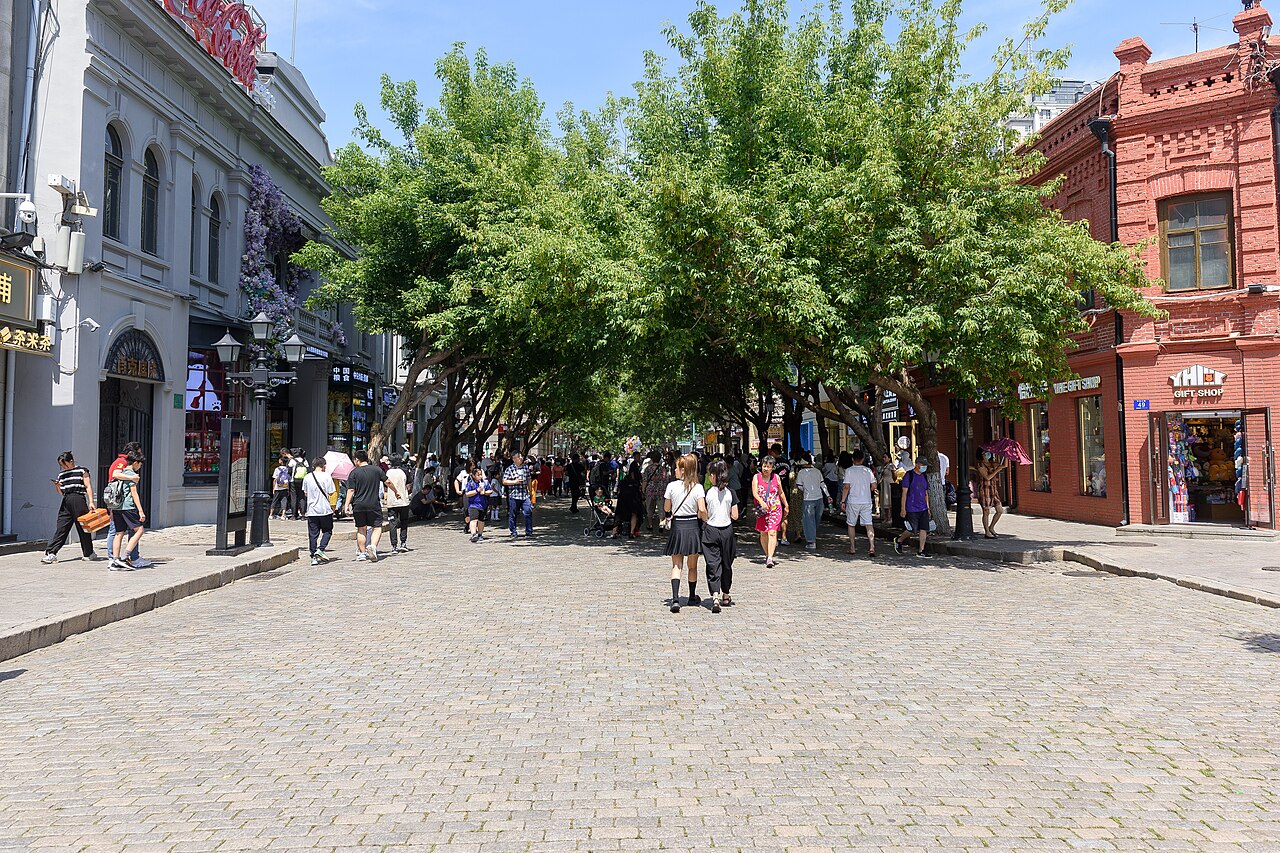
Central Street runs 1,450 metres from Xinyang Square in the south to the Flood Control Monument on the Songhua in the north. It is paved with rounded square blocks that locals call bread stones. The street dates to 1898, when it was called China Street, and in 1997 it opened as mainland China's first commercial pedestrian street. It is often called the longest in Asia. Look up from the shops at the Baroque, Renaissance and eclectic facades, most of them raised by Russian and other European builders early in the twentieth century. The local brand Modern sells ice cream bars from its counter on the street, and people queue for them even at twenty below. The Central Street page gives a south-to-north walk and food stops.
St. Sophia Cathedral
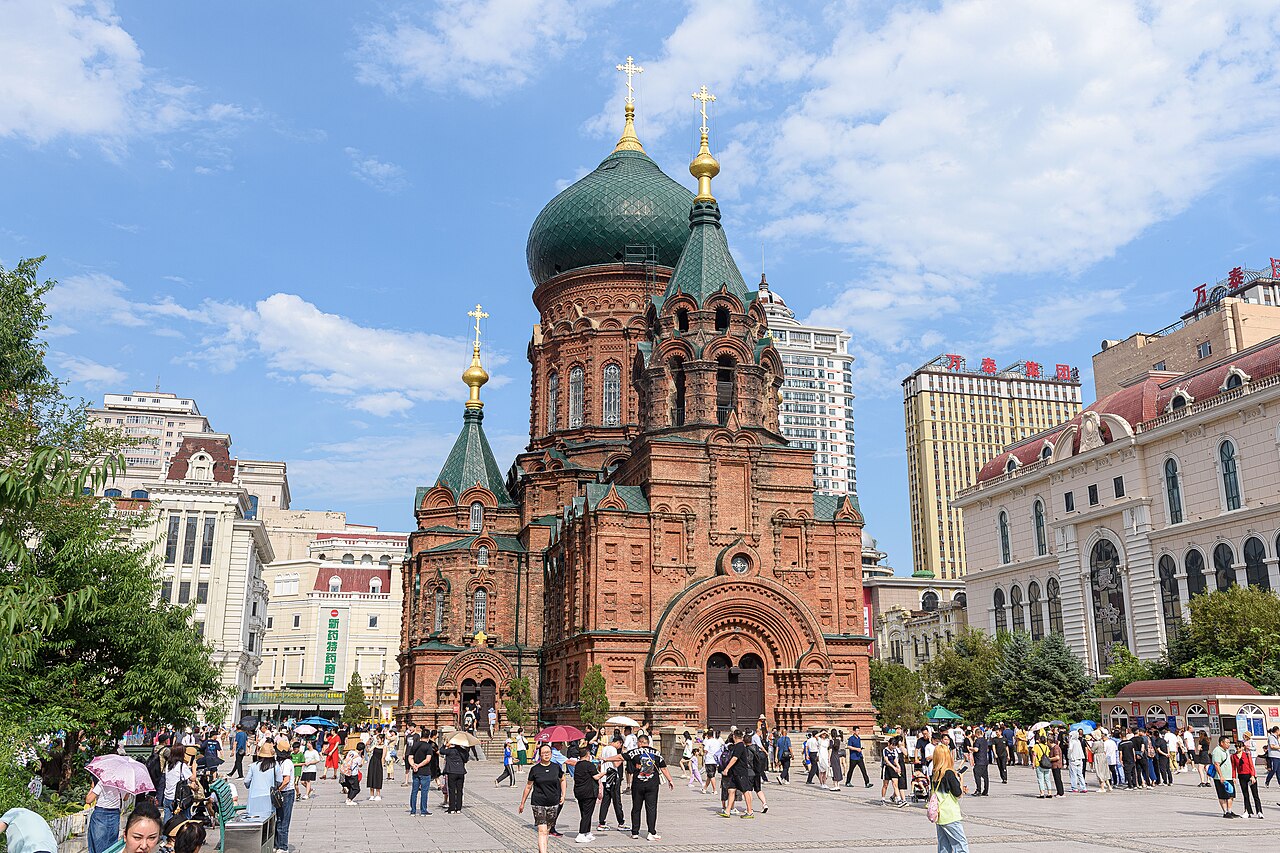
St. Sophia, a few minutes' walk east of Central Street in Daoli, is often called the largest Orthodox church building in the Far East. Its cornerstone was laid in 1907 as the garrison church of a Russian imperial infantry division, and later enlargements produced the red-brick Byzantine building with its green onion dome. Services no longer take place. The interior houses the Harbin Architecture Art Gallery, which tells the story of the city's buildings. The square and the exterior are free. Interior tickets were listed at 20 yuan for adults in early 2026, and the square is floodlit every evening. Hours and photo timing are on the St. Sophia Cathedral page.
Sun Island
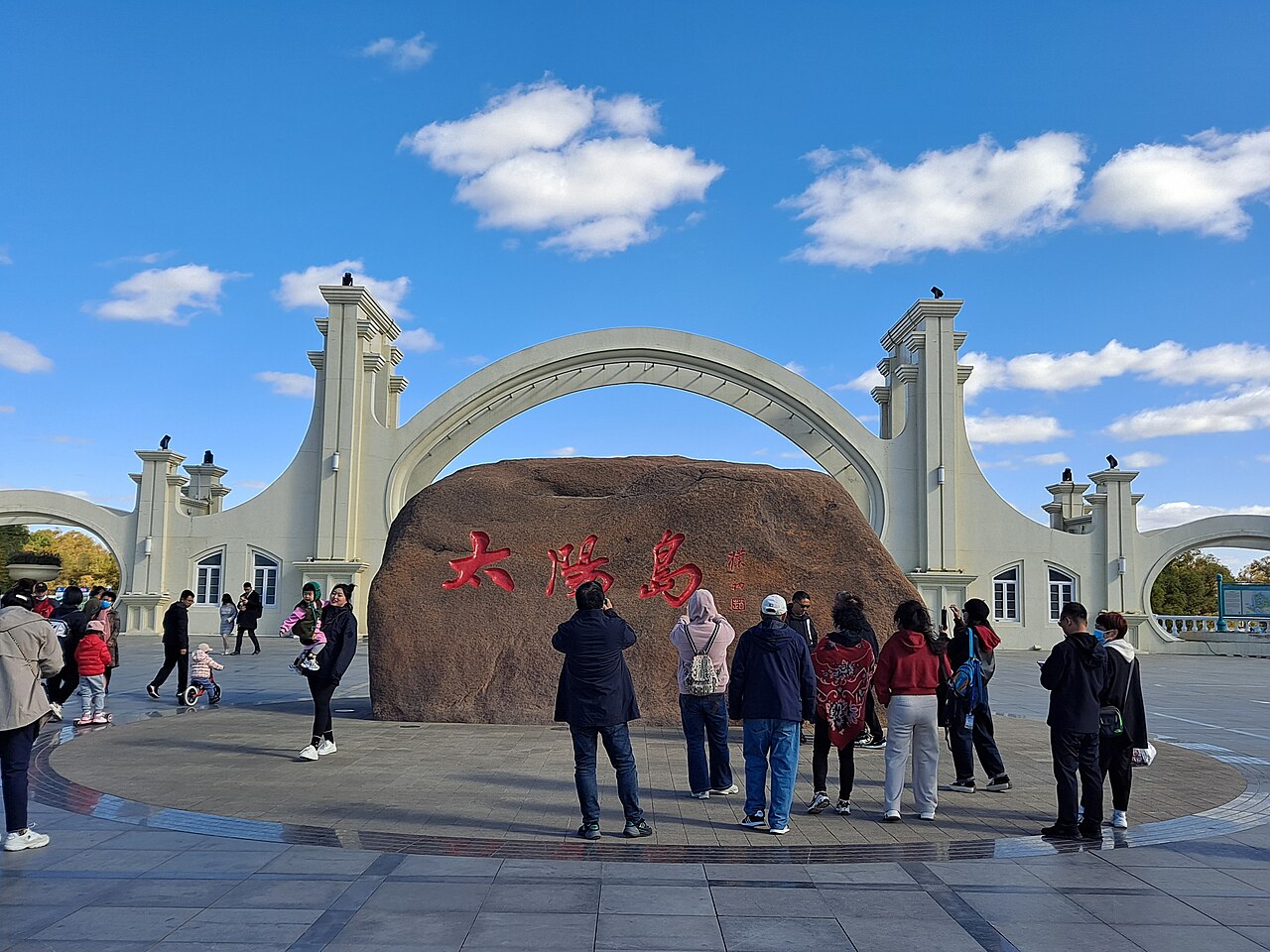
Sun Island lies across the Songhua from the old town, between the old and new districts. It covers 88 square kilometres of wetland, woods and river beaches, and it is a national 5A scenic area, described as China's largest urban riverside ecological area. The origin of the name is disputed; one account traces it to a Manchu word for a kind of bream. In summer it is where Harbin goes to walk, cycle and take boats. In winter it hosts the Sun Island International Snow Sculpture Art Expo, with huge carved snow figures across the snowfields. Allow half a day and use the sightseeing carts. The river wind makes it colder than the city centre. The Sun Island page compares a summer visit with the snow expo.
Ice and Snow World
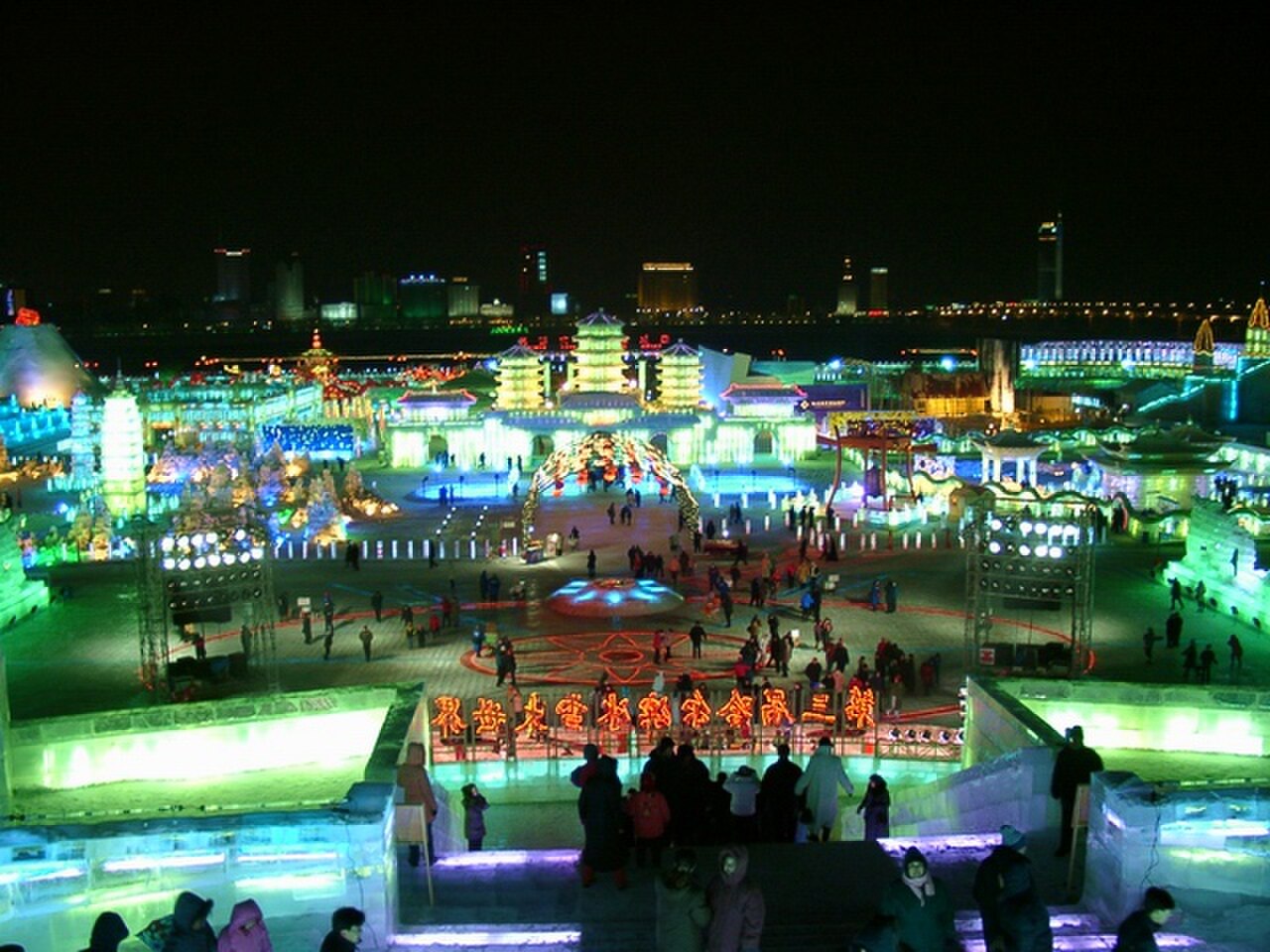
Ice and Snow World, founded in 1999, is built fresh each winter on the north bank of the Songhua, west of Sun Island. Workers cut ice from the river and carve it into castles, towers, slides and figures that are lit from inside after dark. It opens for a single winter season and melts in spring. Go in the late afternoon and stay into the night, when it looks its best. The long ice slides draw long queues. Tickets are expensive and crowds are heavy, but for a winter visitor it is worth doing once. Hat, gloves, thick-soled boots and a long down coat are essential. Season dates, tickets and clothing advice are on the Ice and Snow World page.
Flood Control Monument
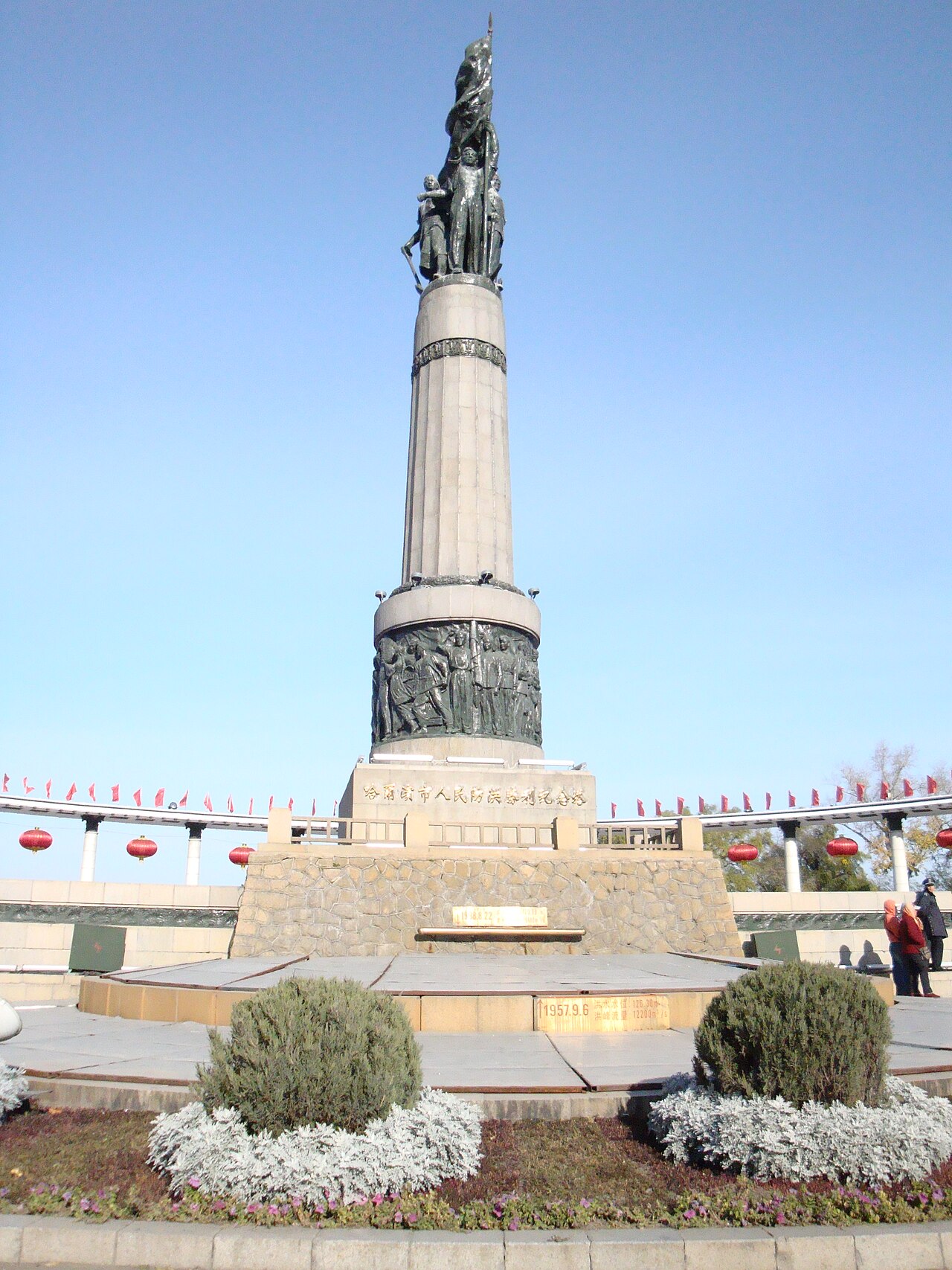
At the north end of Central Street, the monument stands on the Songhua embankment. It commemorates 1957, when the river rose in a catastrophic flood and people from across the city went up onto the levees to hold the water back. The monument was completed in 1958, with figures and reliefs of the flood fight on its shaft, and it became a protected cultural relic of Harbin in 1995. It is free and takes fifteen minutes, and it is where most people finish a Central Street walk and climb onto the embankment to look at the river. The Flood Control Monument page covers the riverside walk.
Eating in Harbin
Harbin food is northeastern with a Russian streak. Red sausage, heavy with garlic, is the signature, and Qiulin and Haroulian are the two big brands to buy sealed. Dalieba is a huge round Russian-style loaf, good with sausage and local beer. Guobaorou, sweet-and-sour pork fried crisp outside and tender within, is the dish most visitors want to try. Pork stewed with vermicelli and the "pig-killing" banquet stew are proper northeastern home cooking, and the right meal after an hour in the cold. The old Russian-style restaurants serve borscht and pot-stewed beef. Modern ice cream is a summer must, and people eat it in winter too.
How to arrange the route
Day one: Daoli on foot. Walk Central Street from south to north, cutting east to St. Sophia Cathedral on the way. Reach the Flood Control Monument and the Songhua at dusk, then return to Central Street for the lights, red sausage and a Modern ice cream.
Day two: Sun Island. Wetlands and river beaches in summer, or the snow sculpture expo in winter. The island is big, so use the sightseeing carts to save your legs.
Day three: ice or river. In winter, Ice and Snow World: rest in the morning, take Line 2 to Ice and Snow World station in the afternoon, and stay until the lights come on. In summer, take a Songhua cruise and explore Laodaowai, the Chinese Baroque quarter east of the centre.
To go beyond the city, Jixi has Xingkai Lake, Yichun (Heilongjiang) has the Korean pine forests of Wuying (not to be confused with Yichun in Jiangxi), Jiamusi is the hub for the Sanjiang plain and Fuyuan, and Heihe faces Russia across the Amur. Suihua is the farming country between. To the south, Shenyang has the Qing palace on the way in, and Dalian has the sea at the tip of the Liaodong Peninsula.
Confirm before you go
- Winter clothing: minus twenty to thirty is normal. A hat, gloves, thick-soled boots and a long down coat are essentials.
- Ice and Snow World: opening dates and prices change every season, so check the official announcement for the current winter.
- St. Sophia Cathedral: the exterior is free, the interior is ticketed, and the interior may close on some days.
- Sun Island: it is windy in summer and colder still in winter, so plan activities by the season.
- Food: buy red sausage in sealed, branded packs, and ask before buying loose sausage from street stalls.
Frequently asked questions
How many days do I need in Harbin?
Three days is comfortable: one for the Central Street area, one for Sun Island, and one for Ice and Snow World in winter or the river in summer.
When is the best time to visit Harbin?
December to February for ice and snow, or June to August for a cool summer. They are completely different trips, so choose the one you want.
Is Ice and Snow World worth it?
Yes, if you are in Harbin in winter. It is one of the largest ice and snow parks in the world and is rebuilt each year. Expect crowds, cold and high ticket prices.
Are Central Street and St. Sophia Cathedral close together?
Yes, a few minutes' walk apart. With the Flood Control Monument at the river end, they make one easy walking route.
Sources
The background facts in this article were checked against the following Chinese Wikipedia entries, retrieved August 25, 2025. St. Sophia ticket and hours details come from Harbin local visitor information published in January 2026.
- Harbin (city) https://zh.wikipedia.org/wiki/哈尔滨市
- Central Street https://zh.wikipedia.org/wiki/中央大街
- St. Sophia Cathedral https://zh.wikipedia.org/wiki/圣索菲亚教堂
- Sun Island (Harbin) https://zh.wikipedia.org/wiki/太阳岛_(哈尔滨)
- Harbin Ice and Snow World https://zh.wikipedia.org/wiki/哈尔滨冰雪大世界
- Flood Control Monument https://zh.wikipedia.org/wiki/防洪纪念塔
All photos are from Wikimedia Commons, used under CC licenses; re-use requires attribution.
- harbin-zhongyang.jpg from File Central Street at West 13th St (20230721112501).jpg, by N509FZ, CC BY-SA 4.0
- harbin-sophia.jpg from File West facade of St. Sophia Cathedral, Harbin (20230721150450).jpg, by N509FZ, CC BY-SA 4.0
- harbin-taiyangdao.jpg from File 哈尔滨太阳岛 2.jpg, by EditQ, CC BY-SA 4.0
- harbin-icecity.jpg from File Ice Snow World.jpg, by Lin Yang, CC BY-SA 3.0
- harbin-fanghong.jpg from File Harbin Memorial Tower.JPG, by Tlrmq, CC BY-SA 3.0