The Bund, Shanghai: When to Go and How to Walk It
The Bund is Shanghai's old riverfront: a 1.5-kilometre promenade on the west bank of the Huangpu, with a row of bank and hotel buildings from 1906 to 1937 on one side and the Lujiazui towers across the water. It is free and open at all hours. The best time is the hour before dark, when the sky still has colour, followed by the switch-on of the building lights, usually around 19:00. Walk it from the Waibaidu Bridge in the north to the southern end in about an hour without stops, or two to three hours if you take your time. East Nanjing Road station (Lines 2 and 10) is the closest metro.
The rest of the city is covered in the Shanghai travel guide. Across the river, the Oriental Pearl Tower gives the view back.
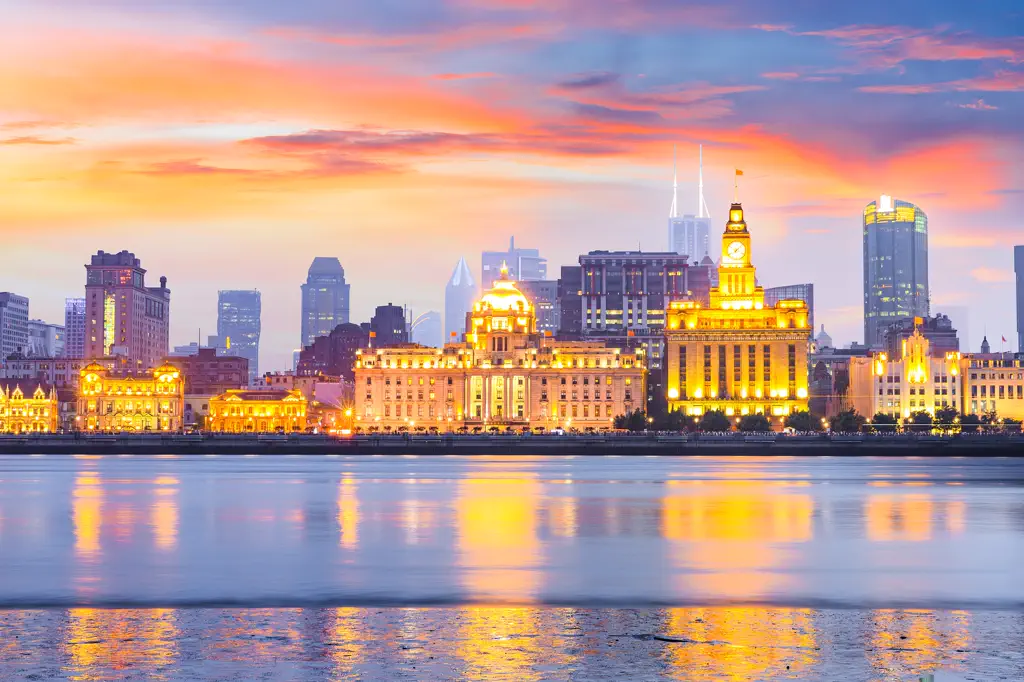
Timing the evening
The promenade never closes, so the only question is when the light is best. Lighting listings for the building row have generally given about 19:00 to 22:00, running later in summer (one set of listings goes to 23:00) and with a winter window starting closer to 17:30. The Pudong towers usually stay lit until about 22:00. On major holidays and city events, the Huangpu district switches the waterfront to an extended lighting mode and publishes the dates beforehand. In August 2026 the nightly switch-on at 19:00 itself started drawing crowds, as people gathered to watch the façades come on in sequence.
The practical plan:
- Check sunset for your date. In Shanghai it ranges from about 17:00 in December to about 19:00 in late June.
- Arrive 45 minutes before sunset at the north end, near the Waibaidu Bridge.
- Walk south slowly as the sky darkens, then stay until the lights are fully on.
- After dinner, the skyline is still lit but the blue sky behind it has gone, so photographs look flatter.
Mornings are a different, quieter experience. Early risers share the promenade with people doing their morning exercises, and the façades get soft light from the east. Come in the morning for the buildings and in the evening for the skyline.
Walking north to south
Starting at the north end puts the buildings on your right and the river on your left, so the skyline across the water is always in view.
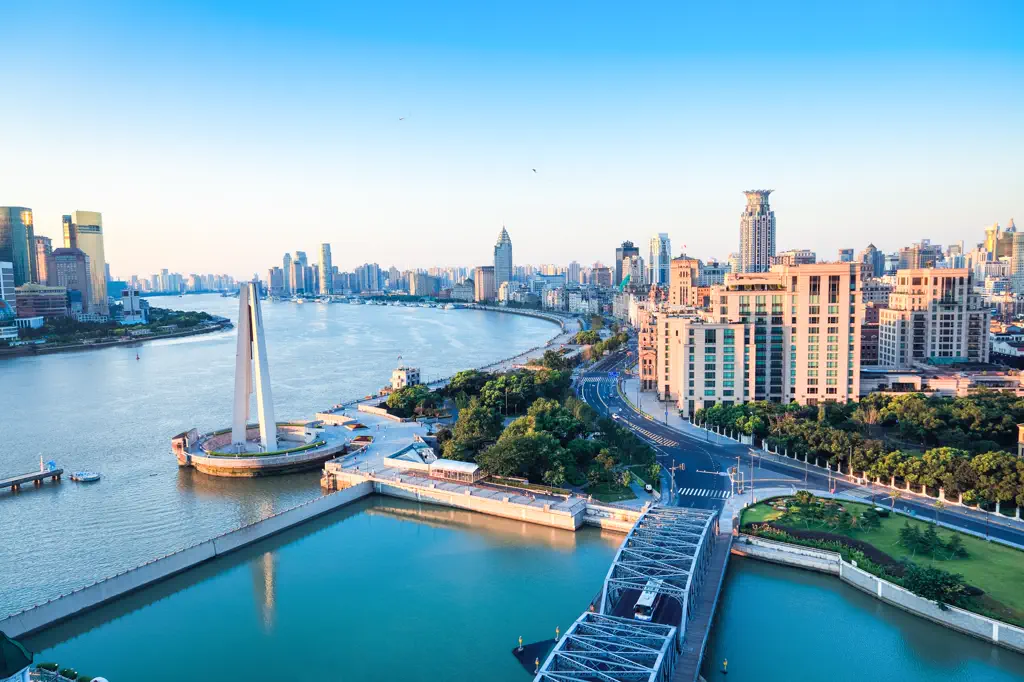
Waibaidu (Garden) Bridge and Suzhou Creek. The steel bridge where Suzhou Creek meets the Huangpu. The view south from here takes in the whole curve of the Bund.
The Peace Hotel and the Bank of China. Sassoon House, now the Peace Hotel, is the building with the green pyramid roof at the corner of East Nanjing Road. Next door, the Bank of China building was kept slightly lower than its neighbour. The story usually told is that the height dispute was argued all the way to London.
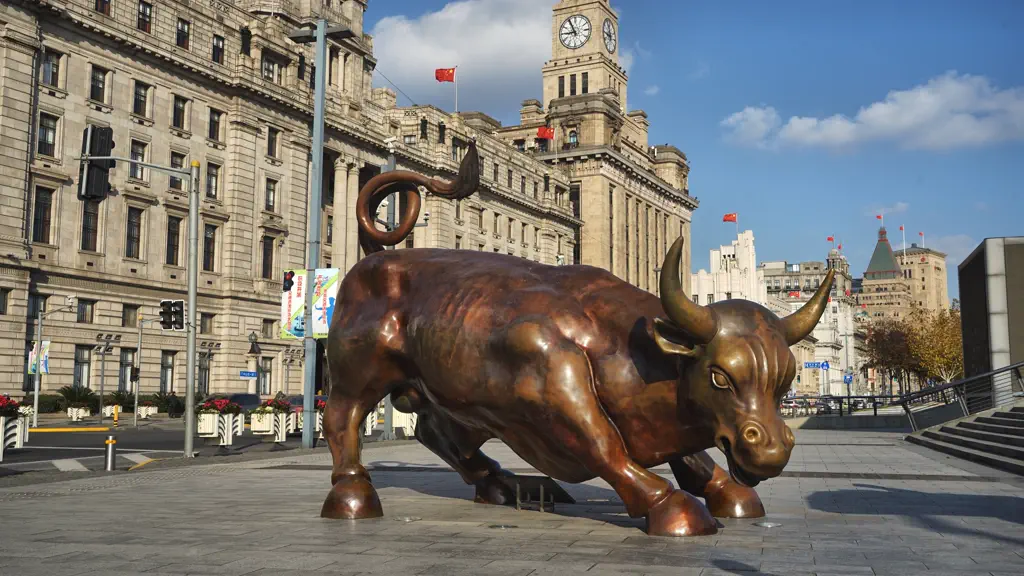
The bull. Just south of East Nanjing Road, on the Bund Financial Square near the end of Jiujiang Road, stands a bronze charging bull, Shanghai's answer to the one on Wall Street. It is one of the most crowded photo spots after dark.
The Customs House and HSBC. A little further south, the clock tower of the Customs House and the domed former HSBC building beside it are the pair most people photograph. The clock still chimes over the waterfront.
The southern end. Beyond Yan'an Road East the promenade continues towards the Shiliupu (Sixteen Piers) ferry area. Turn back here, or carry on to the ferry for Pudong.
Look up as you walk. The interesting detail is on the second and third floors, above the shop and bank entrances.
How the waterfront was built
Before 1843 this was mudflat along the river. From 1844 it was the riverside of the British settlement, and over the next two generations banks, trading houses and hotels lined it with stone buildings, earning it the nickname "the Wall Street of the East". The row you see now dates from 1906 to 1937, mixing neoclassical, Art Deco and Beaux-Arts styles, and has been a nationally protected site since 1996.
What is free and what costs money
Free: the promenade, the view, the architecture from outside and the lights. Paid extras: river cruises, the sightseeing tunnel under the river, and some historic interiors. The Peace Hotel and a few of the old bank buildings let visitors into their lobbies or small museums on their own terms, and access changes without much notice, so treat any interior as a bonus.
Crowds
On weekday evenings the promenade is busy but walkable. On weekend and holiday evenings, especially during Golden Week in early October and over the Lunar New Year, police manage crowd flow along the riverside. The tightest crowds gather around the bull and the Customs House. If you get caught in a holiday crowd, step back from the river railing to the road side, where people move faster.
Crossing to Pudong
The cheapest and most scenic way across is the public ferry from the southern end of the Bund, a short ride with a good view of both banks. The sightseeing tunnel is a paid novelty ride under the river with light effects; the ferry is better on a clear evening. Metro Line 2 from East Nanjing Road to Lujiazui is the fastest option, one stop. In Lujiazui, the riverside promenade facing back towards the Bund is free and less crowded.
Pairing the Bund with the rest of the day
The Bund is the natural end to a day in central Huangpu. A good order is Yu Garden in the morning while it is quiet, lunch in the old city, the Shanghai Museum or a walk along East Nanjing Road in the afternoon, then the Bund at dusk. To see the Bund lit up from the other side, cross to Lujiazui after dark for the Oriental Pearl Tower or the free riverside walk. The French Concession works better on a different day.
Things to confirm before you go
- Sunset time for your date and any event lighting announced by the Huangpu district.
- Holiday crowd controls, especially 1 to 7 October.
- Whether any interior you want to see (such as the Peace Hotel) is open to visitors.
- The weather. Plum rain in June and typhoons from July to September can ruin an evening, so keep a backup night free.
Frequently asked questions
Is the Bund free to visit?
Yes. The promenade is free and open 24 hours. Only cruises, the sightseeing tunnel and some building interiors charge.
What time do the Bund lights turn on?
Usually around 19:00, running until about 22:00, with seasonal and holiday variations. Arrive before sunset to see the blue hour first.
How long does it take to walk the Bund?
About an hour from the Waibaidu Bridge to the southern end without stopping. Two to three hours with photos and a drink by the river.