Yu Garden, Shanghai: The Ming Garden Inside the Bazaar
Yu Garden (Yuyuan) is a classical garden begun in 1559, with ponds, rockeries and pavilions, in the old walled city of Shanghai about 15 minutes' walk from the Bund. Around it is the Yuyuan bazaar, a free and very busy area of shops, food stalls, the City God Temple and the zigzag bridge. Many visitors walk the bazaar and think they have seen the garden. The garden itself is behind a wall, with its own ticket: 40 yuan in peak season, booked by real name. It opens 09:00 to 16:30 (last entry 16:00) and is closed on Mondays except public holidays. Go when it opens, give it an hour or two, then eat lunch in the bazaar.
The rest of the city is in the Shanghai travel guide.
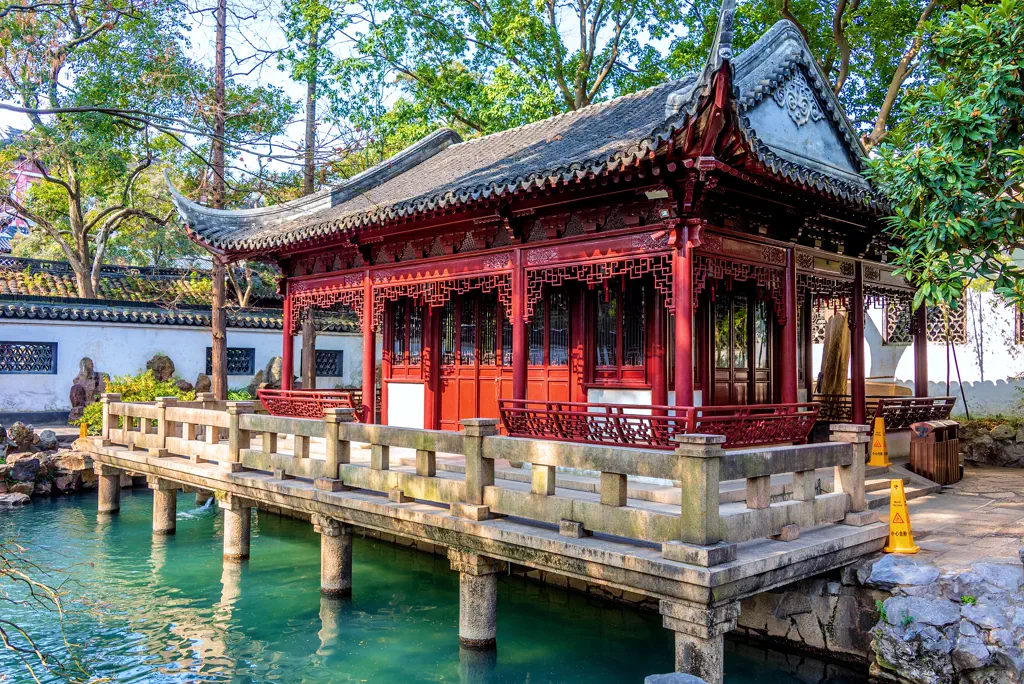
Tickets and booking
From the garden's official site (yugarden.com.cn), checked for this update:
- Peak season (1 April to 30 June and 1 September to 30 November): 40 yuan for adults.
- Off season (the rest of the year): around 30 yuan for adults. Concessions apply.
- Hours: 09:00 to 16:30, last entry 16:00.
- Closed: Mondays, except national public holidays.
- Booking: real-name tickets for timed entry through the official "上海豫园" (Shanghai Yu Garden) mini-program, with your passport checked at the gate.
Timed slots sell out on weekends and holidays, so book ahead instead of turning up at the window. A separate night-visit programme has run on selected dates since summer 2025, with its own tickets and limited numbers. Check the official channel if you want to try it.
What to see in the garden
The garden is small, but it is laid out so you never see all of it at once. Corridors turn, windows frame a single tree or rock, and walls open onto courtyards you didn't expect. Take it slowly.
The Great Rockery. A hill of yellow stone built by Zhang Nanyang, one of the best-known garden rock artists of the Ming dynasty. It is among the oldest surviving parts of the garden.
Dianchun Hall. In 1853 this hall was the headquarters of the Small Swords Society, which held the old walled city against the Qing government from 1853 into 1855.
Jade Rock (Yu Linglong). One of the three famous rocks of the Jiangnan region. It is a tall, porous limestone rock riddled with holes, admired as natural sculpture. It stands in front of the Hall of Jade Splendour.
The Inner Garden. A later annex to the south, with its own stage and quieter courtyards. Many visitors miss it. It is at the far end of the main route, so keep some time for it.
The bazaar is a different place
Outside the garden wall, the Yuyuan bazaar was built to serve visitors, with souvenir halls, snack stalls and restaurants packed into rebuilt traditional buildings. The famous nine-turn zigzag bridge and the Huxinting teahouse in the middle of the pond are part of the bazaar, not the garden, which surprises people. So does the fact that they cost nothing. From the bridge you get the classic photo of upturned eaves with the Pudong towers behind.
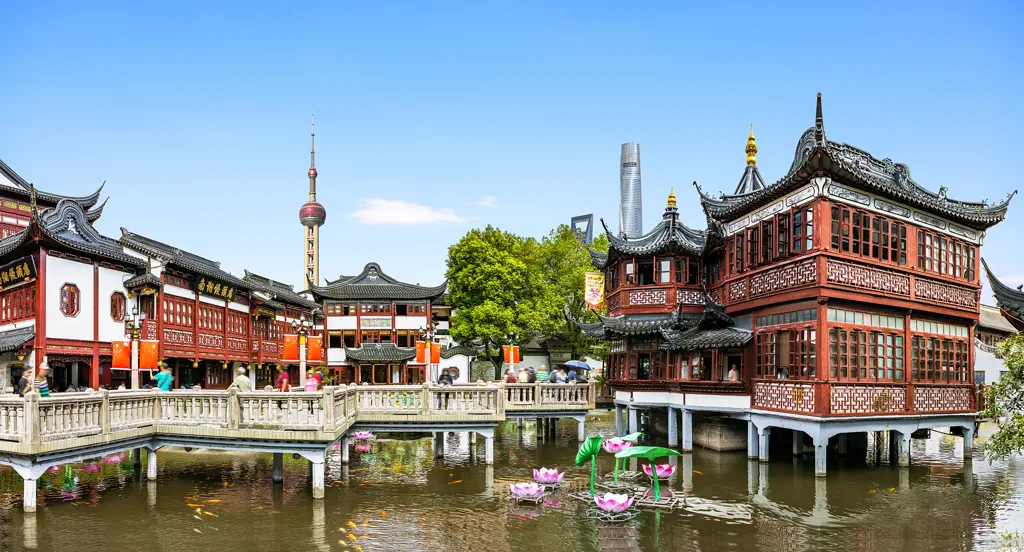
The City God Temple next door is a working Taoist temple with its own small ticket. The bazaar stays open into the evening, when the lanterns are lit, after the garden has closed.
Food. Nanxiang's xiaolongbao (soup dumplings) are the famous queue. The takeaway counter usually moves faster than the sit-down dining rooms, and neighbouring shops sell similar dumplings with shorter waits. Eat them hot and bite carefully, because the soup inside scalds. You will also find crab-shell pastries and pear-syrup candy. Prices in the bazaar are higher than in ordinary neighbourhood shops.
A short history
Pan Yunduan, an official returning from a post in Sichuan, began the garden in 1559, in the 38th year of the Jiajing reign, to please his elderly father. The name plays on that: "yu" means to please or comfort. Over the following centuries it changed hands, fell into disrepair and served unexpected purposes. British troops used the Huxinting Pavilion during the First Opium War, and the Small Swords rebels made Dianchun Hall their headquarters. Restoration began after 1956, the garden opened to the public in 1961 and it was listed as a national protected site in 1982. What you see is largely that restoration, carefully done.
Fitting it into a day
Yu Garden is best first thing. A day in central Shanghai might run:
- 09:00 Yu Garden, before the tour groups.
- 11:00 The bazaar and an early dumpling lunch.
- Afternoon The Shanghai Museum (People's Square hall for the Americas exhibition, or the East Hall in Pudong), or a walk through the old city lanes.
- Dusk The Bund, about 15 minutes' walk north-east of the garden.
Yu Garden station on metro Lines 10 and 14 is the closest. The French Concession is a different kind of day and fits better as an afternoon of its own.
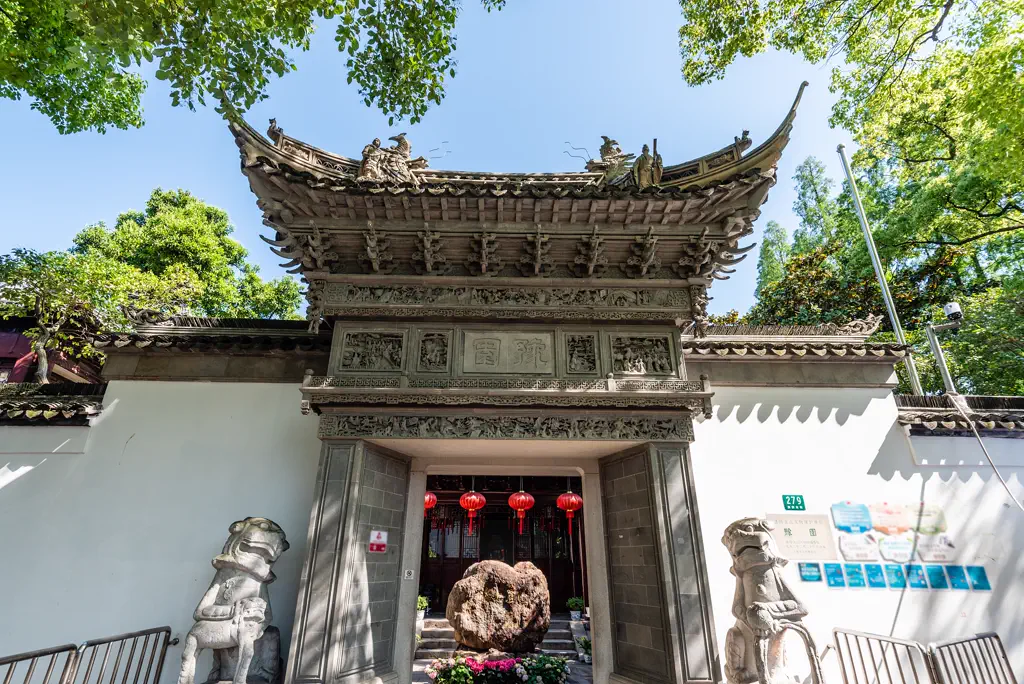
Is it worth it?
If you have already seen the big gardens in Suzhou, Yu Garden is smaller and busier, and you could skip the ticket and walk the bazaar instead. If Shanghai is your only chance to see a classical Chinese garden, it is worth the entry fee and an early start. Come on a weekday morning in spring or autumn. In June's plum rains the stone paths get slippery and photos come out grey.
Things to confirm before you go
- Whether your day is a Monday; the garden is closed but the bazaar is open.
- A timed ticket on the official mini-program, especially for weekends and holidays.
- Peak or off-season price for your date.
- Night-visit dates, if you want to go after dark.
Frequently asked questions
Is Yu Garden free?
The bazaar, zigzag bridge and surrounding lanes are free. The garden itself costs 40 yuan in peak season and around 30 yuan off season.
Is Yu Garden open on Monday?
No. The garden is closed on Mondays except national public holidays. The bazaar and the City God Temple area remain open.
How long do you need at Yu Garden?
One to two hours for the garden, including the Inner Garden. Add an hour or more for the bazaar and lunch.