Anqing Travel Guide: Yingjiang Temple, Zhenfeng Pagoda and Tianzhu Mountain
Anqing is a Yangtze River city in southwest Anhui, for long the provincial capital, and the place that gave Anhui its one-character abbreviation, Wan. Visitors come for two things. In town, Yingjiang Temple and its seven-storey Ming pagoda stand on the north bank of the river, and you can climb the pagoda for the view. An hour or so away, Tianzhu Mountain is a granite range with a long religious history, worth a full day. Anqing is also the home of Huangmei opera. Give the city one day and the mountain another; it is a good stop between Hefei, Jiujiang and the Yangtze towns rather than a substitute for Huangshan.
Anqing in brief
The city's name, "peace and celebration", dates from 1147, and the present city was laid out in 1217 as a defence against the Jurchen Jin. Two thousand years earlier this was the small state of Wan, which named both Tianzhu Mountain (once Wan Mountain) and, eventually, Anhui. Anqing is the birthplace of Chen Duxiu, a co-founder of the Chinese Communist Party, and the place where Huangmei opera grew out of tea-picking songs from the borderlands of Anhui, Hubei and Jiangxi in the late Qing. The local speech is quite different from the rest of Anhui, and the opera is sung in it.
When to come to Anqing
The Yangtze climate is humid: hot, sticky summers with sudden storms, damp grey winters. Spring (March to May) and autumn (September to November) are the best times for both the temple and the mountain. Autumn brings the clearest days on Tianzhu. In midsummer, do the climbing early and save the afternoon for indoor sights.
Getting in and where to stay
Anqing has rail links north to Hefei, east along the river toward Wuhu and southwest to Jiujiang, plus a small airport. Tianzhu Mountain is in Qianshan, northwest of the city, reached by bus or car. Stay near the river and Yingjiang Temple for a walkable evening. If you plan an early start on the mountain, sleep in Qianshan or at the foot of the mountain instead.
Places worth visiting
Yingjiang Temple
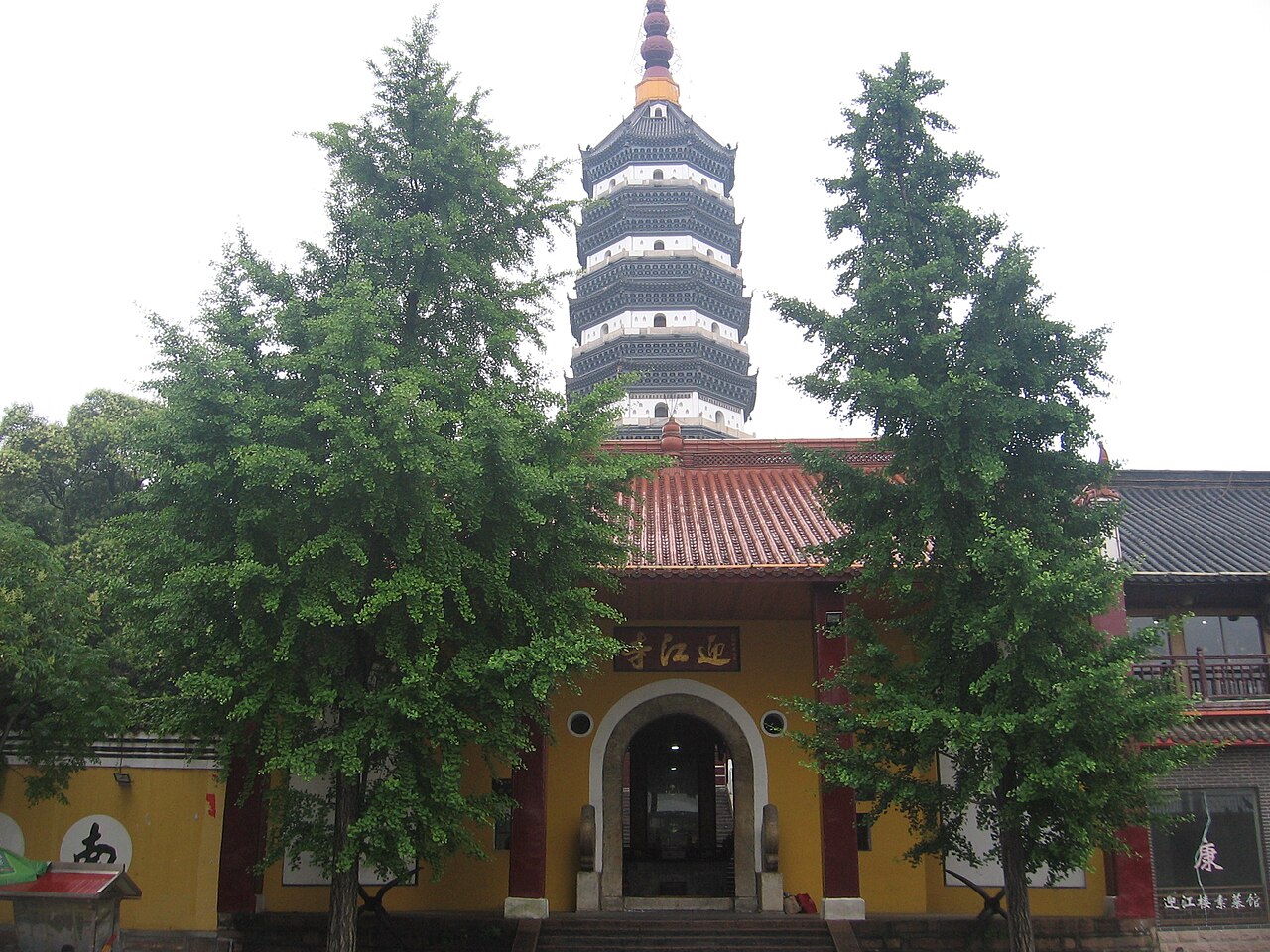
Yingjiang Temple ("the temple that greets the river") on Yanjiang East Road is a large Chan (Zen) temple, sometimes called the first temple of the middle Yangtze. Tradition dates it to 974, but historians place its founding in the Wanli reign of the Ming, around 1619. It was rebuilt and renamed in 1650. Look for the heavy iron anchors on either side of the gate. They play on the old idea that Anqing is a ship and the pagoda its mast. The name board over the gate is in the hand of the Guangxu emperor, and the main hall has boards attributed to the Qianlong emperor and Empress Dowager Cixi. More on the halls, the founding dates and the pagoda climb is in the Yingjiang Temple sight guide.
Zhenfeng Pagoda
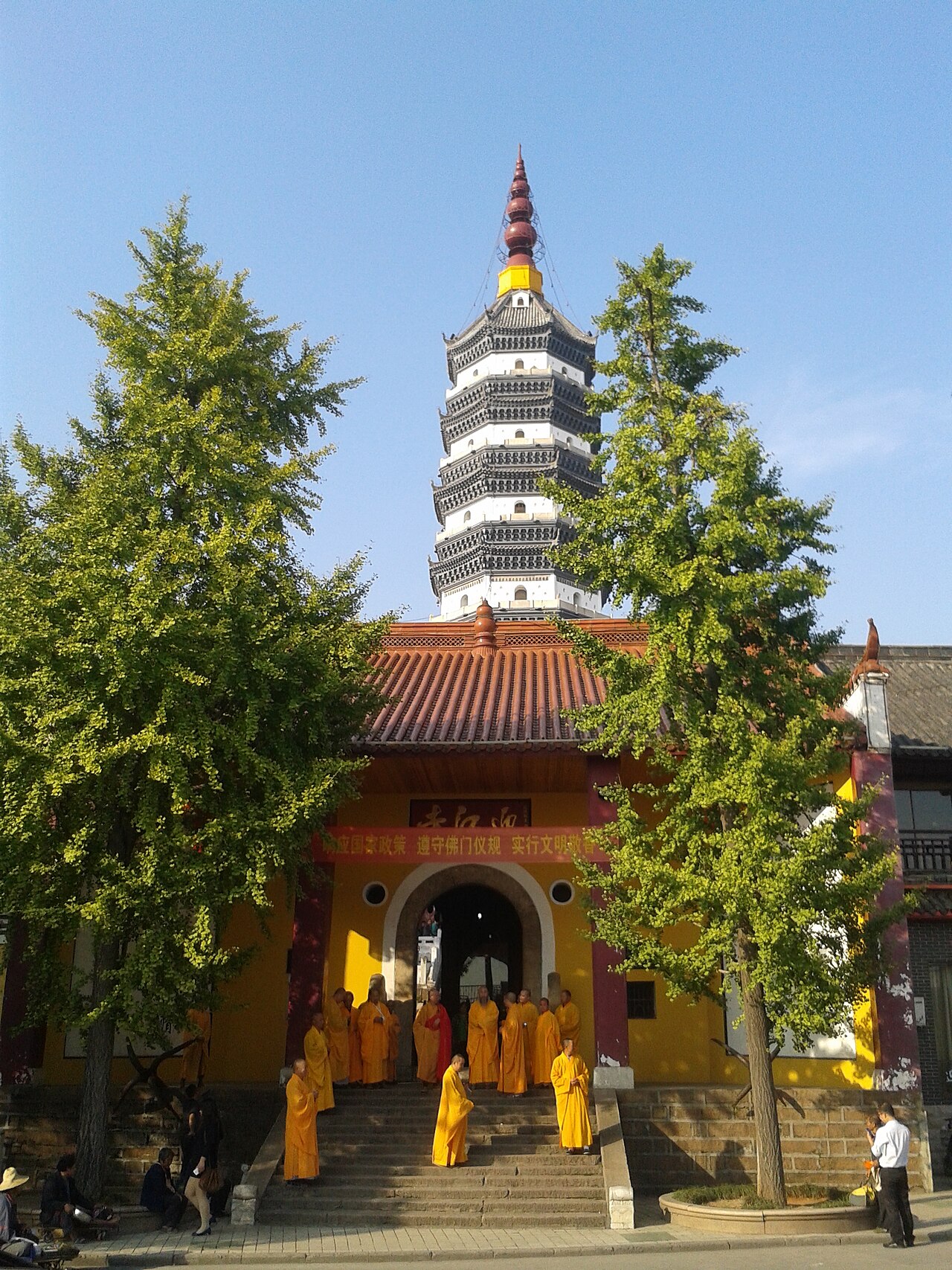
The octagonal Zhenfeng Pagoda inside the temple was built in the Ming, begun in 1568, and is about 65 metres high. Its name means "to stir up the spirit of learning". The top two storeys were damaged by gunfire in 1861 during the Taiping war and later repaired, and it has been a national protected site since 2006. A staircase of 168 steps climbs the seven storeys, past more than 600 small brick-carved Buddhas, with bells hanging from the eaves. The view from the top over the Yangtze is the best in the city. On a moonlit night the pagoda's reflection across the river was one of Anqing's eight classic views.
The courtyards and the river
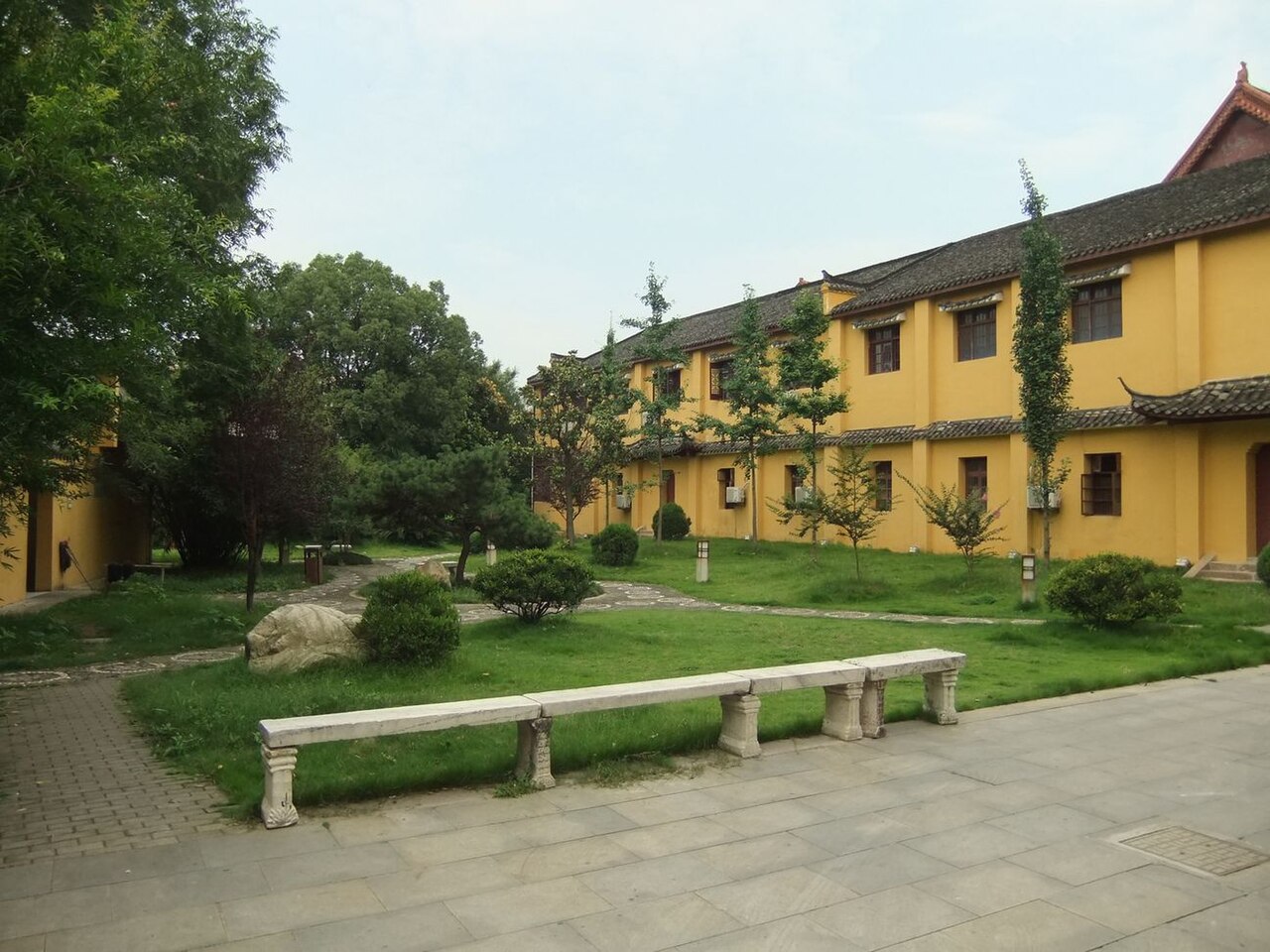
Allow a couple of hours for the temple, then walk the riverbank promenade outside. Late afternoon is the best time, when the light falls across the water and the pagoda.
Tianzhu Mountain
Tianzhu ("Heaven's Pillar") Mountain rises northwest of Qianshan city. Its main peak, a granite column, is 1,489.8 metres high. In 106 BC Emperor Wu of Han made it the Southern Sacred Mountain, a role it held until the Sui returned the title to Hengshan in Hunan. Li Bai, Bai Juyi, Su Shi and Wang Anshi left poems here, and about 400 inscriptions survive on the rocks, most of them around the Shiniu Gudong gorge at the foot of the mountain. The Third Patriarch of Chan Buddhism, Sengcan, lived here, and the Sanzu (Third Patriarch) Temple below the mountain is still active. The scenic area has been rated 5A since 2011. Cable cars serve the upper area, and walks link strange rocks, caves and viewpoints. Give it a full day. The Tianzhu Mountain sight guide lists the 2026 prices, ropeways and booking rules.
Eating in Anqing
Anqing food sits between Anhui and Hubei cooking: river fish, freshwater shrimp, braised pork and plenty of chilli. Breakfast stalls near the old streets sell dumplings, noodles and fried snacks, and busy restaurants near the old city are the safest choice for dinner. If you can, see a Huangmei opera performance. Ask at your hotel which theatres have shows on your dates.
How to arrange the route
- Day one: Yingjiang Temple and a climb of the Zhenfeng Pagoda, the riverbank in the late afternoon, an opera or a long dinner in the evening.
- Day two: Tianzhu Mountain, with Sanzu Temple and the inscriptions at the foot on the way down.
- Day three (optional): travel on to Hefei, Jiujiang or Huangshan.
What to cut if short on time
With one day, do the temple and pagoda and skip the mountain. With a day and a half, put Tianzhu first while you are fresh and leave the temple for the evening before you leave.
Things to confirm before you go
- Opening hours and tickets for Yingjiang Temple and the pagoda.
- Tianzhu Mountain tickets, cable car times and weather on your date.
- Bus or car times between Anqing and Qianshan.
- Performance dates if you want to see Huangmei opera.
Frequently asked questions
How many days do I need in Anqing?
One day for the city and temple; two if you add Tianzhu Mountain.
Can I climb the Zhenfeng Pagoda?
Visitors are normally allowed up its 168 steps to the top storey; check on site, as access can close for repairs or crowds.
Anqing or Huangshan?
Huangshan for famous peaks and Huizhou villages; Anqing for a Yangtze temple town, Huangmei opera and a quieter mountain at Tianzhu.
Sources
The facts in this article were checked against the following Wikipedia and encyclopedia entries, retrieved September 16, 2026, and rechecked on October 14, 2026.
- Anqing https://en.wikipedia.org/wiki/Anqing
- Anqing (Chinese) https://zh.wikipedia.org/wiki/安庆市
- Yingjiang Temple https://en.wikipedia.org/wiki/Yingjiang_Temple
- Zhenfeng Pagoda (Chinese) https://zh.wikipedia.org/wiki/振风塔
- Mount Tianzhu (Chinese) https://zh.wikipedia.org/wiki/天柱山
Ticket prices for the temple, pagoda and Tianzhu Mountain change; check the current notice before you go.
All photos are from Wikimedia Commons, used under CC licenses; re-use requires attribution.
- anqing-3.jpg from File:迎江寺.jpg, by Zhou Guanhuai, CC BY-SA 4.0
- anqing-1.jpg from File:迎江寺庭院 - Courtyard in Yingjiang Temple - 2010.07 - panoramio.jpg, by rheins, CC BY 3.0
- anqing-2.jpg from File:Monastry anqing.jpg, by Krisroll, CC BY-SA 4.0