Longxing Temple, Zhengding's Song-Scale Monastery
Longxing Temple stands inside Zhengding, the historic county town north of Shijiazhuang in Hebei. Locals still call it the Big Buddha Temple. Founded in 586 in the Sui Kaihuang era on ground once tied to Later Yan gardens, it took the Longxing name under Qing Kangxi and keeps a Song-dynasty axial layout across tens of thousands of square meters. In March 1961 it entered China's first batch of nationally protected sites. Most travelers treat Zhengding as Shijiazhuang's heritage day and put Longxing first, then decide whether the four pagodas, Linji Temple or a separate run to the Zhaozhou Bridge fill the rest of the calendar.
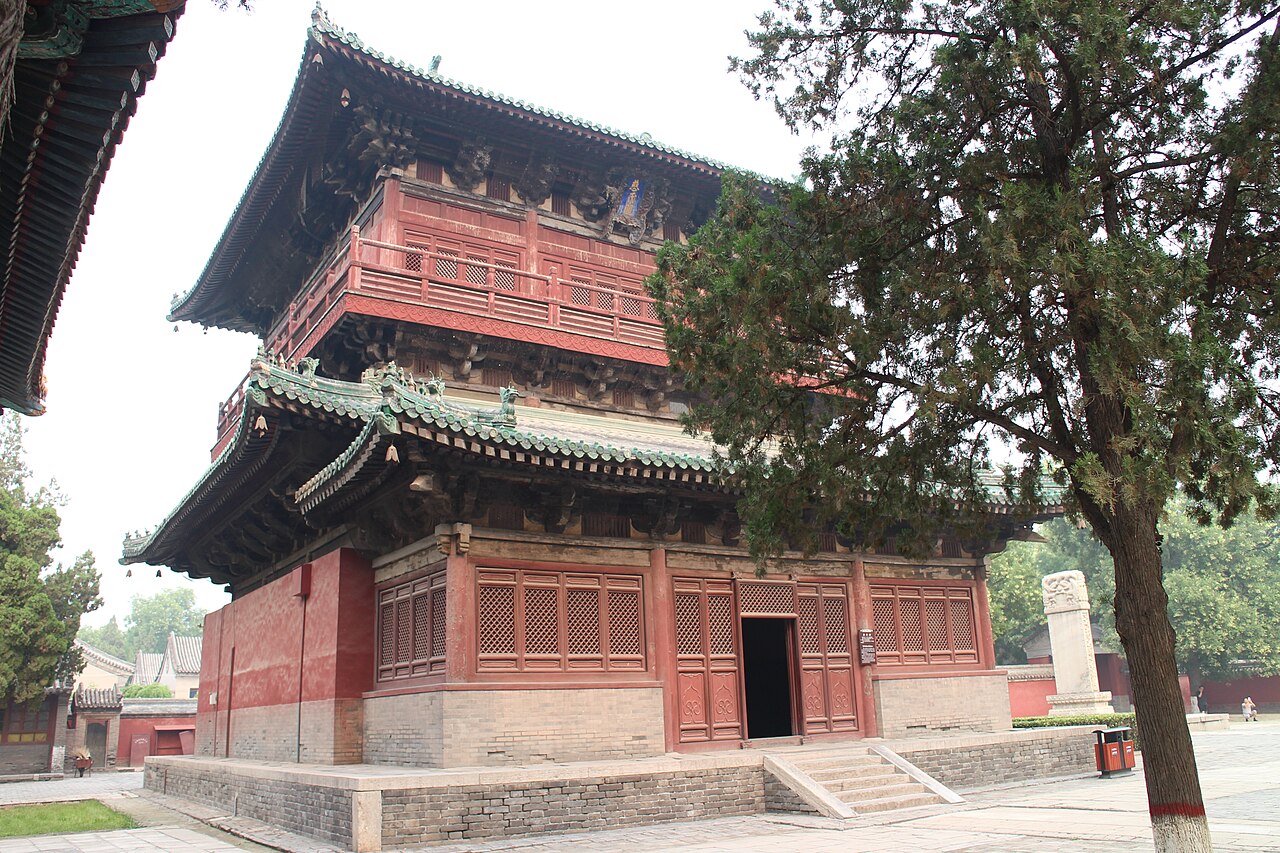
Walking the central axis
The axis runs from a glazed screen wall north past memorial arches, an ordination platform and paired stele pavilions. The great Dajue Liushi Hall is ruined; its platform remains as a reminder that even protected monasteries lose buildings. The Manichaean Hall, dated to 1052 in the Northern Song Huangyou reign, sits on a near-square base with a porch projecting from each face, a cruciform plan Liang Sicheng praised on his 1933 survey. At the north end the Great Treasure Pavilion, rebuilt around 1940, rises about thirty-three meters over a bronze thousand-armed Guanyin cast in the Song, roughly 21.3 meters tall. Look up until your neck complains; that is the temple's signature interior moment.
In 1959 the Pilu Hall from Zhengding's Chongyin Temple was moved here whole, so one compound now carries layers of local building history beyond a single founding date. Side yards, steles and lesser halls reward anyone who slows down after the Guanyin pavilion. Two to three hours covers the axis with plaque reading; rushers can skim the highlights in ninety minutes and miss why architects care about this site.
Zhengding context around the temple
Zhengding is a national historic and cultural city with a density of protected sites that surprises first-time visitors who expected only a provincial capital skyline. The old-town saying counts nine towers, four pagodas, eight great temples and twenty-four gilded arches. Lingxiao, Lingcheng, Hua and Xumi pagodas each have a different silhouette. Linji Temple to the south is the ancestral monastery of the Linji Chan school founded by master Yixuan in 854; Japanese Linji followers still return. The Shijiazhuang guide maps a Zhengding day that starts at Longxing, adds pagodas and Linji, and leaves Xibaipo or Zhaozhou for day three.
Tickets, hours and practical notes
Temple tickets, inner pavilion access and any combined Zhengding passes follow the day's official notice. Opening times for the Great Treasure Pavilion and ordination platform can shift by season or maintenance. Treat yuan prices on travel blogs as unverified until you see the window board. Carry identification for posted concessions. Monday patterns are less rigid than major provincial museums, yet holiday crowd controls and temporary closures still happen; check before you leave Shijiazhuang.
Surfaces are stone and brick. Comfortable shoes beat dress footwear. Flash is often restricted near murals and painted sculpture; follow signs. Early morning light helps exterior photos before tour buses thicken.
Getting there from Shijiazhuang
Zhengding sits a short drive or regional transit hop north of downtown Shijiazhuang. Ride-hailing to Longxing Temple or Zhengding ancient city gates is the simplest independent option; buses exist but numbers change. High-speed passengers sometimes confuse Zhengding Airport rail stations with the old town; confirm you are bound for the historic county seat, not only the airport corridor.
Pair Longxing with lunch on Zhengding old streets (Eight Big Bowls if you want the banquet form) and an afternoon among the pagodas. Keep the Hebei Museum for a downtown morning on another day so jade suits and temple timber do not blur into one exhausted blur. Zhaozhou Bridge in Zhao County is a separate southeast run; do not force it into the same afternoon as a full Longxing-plus-pagoda loop unless you have a private car and an early start.
Season and comfort
Spring and autumn are the comfort windows for old-town walking. Summer heat builds in open courtyards by midday; winter is cold and clearer for architecture photos when winds allow. National holidays pack Zhengding; weekday mornings feel more humane.
Before you go
- Confirm temple hours and pavilion access on official notices.
- Budget a full Zhengding half-day, not a thirty-minute stop.
- Separate Zhaozhou Bridge onto another block when possible.
- Wear shoes for stone courtyards and plan water in summer.
- Use the Shijiazhuang travel guide day-two outline as the default.
Frequently asked questions
How long do I need at Longxing Temple?
Two to three hours for the axis and side halls. Less if you only want the Guanyin pavilion photo.
Is Longxing Temple inside Shijiazhuang city proper?
It is in Zhengding, the historic county town immediately north of the modern capital. Plan transit as a short side trip, not a downtown stroll.
Can I see Longxing and Zhaozhou Bridge in one day?
Possible with a car and discipline; better as two focused half-days so neither site feels rushed.
Why do architects care about the Manichaean Hall?
Its cruciform Song plan with porches on four sides is rare surviving timber design, documented in early twentieth-century surveys.
Sources
Facts in this article were checked against the following sources, retrieved 15 October 2026.
- Shijiazhuang travel guide on this site
- Longxing Temple, encyclopedic overview
- Zhaozhou Bridge sibling page
Photos are from Wikimedia Commons under the licences shown in each caption.