Zhaozhou Bridge, the Sui Arch Southeast of Shijiazhuang
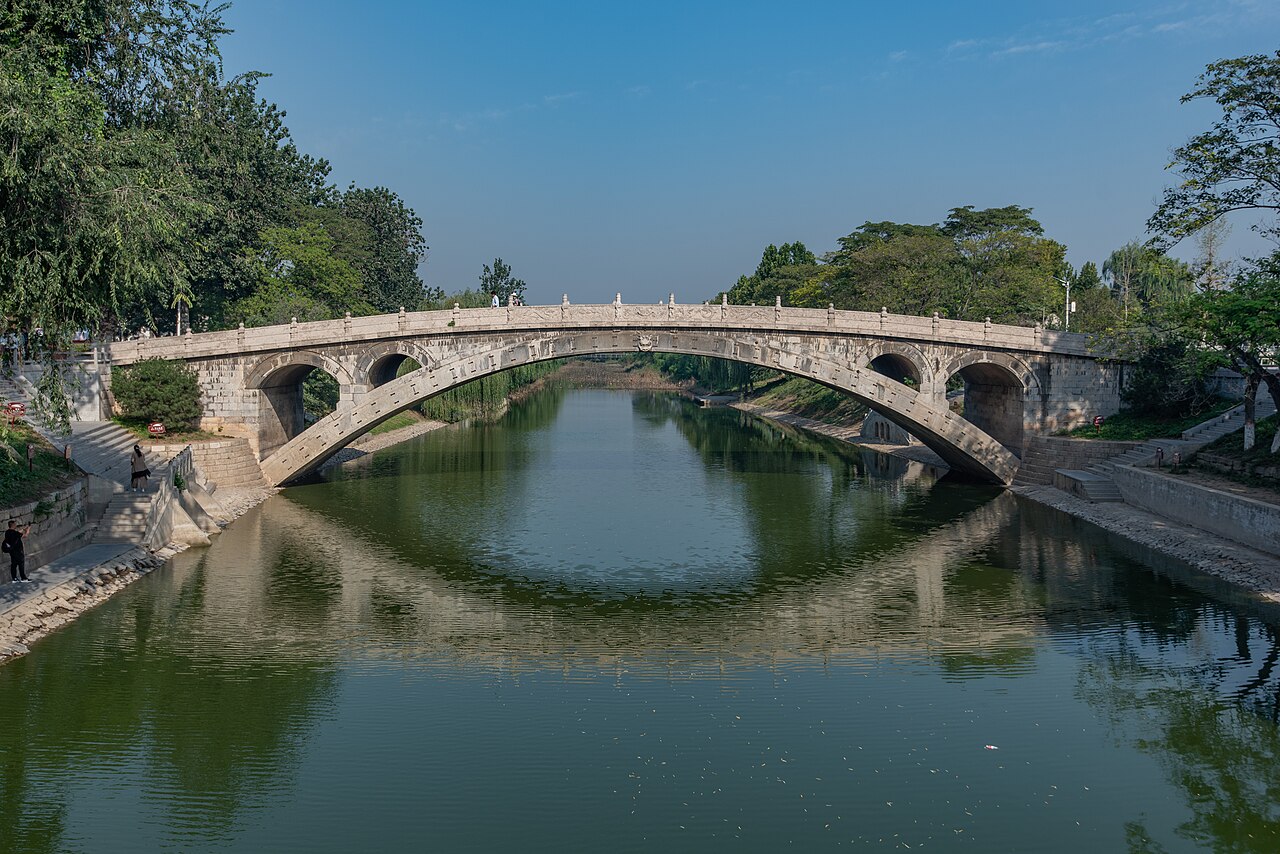
The Zhaozhou Bridge, formally the Anji Bridge, crosses the Xiao River in Zhao County southeast of Shijiazhuang, Hebei. Built under the Sui by the mason Li Chun, it is widely described as the oldest open-spandrel stone arch bridge still standing. In March 1961 it joined Longxing Temple in China's first batch of nationally protected monuments. The span runs about 50.82 meters long and 9 meters wide; the main arch uses parallel stone rings with smaller spandrel arches cut into each shoulder, shedding weight and floodwater centuries before similar ideas spread in Europe.
Why the engineering still matters
Open-spandrel design means the shoulders of the main arch are not solid fill. Smaller arches lighten the structure and give floodwater more room to pass, reducing pressure on the main ring. Four layers of twenty-eight parallel stone rings form the primary arch in classic descriptions of the bridge. Deck stones still show deep ruts from centuries of traffic. Guides on site distinguish legendary marks from ordinary wear; listen, then look for yourself.
Tang chancellor Zhang Jiazhen already recorded the bridge in verse as Li Chun's work. Hebei folk song tradition asks who built the stone bridge of Zhaozhou and answers with legends of Lu Ban building overnight and Zhang Guolao leaving a donkey-track rut. Liang Sicheng surveyed the bridge in the winter of 1933 and helped reintroduce it to modern architectural history. Standing on the bank, the story that matters most is still the surviving stone: a Sui solution that kept working.
Planning the visit from Shijiazhuang
Zhao County is a southeast road trip from the capital, not a Zhengding old-town stroll. The Shijiazhuang guide treats day three as a choice between Zhaozhou and Xibaipo rather than a forced double. Private car or ride-hail is the practical independent option; confirm return time before you linger at sunset. Combine with Zhengding only if you start very early and accept a long day; most travelers keep Longxing and the pagodas as one heritage block and Zhaozhou as another.
On site, walk both banks if access allows, photograph the open spandrels from a three-quarter angle, and read any museum or exhibition rooms that explain Li Chun's method. One to two hours covers the bridge and immediate parkland for most visitors. Add time if a small site museum is open and you want the engineering story in detail.
Tickets and practical hedges
Scenic area tickets, parking and any inner exhibition fees follow the day's official notice. Do not trust old yuan screenshots. Hours can shift with season and maintenance work on the riverbanks. Surfaces near the water can be uneven; wear shoes with grip. Summer midday glare on pale stone is harsh; morning or late afternoon light flatters the arch better.
Holiday crowds thicken the railings. Weekday visits feel calmer. Flash photography rules inside any hall follow posted signs.
Pairing with Zhengding and downtown
A clean three-day Shijiazhuang plan puts the Hebei Museum and Pilu Temple downtown on day one, Zhengding with Longxing on day two, and Zhaozhou or Xibaipo on day three. If you only have two days, choose Zhengding over Zhaozhou when temple architecture is the priority, or reverse that choice when Sui engineering is why you stopped in Hebei. Downtown food and hotel bases still make more sense than overnighting in Zhao County for most short trips.
Season and comfort
Spring and autumn suit outdoor bridge photography. Summer heat rises quickly on open embankments; bring water and sun cover. Winter can be clear and cold, good for unobstructed views when ice and wind allow. Rain makes riverside paths slick.
Before you go
- Confirm scenic hours and any bank closures on official notices.
- Budget road time each way from Shijiazhuang, not only time on the bridge.
- Keep Longxing Temple as a separate Zhengding half-day when possible.
- Visit in soft light if photographs are the goal.
- Re-read the Shijiazhuang travel guide day-three choice before stacking Xibaipo too.
Frequently asked questions
How long do I need at Zhaozhou Bridge?
One to two hours for the arch, banks and any small exhibits. The drive often takes longer than the visit.
Is the bridge still used by cars?
Modern traffic is managed around the protected monument. Treat it as a historic site visit, not a shortcut across the river.
Who built Zhaozhou Bridge?
Historical tradition credits the Sui mason Li Chun. Folk legends add Lu Ban; enjoy the stories without confusing them for engineering documentation.
Can I combine it with Longxing Temple?
Yes with a car and an early start. Two focused half-days remain the more comfortable pattern.
Sources
Facts in this article were checked against the following sources, retrieved 15 October 2026.
- Shijiazhuang travel guide on this site
- Anji Bridge, encyclopedic overview
- Longxing Temple sibling page
Photos are from Wikimedia Commons under the licences shown in each caption.