The Eastern Qing Tombs
The Eastern Qing Tombs, Qing Dongling in Chinese, spread across the foothills of Changrui Mountain in Zunhua, a county-level city in the north of Tangshan prefecture. They lie about 125 kilometres east of central Beijing and 150 kilometres from Tianjin. This is the largest of the three Qing imperial burial grounds. Five emperors are buried here, Shunzhi, Kangxi, Qianlong, Xianfeng and Tongzhi, along with 15 empresses, 136 consorts, three princes and two princesses. In 2000 UNESCO listed the site with the Western Qing Tombs and the Ming Xianling as the Imperial Tombs of the Ming and Qing Dynasties.
The setting
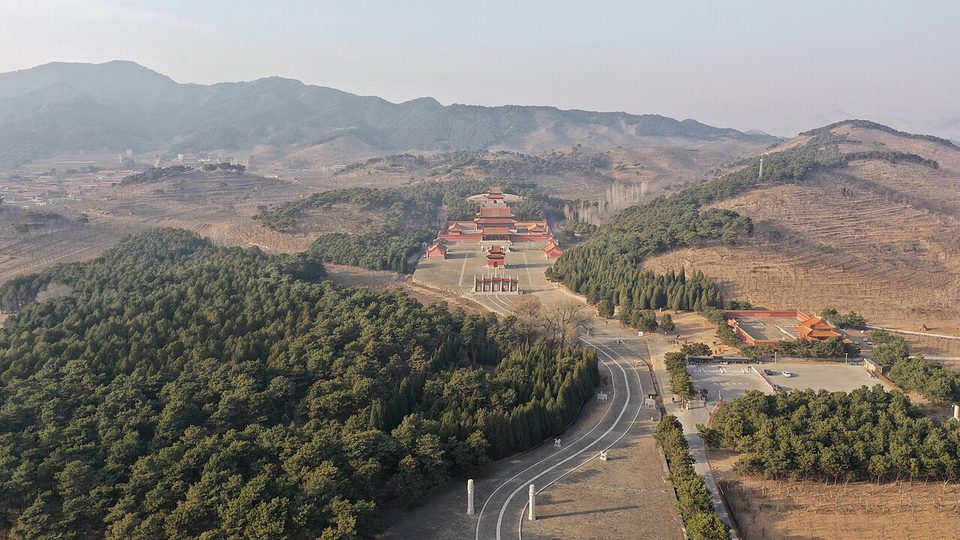
The tomb district is ringed by hills. Changrui Mountain closes the north, Jinxing Mountain the south, Yingfei Daoyang Mountain the east and Huanghua Mountain the west, and the whole area covers about 80 square kilometres. Two low hills at the south end form a natural gateway through which every stream in the valley drains. Accounts differ on who chose the site. One says the Shunzhi Emperor picked it while hunting, another credits advisers including the Jesuit Adam Schall von Bell.
Xiaoling and the spirit way
Shunzhi's tomb, Xiaoling, sits at the centre directly below the main peak, and every later tomb follows its pattern. Building began in 1663 and the main work was done by 1664, with ancillary buildings finished in 1668. English Wikipedia describes its spirit way as the most elaborate in the district. From south to north it passes a stone archway, dismounting stelae, the Great Red Gate, a robing hall and the pavilion of the Divine Merit Stele, then rows of stone animals and officials, the Dragon and Phoenix Gate and a series of bridges, before reaching the sacrificial halls and the burial mound. Shunzhi's tomb is the only one here that was never looted.
Yuling, the Qianlong Emperor's tomb
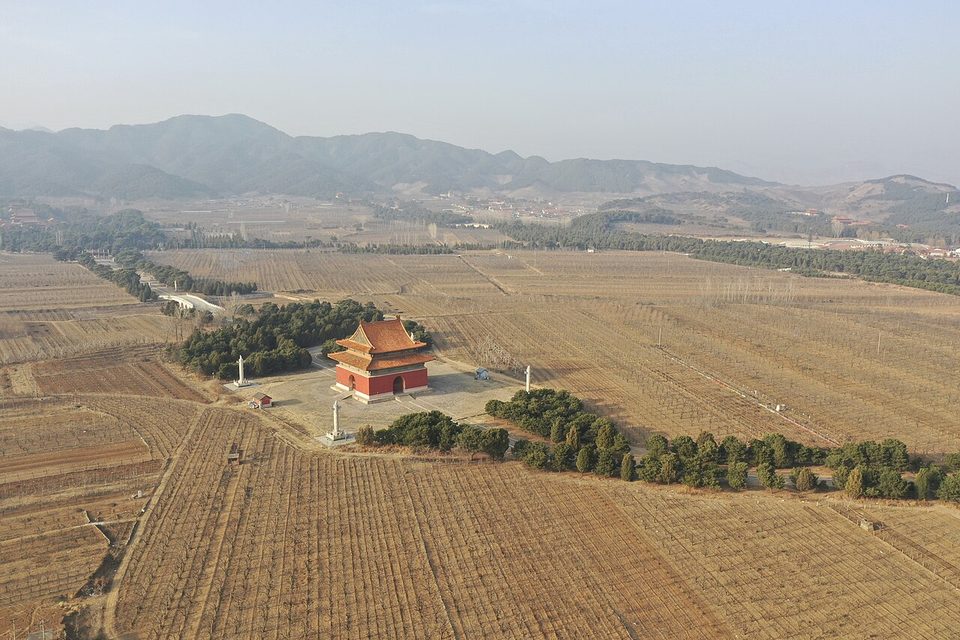
Qianlong chose his site at Shengshuiyu, west of Xiaoling, and building started in 1743. The main works were finished by 1752, and the tomb was enlarged over the following decade. Six people share its underground palace, the emperor, two empresses and three imperial noble consorts, more than any other Qing emperor's vault.
The vault is the reason to come. A sequence of nine chambers is closed by four marble doors, and from the first door onwards the walls, vaults and doors are carved with Buddhist imagery. There are the Four Heavenly Kings, eight bodhisattvas, 24 buddhas, lions and ritual objects, and more than 30,000 characters of scripture in Tibetan and Sanskrit. The doors each weigh about three tonnes and carry bodhisattvas and guardian kings in relief.
Ding Dongling and the Empress Dowager Cixi
Cixi and her co-regent Ci'an were given twin tombs east of Xianfeng's Dingling. Cixi's, at Putuoyu, has the most lavish surface decoration in the district. Its sacrificial hall and side halls are built of precious hardwood and covered with gold-painted designs and gilded dragons, and dragon carvings wind down the columns. The main hall now shows reproductions of photographs taken by Cixi's own studio in 1903.
Daoguang's abandoned tomb
One emperor started here and left. The Daoguang Emperor first built his tomb in the Eastern district, but water seeped into the burial chamber. He moved his tomb to the Western Qing Tombs, and the finished buildings were taken apart and carried there. Two of his sons and two daughters remain buried in the Eastern district.
The 1928 looting
After the Qing abdication in 1912 there was no money to guard the tombs properly. Keepers stole from them, and in 1921 a provincial reclamation office had the surrounding forest cut down. In 1928 troops under the warlord Sun Dianying blasted into the vaults of Cixi and Qianlong and carried off nearly everything. Chinese Wikipedia records stories of where the loot went, including a pearl from Cixi's mouth said to have reached Soong Mei-ling. Further robberies followed in the 1940s. Today the vaults of Qianlong, Cixi and two of Qianlong's consorts are open to visitors.
Tickets, hours and getting there
The scenic area closed for a period in summer 2026 and announced its reopening from 14 August 2026, with online booking and opening hours of 8:30 to 17:30. Hours are shorter in winter. Tickets are sold for individual tombs and as combined passes, and an internal sightseeing bus links the main groups. This page does not quote prices. Check the official "清东陵保护区" WeChat account or the visitor centre on the day.
Most visitors drive or hire a car from Beijing, Tangshan or Zunhua. Allow two hours or more each way from Beijing, depending on traffic. Zunhua's bus station runs tourist buses to the site on a limited timetable. Chengde, with its Mountain Resort, lies to the north and makes a logical next stop.
Planning the day
A full day lets you see Xiaoling's spirit way, Yuling's vault and Ding Dongling at a steady pace. With half a day, go straight to Yuling and Cixi's tomb. The vaults are cool even in summer, and distances between the tomb groups are large.
Before you go
- Book ahead and carry the ID used for the booking.
- Start with Yuling before tour groups arrive.
- Bring a light jacket for the vaults.
- Pair with the Tangshan Earthquake Memorial Park on another day.
Frequently asked questions
Eastern or Western Qing Tombs?
The Eastern tombs are larger and hold Qianlong and Cixi. The Western tombs, in Yi County near Baoding, hold the Yongzheng, Jiaqing, Daoguang and Guangxu emperors.
Which vaults can I enter?
Qianlong's Yuling, Cixi's tomb and two consorts' tombs, according to English Wikipedia.
Is it a day trip from Beijing?
Yes, by car, though it makes a long day.
Are prices listed here?
No. Prices and hours follow the official notice.
Sources
Facts in this article were checked against the following sources, retrieved 20 October 2026.
- Eastern Qing tombs, English Wikipedia
- 清东陵, Chinese Wikipedia
- Eastern Qing Tombs reopening notice, August 2026
- Imperial Tombs of the Ming and Qing Dynasties, UNESCO
- Tangshan travel guide on this site
Photos are from Wikimedia Commons under the licences shown in each caption.