Chengde Mountain Resort: The Qing Court's Summer Capital
The Mountain Resort, Bishu Shanzhuang, fills a long valley on the west bank of the Wulie River on the north side of Chengde, about 225 kilometres northeast of Beijing. The Qing emperors built it between 1703 and 1792 as a summer palace and, in practice, a second capital, where they hunted, governed and received Mongol, Tibetan and foreign envoys. At 5.64 square kilometres it is the largest surviving imperial garden in China. A wall about ten kilometres long, nicknamed the Little Great Wall, runs around palaces, lakes, a grassy plain and wooded hills. The Resort and the temples around it, including Putuo Zongcheng, Puning and Xumi Fushou, were inscribed together as a World Heritage site in 1994.
Why the Qing built a palace in the hills
The Kangxi emperor travelled north of the Great Wall almost every year to hunt with the Mongol princes at the Mulan hunting ground and to hold court with them. Chinese Wikipedia explains that many Mongol nobles avoided Beijing for fear of smallpox, so meeting them beyond the passes was also policy. Kangxi built a chain of travelling palaces along the road. In 1701, on the way back from a hunt, he found this sheltered and almost empty valley, and building began in 1703. In 1711 he named it the Mountain Resort for Escaping the Heat and wrote the plaque himself. His grandson Qianlong enlarged it greatly from 1741, and the last works were finished in 1792. A town grew outside the walls to serve the court, and it became the prefecture of Chengde in 1778.
Under Qianlong the court spent around half of each year here. He received the Torghut leader Ubashi after his people's long trek back from the Volga, the Sixth Panchen Lama from Tibet, and the first British embassy under Lord Macartney in 1793. Two emperors died here, Jiaqing in 1820 and Xianfeng in 1861. Xianfeng had fled to Chengde when British and French troops took Beijing in 1860, and his death set off the coup that brought the Empress Dowager Cixi to power. After that the court stopped coming. The Resort was left to decay, and Chinese Wikipedia says Japanese forces removed many of the remaining treasures after occupying Rehe in 1933. Repairs ran in three ten-year programmes from 1976 to 2006.
The palace zone
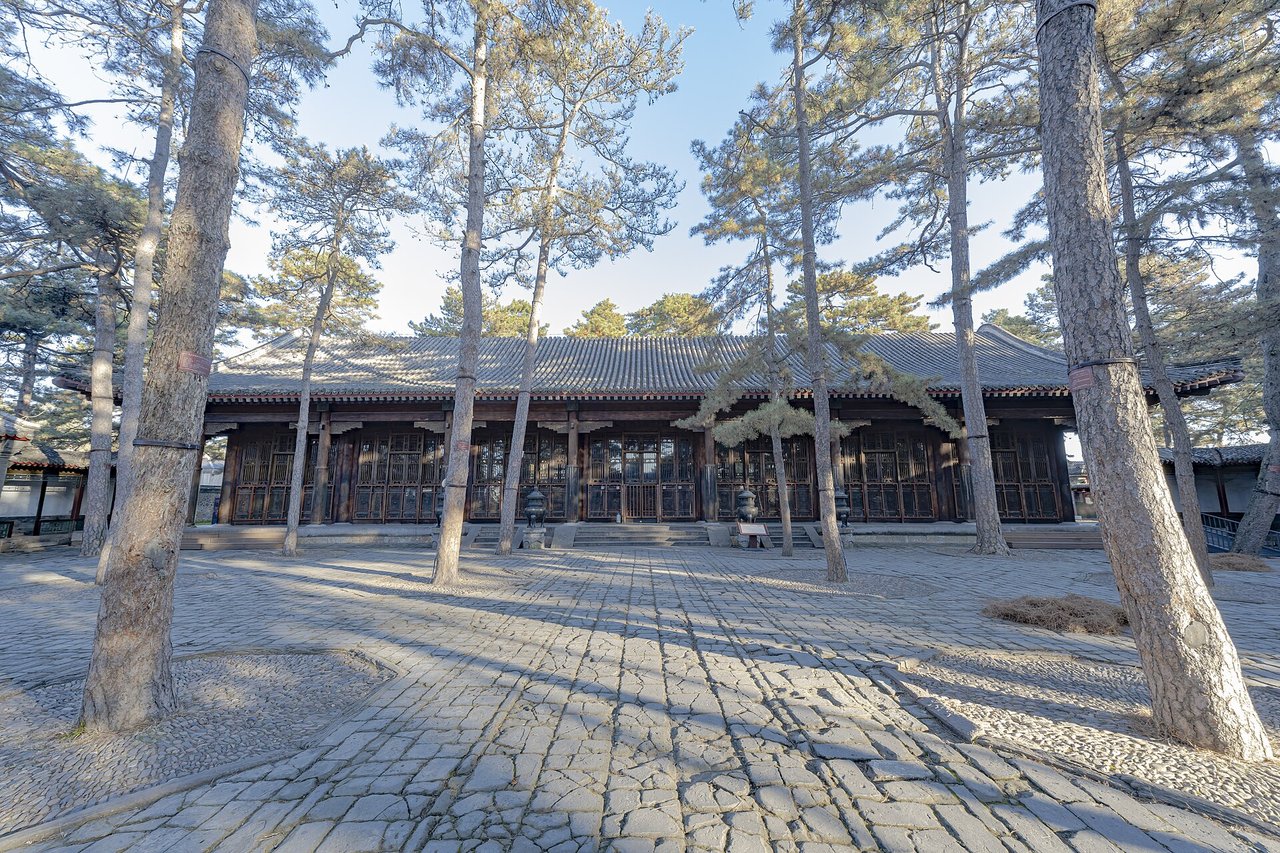
The palaces are at the south end, and the main gate, the Lizheng Gate of 1754, carries its name in five scripts, Chinese, Manchu, Mongol, Tibetan and Uyghur. The Main Palace runs through nine courtyards. Its audience hall, the Danbo Jingcheng Hall, was built in 1710 of nanmu wood and left unpainted, so it is often called the Nanmu Hall. With grey tiles and bare timber it looks very different from the Forbidden City, and Chinese Wikipedia contrasts the plain style of the Resort with the gilded temples outside its walls. Behind it is the Yanbo Zhishuang Hall, the emperor's bedchamber, which Kangxi named for the mist and cool air over the lakes. Jiaqing and Xianfeng both died in this building, and in its west room Xianfeng approved the Convention of Peking in 1860. The palace rooms now form the Mountain Resort Museum, with court furniture and objects.
The lakes
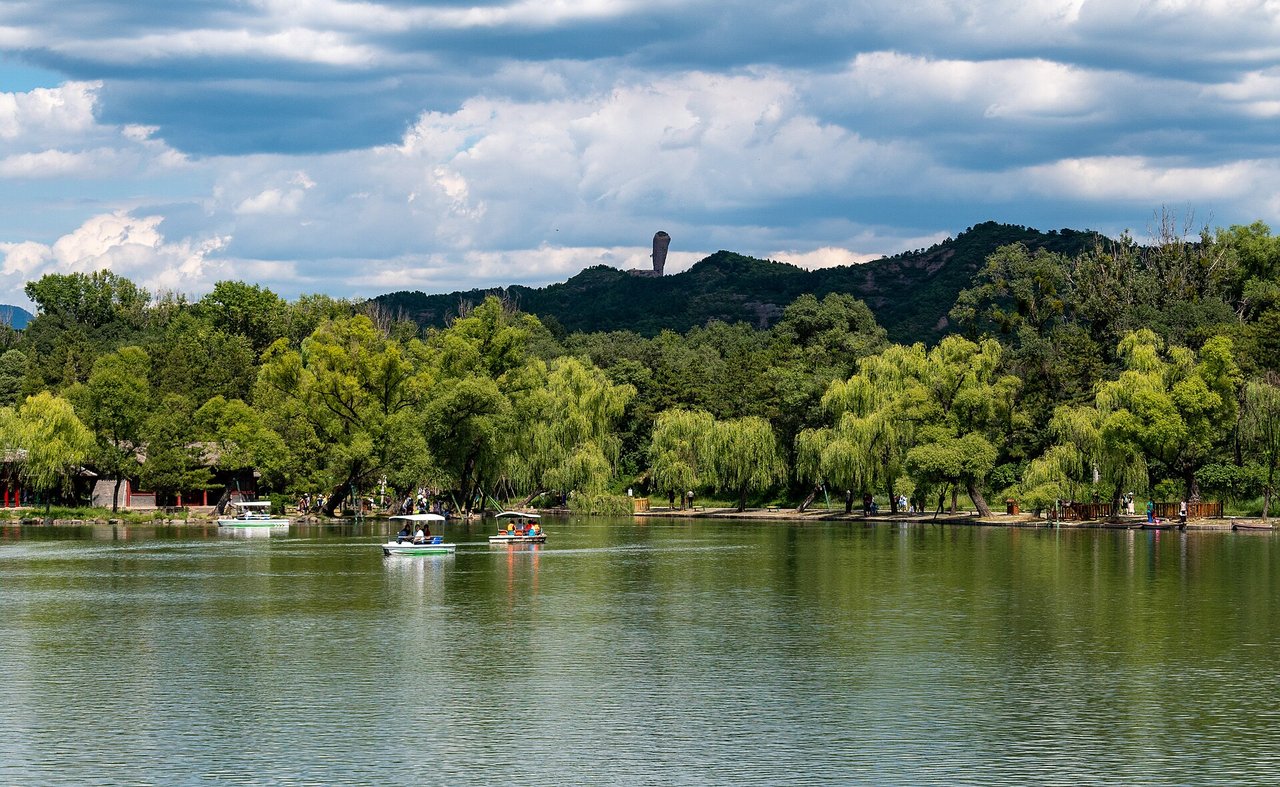
North of the palaces lies the lake district, fed by mountain streams, a warm spring and the Wulie River. Chinese Wikipedia says it once had nine lakes and ten islands, and seven lakes and eight islands survive, joined by causeways and bridges. This is where Kangxi and Qianlong copied the south. The Jinshan pavilion repeats one at Jinshan in Zhenjiang, and the Tower of Mist and Rain on its island copies the one on South Lake in Jiaxing. Rowing and electric boats are hired out on the lakes in the warm months. In 2018 the frozen lake hosted the Women's Bandy World Championship.
The plain and the hills
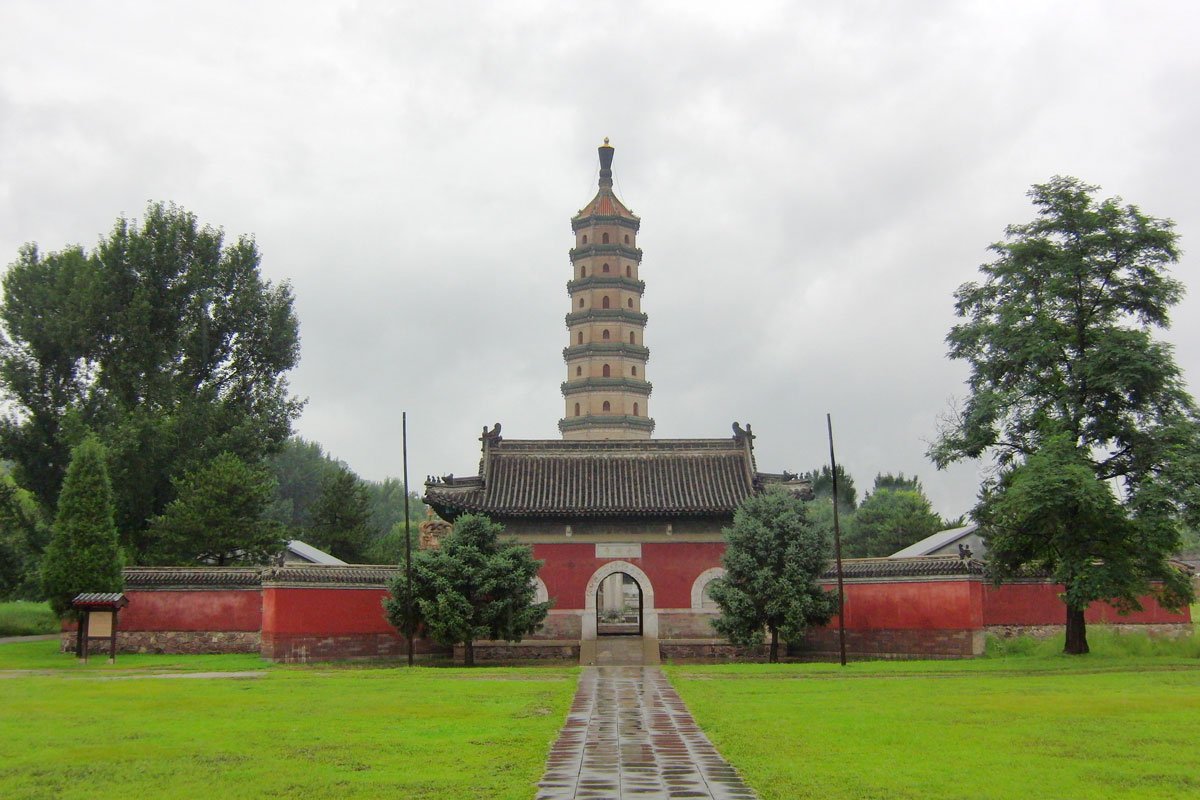
Beyond the lakes the land opens into a grassy plain. The western part was a riding ground. The eastern part, Wanshu Yuan or the Garden of Ten Thousand Trees, is where Qianlong pitched great tents to feast Mongol princes, religious leaders and foreign envoys, and yurts stand there again as guest lodging. At the north end of the plain, Yongyou Temple, the largest temple inside the Resort, keeps a nine-storey pagoda of 1751 that English Wikipedia puts at about 70 metres. The Wenjin Pavilion nearby was one of the four imperial libraries built for the Siku Quanshu, the great Qianlong collection of books.
The hills take up about three quarters of the Resort. Kangxi and Qianlong named seventy-two scenes in all, thirty-six each, many of them scattered through these valleys, and most hill buildings have since disappeared. Sightseeing buses run up into the hill zone for those who want to see it without a long walk. Chinese Wikipedia notes that the hills close in winter and spring for fire prevention.
Tickets and hours
The city's cultural relics bureau lists the Resort ticket at 130 yuan from 1 April to 31 October and 90 yuan from 1 November to 31 March, with half-price tickets at 65 and 45 yuan. The ticket includes the palace zone and is valid for one entry within two days of sale. Entry is by real-name online booking with an ID or passport. For 1 May to 9 October 2026 the main Lizheng Gate opened at 07:00 with last entry at 17:10. Hours shorten from 10 October, so check the day's notice.
Getting there
Chengde has high-speed trains from Beijing, and taxis and city buses run from the stations to the Lizheng Gate. Visitors enter through the Lizheng, Dehui and Wanshuyuan gates and leave by the Chengguan or Wanshuyuan gates. Hotels near the south wall put both the Resort and the northern temples within reach. Chengde can be done as a day trip from Beijing, but an overnight stay makes the Resort and the temples far less rushed.
How long and when
Give the Resort a full day, starting with the palace zone at opening, then the lakes, and the plain or a hill bus in the afternoon. Summer is the season the emperors chose, cooler than Beijing, and early autumn colours the hills. Weekdays help on holiday weeks.
Things to confirm before you go
- Your booking and which gate you will use.
- Opening hours after 10 October and in winter.
- Whether the hill zone is open, and the bus times.
- Boat hire on the lakes, which is seasonal.
Frequently asked questions
How big is the Chengde Mountain Resort?
About 5.64 square kilometres inside a ten-kilometre wall, the largest surviving imperial garden in China.
How much is the ticket?
130 yuan from April to October and 90 yuan from November to March, by the city's published price list.
Is one day enough?
One full day covers the palaces, lakes and plain. Add a second day for the outer temples.
Which temple should I add?
Putuo Zongcheng, the Little Potala, is the most dramatic, and Puning has the giant wooden Guanyin.
Sources
Facts in this article were checked against the following sources, retrieved 8 October 2026.
- 承德避暑山庄及其周围寺庙, Chinese Wikipedia
- Chengde Mountain Resort, English Wikipedia
- 避暑山庄及周围寺庙景区旅游景点价格公示, Chengde Cultural Relics Bureau
- 5月1日起,承德避暑山庄调整景区开园时间, Beijing Daily, April 2026
- The Mountain Resort and its Outlying Temples, Chengde, UNESCO
Photos are from Wikimedia Commons under the licences shown in each caption.