Guangji Temple
In the middle of Wuhu, a pair of low red earth hills called Zheshan rises above the streets, and on the southwest slope of the larger one stands Guangji Temple. Local people call it Little Jiuhua. Mount Jiuhua, one of the four sacred Buddhist mountains of China, lies roughly a hundred kilometres to the southwest, and pilgrims heading there were said to stop and burn incense here first. The temple climbs the hill in tiers, crowned by a Northern Song brick pagoda, and it makes the easiest piece of history to reach in Wuhu.
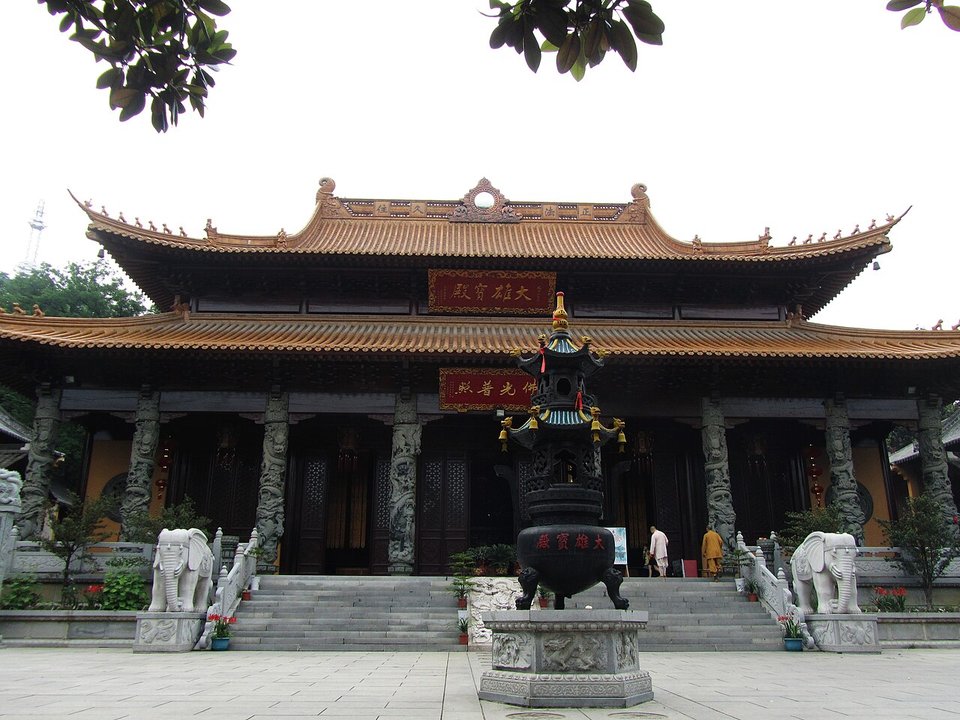
Little Jiuhua
The temple's story is tied to Kim Gyo-gak, known in Chinese as Jin Qiaojue, a Buddhist monk from the Korean kingdom of Silla who came to China in the Tang dynasty and is venerated as an incarnation of Ksitigarbha, the bodhisattva who vows to save beings in the underworld. He spent most of his life on Mount Jiuhua. Tradition says that before settling there he stayed on Zheshan in a thatched hut and taught, and Chinese Wikipedia says the temple founded in the Qianning reign of the Tang, between 894 and 898, was built in his memory.
It was named Yongqing Temple in the following reign and also called Guangji Yuan, and took its present name in the Dazhong Xiangfu reign of the Northern Song in the early 11th century. Ctrip's description and the Chinese entry both explain that pilgrims bound for Jiuhua came here first, and that is where the nicknames Little Jiuhua and Jiuhua travelling palace come from. The temple also holds what Chinese Wikipedia describes as a Ksitigarbha seal cast from placer gold in 757.
Climbing the halls
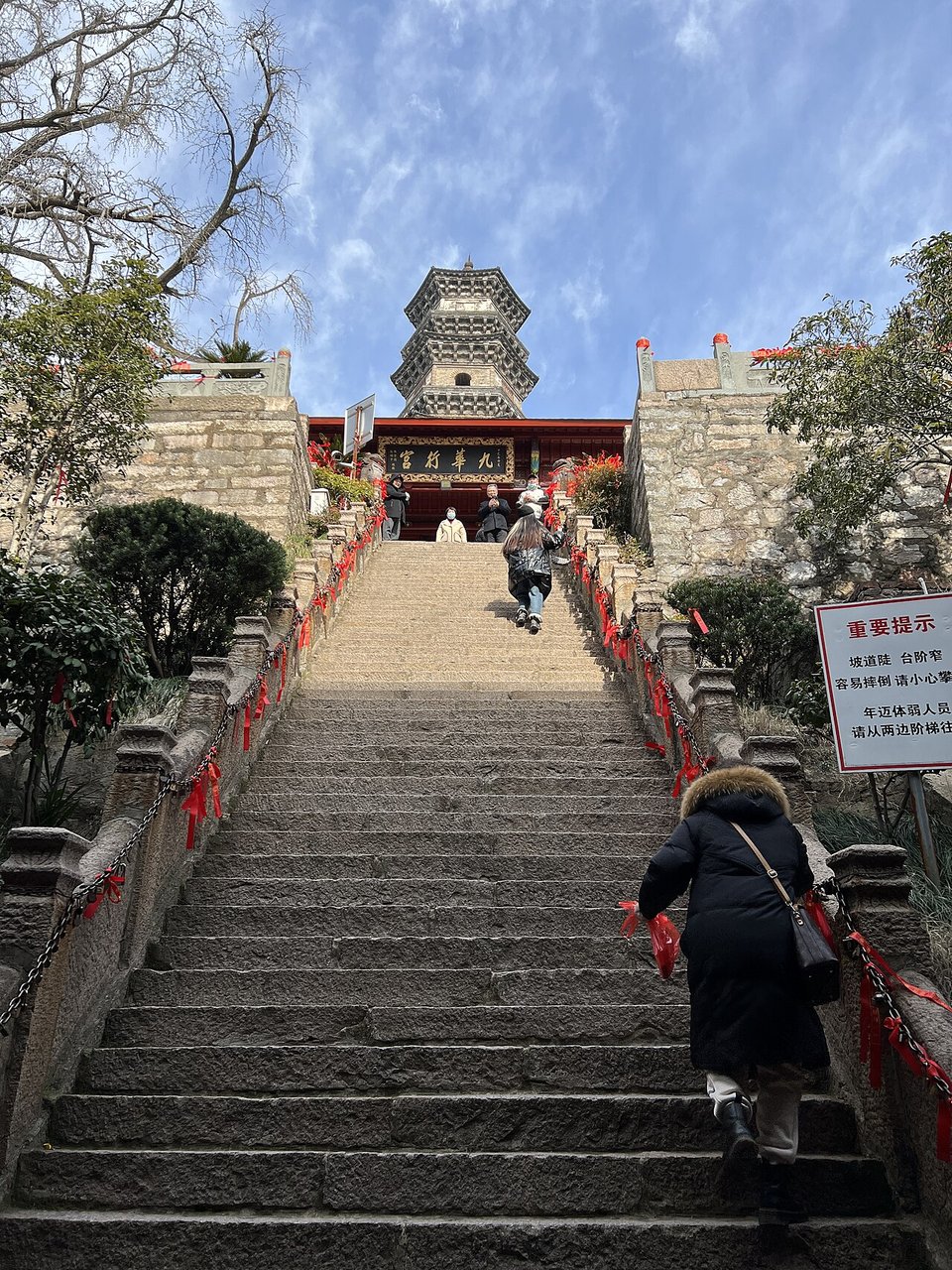
The buildings have been destroyed and rebuilt many times, and most of what you see is recent reconstruction laid out to echo Jiuhua. The temple rises in four tiers up the slope, through the Heavenly Kings Hall, the Mahavira Hall and the Ksitigarbha Hall, with the Medicine Buddha Hall to the east. Ctrip counts 88 steps from the bottom to the top. One 2023 visitor notes that the steepest flight, between the Mahavira Hall and the Ksitigarbha Hall, is one way only, up.
The Ksitigarbha Hall at the top is modelled on the Flesh Body Hall on Mount Jiuhua, which holds the preserved body of Kim Gyo-gak. Ctrip says a ginkgo tree from the Song dynasty stands in front of it and that the statue of Ksitigarbha inside is about 12 metres tall. Visitors also mention the figures of the ten kings of hell and their attendants along the walls, and a stall where you can draw a fortune stick.
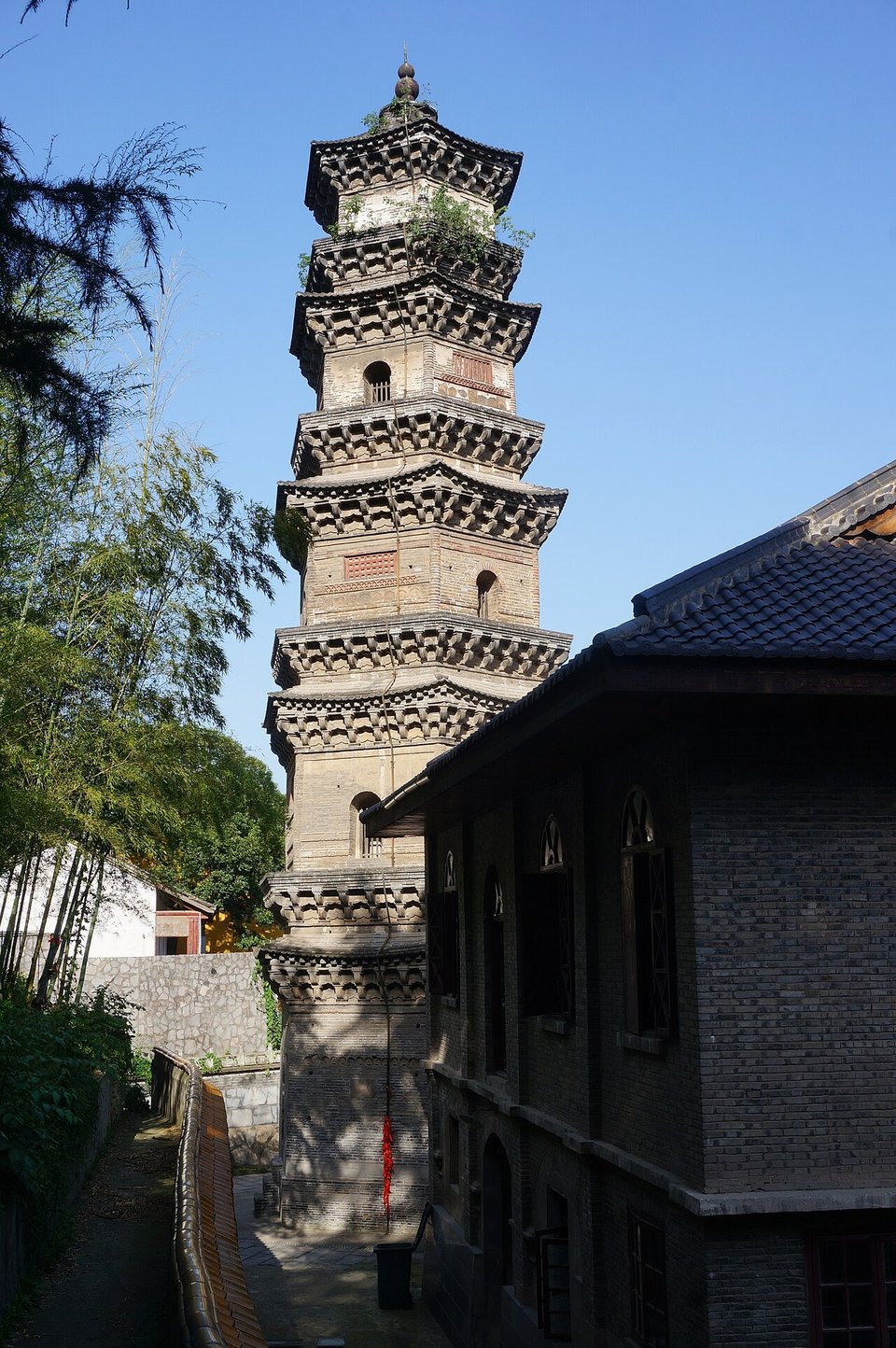
The Zheta Pagoda and Dicui Xuan
Two older structures survive. Behind the Ksitigarbha Hall is the Zheta, or Zheshan Pagoda, built in 1065. Chinese Wikipedia describes a five storey, six sided pagoda of the pavilion type, about 28 metres high, with a seated figure of Ksitigarbha inside. Visitors point out that one corner of the pagoda is enclosed by the back of the hall, so you can see part of the base from inside. The scene of the pagoda in clear weather haze, Zheta Qinglan, was counted among the eight views of old Wuhu, and Chinese Wikipedia's article on Zheshan puts it first among them.
West of the Ksitigarbha Hall is Dicui Xuan, a two storey building of 1919 on the site of a study used by the Song poet and calligrapher Huang Tingjian. It was later used to honour the god of literature and local worthies, and stone tablets are set into the walls downstairs.
Zheshan Park
The temple is one part of the Zheshan scenic area, which Chinese Wikipedia says also includes Zheshan Park and the Luhecun tea museum, and was rated 4A in 2006. The hills are small, the larger peak 84.8 metres and the smaller 67.9 metres, and the earth is a deep red, which gives the name. Being the highest ground in the city, they have long been a place to climb for views over Wuhu and the Yangtze. Song and later poets including Huang Tingjian and Lin Bu came here. On the hill are the tomb of General Dai Anlan, who died fighting in Burma in 1942, and the tomb of the educator Liu Xiping.
Wuhu Bendibao says the park itself is free and is the city's largest hill park, popular with locals for walks and exercise.
Hours, ticket and festivals
Ctrip and Wuhu Bendibao list the temple at 215 Jiuhua Middle Road, open 6:30 to 17:00 every day. An older Bendibao article gives the ticket as 5 yuan bought on site, and a 2023 visitor review gives the same figure, so expect a small fee and check the day's notice. Incense is sold inside. The phone numbers listed are 0553 3821494 and 0553 3835195.
Bendibao notes a temple fair on the 30th day of the seventh lunar month, the day associated with Ksitigarbha, when the temple is at its busiest. Dress modestly and keep quiet in the halls, as it is an active place of worship.
Getting there
Many city buses stop at Zheshan Park; Bendibao lists more than ten routes. Visitors on Ctrip mention a car park by the temple that fills on holidays. From the station a taxi is quick. Allow an hour for the temple and another hour if you want to walk up through the park.
From Wuhu, Caishi Rock in Ma'anshan is less than an hour away by road and pairs well for a day of Yangtze history. Pilgrims still continue south to Mount Jiuhua.
Frequently asked questions
Can I climb the pagoda?
Visitors describe viewing it from the top courtyard. Treat any interior access as unlikely and ask on site.
Is it worth a stop on the way to Huangshan?
For a couple of hours, yes, especially if you are already changing trains in Wuhu.
Is the park free?
Bendibao lists Zheshan Park as free, with small fees only for the temple and the tea museum.
Sources
Facts in this article were checked against the following sources, retrieved 23 October 2026.
- 广济寺 (芜湖), Chinese Wikipedia
- 赭山, Chinese Wikipedia
- Ctrip, Guangji Temple listing and reviews
- Wuhu Bendibao, Guangji Temple listing
- Wuhu Bendibao, Zheshan scenic area tickets
- Wuhu travel guide on this site
Photos are from Wikimedia Commons under the licences shown in each caption.