Yantai Mountain, the Beacon Hill That Named a City
Yantai Mountain, Yantaishan, is a small hill on the Yellow Sea at the northern edge of downtown Yantai, in Zhifu District. Chinese Wikipedia gives it a height of only 42.5 metres and an area of 45 hectares, with the sea on three sides and the port in Taiping Bay to the west. A Ming beacon on its summit gave the city its name, and after Yantai became Shandong's first treaty port in 1861, consulates and foreign houses filled its slopes. The park is free, the walk is short and gentle, and it packs about six centuries of the city's history into two or three hours.
From North Hill to Smoke Tower
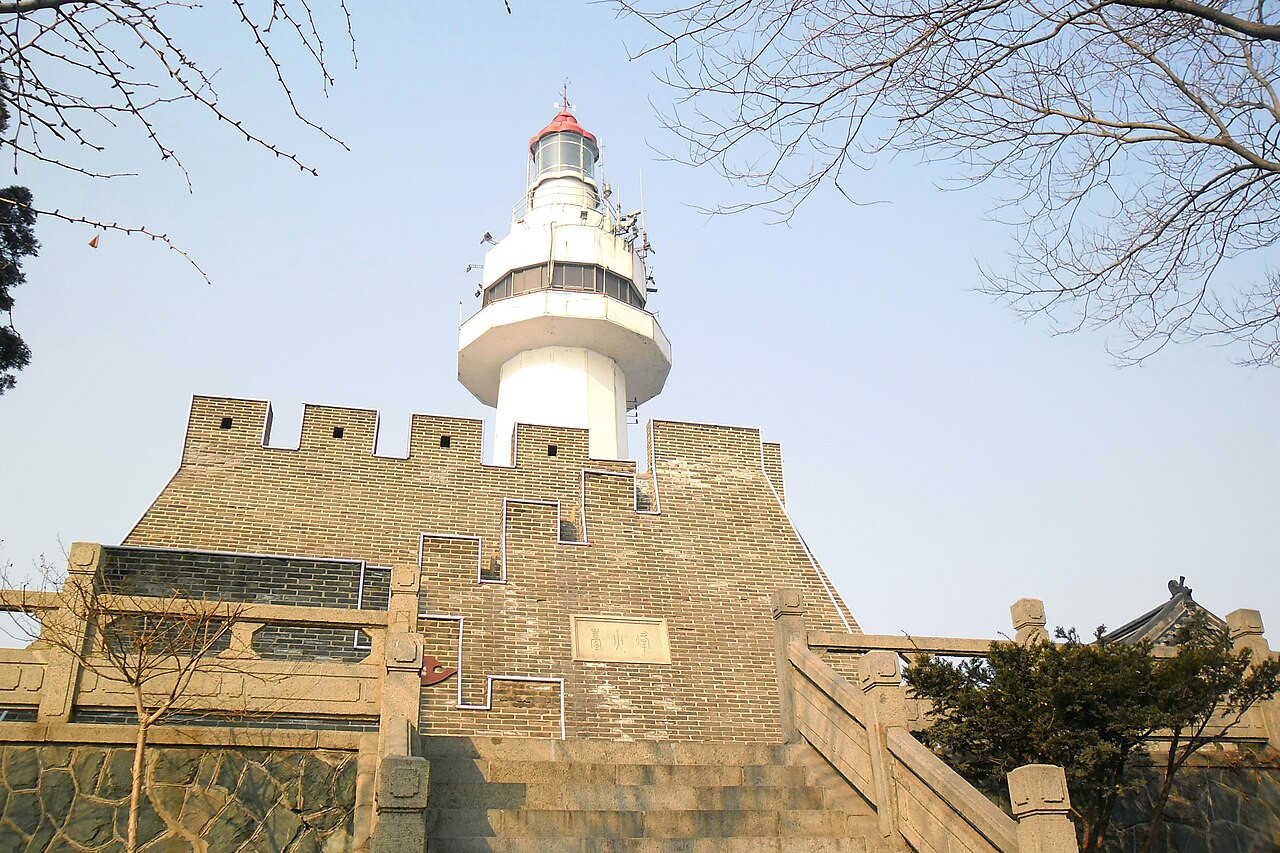
The hill was once called Beishan, North Hill. In 1398, as Japanese pirates raided the coast, the Ming set up the Qishan garrison just south of it and built a beacon tower on top. Guards burned wolf dung to send smoke by day and lit fires at night to warn the next post along the coast. The beacon was called a yantai, a smoke tower, and the name passed to the hill and later to the city. Chinese Wikipedia records the tower as 6.5 metres high. Only its base survives. In the Kangxi reign of the Qing, the hill was counted among the eight views of Fushan county.
The treaty port on the hill
After the Second Opium War, the Treaty of Tianjin opened Dengzhou to foreign trade. The British found the water at Dengzhou too shallow and chose this harbour instead, and Yantai opened as Shandong's first treaty port on 22 August 1861. Westerners called the town Chefoo. Britain set up the first consulate on the hill. Chinese Wikipedia counts sixteen countries with consulates in Yantai, six of them on the hill itself. Besides Britain these were the United States, France, Germany, Denmark and Japan. Churches, a hospital, schools and trading houses spread around them. The French consulate, opened in 1901, worked from the Catholic bishop's residence. The Austro-Hungarian consulate, opened in 1902, used offices inside the Changyu wine company. The last foreign residents left in 1949.
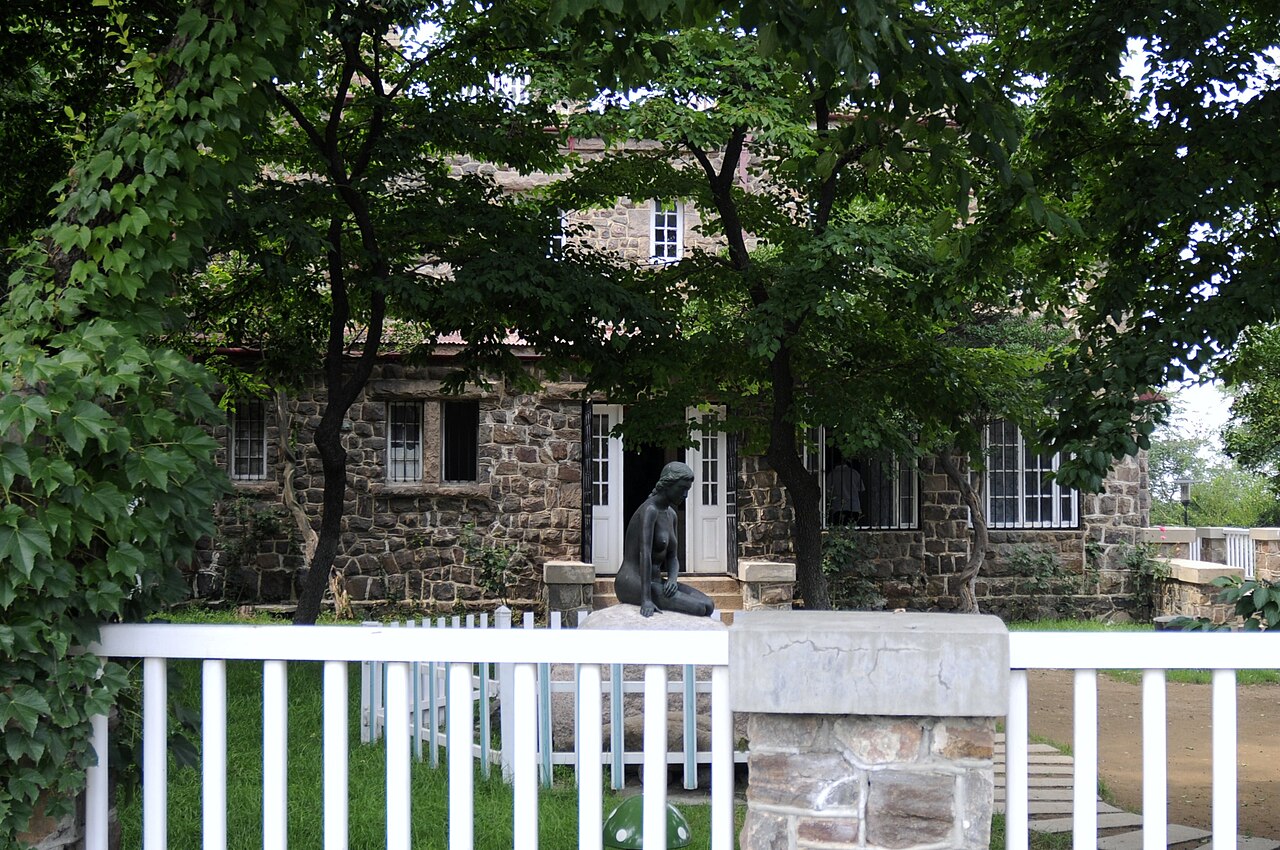
In 2006 the Yantai Mountain group of modern buildings was listed as a national key heritage site. Chinese Wikipedia singles out the British consulate, in the veranda style of early colonial buildings in Asia, along with the American, Japanese and Danish consulates, as the most distinctive.
The lighthouse question
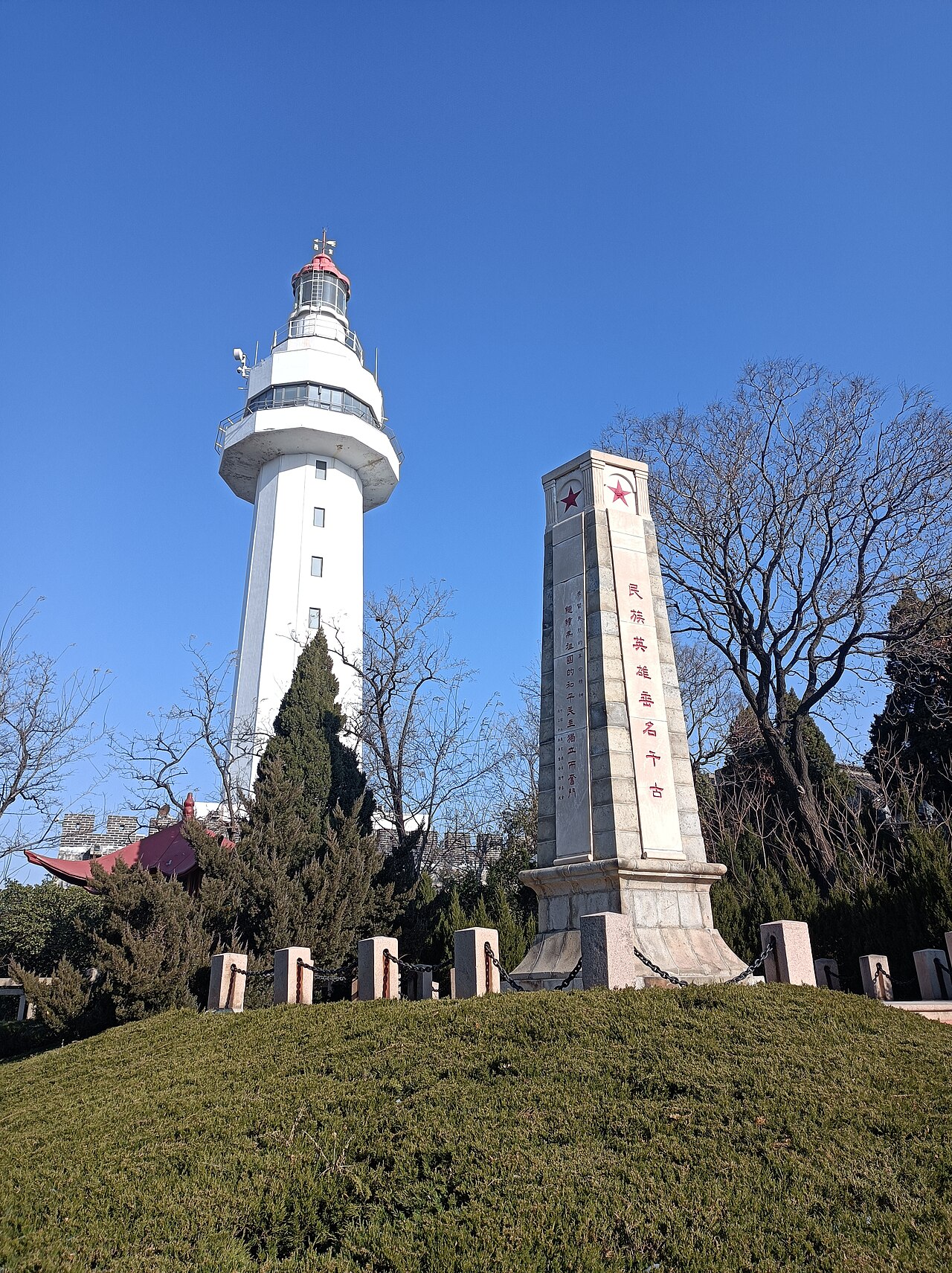
The lighthouse at the top replaced the beacon and is a landmark for ships entering the port. In 1866 the British-run Chefoo customs put a simple light with a wooden roof and a flagpole on the old beacon platform. It was rebuilt as a proper lighthouse in 1905, with a beam visible for about 17 nautical miles. In 1986 the city pulled down both the beacon remains and the old lighthouse and put up the present tower, designed by Tsinghua University. It is 49.25 metres tall with twelve floors, and a lift goes up to a viewing platform on the eleventh. Its light reaches about 30 nautical miles. Many residents disliked losing the old tower, and Chinese Wikipedia notes that in 2008 members of the city's political consultative conference proposed taking the new one down and rebuilding the old lighthouse and beacon. The 1986 tower still stands and has become a city symbol in its own right.
Other stops on the hill
Relang Pavilion, built in 1982 on the rocks at the northern corner, is the spot for sunrise and, on rare days, mirages over the sea. The Bing Xin Memorial occupies the former house of the customs commissioner. The writer Bing Xin lived in Yantai as a child from 1903 to 1911, and the house shows her belongings, photographs and manuscripts. The Longwang temple dates from the Ming and was repaired in 1936, 1994 and 2000. When it was repaired in 1936, residents turned its south court into a shrine for the war dead. Beside it stands a monument put up in May 1946 with the names of 89 soldiers killed in the fighting for Yantai on 24 August 1945. Look also for an old goldenrain tree said to have been planted by Ming beacon guards about six hundred years ago, and for a large rock linked to a story of swallows gathering every spring.
Tickets, hours and getting there
Yantai Bendibao, updated in August 2026, says the park itself is free and the lighthouse costs 10 yuan, with children under 1.2 metres free. It lists park hours of 8:00 to 21:00 and lighthouse hours of 8:00 to 19:30. Bendibao also warns that the park has no street lights, so leave the hill before dark. Check the day's notice for changes.
The address is 7 Lixin Road. City buses including routes 3, 17, 46, 50 and 61 stop at Yantaishan. Paths are gentle and pushchairs can manage them.
Planning your visit
Bendibao suggests arriving around 16:00 to see the sea in daylight and stay for sunset. The Yantai guide puts the hill on the first day, followed by seafood on Chaoyang Street just below. If you have a third day, Penglai Pavilion west of the city covers the older, mythical side of this coast.
Before you go
- Buy the lighthouse ticket at the base if you want the top platform.
- Bring a light jacket for the sea wind.
- Leave before dark, as the park has no lighting.
- Combine the hill with Chaoyang Street for dinner.
Frequently asked questions
Is Yantai Mountain free?
Yes. Entry to the park is free. The lighthouse costs 10 yuan, according to Bendibao.
Why is the city called Yantai?
It means smoke tower, after the Ming beacon built on this hill in 1398.
How long do I need at Yantai Mountain?
Two to three hours covers the lighthouse, consulates and the coastal path.
Can I go up the lighthouse?
Yes. A lift runs up to the viewing platform on the eleventh floor.
Sources
Facts in this article were checked against the following sources, retrieved 12 October 2026.
Photos are from Wikimedia Commons under the licences shown in each caption.