Dongying Travel Guide: Yellow River Estuary and Delta Wetlands
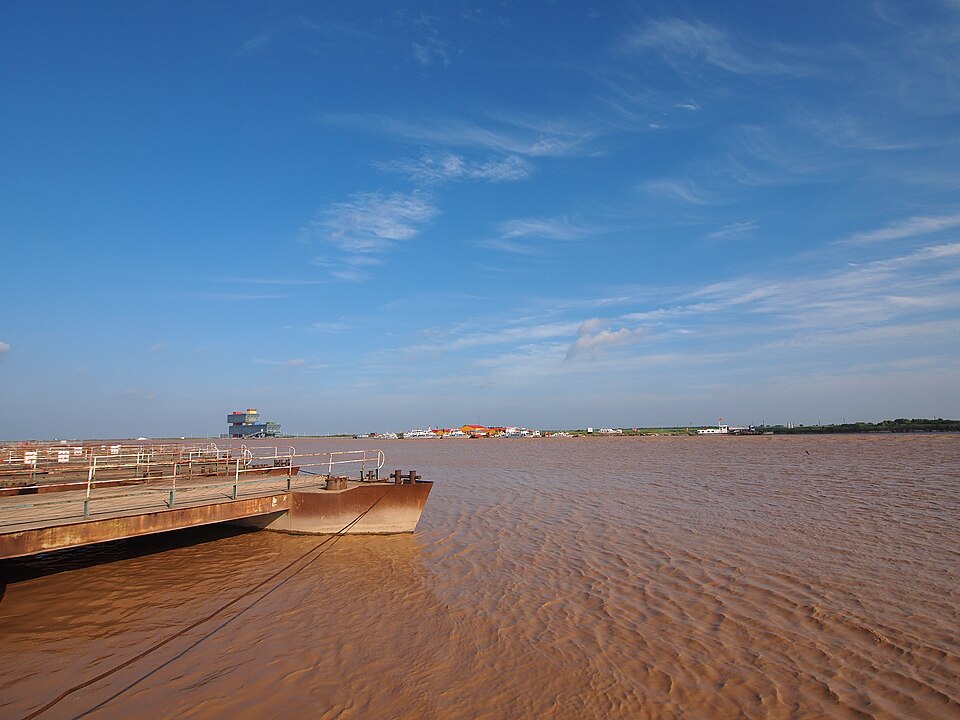
Come to Dongying for one thing: the place where the Yellow River finally reaches the Bohai Sea. The estuary and the national nature reserve around it are a long drive from the city's hotels, so the whole trip turns on getting one clear day out to the river mouth. Downtown is a young oil town (founded in 1983 as the base for Shengli Oilfield) and works best as somewhere to sleep, eat and catch a train.
The short version
- Minimum: two nights, with the middle day spent entirely at the Yellow River estuary.
- Best months: April to June and September to October. Mid-autumn adds the red Suaeda flats; winter brings swans and cranes but hard wind.
- Skip: treating the city's malls and plazas as a sightseeing day. They aren't one.
Why the delta is worth the drive
The river has only flowed out here since it changed course in 1855, and the mouth has wandered dozens of times since, settling in its current position in 1976. It still carries so much silt that the coastline keeps growing, which is why the land around the mouth feels raw and unfinished: reed beds, mudflats, tidal channels and almost no relief.
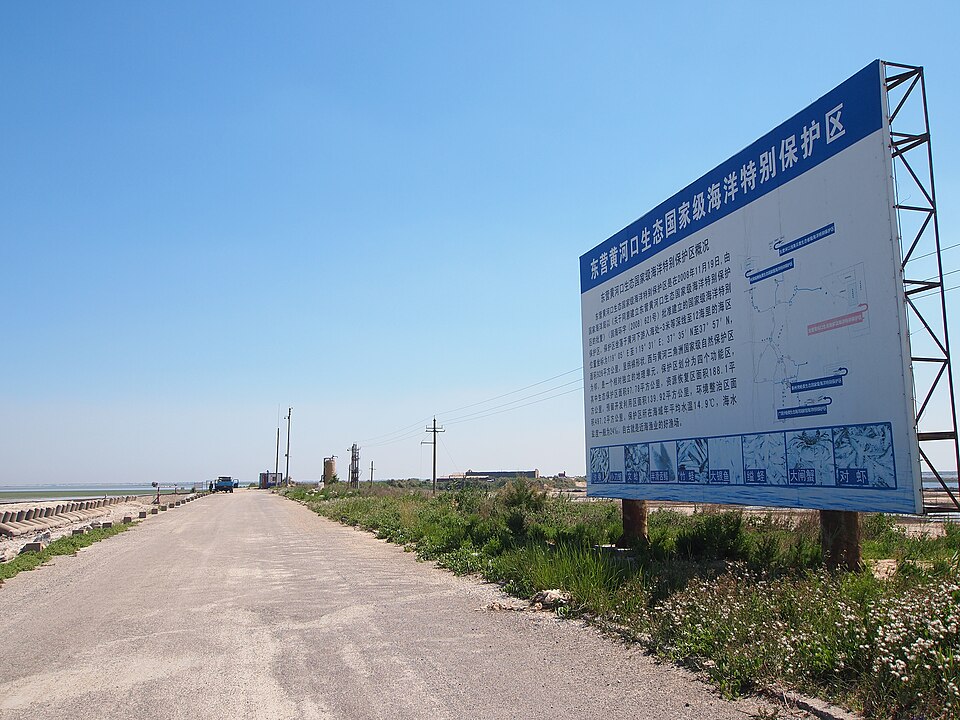
The Yellow River Delta National Nature Reserve, designated in 1992 and listed under the Ramsar Convention in 2013, covers about 153,000 hectares in two separate pieces. The larger one surrounds the current river mouth on the east coast (in Kenli District); a smaller one sits on the north coast at the mouth of the Diaokou River, an older course of the Yellow River. Most visitors only need the eastern section, where boardwalks and viewing points are concentrated.
For birders this is one of the most important stops on the East Asian–Australasian Flyway. The reserve hosts the largest breeding population of Oriental storks anywhere, and in winter (roughly November to April) whooper swans and red-crowned cranes gather here. Casual visitors tend to remember the colour instead: in autumn the salt-tolerant Suaeda salsa turns the mudflats deep red, the so-called "red carpet", seen from wooden walkways laid across the wetland.
How to spend the estuary day
Leave early. The reserve's tourist zone is well over an hour by road from the main hotel districts, and once you are inside, sightseeing vehicles and boardwalks spread you across a large area. A sensible order:
- Confirm at the gate which zones and shuttles are running that day; closures for breeding birds or storm damage happen.
- Head for the river-mouth viewing area first, while light is soft and before tour groups arrive.
- Spend the middle of the day on the wetland boardwalks and bird-watching points. Binoculars make a big difference.
- Check the last return shuttle time before walking deep into the boards, and keep a snack and water with you because services are thin.
Off-path walking and drones are generally restricted, and the core area is closed to visitors. Ticket prices and shuttle fares change; this guide does not quote 2026 figures, so check the reserve's official notice before you go.
When the weather fails
A wet or windy day turns open dikes into a miserable place. Rather than forcing it, move the estuary to your spare day and use the bad one for indoor stops. In Guangrao County, the Dongying History Museum (which includes a Sun Wu temple) and the Sun Tzu Cultural Tourism Area cover the region's claim to the strategist Sun Tzu. Neither replaces the delta, but both beat sitting in a hotel.
Oilfield country
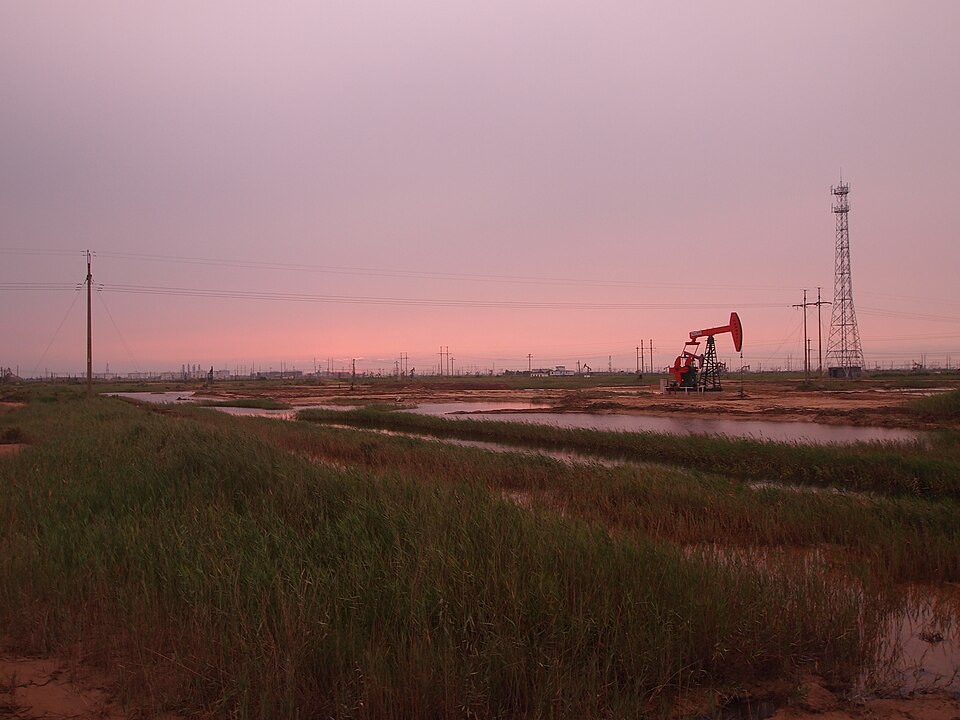
Dongying exists because of Shengli, China's second-largest oilfield, and you will see pumpjacks nodding in fields on the drive out. The Gudong oilfield page covers the one place where that industrial skyline is worth a stop, usually for sunset on the way back from the reserve. Treat it as a bonus. If time is short, it is the first thing to cut.
When to come to Dongying
The delta has a temperate monsoon climate with most rain in summer. Spring (April to June) and autumn (September to October) give the best walking weather and the migration traffic serious birders come for. July and August are humid and the boardwalks are thick with mosquitoes. Winter is clear, cold and very windy on the open coast, though it is the season for swans and cranes. Holiday weeks, particularly early October, crowd the shuttles.
Arriving and where to stay
Rail arrives at two stations: Dongying Station on the Zibo–Dongying line and Dongying South on the Dezhou–Dajiawa line. Check which one your ticket uses, because they are not interchangeable for taxis. Dongying Shengli Airport handles domestic flights, and the main long-distance bus station on Huanghe Road has daily coaches to Jinan, Qingdao and Beijing.
There is no practical public bus to the river mouth for most visitors, so book a car or join an organised day trip. Sleep in the city near your departure station if you are moving on quickly; sleep closer to Kenli if dawn at the estuary matters more than restaurant choice.
Eating in Dongying
Expect northern Shandong cooking: wheat buns and noodles, hearty stews, and seafood from the Bohai coast, including crab in autumn. Food near the reserve is basic, so eat a proper breakfast and plan dinner back in town. Prices vary by season; ask before ordering anything sold by weight.
How to arrange the route
Day 1: Arrive, settle near your station, early night.
Day 2: Full day at the Yellow River estuary and reserve. Gudong oilfield for sunset on the return only if you still have energy.
Day 3: Buffer for bad weather or a second birding morning, or move on to Binzhou, Zibo or Jinan.
What to cut if short on time
Cut the oilfield first, then any second reserve gate. Don't trade the estuary for city sights. If you only have a single day, go straight from the station to the reserve and leave the same evening, accepting a long day.
Things to confirm before you go
- Reserve opening hours, zone closures and last shuttle times on the official notice for your date.
- Which railway station your ticket uses.
- Driving time from your hotel to the specific gate you plan to enter.
- Insect repellent in summer; windproof layers from October to April.
Frequently asked questions
How many days do I need in Dongying?
Two nights covers one estuary day. Add a third if you are birding seriously or the forecast is uncertain.
Is Dongying a beach destination?
No. The coast is mudflat and wetland. For swimming beaches go to Rizhao or Qingdao on the Shandong peninsula.
When do the red Suaeda flats appear?
The plants turn from green to red in autumn. Exact timing varies year to year, so check recent local reports before planning a trip around it.
Dongying or Binzhou for the Yellow River?
Dongying if you want the river meeting the sea. Binzhou shows the river crossing the plain further upstream, plus the Wei family manor.
Sources
The facts in this article were checked against the following Wikipedia and encyclopedia entries, retrieved September 20, 2026, and rechecked on October 17, 2026.
- Dongying https://en.wikipedia.org/wiki/Dongying
- Yellow River Delta / estuary reserve summaries (cross-checked)
- Shengli Oilfield regional context
- Yellow River Delta National Nature Reserve https://en.wikipedia.org/wiki/Yellow_River_Delta_National_Nature_Reserve
Tickets change; this article does not invent yuan amounts.
All photos are from Wikimedia Commons, used under CC licenses; re-use requires attribution.
- dongying-estuary.jpg from File:滚滚黄河入海流 - The Yellow River Entering the Sea - 2012.07 - panoramio.jpg, by rheins, CC BY 3.0
- dongying-reserve.jpg from File:东营黄河口生态国家级海洋特别保护区 - Dongying Yellow River Estuary National Marine Reserve - 2012.06 - panoramio.jpg, by rheins, CC BY 3.0
- dongying-oilfield.jpg from File:孤东油田夕照 - Evening Glow of Gudong Oilfield - 2012.08 - panoramio.jpg, by rheins, CC BY 3.0