Huanglong Cave: Water and Stone Under Wulingyuan
Huanglong Cave sits in Hekou Village on the Suoxiyu side of Wulingyuan, a classic karst system and one of China's early 4A scenic areas. The standard visit starts with a boat on an underground river, then continues on foot past stalagmites, stone curtains and flowstone falls. The marquee formation is the Dinghai Shenzhen, the "Needle That Steadies the Sea," a stalagmite about 19.2 metres tall in the Dragon Palace hall; a widely reported 100-million-yuan insurance policy on it in 1998 made Chinese headlines. Cave air stays cool year-round, which is a relief after ridge days in the pillar forest. The full loop takes about two hours on mature walkways that suit children and older visitors better than cliff glass. It is ticketed separately from the Wulingyuan multi-day pass. City sequencing is in the Zhangjiajie travel guide.
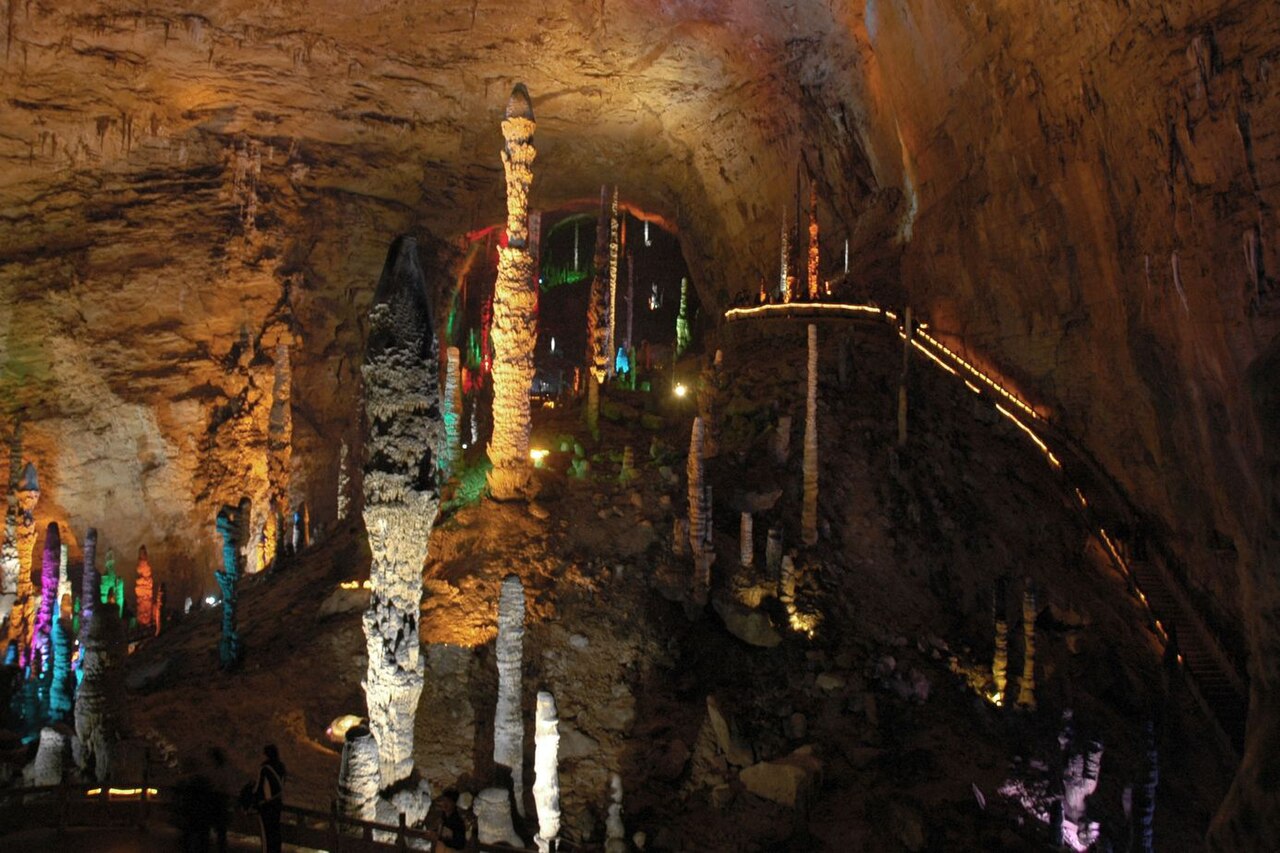
The boat-and-walk route
Follow the guided flow: boat first while eyes adjust to the lighting, then the walking halls. Stay on wet-marked paths; handrails exist where the stone is slick. Photography without flash is kinder to other visitors and usually enough under the installed lights. The Dragon Palace stop for the tall stalagmite is the one place worth a short wait for a clear sightline. Do not touch formations; skin oils stop growth and stewards enforce the rule.
Two hours is the honest average. Rush tours feel like a train platform; lingering at every curtain exhausts group patience. Aim for the middle pace.
Practicalities
Buy tickets for Huanglong Cave on its own channel or combo day tours that also hit the glass bridge; prices move with season and package, so check the day's board rather than an old blog number. Bring a light layer even in July; underground chill surprises people who dressed only for humid valley heat. The cave is a good bad-weather substitute when Wulingyuan ridges are fogged in, though it will not replace a clear Yuanjiajie morning.
Exit stalls sell kudzu powder and local snacks at scenic markups. For gifts, buy rock ear, smoked pork or kudzu powder in town markets instead. As elsewhere in Zhangjiajie, skip any "baby fish" giant-salamander dishes; the species is protected.
Where it fits the itinerary
The four-day guide pattern puts Huanglong in the morning and the glass bridge in the afternoon on the last day, or drops one of the two when time is short. Transport between Suoxiyu and Cili County needs a driver or tourist bus; do not assume a casual walk. If you stay in Wulingyuan town, the cave is the closer of the two extras; the bridge remains the longer transfer.
Huanglong is the wrong "save" if everyone in the group hates enclosed spaces. In that case, keep a valley walk or a rest afternoon instead of forcing the boat ride.
Pairing without burnout
A calm cave morning plus a glass-bridge afternoon works when drivers are booked and legs still have stairs left. Reverse the order if bridge timed slots only exist early. Solo travellers using buses should study last-return times before entering the cave; missing the bus turns a neat half day into an expensive private transfer. Huanglong is the soft landing of a Zhangjiajie trip: cool air, fixed length, no wind shutdowns. Use it when the peaks have already taken their share of energy.
What makes this cave different from a random grotto stop
Many Chinese scenic caves feel interchangeable after the third visit. Huanglong earns its slot on a Zhangjiajie itinerary because the boat segment changes the rhythm after days of cliffs and cable cars, and because the Dragon Palace stalagmite has a documented scale and a local story people actually recognise. Lighting is theatrical but readable; walkways are continuous enough that you are not scrambling rubble. Still, it is a commercial cave: expect guided pacing, gift stalls and a design that moves volume. Go for geology and cool air, not solitude. If you have already booked a long underground visit elsewhere on a China trip, you can cut Huanglong without damaging the Zhangjiajie story; the pillars remain the reason you came.
Things to confirm before you go
- Separate cave ticket and operating hours.
- Boat operations (water levels and maintenance can pause segments).
- Layer for cool underground air.
- Same-day transfer plan if continuing to the glass bridge.
Crowds, damp air and photography
Tour groups densify late morning. Earlier slots give more room on the boat and at the big chambers. The air stays cool and damp year-round; a light layer helps after summer heat outside. Flash rules vary by chamber; follow staff and avoid holding the boat for photos. If knees are tired from park stairs, this is still a long indoor walk with wet floors—wear grippy shoes.
Quick decisions
Is Huanglong Cave worth it?
Yes as a cool, low-walking-intensity half day, especially with kids or after hard ridge days. Skip it first if enclosed caves bother you.
Cave or glass bridge on a three-day trip?
Glass bridge if heights excite you; cave if you want geology without queues in the wind. The city guide says drop one when short on time.
How long inside?
About two hours for the standard boat-plus-walk loop.
What else nearby?
Wulingyuan park days for pillars; Tianmen Mountain as the Yongding city peak day.