Baoshan Travel Guide: Heshun Old Town, Tengchong's Volcanoes and the Road West
Baoshan prefecture, in far western Yunnan between the Mekong and the Burmese border, is really two destinations. Baoshan city, the old Yongchang, is a pleasant transport base with an airport and trains from Dali. Most of what visitors come for is in Tengchong, a county-level city a couple of hours further west across the Nu River and the Gaoligong Mountains. There you will find Heshun, a stone-lane town built with money sent home by traders in Burma; a field of young volcanoes; dozens of boiling springs; and the cemetery for the soldiers who retook the town from Japan in 1944. Plan three days, and sleep in Tengchong or Heshun rather than Baoshan city.
A frontier with long roots
The Baoshan basin was the centre of the ancient Ailao kingdom, and in AD 69 the Han made it Yongchang Commandery, one of the empire's furthest points on the road to Burma and India. The city takes its present name from Taibao Mountain on its western edge. Tengchong, long known as Tengyue, was the gateway for the jade and cotton trade with Burma. A British consulate was completed there in 1931. In 1942 Japanese forces advanced out of Burma and took everything west of the Nu River. Tengchong was recaptured on 14 September 1944 after a four-month siege that left the old walled town in ruins.
When to come to Baoshan
The climate is mild subtropical highland: dry, sunny winters with cool mornings and warm afternoons, and a rainy season from June to October that brings nearly three quarters of the year's rain. October to April is the best time, with clear skies over the volcanoes. Tengchong, at about 1,640 metres, is cooler than the Baoshan basin, so bring a jacket for the evenings. Spring brings huge rhododendrons on the Gaoligong slopes. In the rainy months the stone lanes and volcano paths get slippery.
Getting in and where to stay
Baoshan has an airport and a railway to Dali; trains and buses connect it with Kunming, about 490 kilometres east. Tengchong Tuofeng Airport, opened in 2009 about 12 kilometres from town and named "Hump Airport" after the wartime air route, has direct flights from Kunming and other cities, so many visitors skip Baoshan city entirely. The road from Baoshan to Tengchong crosses the Nu River gorge and the Gaoligong range.
Heshun is only 4 kilometres west of central Tengchong, and staying in one of its courtyard guesthouses is the nicest base. Tengchong town has more hotels and restaurants.
Places worth visiting
Heshun old town
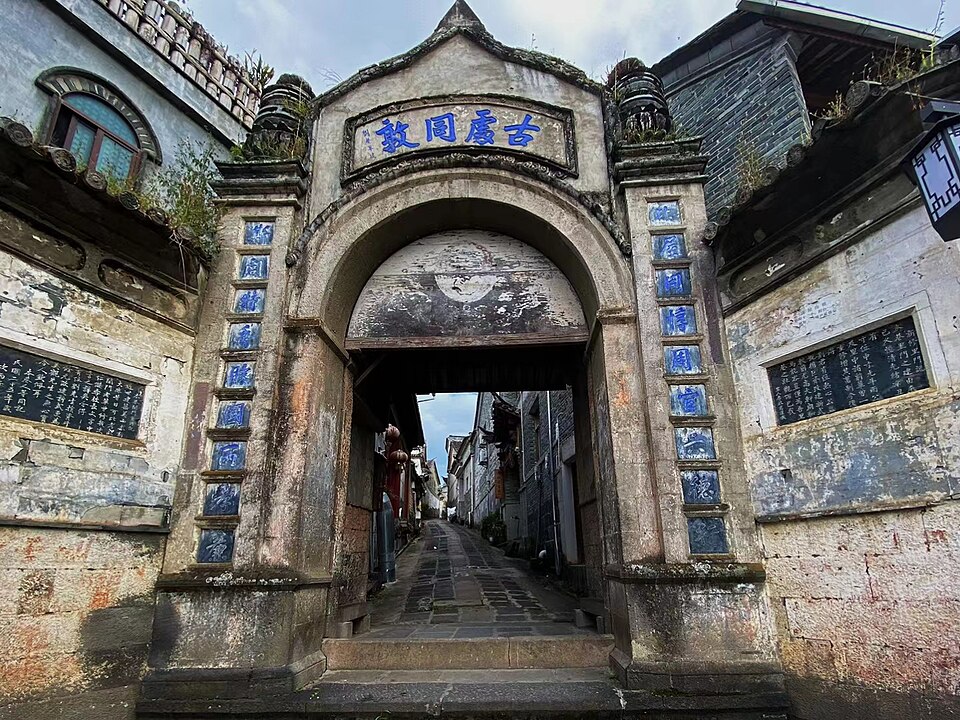
Heshun was one of the great overseas-Chinese home towns of Yunnan. Generations of its men went to trade in Burma and sent money back for houses, ancestral halls, archways and schools. The result is a hillside town of stone lanes and courtyard houses facing a valley of fields and ponds. Its most famous building is the Heshun Library, founded in 1928 and housed from 1938 in a Chinese-Western hall built with donations from abroad. It is still a working public library with about 80,000 volumes, free to enter, and a national protected site since 2006. Nearby are the former home of the philosopher Ai Siqi, now a small museum, and a string of family ancestral halls. Walk the upper lanes early in the morning, before tour groups arrive.
Ponds, bridges and the valley
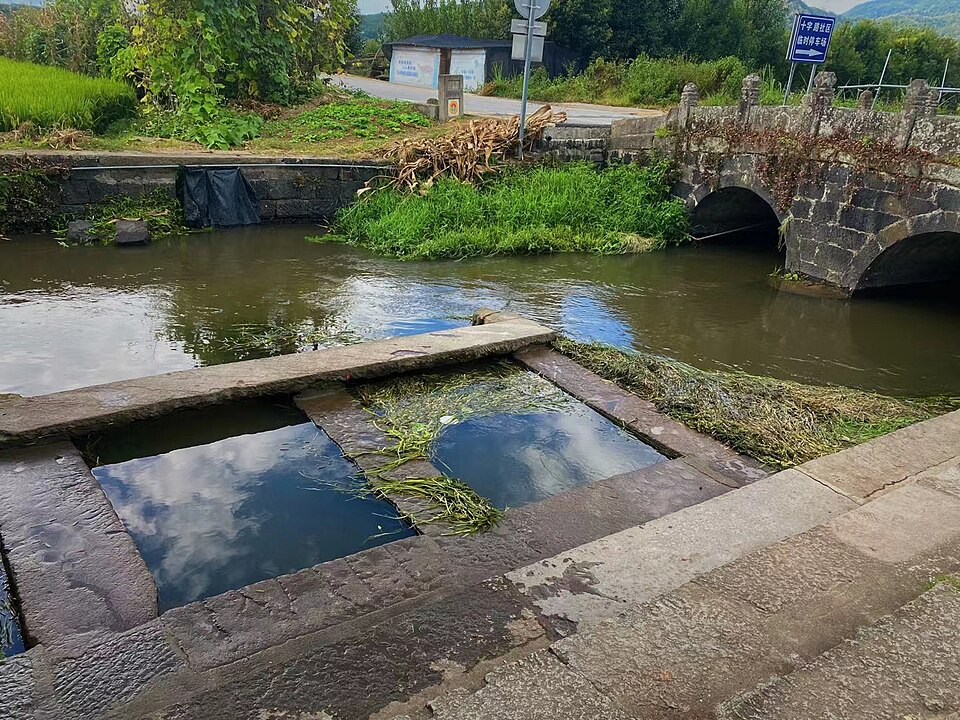
Along the foot of the town, a stream with stone bridges, laundry pavilions and willows separates the houses from the fields. This is the classic view of Heshun, best at sunset or in the morning mist. Allow at least half a day for the town, preferably an evening and the following morning.
Tengchong volcanoes and hot springs
Tengchong is one of China's few active volcanic regions. Young cones such as Dayingshan and the Heikongshan group ring the town, and the main volcano park lets you climb a crater rim. The area has more than 80 hot springs and steaming vents, ten of them over 90°C. The best-known geothermal area, the "Hot Sea" (Rehai), has boiling pools and spa facilities. Give the volcanoes and the springs a full day between them.
War cemetery and memorial
The Guoshang Cemetery, on a hill at the southwest edge of Tengchong, was built from 1945 for the soldiers of the Chinese Expeditionary Force's Twentieth Army Group who died retaking the town in 1944. It was paid for largely by overseas Chinese in India and local people. Rows of small headstones climb the hill, and the West Yunnan Anti-Japanese War Museum stands beside it. It is a national protected site and a moving visit.
Baoshan city
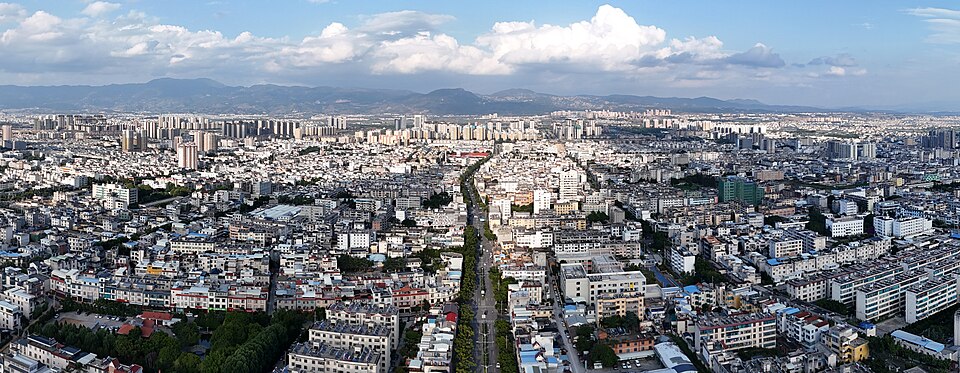
If you have an evening in Baoshan, walk up Taibao Mountain park on the western edge of town for the view over the basin. Most people move on to Tengchong the next morning.
Gaoligong Mountains
East of Tengchong, the Gaoligong range rises to over 3,700 metres and is part of the Three Parallel Rivers World Heritage area. It is famous for its plant life, with more than 1,400 species of higher plants recorded in the reserve, including giant rhododendrons. Serious hiking needs a guide and planning; for most visitors the views from the Baoshan–Tengchong road are enough.
Eating in Baoshan
Tengchong's best-known dish is dajiujia ("great rescue"), stir-fried rice cakes with ham and vegetables, named for a legend about a fleeing Ming emperor. Look also for rice noodles and cured ham. Wild mushrooms appear in the rainy season. Only eat them in established restaurants. Baoshan is one of China's main coffee-growing areas, and local coffee is sold everywhere.
How to arrange the route
- Day one: fly into Tengchong or travel from Baoshan; afternoon and evening in Heshun.
- Day two: the volcano park in the morning, Rehai hot springs in the afternoon.
- Day three: Guoshang Cemetery and the war museum, then fly out or continue to Dali.
Tengchong is also a natural stop on the way to Ruili and Dehong near the Burmese border.
What to cut if short on time
With one day, do Heshun and the war cemetery. With two, add the volcanoes or the hot springs, but not both in a rush. Skip Baoshan city unless you are changing trains or flights there.
Things to confirm before you go
- Ticket prices and opening times for Heshun, the volcano park, Rehai and the war museum; this guide could not confirm 2026 rates.
- Flight schedules into Tengchong, and road conditions on the Baoshan–Tengchong road in the rainy season.
- Weather for climbing the volcano rim.
- Any booking requirements at the war museum.
Frequently asked questions
Should I stay in Baoshan or Tengchong?
Tengchong, or Heshun just outside it. Baoshan city is useful for transport, but the main sights are all around Tengchong.
Is Heshun worth visiting?
Yes. It is one of Yunnan's best-preserved old towns, with a real community still living in it, and its library is unique.
How many days do I need?
Three days covers Heshun, the volcanoes and springs, and the war sites.
Sources
The facts in this article were checked against the following Wikipedia and encyclopedia entries, retrieved September 17, 2026, and rechecked on October 14, 2026.
- Baoshan, Yunnan https://en.wikipedia.org/wiki/Baoshan,_Yunnan
- Baoshan (Chinese) https://zh.wikipedia.org/wiki/保山市
- Tengchong https://en.wikipedia.org/wiki/Tengchong
- Heshun, Tengchong https://en.wikipedia.org/wiki/Heshun,_Yunnan
- Heshun Library (Chinese) https://zh.wikipedia.org/wiki/和顺图书馆
- Guoshang Cemetery (Chinese) https://zh.wikipedia.org/wiki/国殇墓园
Ticket prices change; check the official notices before you go.
All photos are from Wikimedia Commons, used under CC licenses; re-use requires attribution.
- baoshan-heshun.jpg from File:An alleyway in Heshun, Baoshan, Yunnan, China.jpg, by Huangdan2060, CC BY 3.0
- baoshan-heshun-bridge.jpg from File:A river and a bridge in Heshun, Baoshan, Yunnan, China.jpg, by Huangdan2060, CC BY 3.0
- baoshan-skyline.jpg from File:保山市天际线 - 航拍 - 全景 - 2024-06-02 02.jpg, by 瑞丽江的河水, CC BY-SA 4.0
- baoshan-city.jpg from File:Baoshan, Yunnan (50798273278).jpg, by Rod Waddington, CC BY-SA 2.0