Honghe Travel Guide: Yuanyang's Hani Terraces and Jianshui Old Town
Honghe prefecture in southern Yunnan holds two of the province's best stops: the Hani rice terraces of Yuanyang, a UNESCO World Heritage Site since 2013, and Jianshui, an old walled town with one of China's largest Confucian temples. The terraces need at least one, ideally two, nights on the ridge so you can be at a viewpoint at dawn or dusk; they are too far from Kunming for a sensible day trip. Jianshui works best as a stop on the way in or out.
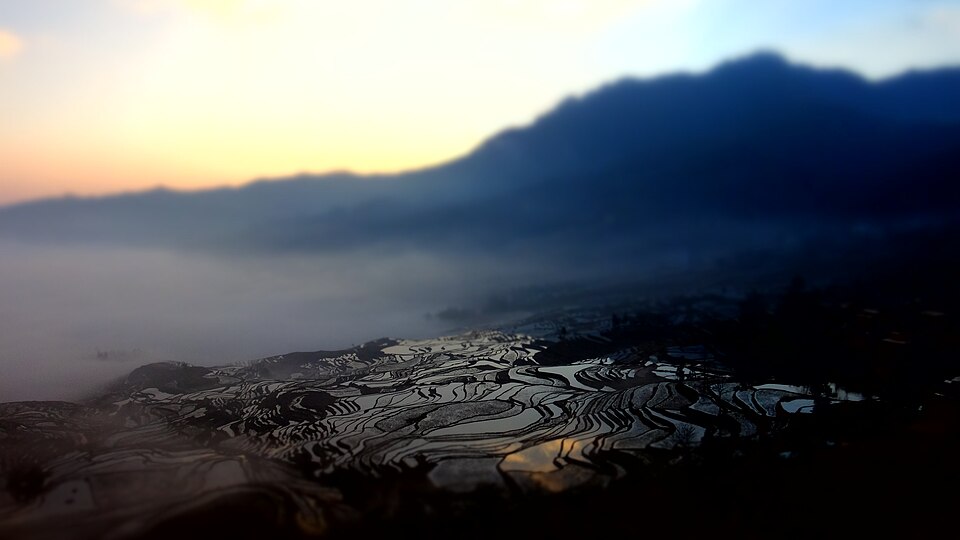
How the terraces work, and why timing matters
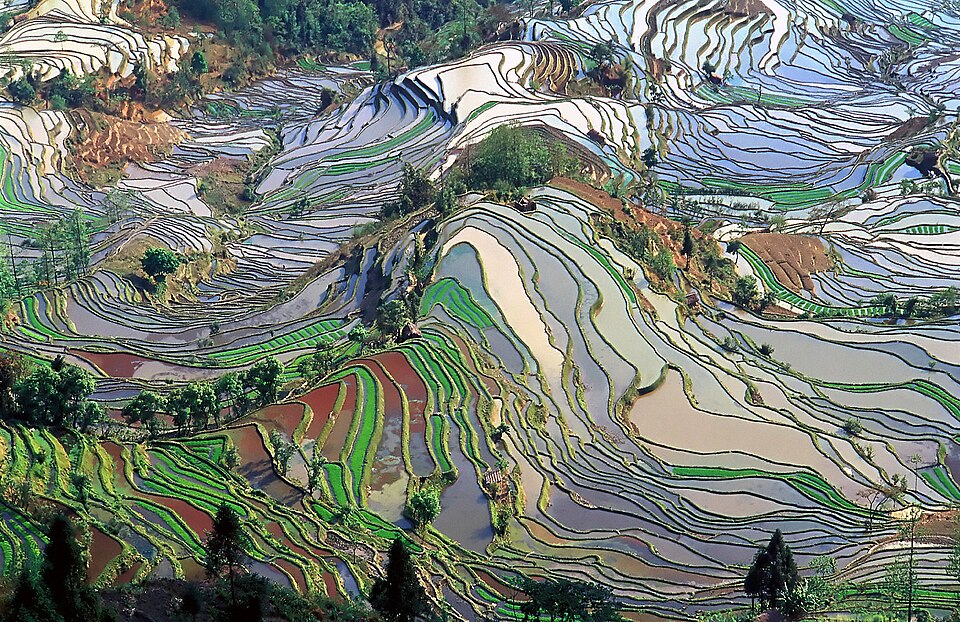
The Hani and their Yi neighbours have been carving these slopes in the Ailao Mountains for at least 1,300 years. The terraces that draw visitors lie between about 1,000 and 2,000 m, and their appearance changes completely with the farming year:
- Mid-September to mid-November: harvest, then the fields are flooded, starting earlier at higher elevations.
- Roughly December to March: the classic season. Flooded paddies reflect the sky, and sunrise mist fills the valleys. This is also the busiest time, especially around Chinese New Year.
- April onward: planting, then green rice through the summer rainy season, when cloud often hides the views.
Winter here never freezes, but ridge mornings are cold, so bring a warm layer for dawn.
Where to watch: sunrise and sunset
The terraces are spread across a large area, and viewpoints are known for either morning or evening light. Before you book a room, check which way it faces.
- Duoyishu: the classic sunrise spot, with mist pooling below the terraces on good mornings. Arrive before first light.
- Bada and Laohuzui (Tiger's Mouth): the usual sunset viewpoints, with Laohuzui giving the steepest, most dramatic view down a valley of terraces.
Ticket arrangements and viewing-platform rules change, so check the scenic area's official notice for 2026 prices and access. Away from the platforms, remember these are working farms: stay on paths, don't walk on terrace walls, and ask before photographing people.
Hani villages and markets
Many Hani women still wear traditional dress every day. Village market days, held on a rotating schedule, bring several ethnic groups together and are the best way to see local life; ask your guesthouse which village has a market during your stay. Traditional mushroom-roofed Hani houses survive in some villages around the viewpoints.
Where to stay for the terraces
There are two Yuanyangs, and confusing them is a classic mistake. The county seat, Nansha (New Yuanyang), sits down in the Red River valley at about 240 m, far below the terraces. You want Xinjie (Old Yuanyang), a ridge town at around 1,570 m, or one of the guesthouses beside the viewpoints. Guesthouses near Duoyishu give the easiest sunrise; Xinjie has more food and transport.
Jianshui
About 70 km north of Yuanyang as the crow flies (several hours by mountain road), Jianshui was once a major centre of Yunnan, and its old town is one of the best preserved in the province.
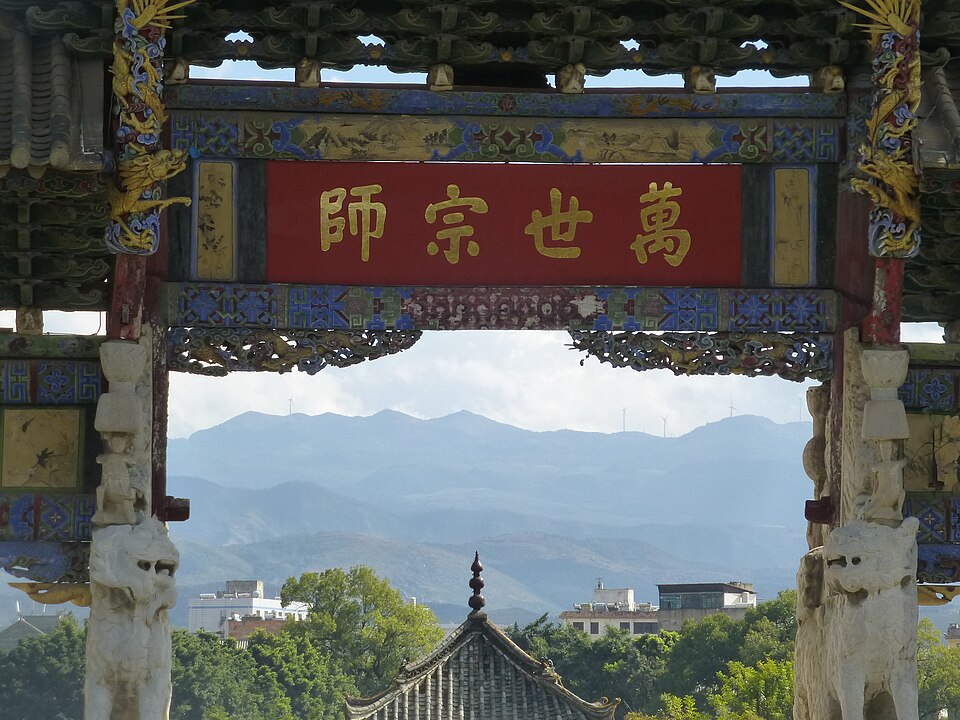
- Confucian Temple: among the largest in China after Qufu's, with a big pond, gates and halls. Allow at least an hour.
- Chaoyang Tower: the old east gate, built in 1389, which dominates the main street.
- Zhu Family Garden: a large late-Qing mansion and ancestral hall complex built by the Zhu brothers.
- Shuanglong (Double Dragon) Bridge: a Qing bridge of seventeen arches about 5 km west of town, where two rivers meet.
- Tuanshan Village: an old village about 13 km west, often combined with the bridge.
Further east, the Swallow Cave, 22 km from town, is known for its huge colony of nesting swallows.
When to come to Honghe
For the terraces, come between December and March for water reflections. Late September to November catches harvest and the first flooding. Summer is green but wet and often cloudy. Jianshui is pleasant most of the year. Book accommodation well ahead for Chinese New Year.
Getting in
The usual approach is from Kunming by train to Jianshui or to Mengzi, the prefecture capital, both on the line south toward the Vietnam border at Hekou. From there, buses and hired cars climb to Xinjie. The road takes several hours and is slow after rain, so confirm the last bus or book a driver. A hired car with driver is the most flexible way to move between viewpoints at dawn and dusk.
Eating in Honghe
Jianshui is famous for its grilled tofu, small squares cooked on a charcoal grill and eaten with chilli dip, and for its purple pottery. Around the terraces, food is simpler: rice, local vegetables, cured pork and red rice grown on the terraces. Guesthouses often cook for guests, which is easier than hunting for restaurants late at night after sunset.
How to arrange the route
Day 1: Kunming to Jianshui by train; afternoon at the Confucian Temple and Zhu Garden; grilled tofu for dinner.
Day 2: Shuanglong Bridge in the morning, then road up to Xinjie; sunset at Bada or Laohuzui.
Day 3: Sunrise at Duoyishu; village market or walk; second sunset if the first was clouded out.
Day 4: Back to Kunming, or on to Xishuangbanna. Dali and Lijiang are separate trips in the other direction.
What to cut if short on time
Cut the Jianshui side trips first (bridge, Tuanshan, Swallow Cave), then Jianshui itself. Don't cut the terrace overnight; one dawn or dusk is the minimum.
Things to confirm before you go
- Scenic area tickets and viewpoint rules on the official notice; no 2026 prices are quoted here.
- Which direction your guesthouse faces, and how far it is from the viewpoints.
- Bus times between Jianshui or Mengzi and Xinjie, including the last one.
- Road conditions after rain, and fog forecasts.
Frequently asked questions
How many days do I need for Yuanyang?
Two nights near the terraces gives you two chances at good light. With Jianshui, plan three to four days.
Sunrise or sunset at Yuanyang?
Both are worth it. Sunrise often brings valley mist; sunset warms the water. Midday is the weakest time.
Yuanyang or Longji terraces in Guangxi?
Yuanyang's terraces are larger and best when flooded in winter; Longji near Guilin is easier to reach and greener in summer. They're very different trips.
Sources
The facts in this article were checked against the following Wikipedia and encyclopedia entries, retrieved September 18, 2026, and rechecked on October 17, 2026.
- Honghe Hani and Yi Autonomous Prefecture https://en.wikipedia.org/wiki/Honghe_Hani_and_Yi_Autonomous_Prefecture
- Honghe Hani Rice Terraces https://en.wikipedia.org/wiki/Honghe_Hani_Rice_Terraces
- Yuanyang County, Yunnan https://en.wikipedia.org/wiki/Yuanyang_County,_Yunnan
- Jianshui County https://en.wikipedia.org/wiki/Jianshui_County
Scenic tickets change; this article does not invent yuan amounts.
All photos are from Wikimedia Commons, used under stated licenses; re-use requires attribution.
- honghe-yuanyang-sunrise.jpg from File:Yuanyang Hani Rice Terraces at Sunrise.jpg, by Chiu Ho-yang, CC BY-SA 2.0
- honghe-yuanyang-terraces.jpg from File:Terrace field yunnan china denoised.jpg, by Jialiang Gao, CC BY-SA 3.0
- honghe-jianshui-temple.jpg from File:Jianshui Confucian Temple - P1360947.JPG, by Vmenkov, CC BY-SA 3.0