Wei Family Manor, a Walled Qing Residence in the Binzhou Countryside
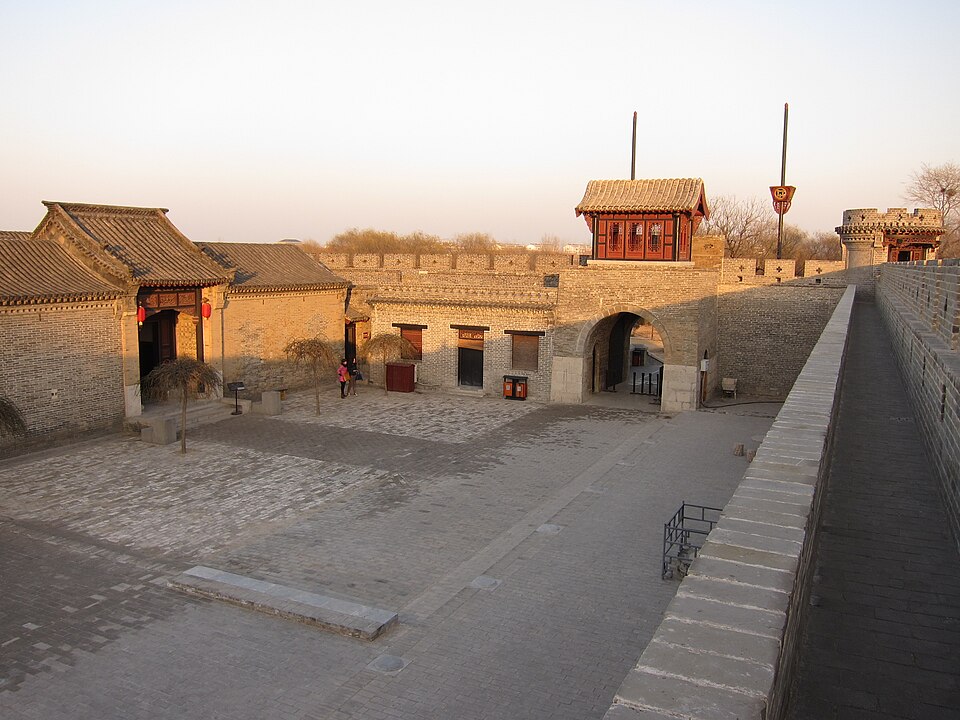
The Wei Family Manor stands in Weiji village, Weiji town, in Huimin County, part of Binzhou in northern Shandong. It is a late Qing family seat built like a small fortress, with a brick city wall, gate towers and gun positions wrapped around Beijing-style courtyard houses. Chinese tourism material often ranks it with the Mou family manor in Qixia and the Liu Wencai manor in Sichuan as one of China's three great manors, and calls it the only castle-style manor of its kind still standing. The Binzhou guide gives it a half day when culture is the thread of the trip.
Who the Wei family were
Local histories describe the Wei as one of the leading families of northern Shandong. Over six generations, more than twenty members held official posts, the highest reaching the second rank. The family owned more than three thousand mu of farmland around the village and ran money shops and pawnshops across north China under trade names such as Xiehe and Xiezeng. That mix of office, land and commerce paid for the buildings you see today.
Three halls, one manor
The manor is really three building groups. They were listed together as a national key protected site in 1996.
Shude Hall is the main group and the one most visitors mean when they say Wei Family Manor. It was the home of Wei Zhaoqing, an assistant prefect of Wuding prefecture, and was built from 1890 to 1893. Tourism descriptions credit the design to a master builder linked to the imperial works office. The complex faces east and covers about 27,000 square metres, with the walled residence, a square, a pond, a garden and an ancestral hall.
Fushou Hall, about 200 metres away, is older. It was built in 1865 as a two-storey courtyard house, and a county publicity piece from 2024 notes its Shanxi Jinzhong building style. Xiyi Hall, about 100 metres from Shude Hall, also went by the trade name Xiezeng and was built in 1892, at almost the same time as the main house.
The walls and defences
The defensive design is what sets Shude Hall apart. The residence is enclosed by a rectangular wall about ten metres high and about 1.5 metres wide at the top, built in the manner of a city wall with a gate, gate tower and projecting bastions. Gun towers project out from the wall line, an addition the tourism descriptions single out as unusual for a home. Inside, thirteen firing niches line the inner wall for armed guards. On the north side the parapet narrows until only one person can pass, the kind of choke point summed up in the old phrase about one man holding a pass against ten thousand. Tourism material links the layout to Sun Tzu's military ideas, which also nods to Huimin's claim to be Sun Tzu's hometown.
Inside the walls the plan switches to orderly courtyard houses with halls, side rooms and gardens. Travel writers mention hidden doors, built-in cupboards and a drawbridge-style link between outer wall and inner house. Exhibits in the rooms show furniture, household objects and folk customs of northern Shandong. Restoration and new displays have been added in recent years, so some rooms look more furnished than others.
Tickets and hours
Travel listings give daily hours of 8:30 to 17:30 with last entry at 17:00, and longer evenings around the May holiday. A travel information site listed the adult ticket at 50 yuan. Treat that as a reported figure and check the day's notice at the gate, since prices and concessions change.
Getting there and how long to stay
Weiji town is outside Binzhou city, so this is a dedicated trip. Listings give the address as 1 Zhuangyuan Road, Weiji town, and mention a county bus route serving the area. For most visitors a taxi or hired car from Binzhou or Huimin county town is far simpler, and agreeing on the return trip in advance saves trouble in the countryside. Allow two to three hours on site to see Shude Hall properly and walk to the other two halls.
Pair the manor with a Yellow River viewpoint back in Binzhou in the late afternoon, as the city guide suggests. Combining it with the Yellow River delta wetlands in Dongying on the same day is too much.
Before you go
- Plan transport both ways before leaving Binzhou city.
- Wear comfortable shoes for wall walkways and uneven courtyard stone.
- Arrive with time to reach Fushou Hall and Xiyi Hall, which many visitors skip.
- Bring ID for any concession checks.
- Read the Binzhou travel guide for the rest of a short stay.
Frequently asked questions
Where exactly is the Wei Family Manor?
In Weiji village, Weiji town, Huimin County, a county of Binzhou. It is a drive from the city centre.
How old is it?
The main Shude Hall was built from 1890 to 1893, Fushou Hall in 1865 and Xiyi Hall in 1892.
Why does it look like a fortress?
The family built in the 1890s, a troubled decade on the north China plain, and the design shows how seriously they took security, down to the armed guards the house once kept.
Is it worth the trip from Binzhou?
For anyone interested in Qing architecture or family history, yes. If you only have an evening between trains, stay in the city.
Sources
Facts in this article were checked against the following sources, retrieved 17 October 2026.
- Wei Family Manor, Chinese Wikipedia
- Dazhong news, the three halls of the Wei Family Manor, May 2024
- Ctrip, Wei Family Manor listing with hours
- Tuniu, Wei Family Manor listing and description
- Binzhou travel guide on this site
Photos are from Wikimedia Commons under the licences shown in each caption.