Jinan Travel Guide: The City of Springs in Three Days
Jinan, the capital of Shandong, is built over a karst aquifer: rain that falls on the hills to the south sinks underground and is pushed back up beneath the old town, where it emerges in dozens of springs that feed a moat and a lake. Tradition counts 72 famous springs; the real number is far higher. The city is old too. Its early name, Luo, appears in Shang oracle-bone inscriptions about 3,500 years ago, and in late 2025, excavations at a metro station uncovered Longshan-culture walls dated to around 4,200 years ago. It has been Shandong's provincial seat since 1376.
Three days covers the springs, the lake, a mountain and the provincial museum, plus a half day out to China's oldest stone pavilion pagoda. Jinan is also on the Beijing–Shanghai high-speed line, an easy stop on the way to Tai'an and Mount Tai.
When to come to Jinan
The springs follow the rain. Summer rains recharge the aquifer, so from September to November the springs run strongest, the weather is crisp, and Daming Lake still has its last lotus: the best time to come. July averages 27.6°C, with strong sun, so see the springs early or late in the day. Spring is dry and can be dusty; winter is cold with little snow, though the springs steam on frosty mornings. In a dry year, the jets at Baotu Spring can be weak; in 2024 the water table rose past 30 metres and they ran unusually high.
Getting in and where to stay
Jinan West, on the Beijing–Shanghai high-speed line, has fast trains to Beijing and Shanghai; Jinan East handles many trains toward Qingdao, and the old Jinan station and Daminghu station are central. Jinan Yaoqiang Airport has domestic and some international flights. The metro, buses and taxis link stations to the old town.
Stay inside or near the old town, between Baotu Spring and Daming Lake: the spring sights, the moat and food streets are all within walking distance.
Places worth visiting
Baotu Spring
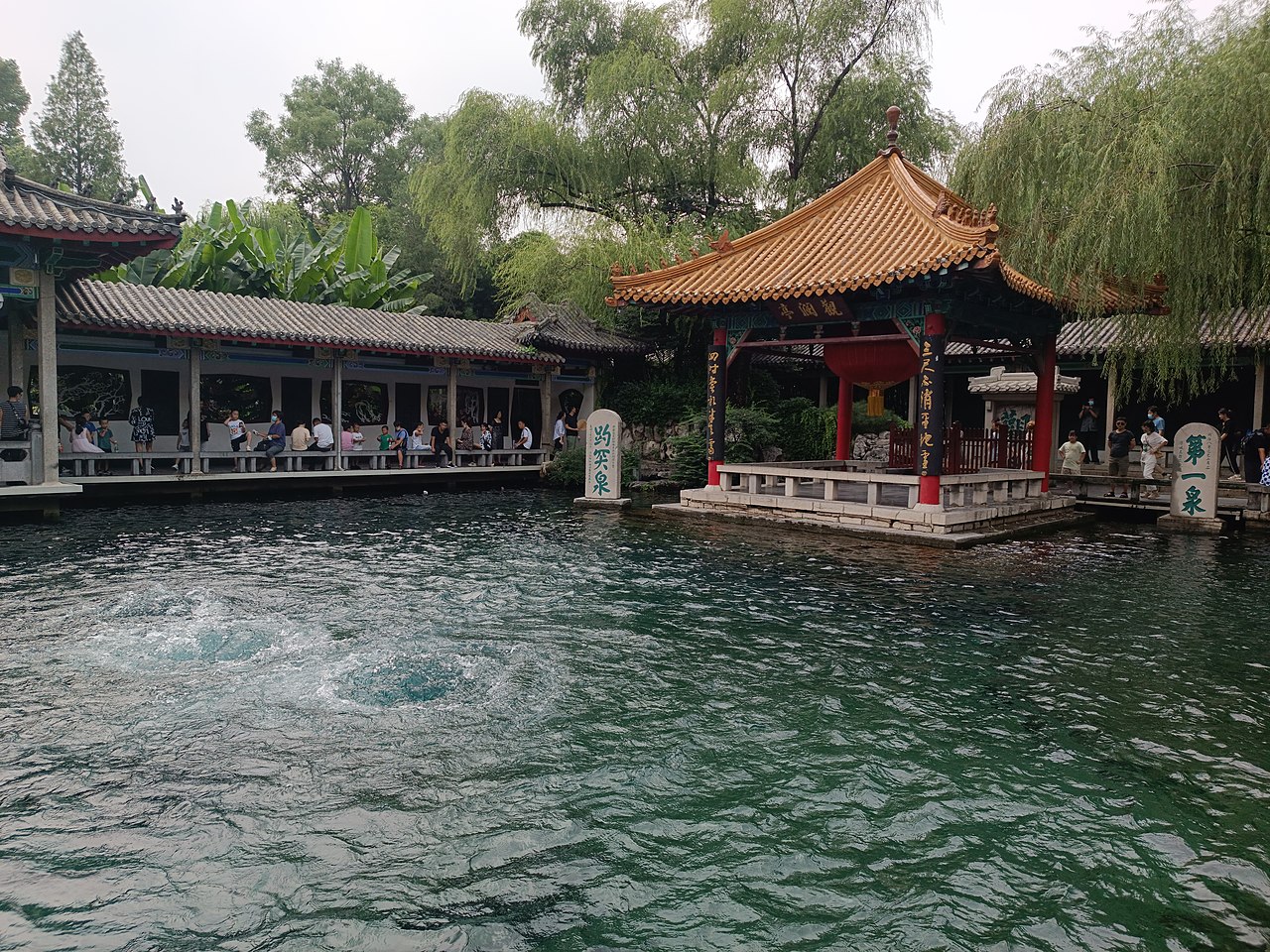
Baotu Spring, once called Kan Spring and anciently Luo, sits just outside the southwest corner of the old city by the moat and heads Jinan's list of famous springs. Water wells up through karst channels in three jets, slightly staggered, day and night, so clear you can see the bottom, then flows off to the moat and on to Daming Lake. It enters the written record early: the Spring and Autumn Annals record the lords of Lu and Qi meeting at Luo, this spring, in 694 BC. Legend says the Qianlong Emperor named it the First Spring Under Heaven, and a stele with those words stands by the Guanlan Pavilion.
Where you stand matters. The pavilion is west of the pool, but the best views are from the north (closest to the jets) and the east, which lines up pavilion, stele and spray in one frame. In high water, the jets rise half a metre and you can hear them. In the same park, Shuyu Spring has a memorial hall to Li Qingzhao, the Song poet born in Jinan.
Black Tiger Spring
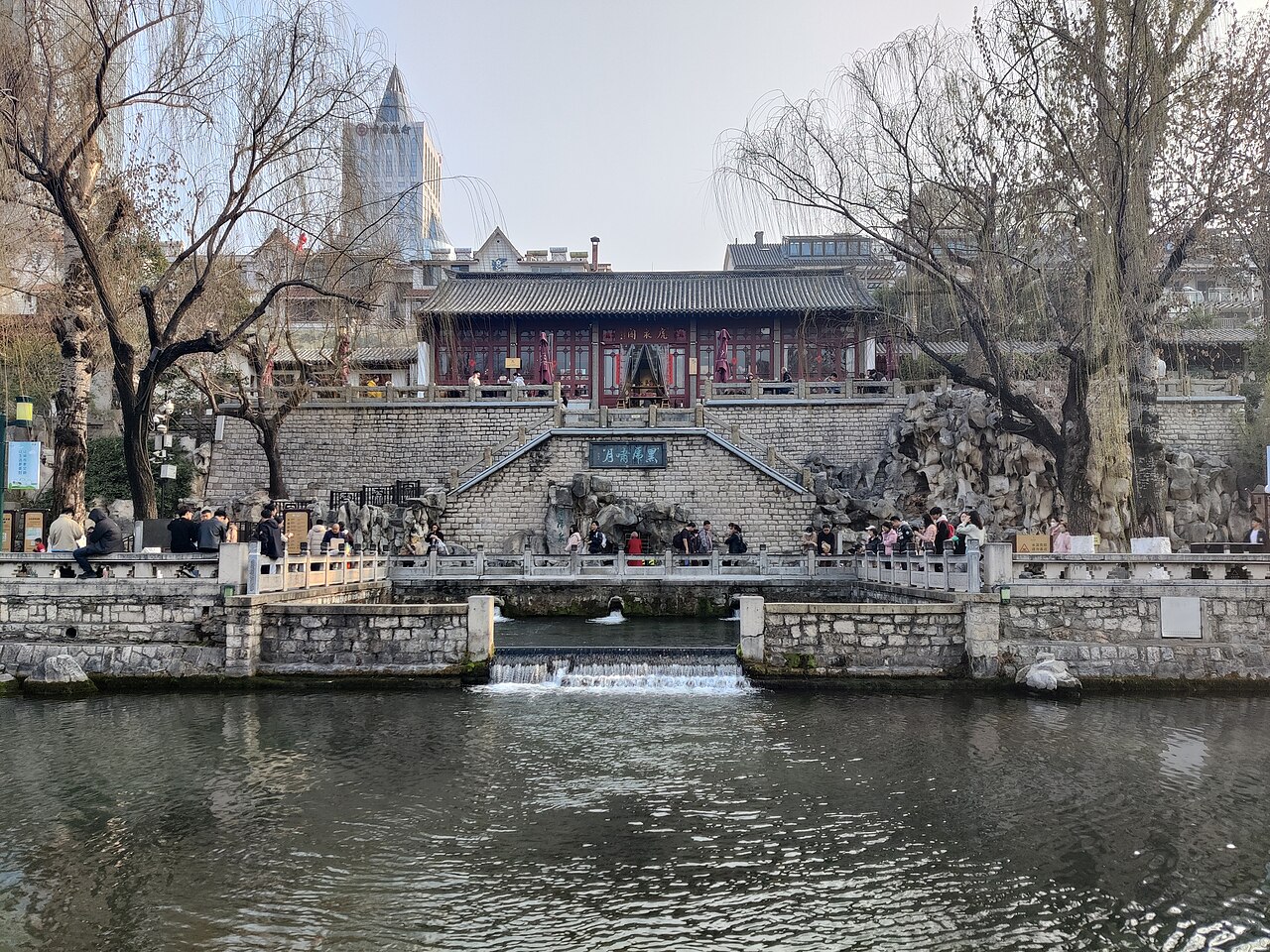
A short walk east along the moat, Black Tiger Spring rises in a cave on the south bank; its name first appears in the Jin-dynasty Register of Famous Springs. The water surges out of a cave about two metres high and pours through three carved stone tiger heads into a pool 13 metres long and 9 wide, then spills over a weir into the moat. The roar inside the cave is said to sound like a tiger, hence the name. A temple stood above the cave in the Ming; the tiger heads came with a Qing rebuild, and the pool was enlarged in 1931.
This stretch of the moat has more springs than anywhere in the city. You'll see locals queuing with buckets and bottles of every size to fill up and carry spring water home. Bring a bottle and try it: cool, clear and faintly sweet. At dusk the lamps come on along the moat.
Daming Lake
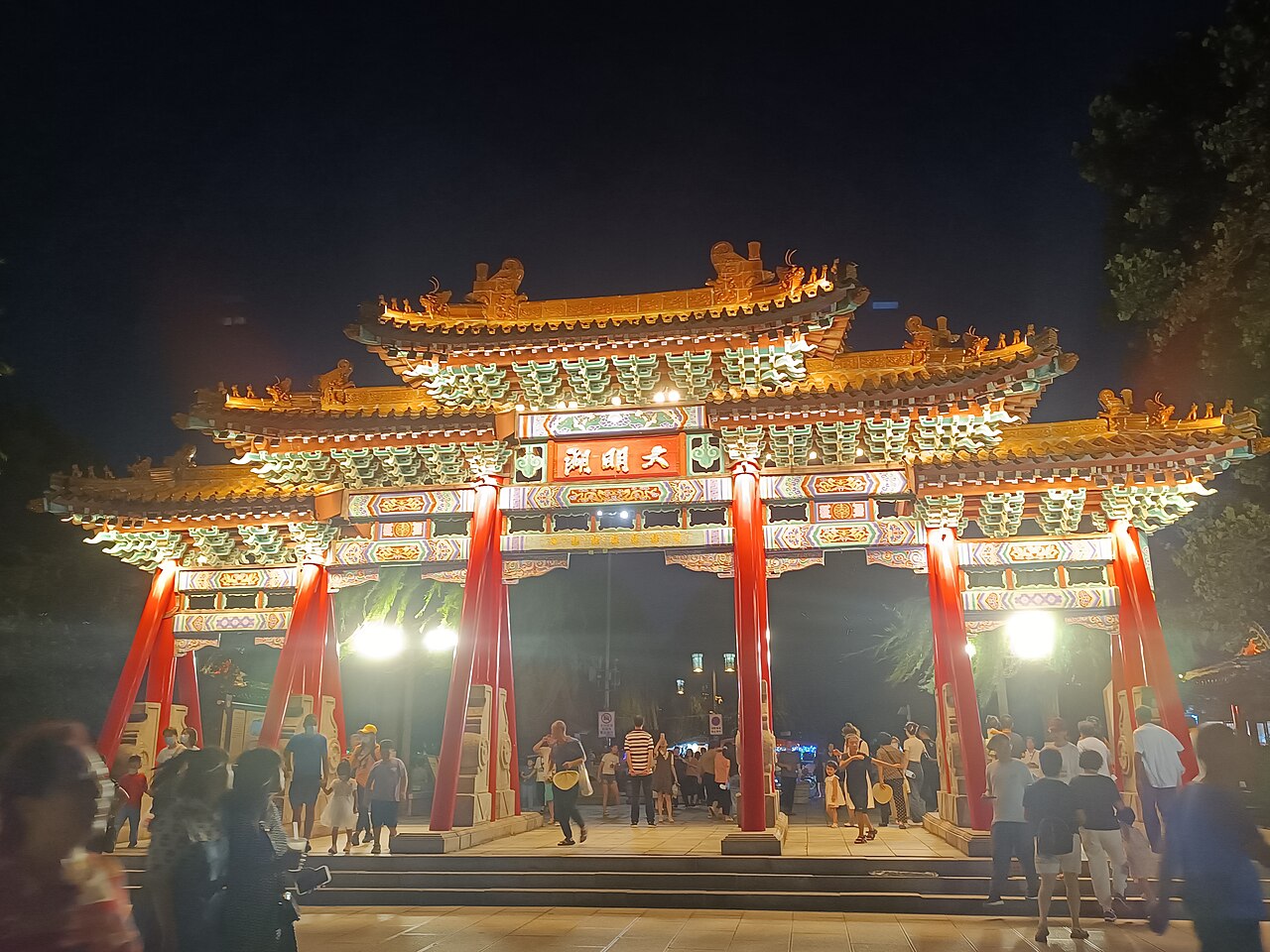
Daming Lake lies north of the old town, where the springs finally collect into one sheet of water. Willows line the shore and lotus covers the water in summer. The gate carries a tablet in Guo Moruo's calligraphy, flanked by the city's best-known couplet: "Lotus on four sides, willows on three; hills fill half the city, the lake the other half."
On the northeast shore, the Lotus Goddess Shrine, rebuilt by Qing scholars in the Tongzhi years, honours Li Qingzhao as goddess of the lotus. In the southeast corner, Chaoran Tower is lit up at dusk, and half the lakeshore turns to photograph it. A full walk around the lake takes about two hours; a boat trip gives you lotus in summer and snowy willows in winter.
Qianfo Mountain

Qianfo (Thousand-Buddha) Mountain rises on the southern edge of the city. Its ancient name was Mount Li, where the sage-king Shun is said to have farmed. With Baotu Spring and Daming Lake, it makes up Jinan's traditional "three great sights". Buddhists carved figures into the cliff in the Sui dynasty's Kaihuang era, and Sui-dynasty statues survive; counts vary from about 60 to over 130, depending on what's included. Xingguo Chan Temple, halfway up, was founded in the Sui as the Thousand-Buddha Temple and renamed in the Tang Zhenguan era (627–649).
Stone steps reach the temple in about half an hour. The main hall is built half into the cliff, with the carvings below it and the Longquan and Jile caves along the rock face. From the summit, the city spreads north with the Yellow River in the distance. Jinan families climb here on the Double Ninth Festival, when a temple fair fills the paths; on ordinary days it's calm. Check ticket prices at the site.
Shandong Museum
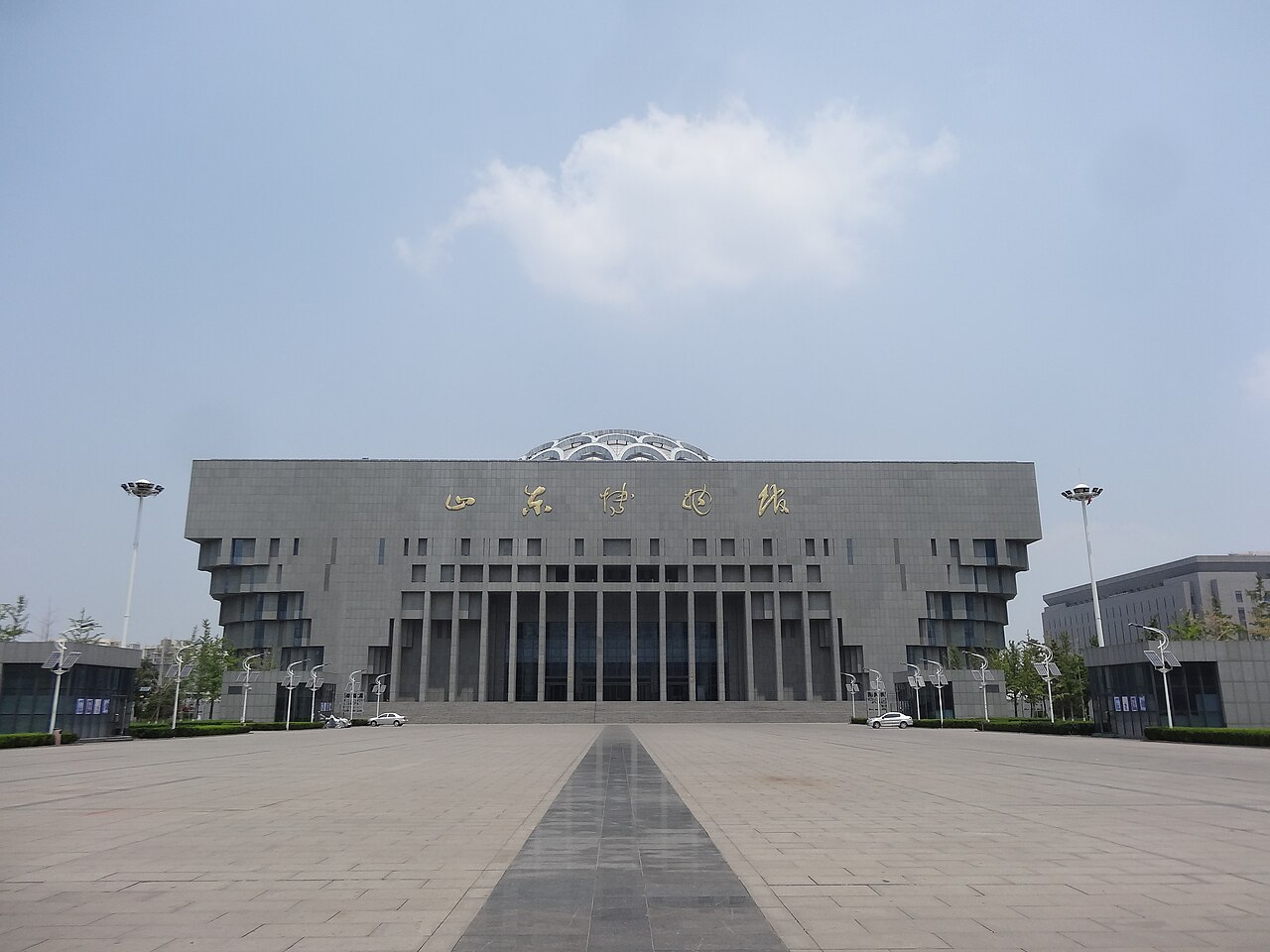
The provincial museum, founded in 1954 and now in a large building on Jingshi Road, traces its collection back to the Guangzhi Yuan, expanded in Jinan in 1904. Shandong was the land of the states of Qi and Lu and the heartland of the Longshan culture, and the museum's bronzes, Han pictorial stones, pottery and excavated texts cover more than two thousand years. Seeing it early in your stay gives context for the springs and mountains afterward. Entry is free with a reservation; it usually closes on Mondays, so check before planning around it. It's a good retreat on very hot or cold days.
Four Gates Pagoda
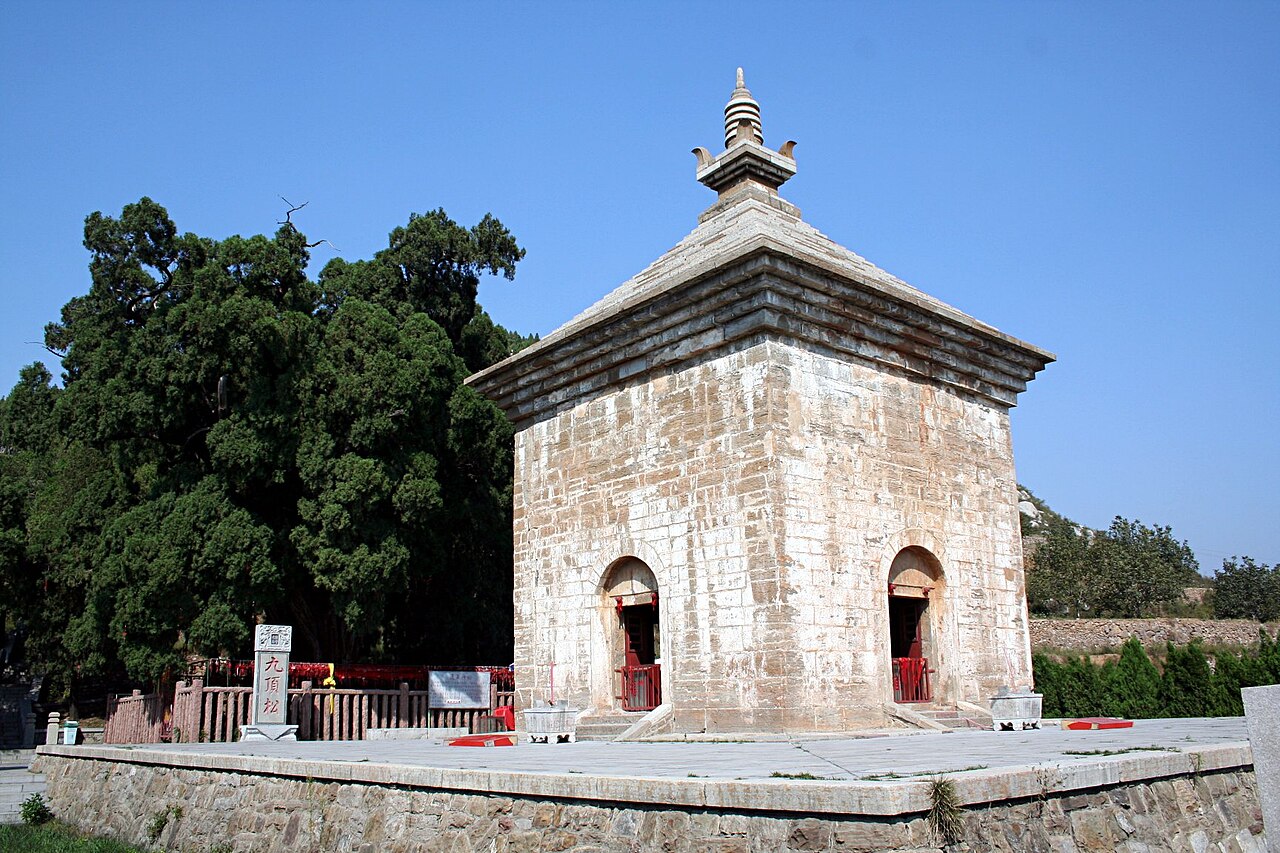
The Four Gates Pagoda stands at the foot of Qinglong Hill in Liubu, more than 20 km from the city: a square, single-storey stone pagoda 15.04 metres tall, with an arched door on each side. Its date is uncertain. One account ties it to the Langgong Temple, founded in 351 under the Former Qin; objects found inside suggest the Sui. Scholars generally regard it as the oldest surviving stone pavilion-style Buddhist pagoda in China, and it was among the first sites given national protection in 1961.
Inside, a central square pillar carries four seated Buddhas, one facing each door. Langgong Temple later became Shentong Temple, and its ruins, a pagoda forest, the Dragon and Tiger Pagoda and cliff carvings from the Northern Qi to the Tang are scattered through the same valley. Few visitors come, and it's the quietest place in the Jinan area. Allow half a day by taxi or car; buses are slow.
Eating in Jinan
Jinan is a centre of Lu (Shandong) cuisine. Bazi rou, a thick slice of soy-braised pork belly over rice with gravy, a braised egg and peppers, is the everyday lunch. Breakfast is tianmo, a savoury millet porridge with peanuts, noodles, spinach and white pepper (despite the name, "sweet porridge", it isn't sweet), with youxuan, a flaky spiral scallion pastry, torn apart hot. For a proper Lu cuisine dinner, order jiuzhuan dachang, braised pork intestine that's sweet, sour, salty and spicy at once. Furong Street, in the old town, has many old-style shops within walking distance of the springs. Noodles come with a raw garlic clove; follow the locals.
How to arrange the route
Day 1: the springs. Baotu Spring in the morning, bazi rou for lunch, a walk along the moat to Black Tiger Spring in the afternoon, then Daming Lake at dusk for Chaoran Tower lit up.
Day 2: museum and mountain. Shandong Museum in the morning, a long lunch, Qianfo Mountain in the afternoon for Xingguo Temple, the cliff carvings and a city view at sunset.
Day 3: Liubu. The Four Gates Pagoda and Shentong Temple ruins, back to town for jiuzhuan dachang. In the evening, walk the old lanes of Furong Street and Qushuiting Street, where the old saying has spring water at every house and willows at every door.
From Jinan, continue south to Tai'an for Mount Tai, east to Zibo or Qingdao, or north to Dezhou.
What to cut if short on time
With one day, do Baotu Spring, the moat and Black Tiger Spring, and Daming Lake; drop the museum and Qianfo Mountain. Cut the Four Gates Pagoda unless early stone carving is a particular interest.
Things to confirm before you go
- Spring flow depends on rainfall: strongest from September, weaker in dry years.
- The Shandong Museum is free with reservation; check hours and avoid Mondays.
- Ticket policies at Baotu Spring, Daming Lake and Qianfo Mountain; combination tickets are sometimes available.
- Transport to the Four Gates Pagoda; allow half a day by taxi or car.
- Jinan is hot in summer and cold in winter; plan outdoor sights for mornings and evenings.
Frequently asked questions
How many days do I need in Jinan?
Three days for the springs, museum and mountain, and Liubu. One day can cover the three main spring sights, but misses much of the city.
Why is Jinan called the City of Springs?
Rain on the southern hills sinks into karst rock and is forced back to the surface under the old town, creating spring after spring. Seventy-two are traditionally named; Baotu Spring is the most famous.
Qianfo Mountain or the Four Gates Pagoda?
If time is short, Qianfo Mountain: it's on the edge of the city and combines carvings, a temple and a view. For early Buddhist architecture, the Four Gates Pagoda is worth the half day.
What should I eat in Jinan?
Bazi rou with rice for lunch, tianmo and youxuan for breakfast, and jiuzhuan dachang for a Lu cuisine dinner.
Sources
The facts in this article were checked against the following Chinese Wikipedia entries, retrieved September 3, 2026, and rechecked on October 17, 2026.
- Jinan (city) https://zh.wikipedia.org/wiki/济南市
- Baotu Spring https://zh.wikipedia.org/wiki/趵突泉
- Daming Lake https://zh.wikipedia.org/wiki/大明湖
- Black Tiger Spring https://zh.wikipedia.org/wiki/黑虎泉
- Qianfo Mountain https://zh.wikipedia.org/wiki/千佛山
- Shandong Museum https://zh.wikipedia.org/wiki/山东博物馆
- Four Gates Pagoda https://zh.wikipedia.org/wiki/四门塔
The Chinese Wikipedia entry for Qianfo Mountain is brief; the figure counts and the Xingguo Temple history were verified against the entry summary and public visitor information, with the carving count given in both versions.
All photos are from Wikimedia Commons, used under CC licenses; re-use requires attribution.
- jinan-city.jpg from File Jinan Skyline from Spring City Square.jpg, by Kestreltail, CC BY-SA 2.5
- jinan-baotu.jpg from File 趵突泉.jpg, by KangTyngrwey, CC BY-SA 4.0
- jinan-daminghu.jpg from File 济南大明湖牌匾夜景.jpg, by KangTyngrwey, CC BY-SA 4.0
- jinan-heihu.jpg from File Black Tiger Spring 20250301.jpg, by Steven Sun, CC BY-SA 4.0
- jinan-qianfoshan.jpg from File 6-2241 at Qianfoshan (20260726113724).jpg, by N509FZ, CC BY-SA 4.0
- jinan-bowuguan.jpg from File Shandong Museum Building.jpg, by Baomi, CC BY-SA 4.0
- jinan-simenta.jpg from File Four gates pagoda shandong 2006 09.jpg, by Rolf Müller, CC BY-SA 3.0