Sulu King Tomb, Where a King from the Philippines Was Buried in Dezhou
On the northern edge of Dezhou lies the grave of Paduka Pahala, the East King of Sulu, an island kingdom in what is now the southern Philippines. He died here in 1417 on his way home from Beijing, and the Yongle Emperor ordered him buried with the honours of a Ming prince. Some of his family stayed to tend the grave, and their descendants still live in the village beside it. Chinese sources describe it as one of only two tombs of foreign monarchs in China, the other being the tomb of a king of Boni in Nanjing. For a city the Dezhou guide mostly sells on canal walks and braised chicken, this is the sight with the strongest story.
The voyage of 1417
According to the Ming Veritable Records, three rulers of the Sulu Archipelago sailed to China in 1417 with an entourage of more than 340 people. Paduka Pahala, the East King, ranked first among them. They were received at the Yongle court in Beijing and stayed for 27 days, exchanging pearls and precious stones for silk, money and robes of office.
The party went home by the Grand Canal. Near Dezhou the East King fell ill with what the records call an autumn fever and died in October 1417. The emperor sent an official from the Ministry of Rites with a funeral address, granted the posthumous title Gongding, and had a tomb built to the standard of a Ming imperial prince. A memorial stele written in the emperor's name was put up the following year.
The king's eldest son went back to Sulu to take the throne. His widow and two younger sons stayed in Dezhou to mourn and guard the grave, and the sons were later buried beside their father. Their descendants intermarried with local Hui Muslim families and took the surnames An and Wen. In 1733 a Sulu sultan sent an envoy to the Yongzheng Emperor asking for the tomb to be repaired and for support for the family, and the request was granted.
What you see at the site
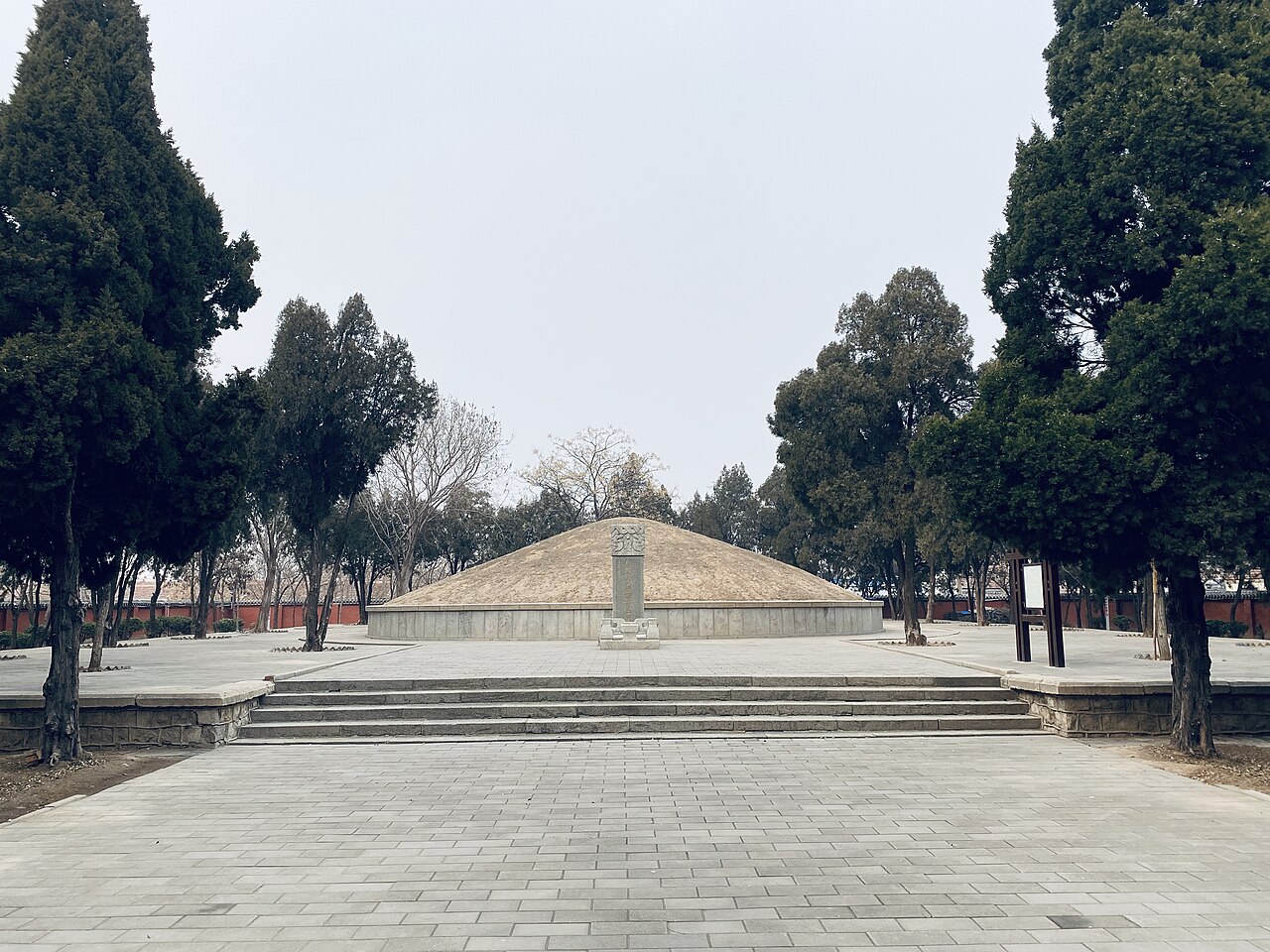
The tomb faces south on a raised platform. A round earth mound sits on top, ringed at its base by a stone retaining wall, with a Ming stele in front. The spirit road leading to it is lined with stone figures of officials, horses, rams and leopards, following the pattern of a princely burial. Shandong's canal heritage plan lists the tomb among the monuments of the Southern Canal, which fits the way the king travelled.
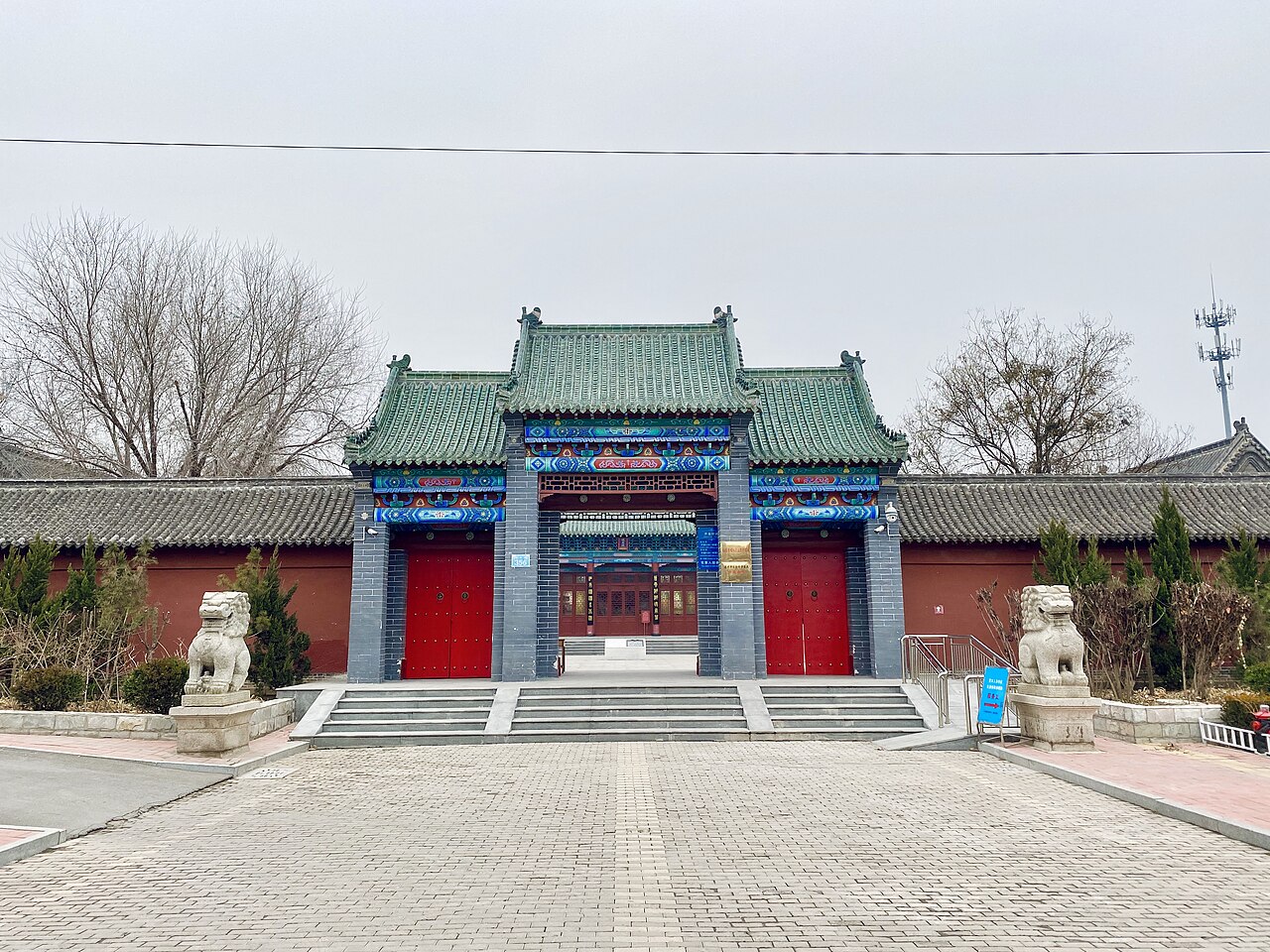
The museum uses a hall and its two side halls plus a covered corridor. Listings describe a first gallery on the visit and on Sulu itself, a second on China and Philippines friendship, and a third on notable descendants, with a corridor display on the Maritime Silk Road and canal culture. Outside the main hall, on the west side of the road, stands the Beiying Mosque used by the descendants' community. A news report from 2023 counted more than 280 households in Beiying village tracing their line to the king.
The tomb became a national key protected site in 1988, and the museum was rated a national second-class museum in 2024. In 2017 the city marked the 600th anniversary of the king's death with a ceremony attended by members of the Sulu royal family.
Tickets and hours
Entry is free. A museum notice from April 2026 asked visitors to show ID at the gate, with no advance booking needed, and gave hours of 9:00 to 17:00 with last entry at 16:30. Travel listings give the regular pattern as Tuesday to Sunday, closed on Mondays except public holidays. The museum sometimes stays open on a holiday Monday, as it did in April 2026, so check the day's notice if your only free day is a Monday.
Getting there and how long to stay
Listings give the address as 356 Qingnian Road in Decheng District, at the north end of Beiling Road, in Beiying village north of the old city. A taxi or ride-hailing car from Dezhou or Dezhou East station is the easiest option. Allow one to one and a half hours for the tomb, spirit road and galleries.
The tomb fits well into a Dezhou day built around the old canal street. Morning at the tomb, lunch with the famous braised chicken, and an evening walk by the water covers the city's main threads without rushing.
Before you go
- Bring ID for free entry.
- Avoid Mondays unless a holiday notice says the museum is open.
- Dress modestly if you step toward the mosque, which serves a living community.
- Pair the tomb with the old canal street and a braised chicken meal.
- Use the Dezhou travel guide for timing around rail connections.
Frequently asked questions
Who is buried at the Sulu King Tomb?
Paduka Pahala, East King of Sulu, who died in Dezhou in 1417, along with his queen and two of his sons.
Do his descendants really still live there?
Yes. Families surnamed An and Wen in Beiying village trace their ancestry to the king, and some have visited Sulu in recent decades.
Is the site worth a visit for non-specialists?
The story is easy to follow and the galleries explain it. Most people need about an hour.
How far is it from the canal?
It sits north of the old city. A short taxi ride links it with the canal street area.
Sources
Facts in this article were checked against the following sources, retrieved 17 October 2026.
- Paduka Pahala, English Wikipedia
- Sulu King Tomb, Baidu Baike
- Iqilu news on Beiying village and the museum, June 2023
- Sulu King Tomb museum spring opening notice, April 2026
- Shandong Department of Culture and Tourism, Grand Canal heritage in Shandong
- Dezhou travel guide on this site
Photos are from Wikimedia Commons under the licences shown in each caption.