Nanfeng Ancient Kiln, a Ming Dragon Kiln Still Firing in Shiwan
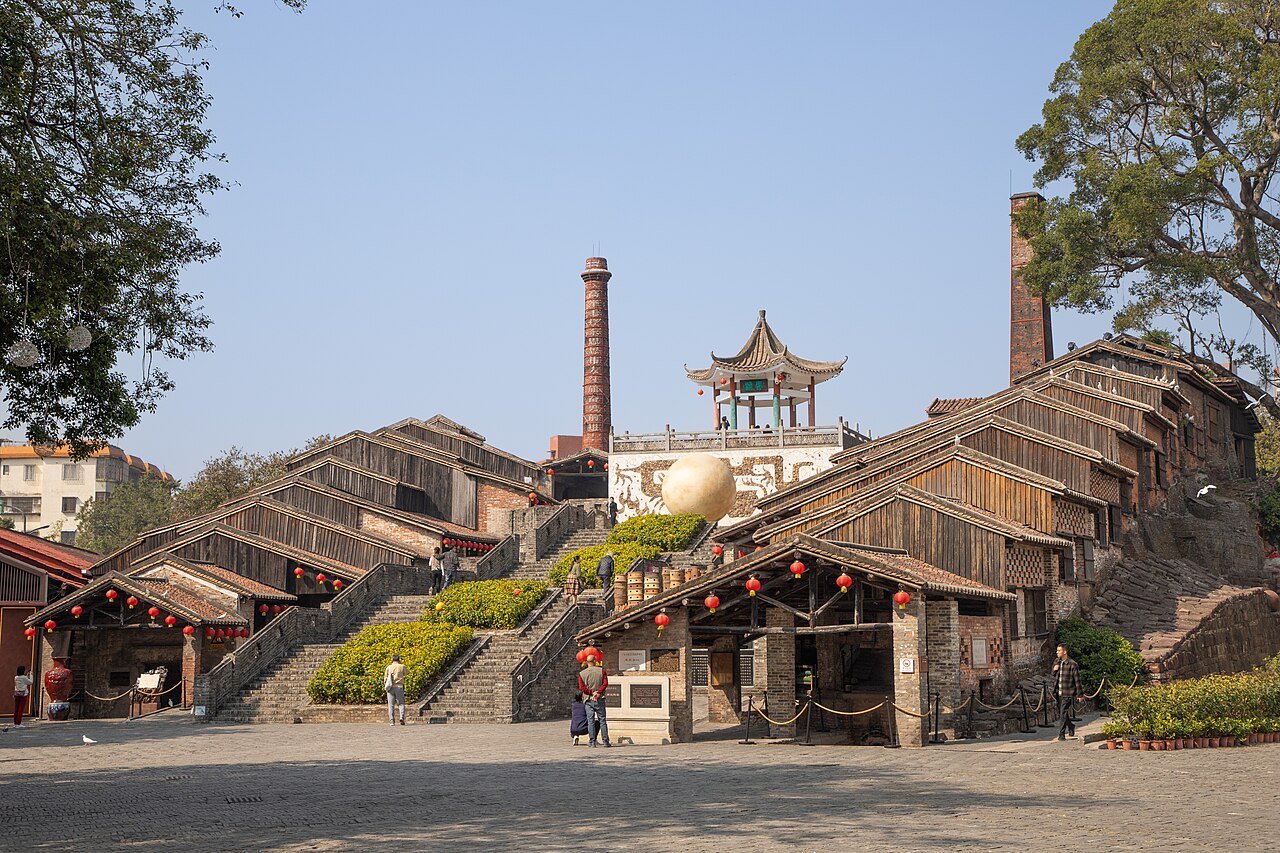
Nanfeng Ancient Kiln, Nanfeng Guzao, is a long sloping brick kiln on Gaomiao Road in Shiwan, the pottery district in the south of Chancheng, Foshan. Chinese Wikipedia dates it to 1506, in the Zhengde reign of the Ming, which makes it more than five hundred years old. Together with the Gaozao kiln beside it, it was listed as a national key heritage site in 2001. Local tourism pages describe these as the only two old dragon kilns left in Shiwan and say the wood-fired kiln is still used. The kiln sits at the centre of a ceramics quarter of old workshops, craft shops and a figurine street, and the visit makes sense of the glazed figures you see on Foshan's temple roofs.
How a dragon kiln works
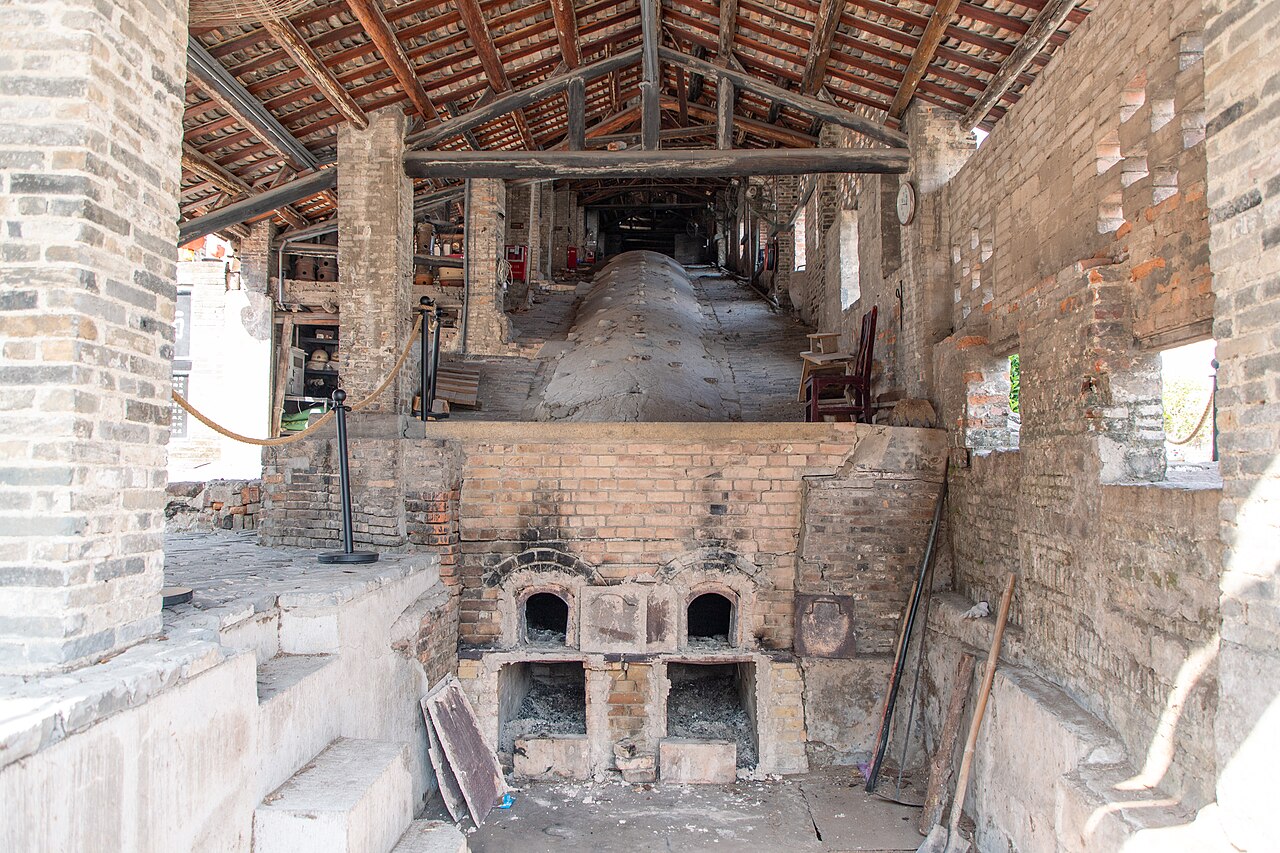
Shiwan potters mostly fired in dragon kilns, long tunnels built up a hillside or on a raised bank so that the fire draws upward along the slope. The shape of the long roof climbing the hill gave them the name. In Shiwan the word for kiln is zao, the same as stove. Chinese Wikipedia explains the name Nanfeng, south wind. The firing mouth faces due south, and a banyan more than four hundred years old grows at the tail of the kiln, so a cool breeze blows through in summer.
The kiln is 37.8 metres long. Its walls are about 6 metres wide outside and an average of 2.3 metres inside. Along the top run 34 rows of fire holes, five holes to a row, where firewood was fed in as the heat moved up the tunnel. In the trade each row is counted as one fire, so this is a kiln of 34 fires. Four doors in the side let workers carry wares in and out. The chimney is a later addition. Potters here say every firing yields one treasure, because changes of temperature and atmosphere inside a dragon kiln sometimes produce rare glaze colours that cannot be planned.
Over the centuries the kiln fired large basins. Today, Chinese Wikipedia says, it is used by a factory for garden flowerpots.
Firing days
Foshan Bendibao says visitors who are lucky can see a firing, which happens about twice a month. A demonstration hall in the scenic area also shows potters throwing on a traditional wheel and other crafts every day. Schedules for firings are not fixed, so call the scenic area on 0757-82711798 if seeing the kiln lit matters to you. The old banyan at the tail is a local landmark. Bendibao describes how it has grown over the kiln for more than four centuries despite the heat, and residents treat it as a lucky tree.
The ceramics quarter around the kiln
Bendibao describes the wider Nanfeng Guzao area as five former factory compounds with about 160,000 square metres of buildings and more than 600 creative businesses. Chinese Wikipedia lists the Guangdong Shiwan Ceramics Museum, Shiwan figurine street, an international ceramic artists' village and three municipal heritage buildings, the Gaozao kiln, the Lin family hall and a side hall of Gaomiao temple.
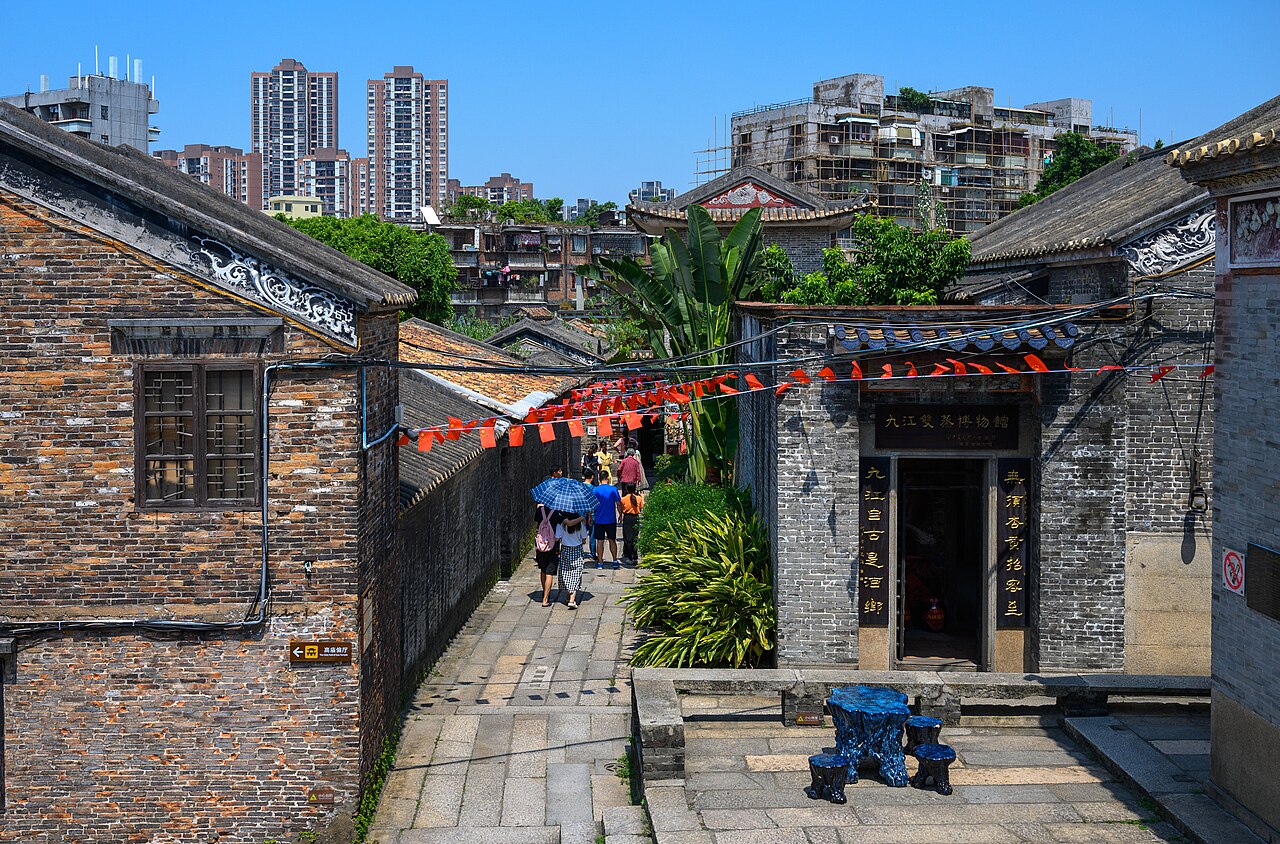
Shiwan figurines, small glazed figures of people, animals and scenes, are the district's best-known product. The figurine street is lined with shops in Ming and Qing style buildings, and many pieces in the lanes are made by local craftsmen. A pottery centre lets visitors try making their own. Folk performances such as lion dance, Cantonese opera and paper cutting are part of the programme on some days.
Tickets and hours
The scenic area's own site gives opening hours of 8:30 to 17:30, with last entry at 17:00. Foshan Bendibao adds evening openings on Fridays to Sundays from 18:30 to 21:00 and lists the pottery centre from 9:00 to 17:30.
Bendibao lists an adult ticket of 25 yuan in 2026, 20 yuan for teachers and full-time university students, and 12.5 yuan for children between 1.2 and 1.4 metres and some seniors. Children under 1.2 metres, people aged 65 and over, and Foshan residents enter free, and so do university students from anywhere in China with a student card. Check the day's notice, as discounts change.
Getting there
City buses 109, 120, 137 and 171 end at the Zhongxin market stop, also signed for Nanfeng Guzao, according to the scenic area. Travel listings point to Shiwan station on Foshan Metro Line 2 as the nearest metro, about a ten-minute walk away. The Ancestral Temple is about five kilometres to the northeast, a short taxi ride.
Planning your visit
Allow two to three hours for the kilns, the museum and the lanes. The Foshan guide treats Shiwan as a separate half-day and suggests stacking it with Zumiao only if you start early. Weekday mornings are calmer. Come on a Friday to Sunday evening if you would like to see the lanes lit up.
Before you go
- Call ahead if you hope to see a firing.
- Bring a student card or ID for discounts.
- Leave time and luggage space if you plan to buy ceramics.
- Wear shoes for uneven old paving.
Frequently asked questions
How old is Nanfeng Ancient Kiln?
It was built in 1506, in the Ming dynasty, and has been in use for more than five hundred years.
Can you see the kiln being fired?
Firings happen about twice a month, Bendibao says. Ask the scenic area for dates.
How much is the ticket?
Bendibao lists 25 yuan for adults in 2026, with discounts and free entry for some groups.
Is Shiwan worth visiting after Zumiao?
Yes, if ceramics interest you. Many of the roof figures at Zumiao are Shiwan ware.
Sources
Facts in this article were checked against the following sources, retrieved 12 October 2026.
- 南风古灶, Chinese Wikipedia
- 南风古灶 official site, tickets and transport
- 佛山南风古灶门票多少钱, Foshan Bendibao
- 佛山禅城区南风古灶打卡攻略, Foshan Bendibao
Photos are from Wikimedia Commons under the licences shown in each caption.