Drum Mountain, Temple Height Above the Min River
Drum Mountain, Gu Shan, rises in Jin'an District east of central Fuzhou. Chinese Wikipedia gives a north–south length of about six kilometres, east–west width of about four, typical heights of 700 to 800 metres, and a high point of 919.1 metres at Dading Peak. The name comes from a drum-shaped rock and from stories of drum-like sounds from caves in wind and rain. Yongquan Temple (also written Yongquan / Surprising Spring Temple) sits on the mid-slope and is the religious reason most visitors climb. Cliff inscriptions by Cai Xiang, Zhu Xi and others make the mountain Fuzhou's densest ancient stone-carving site, protected as a national monument group.
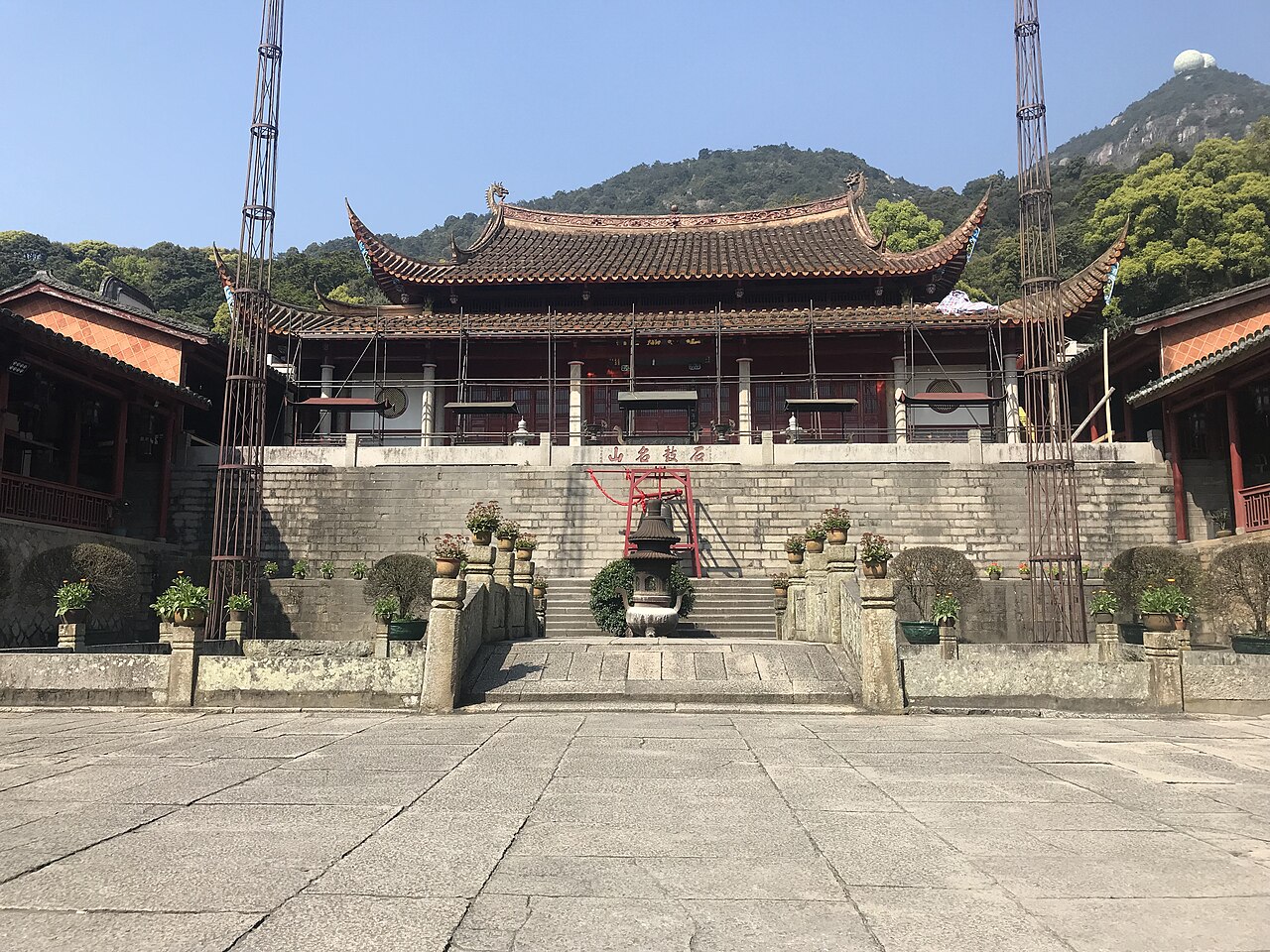
Yongquan Temple and the slope sights
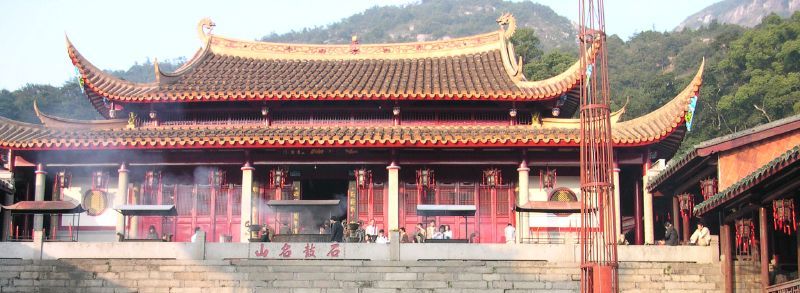
Temple histories place early foundations in the Tang, with the living monastery rebuilt across dynasties; the Fuzhou guide notes a foundation tradition around 915 for the community travelers meet today. Two Song ceramic pagodas stand before the halls. Inside, expect active worship, incense and vegetarian meal options when the kitchen is serving. Modest clothing and quiet voices are basic courtesy.
Beyond the temple, paths reach Heshui Rock, Guanyin Pavilion and named "eighteen scenes." Cliff carvings reward slow walkers more than peak-baggers. Views back toward the Min estuary appear on clear days; summer haze often softens the city disc.
Cableway, hike and tickets
Cableway and trail choices change with weather and maintenance. Tickets for temple, scenic gates or cable follow official notice; invent no yuan figures. Heat, typhoon rain and wet stone are the usual reasons to skip. The mountain is a suburb half-day, not a stroll from Nanhou Street. Give it its own morning.
Buses and taxis reach the lower cable or trailheads from Gulou. Confirm last cable descents before you hike up late. Carry water; slope shops thin out between nodes.
When to go and who should skip
Spring and autumn suit the climb. Summer works at dawn before heat builds. Winter is quieter with cold wind on the ridge. Skip Gu Shan if you have only two days and Sanfang Qixiang plus food already fill them, if typhoon rain makes trails unsafe, or if one more Chinese mountain temple after other Fujian trips feels redundant. Keep it when you want height, monastery incense and a view toward the Min, with a clear half-day that is not stacked after Nanhou Street.
West Lake Park is the flat recovery contrast in the city. Fujian Museum near the lake covers rain pivots. Drum Mountain is the opposite tempo.
Pairing with the lanes
The Fuzhou guide table puts West Lake as easy circuit and Drum Mountain as suburb half-day hill temple. Day one for Sanfang and lake, day two for Gu Shan, is the comfortable three-day spine. Same-day lane-plus-mountain stacks leave little margin for cable queues. Black and White Pagodas stay as quick old-city markers on the lane day, not as mountain substitutes.
Practical half-day script
Start from downtown after breakfast, ride to the lower cable or trailhead, and aim to reach Yongquan Temple before the strongest midday heat. Walk the courtyard, ceramic pagodas and a short stretch of cliff inscriptions, then decide whether Dading Peak is worth the remaining energy. Descend by cable when queues are short, or by trail if you prefer a longer cool-down. Keep lunch flexible; temple vegetarian sets and downhill restaurants both work when open.
Rainy days shift the plan toward covered halls and the closest carvings rather than ridge viewpoints. After typhoon warnings, wait for trail reopen notices instead of improvising on wet rock. Pair leftover afternoon time with West Lake or a museum only if legs still agree; otherwise return to Gulou snacks and call the mountain done.
If you are comparing Fujian temple mountains, Drum Mountain is shorter and more urban-accessible than Wuyi's raft-and-peak spine or Putuo's ferry logistics. It rewards travelers who want incense and height without leaving the Fuzhou day-trip radius.
Before you go
- Give the mountain its own half-day.
- Check cable status and last descent times.
- Wear shoes with grip; stone stays slick after rain.
- Dress modestly for Yongquan Temple.
- Confirm temple and cable tickets on the day's notice.
Frequently asked questions
How high is Drum Mountain?
Chinese Wikipedia gives Dading Peak at 919.1 metres, with much of the massif around 700 to 800 metres.
Is Yongquan Temple the only stop?
It is the main religious stop. Cliff carvings, named rocks and viewpoints fill the rest of a half-day.
Cable or hike?
Cable saves knees when running. Hiking suits clear, cool mornings. Confirm operations before you rely on the cable down.
Can I do Sanfang and Drum Mountain the same day?
Only if you cut deeply and start very early. Most travelers enjoy both more on separate days.
Sources
Facts in this article were checked against the following sources, retrieved 13 October 2026.
- 鼓山, Chinese Wikipedia
- 涌泉寺 (福州), Chinese Wikipedia
- Fuzhou travel guide on this site
- 三坊七巷 pairing context
Photos are from Wikimedia Commons under the licences shown in each caption.