Sanfang Qixiang, Fuzhou's Three Lanes and Seven Alleys
Sanfang Qixiang, Three Lanes and Seven Alleys, is the surviving late-imperial residential grid in Gulou District, central Fuzhou. Chinese Wikipedia calls it the largest historic district still sitting in a Chinese city centre, laid along Nanhou Street: three lanes to the west (Yijin, Wenru, Guanglu) and seven alleys to the east (Yangqiao, Langguan, Ta, Huang, Anmin, Gong, Jibi). White walls, horse-head gables and scholar-official mansions define the walk. It is a national 5A scenic area, a nationally protected monument group and a long-standing tentative World Heritage entry. The historic streets themselves are free to stroll; individual house museums may charge.
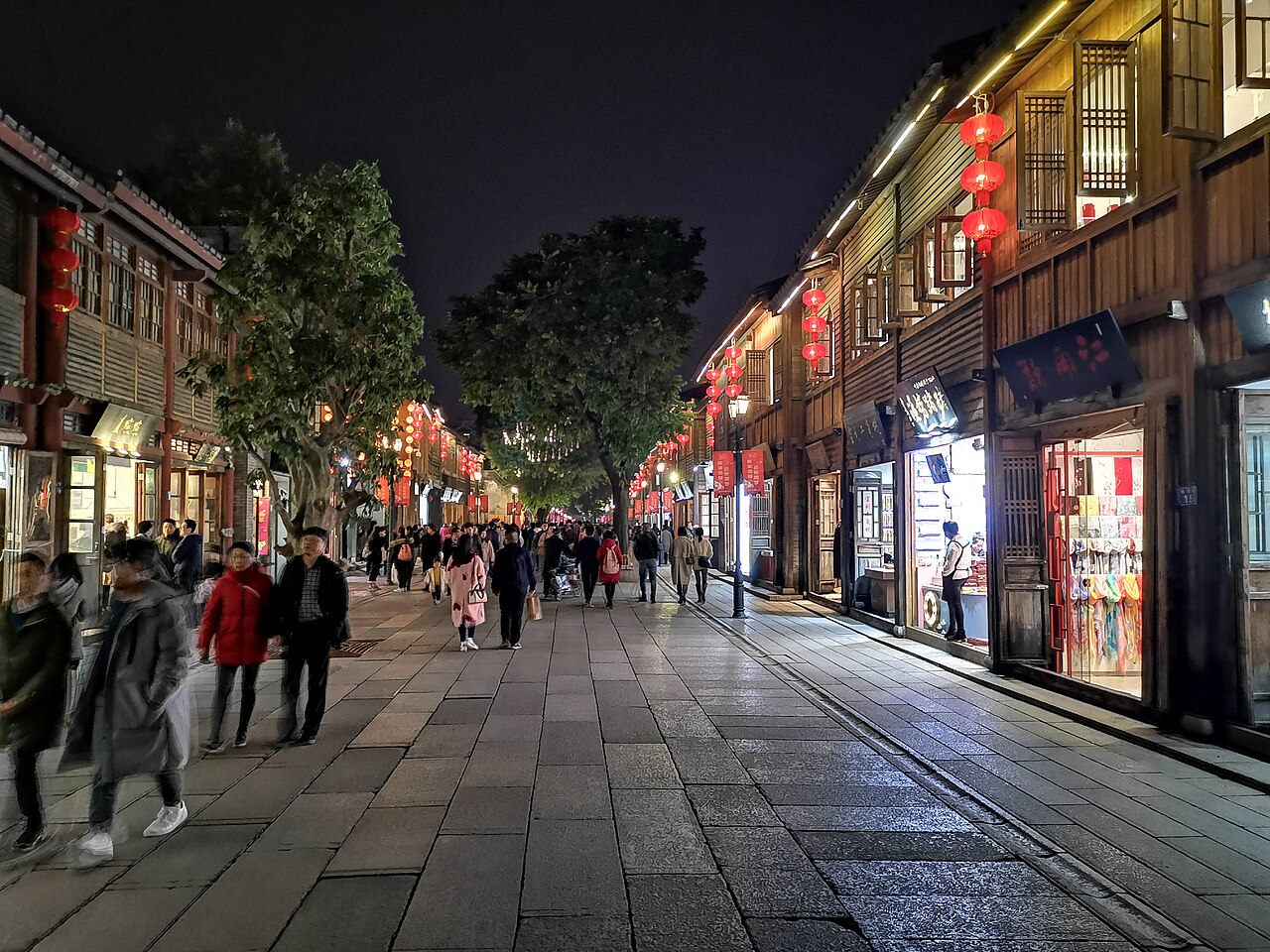
A living li-fang grid
The pattern follows Tang and Song ward planning that Fuzhou kept more completely than most cities. Shops concentrate on Nanhou Street; quieter courtyards sit in the side lanes. In the Republic era the outermost lanes were widened into roads, so what you walk today is effectively two lanes and five alleys inside the protected core, still marketed under the full historic name. Plaques and small museums mark houses linked to Lin Zexu, Shen Baozhen, Yan Fu, Bing Xin and other Fujian names. The local saying that "half of China's modern history" passes through these lanes is marketing hyperbole with a real guest list behind it.
Early 2000s redevelopment plans threatened large clearances. After expert campaigns and a cancelled commercial contract, restoration from 2006 onward rebuilt the district as a protected tourist and residential mix. You will see polished shopfronts beside quieter courtyards; pick one or two halls, not six.
Suggested walking order
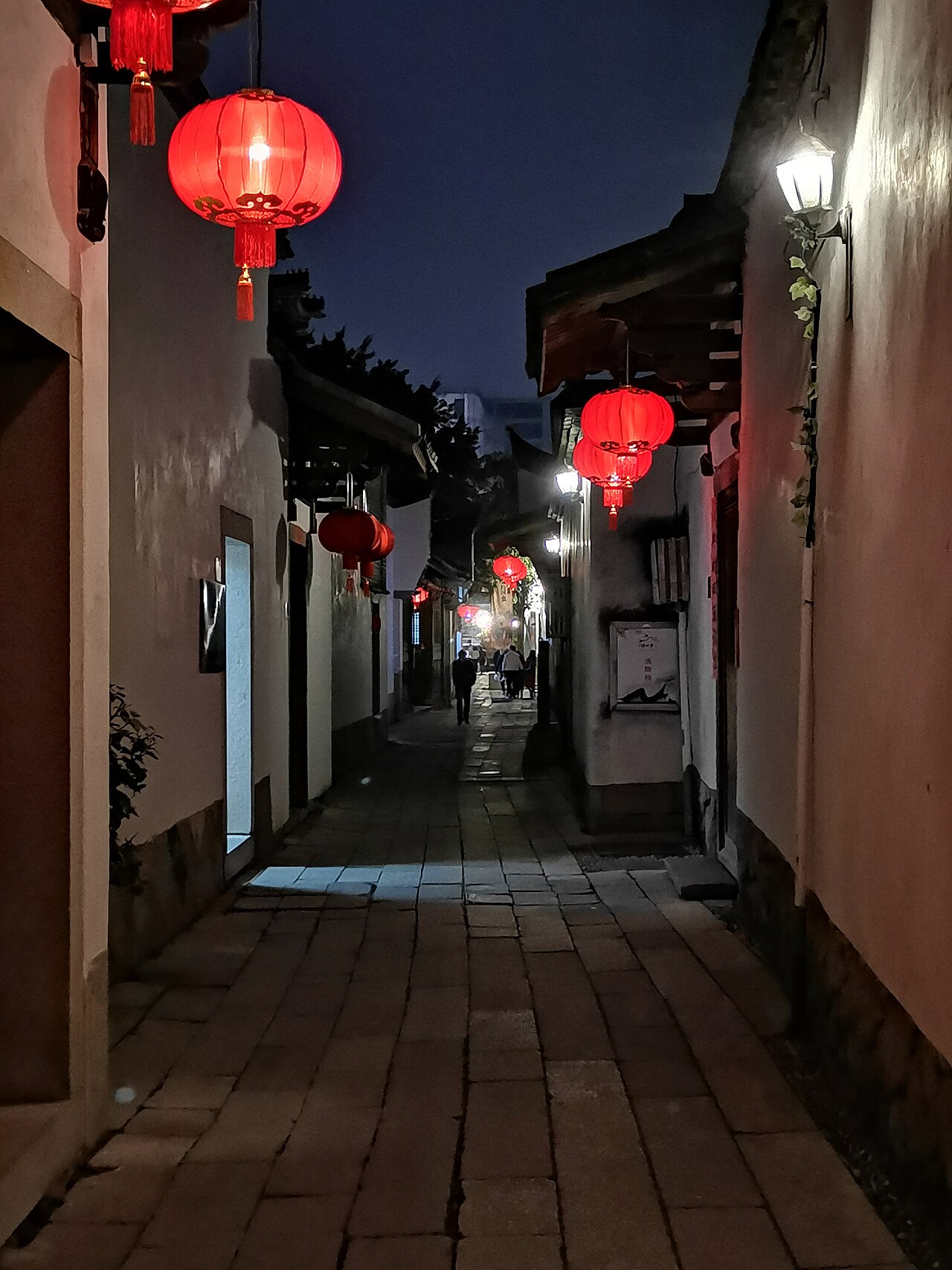
Enter from the commercial approaches, walk Nanhou Street as the spine, peel into one named lane for quieter courtyards, then exit toward West Lake or a snack street. The Fuzhou guide suggests morning and early afternoon for the first pass, with a night return for lit façades without noon glare. Food stalls around the lanes handle fish balls, yanpi and oyster cakes better than hotel restaurants.
Modest dress is enough; this is an urban historic street, not a monastery. Still keep voices down inside courtyard museums that remain active memorial spaces.
Tickets, hours and practical notes
Street walking is free. House museums and exhibition halls post their own tickets and hours; official notice wins, and yuan figures change. Evening lighting makes a second visit worthwhile if your hotel is downtown. Summer heat in the lanes is intense at midday; spring and autumn suit longer walks. Typhoon rain makes stone slick.
Metro and bus links serve Gulou; exact station choices depend on which gate you use. Combine with West Lake Park the same day if energy holds. Save Drum Mountain for its own morning rather than stacking it after a full lane day.
Pairing and what to cut
If you have seen Pingjiang Road in Suzhou or similar Jiangnan historic streets, Sanfang still earns a half-day for Fujian courtyard detail and the modern-history house list. Cut the sixth museum and keep one Lin Zexu-related stop if Qing coastal history is your thread. Black and White Pagodas are quick photo markers, not half-day sights. Mawei naval-yard history waits for a fourth day.
Reading the houses without museum fatigue
Many courtyards open as small thematic museums: maritime officials, translators, women writers, revolutionary safe houses. Read the doorway plaque, decide in thirty seconds, and enter only if the person or craft interests you. One deep house beats five hurried stamps. Nanhou Street shops lean tourist; side-lane bakeries and tea rooms still feel local at off-peak hours. Ask before photographing inside private-looking courts that are not ticketed exhibitions.
On wet days the white walls stain and stone grows slick. Umbrellas crowd the spine; duck into a covered courtyard exhibit rather than forcing the full alley list. Evening neon on horse-head gables is the easy second visit if your hotel is nearby.
Before you go
- Walk Nanhou Street first, then one quiet lane.
- Budget for optional house-museum tickets only if the person interests you.
- Return at night for lighting if you stay downtown.
- Keep Drum Mountain for a separate half-day.
- Bring water in summer; lane shade is uneven.
Frequently asked questions
Is Sanfang Qixiang free?
The historic streets are free to stroll. Individual courtyard museums may charge.
How long should I spend?
A half-day covers the spine and one or two halls. Add an evening return for night photos.
Is it worth it if I have seen other old streets?
Yes if you want Fuzhou-specific courtyards and modern-history houses. Skip if you only have energy for one Fujian city and Xiamen's coast is the thesis.
Can I combine it with Drum Mountain the same day?
Possible but tiring. The Fuzhou guide prefers lanes and lake on one day, mountain on another.
Sources
Facts in this article were checked against the following sources, retrieved 13 October 2026.
- 三坊七巷, Chinese Wikipedia
- Fuzhou travel guide on this site
- Fuzhou West Lake and lane pairing notes in the city guide
- National cultural heritage listing context via Chinese Wikipedia
Photos are from Wikimedia Commons under the licences shown in each caption.