Fuzhou Travel Guide: Three Lanes, West Lake, and Drum Mountain
Fuzhou's historic core rewards concentration more than long transfers. Three Lanes and Seven Alleys (Sanfang Qixiang) is a dense pedestrian maze; the city West Lake is a flat park circuit; Drum Mountain is a half-day hill with Yongquan Temple. The provincial capital of Fujian sits on the Min River estuary, nicknamed the Banyan City; Eastern Min speech and Min opera still color daily life. Population ran past eight million in the 2020 census. Keep the lanes as day-one spine and the mountain as the suburb half-day.
Stay in Gulou / Taijiang if the lanes and lake are the point; Changle is for the airport, not for sightseeing lodging. Fuzhou Changle International Airport is the main air gate. High-speed rail uses Fuzhou and Fuzhou South; Line 1 of the metro links them. The Hefei–Fuzhou and coastal corridors connect the city north to Zhejiang and south toward Xiamen. Stay near Sanfang Qixiang (Gulou) for evening walks, or along the Min River parks if you want newer hotels.
When to come to Fuzhou
Humid subtropical monsoon climate: long hot summers, short mild winters, mean around 20.5°C. March–May and October–November are the comfort windows for lane walking. June–September brings heat, heavy rain pulses, and typhoon risk; Drum Mountain trails get slippery, so keep the hill movable. Snow is almost unheard of. Plum-rain humidity makes stone lanes slick; flat shoes matter more than fashion. Midday summer heat on Nanhou Street is a poor trade for photos you can take at 8 a.m. or after dark.
Getting in and where to stay
Sanfang Qixiang is the free street day: start early or return after dark (the night lighting is part of the draw). West Lake is a soft morning, not a ticket mountain, and it is Fuzhou's West Lake, not Hangzhou's. Drum Mountain wants its own half-day; stacking it after a full Sanfang day usually means a rushed temple. Put it on day two or three. Lin Zexu Memorial Hall is a small focused stop near the historic core. Black Pagoda and White Pagoda are old-city vertical markers: photograph and move on. Min River parks and Mawei suit a fourth day or naval-history interest, not instead of Sanfang.
Places worth visiting
Half-day in Sanfang Qixiang
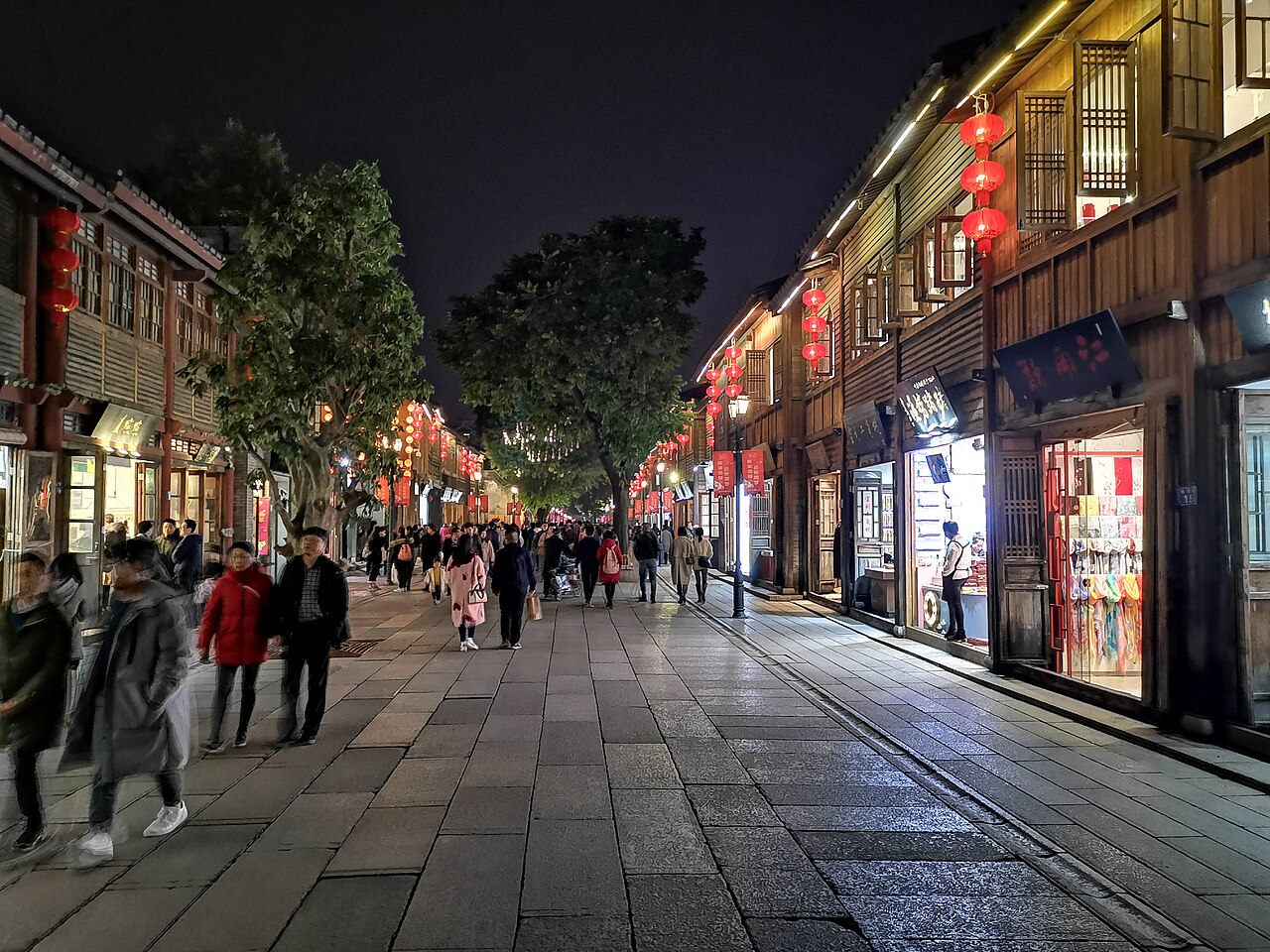
Walk Nanhou Street as the spine, then peel into the named lanes and alleys rather than treating every courtyard museum as mandatory. Sanfang Qixiang is a surviving late-imperial residential grid in Gulou (white walls, horse-head gables, and scholar-official mansions), now a national 5A area and a long-standing tentative World Heritage entry. Many houses host small exhibitions on local figures (Lin Zexu among them); pick one or two halls, not six. Suggested order: enter from the commercial approaches, Nanhou Street, one lane deep for quieter courtyards, then exit toward the lake or a snack street. The historic block itself is free to stroll; individual house museums may charge. Follow the official notice for the day.
Three Lanes and Seven Alleys at night
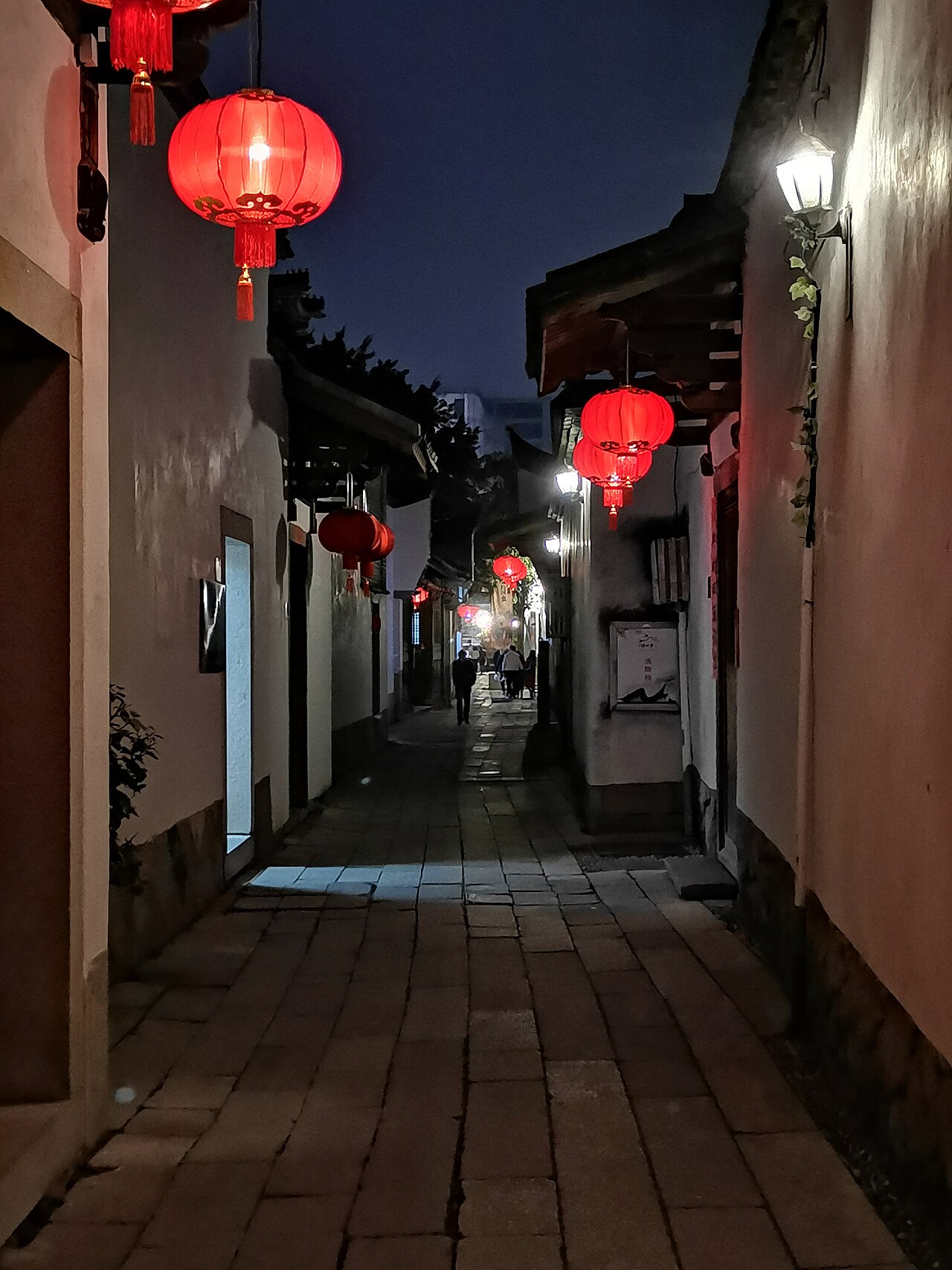
Return after dark if you want the lit façades without noon glare. Night snacks around the lanes are part of the visit; you do not need a separate "food street" plan if you already walked Nanhou hungry.
West Lake and Drum Mountain
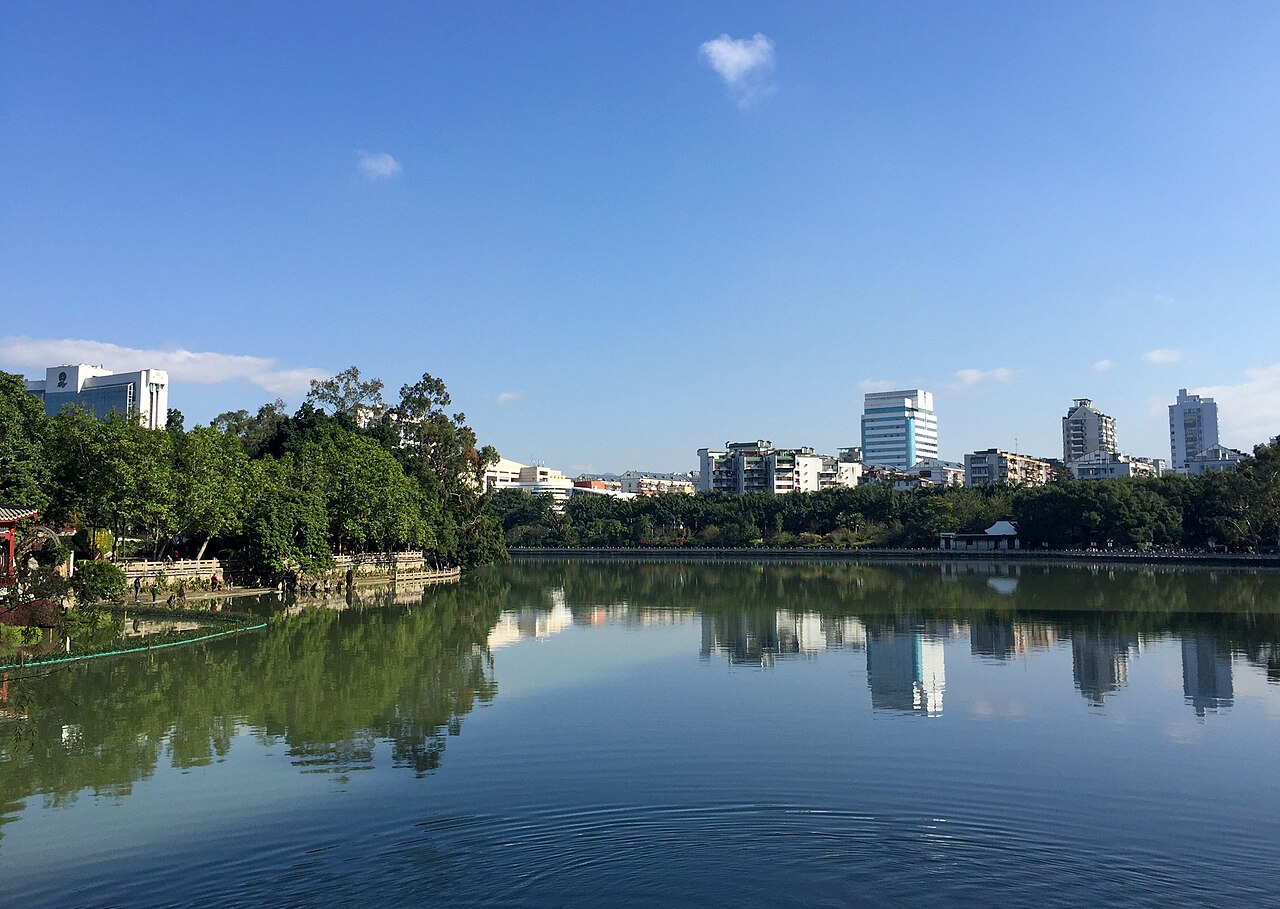
Fuzhou West Lake Park is the city's classic inland water garden, traditionally dated to early works in the Jin era and rebuilt across dynasties: a green contrast to the lane stone. Fujian Museum sits nearby for a rainy pivot. Boats are optional; an easy circuit recovers legs between heavy walking days.
Drum Mountain (Gu Shan) is the opposite tempo: summit around 969 m east of the urban core, with Yongquan Temple (founded 915) on the mountain. Cable options and hiking trails both exist; tickets for temple or cable follow official notice. See the Drum Mountain and Sanfang Qixiang pages for trail and lane detail.
Yongquan Temple on Drum Mountain
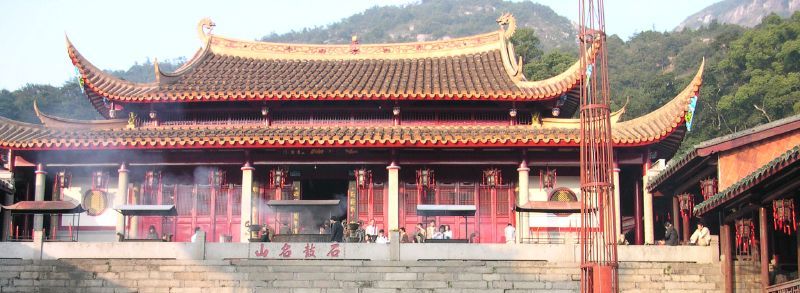
Skip Gu Shan if you have only two days and Sanfang plus food already fill them, if summer typhoon rain makes trails unsafe, or if one more Chinese mountain temple after other Fujian trips feels redundant. Keep it when you want height, monastery incense, and a view back toward the Min estuary, and when you can give it a clear half-day without stacking after Nanhou Street.
City skyline and secondary stops
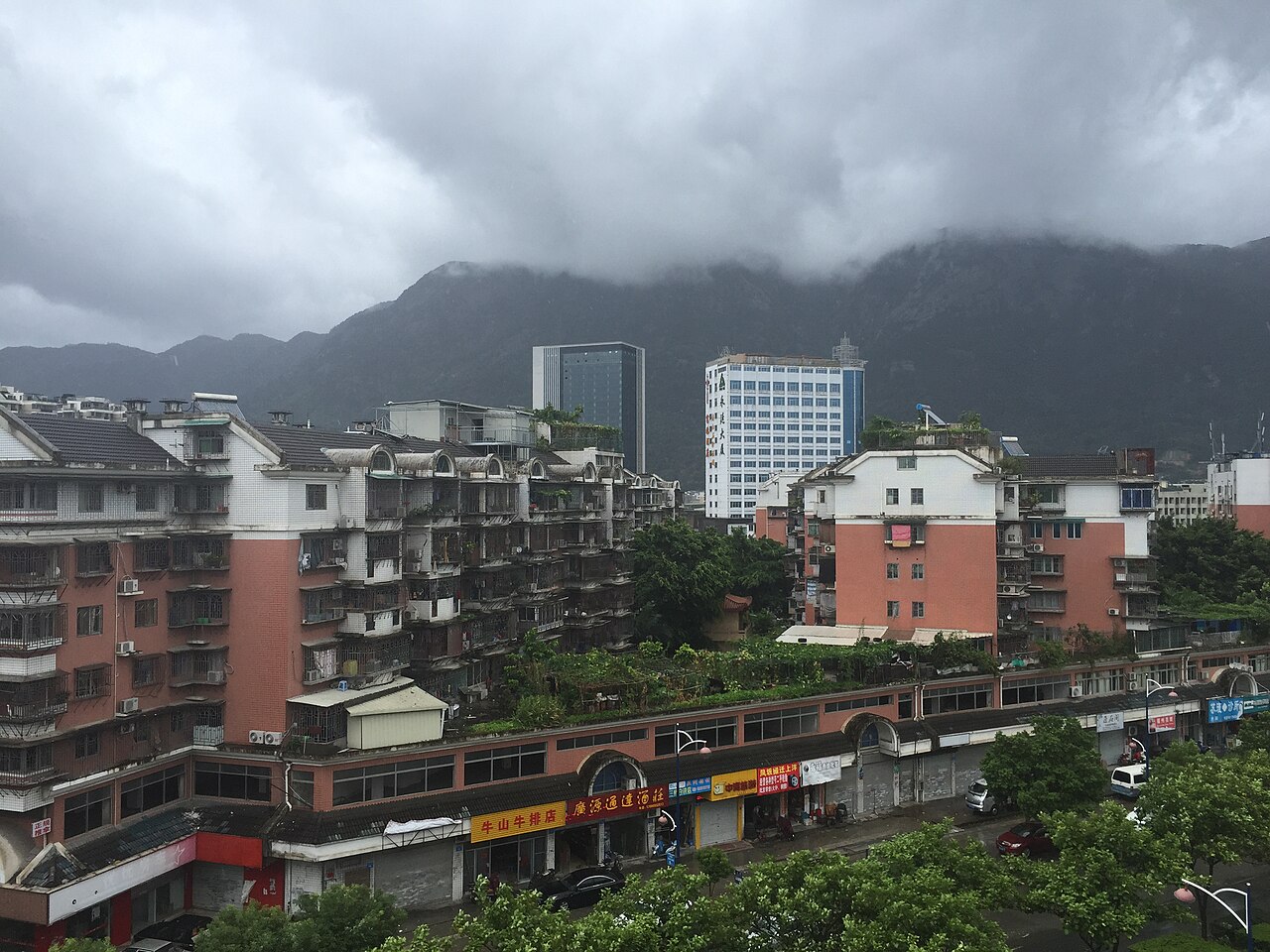
Lin Zexu Memorial Hall suits Qing history fans. Mawei and Min River parks are niche history, not the first Fuzhou photograph. Xiamen is the island city south along the coast; Quanzhou is the UNESCO port between them. Inland, Sanming covers Taining Danxia water days, Nanping anchors Mount Wuyi rafting, Ningde is the Xiapu mudflat and Taimushan coast, and Longyan holds Yongding tulou clusters.
Eating in Fuzhou
Fuzhou cuisine is the light, umami-leaning face of Fujian food: sweet-and-sour notes, seafood, and clear soups. Buddha Jumps Over the Wall is the banquet cliché; fish balls, yanpi meat-pastry, oyster cakes, and dingbianhu rice-scroll soup are the everyday forage. Street stalls around the lanes and traditional markets beat hotel restaurants for snacks. Bring an appetite for mild sweetness if you are used to heavier spice.
How to arrange the route
- Day one: Sanfang Qixiang morning and early afternoon; West Lake toward evening or the next morning; night return to the lit lanes for snacks.
- Day two: Drum Mountain and Yongquan Temple; back to town for Min opera or a quiet riverside walk if legs allow.
- Day three: Lin Zexu hall or pagodas, leftover food streets, or a slow museum morning before the train south or north.
Three days is comfortable. Two days covers the lanes and either the lake or Drum Mountain. One day is Sanfang only.
What to cut if short on time
Drop Mawei / Min River parks first. Drop Drum Mountain when two days must stay in the flat city. West Lake is pleasant and replaceable if Sanfang already ate the walking budget. Keep Sanfang Qixiang (day and night pass) as the minimum honest Fuzhou.
Things to confirm before you go
- Sanfang Qixiang streets are free; some house museums charge. Check posted notices.
- Drum Mountain weather changes fast in typhoon season; trails get slick.
- Fuzhou West Lake is not Hangzhou West Lake; read the city name on the map.
- Summer heat in the lanes is real; schedule shade and water.
- High-speed tickets: Fuzhou versus Fuzhou South are different stations.
Frequently asked questions
How many days for Fuzhou?
Two days covers the lanes and either the lake or Drum Mountain. Three days fits all three without rushing. One day is Sanfang only.
Is Three Lanes and Seven Alleys worth it if you have seen Pingjiang Road or similar?
Yes if you care about Fujian scholar-official houses and Eastern Min street food; the texture differs from Jiangnan water towns. No if you are exhausted by restored pedestrian heritage streets; then go straight to the mountain or the train to Xiamen.
Fuzhou or Xiamen first?
Fuzhou for capital museums, lanes, and inland Fujian flavor; Xiamen for island, Gulangyu, and beach air. Many travellers do both on the coastal high-speed line.
What should you eat?
Fish balls and a bowl of local snack soup once; Buddha Jumps Over the Wall only if you want the banquet version.
Sources
The facts in this article were checked against the following Wikipedia entries, retrieved September 16, 2026, and rechecked on October 16, 2026.
- Fuzhou https://en.wikipedia.org/wiki/Fuzhou
- Fuzhou (Chinese) https://zh.wikipedia.org/wiki/福州市
- Three Lanes and Seven Alleys https://en.wikipedia.org/wiki/Three_Lanes_and_Seven_Alleys
- Three Lanes and Seven Alleys (Chinese) https://zh.wikipedia.org/wiki/三坊七巷
- Mount Gu (Fuzhou) https://zh.wikipedia.org/wiki/鼓山_(福州)
Individual house-museum hours change; this article does not invent ticket yuan amounts.
All photos are from Wikimedia Commons, used under CC licenses; re-use requires attribution.
- fuzhou-sanfang.jpg from File:Fuzhou_Three_Lanes_and_Seven_Alleys_Mainstreet.jpg, by Lennartbj, CC BY-SA 4.0
- fuzhou-sanfang-night.jpg from File:Fuzhou_Three_Lanes_and_Seven_Alleys_Nightview.jpg, by Lennartbj, CC BY-SA 4.0
- fuzhou-westlake.jpg from File:West_Lake_in_Fuzhou_(20160118101140).jpg, by N509FZ, CC BY-SA 4.0
- fuzhou-yongquan.jpg from File:Yongquan_Temple_in_Gushan_Mountain,_Fuzhou.jpg, by Jack Parkinson, CC BY 2.0
- fuzhou-skyline.jpg from File:Fuzhou_before_the_typhoon_(20150808092211).JPG, by N509FZ, CC BY-SA 4.0