Qingyan Ancient Town, a Stone Garrison in the Guiyang Hills
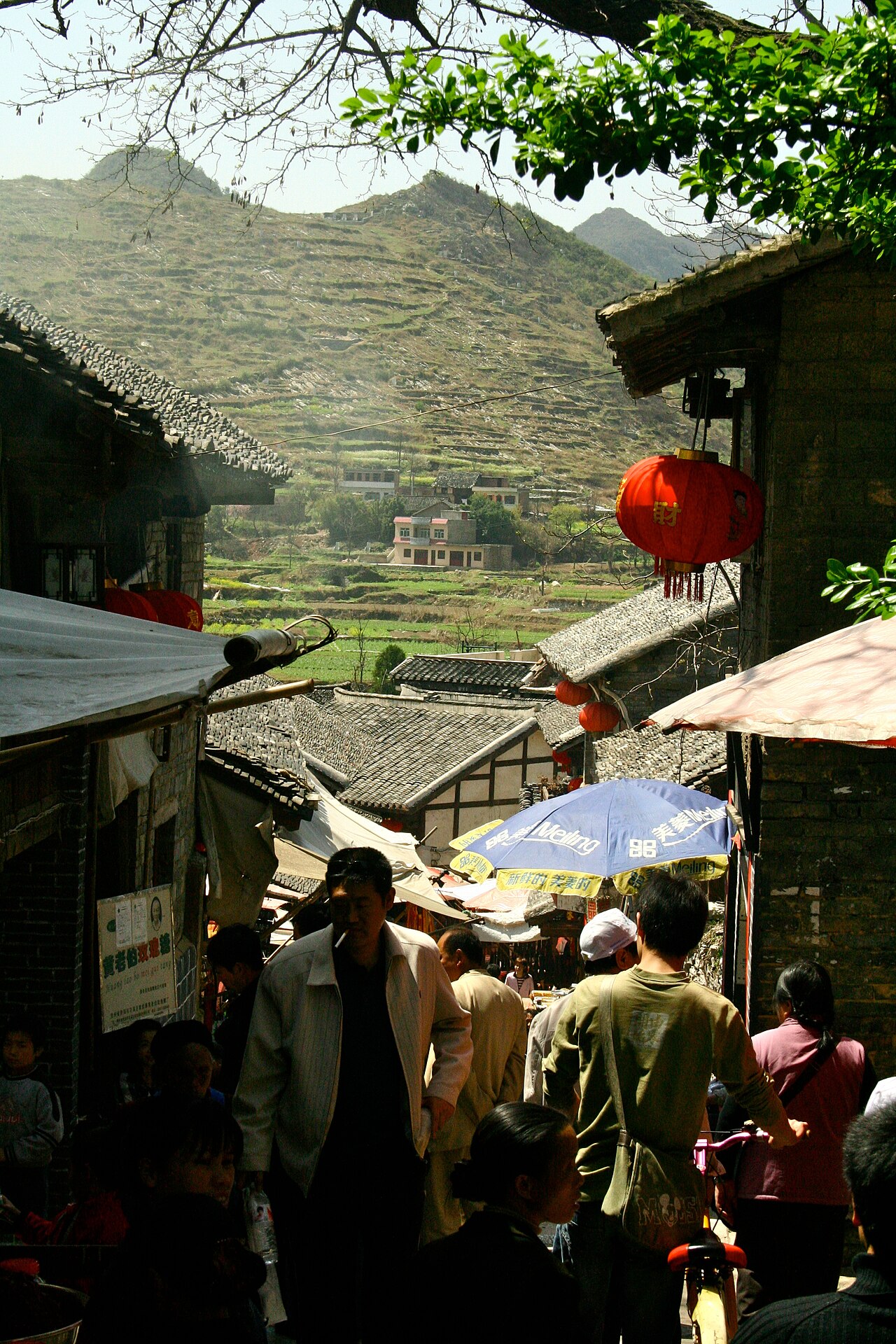
Qingyan sits 29 kilometres south of central Guiyang in Huaxi District, a walled town of stone gates, slate lanes and temple roofs climbing a hillside. Chinese sources count it among the four great ancient towns of Guizhou. It started as a Ming military post, grew into a market and scholar town, and today is a national 5A scenic area that fills with day-trippers from the city. The stone is what sets it apart. Walls, gates, steps and many house bases are built from local rock, which gives Qingyan a harder, greyer look than the canal towns of the Yangtze delta.
From garrison to town
Chinese Wikipedia dates the town to 1378, the tenth year of the Ming Hongwu reign, when it was set up as a military stronghold on the routes into Guizhou. English Wikipedia adds that a local Bouyei chief, Ban Lingui, built a fortified town here in the Tianqi period of the 1620s. Under the Qing, from 1687, it was administered from Guizhu County. It became a town in 1914. Eleven ethnic groups live in the wider township, among them Han, Miao, Bouyei, Dong and Zhuang.
The town was named a China Historical and Cultural Town in 2005, entered the first list of distinctive small towns in 2016, and was rated a national 5A scenic area on 25 February 2017.
What to look for inside the walls
Start at one of the stone gates. Dingguang Gate is the south gate, and the North Gate is where many buses and car parks deliver visitors. The stretch of wall near the gates is the best place to see how the town was built into the slope.
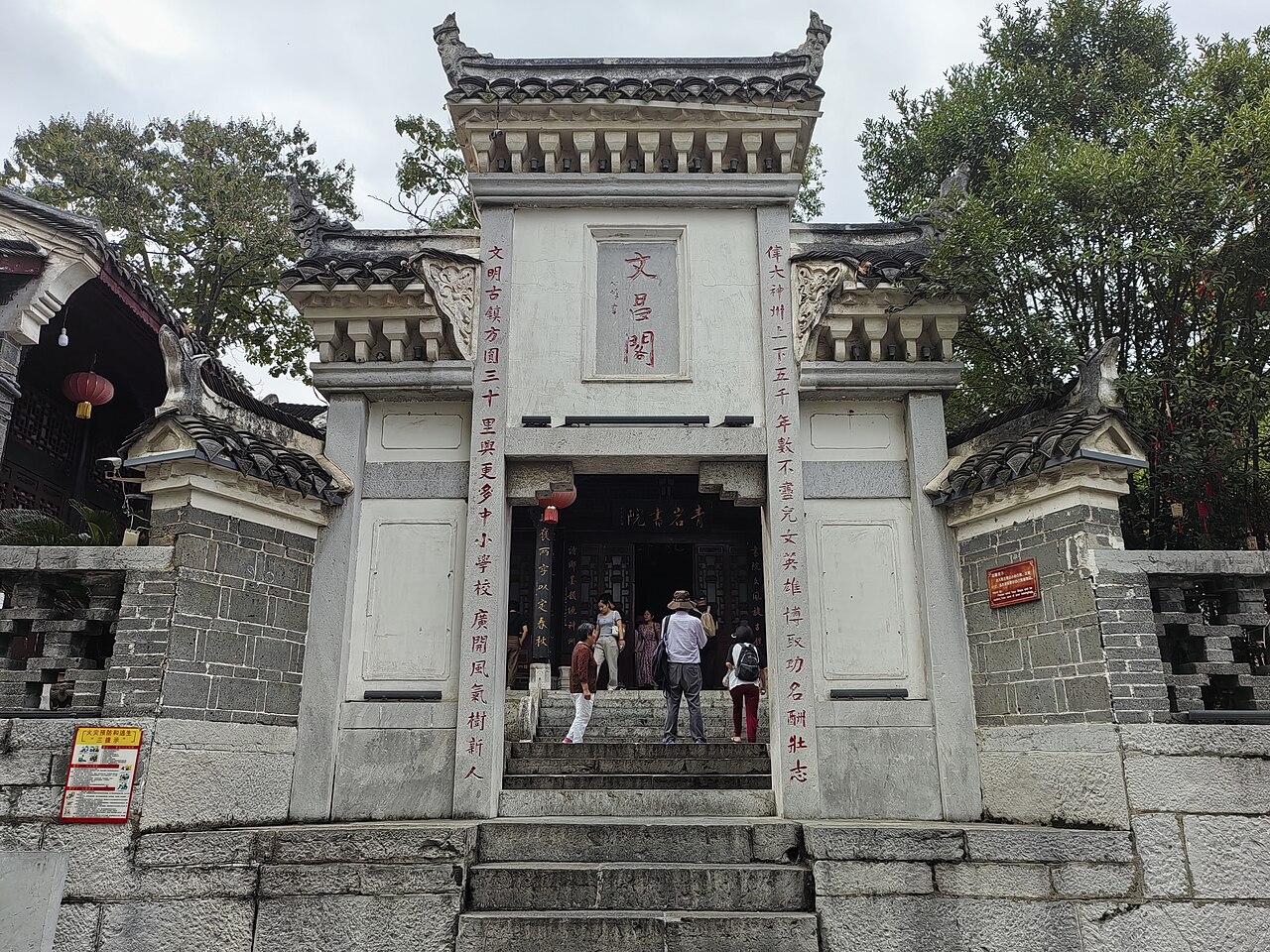
Inside, the main lanes connect a dense group of temples and halls. Ciyun Temple, Wanshou Palace, Longquan Temple and Wenchang Pavilion are the ones most visitors reach, with carved stone and woodwork that reward a slow pace. Three memorial arches stand along the old streets. Chinese Wikipedia lists the Qingyan section of the old Tea Horse Road, built in the Wanli period and surviving for about 8 kilometres, as a nationally protected site, together with Qingyan and Gongzhan bridges and the centenarian arches of Zhao Caizhang and Zhao Lilun.
People and history
The town's best-known son is Zhao Yijiong, who in the late Qing became the first scholar from Guizhou to place first in the palace examinations for civil officials, the title of zhuangyuan. His former residence stands on Zhuangyuan Street. The Qing scholar and poet Zhou Yuhuang also came from Qingyan.
The town carries more recent history too. Chinese sources list the site of the Qingyan missionary case, a nineteenth-century incident that drew international attention, and a Catholic church stands on a side lane. Zhou Enlai's father, Deng Yingchao's mother and the revolutionary Li Kenong all lived here quietly, and part of Zhejiang University was relocated here during the war with Japan.
Eating in Qingyan
Food is half the reason people come. The famous dish is braised pig trotters, called zhuangyuan trotters after Zhao Yijiong, simmered with a dozen or so herbs and spices until soft. Tofu balls, fried until golden and dipped in Guizhou chili water, are the common snack. Rose candy is the take-home sweet. Shops along the main lanes compete loudly, so look for places busy with local families.
Tickets and getting there
Entry arrangements have been tiered, with a basic ticket for the streets and public areas and a combined pass that covers the main paid sites such as the gate wall, the Zhao Yijiong residence, Ciyun Temple and Wanshou Palace. Prices and what each ticket covers follow the scenic area's own notice. This page does not quote yuan amounts.
In October 2023 Guiyang opened direct tourist bus routes to Qingyan from the city, including services from the main railway station area and Guiyang North. Taxis and ride-hailing also make the trip, with journey times that depend heavily on traffic. Check the latest timetable and last return before you set off.
When to go
Weekday mornings are calm. Weekends and holidays bring heavy crowds by late morning, and the narrow lanes clog. Guiyang's mild climate makes the town comfortable most of the year, and summer is the busiest season because of visitors escaping heat elsewhere. Rain is common, and wet stone steps are slippery, so wear shoes with grip.
Pairing it
A half day to a full day is enough. Combine Qingyan with Huaxi District sights such as Tianhetan on the way back, or keep it as its own day as the Guiyang guide suggests. In the city, Jiaxiu Tower on the Nanming River is the evening counterpart, a short walk from central hotels.
Things to confirm before you go
- Which ticket covers the sites you want.
- Bus times and the last bus back to Guiyang.
- Holiday crowd notices.
- Rain gear and shoes with grip for stone steps.
Frequently asked questions
How far is Qingyan from Guiyang?
About 29 kilometres south of the city centre. Travel time by bus or car depends on traffic, so leave a margin for the return.
Is Qingyan worth a day?
Half a day covers the gates, the main temples and lunch. Stay longer if you want the side lanes and the town in the late afternoon.
What should I eat?
Zhuangyuan trotters, tofu balls and rose candy are the classic list.
Is it a real town or a rebuilt one?
People still live in Qingyan, and many temples, arches and bridges are protected heritage. Shopfronts on the main lanes are heavily commercial.
Sources
Facts in this article were checked against the following sources, retrieved 10 October 2026.
- 青岩镇, Chinese Wikipedia
- Qingyan, English Wikipedia
- Guiyang opens direct bus routes to Qingyan Ancient Town, China Daily
Photos are from Wikimedia Commons under the licences shown in each caption.