Huludao Travel Guide: Xingcheng's Ming Walls, Bohai Beaches and Jiumenkou
Huludao is an industrial port on the Bohai coast of western Liaoning, the first city north of the Shanhai Pass. Visitors mostly go to Xingcheng, a county-level city within Huludao, which has one of only four Ming-dynasty towns in China whose original walls survive complete, plus a long sandy beach and hot springs. A day in Xingcheng covers the walled town and the seafront; Juhua Island and the Jiumenkou section of the Great Wall each need a separate trip.
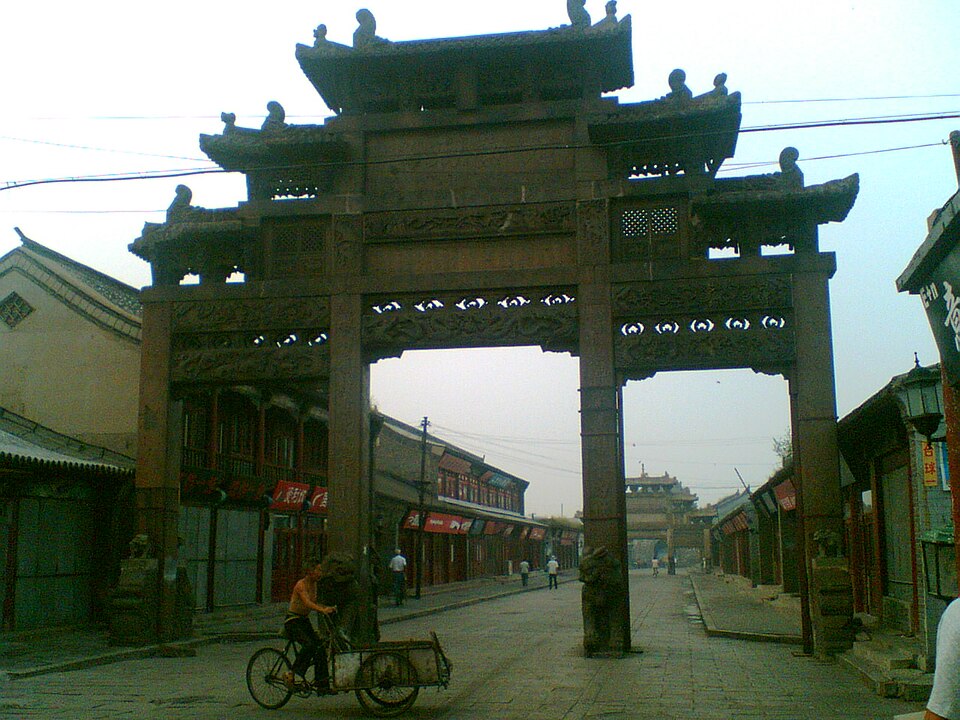
Xingcheng Ancient City
Xingcheng, then called Ningyuan, was the Ming dynasty's first fortified outpost beyond the Great Wall. Its walls went up in 1428, and in 1626 they held against the Manchu leader Nurhaci at the Battle of Ningyuan, one of his few defeats and, by tradition, the battle in which he was fatally wounded.
The town inside is small and square, with a drum tower at the centre and four gates. Things to do:
- Walk the walls. The full circuit is a manageable walk and gives you views over the grey roofs and the streets running to the gates.
- The Confucius Temple, the oldest in northeast China and among the largest historic buildings in Liaoning.
- The old streets, with memorial arches and old courtyard houses, now partly given over to snack shops and souvenirs.
Allow half a day. Mornings are calmer than summer afternoons, when tour groups arrive from the beach. Ticket prices and wall access for 2026 aren't confirmed here, so check the official notice before you go.
The seafront
Xingcheng has been a summer resort for decades, sometimes called a "second Beidaihe". The main beach, a short bus or taxi ride east of the old town, has a pier leading to reef-top pavilions and a temple at its south end. Xingcheng is also China's "swimwear town", making a large share of the country's swimsuits, which you'll notice in the shops. Swimming season is July and August, when it gets crowded.
Hot spring resorts, using springs first noted in the Tang dynasty, are an option in cooler months.
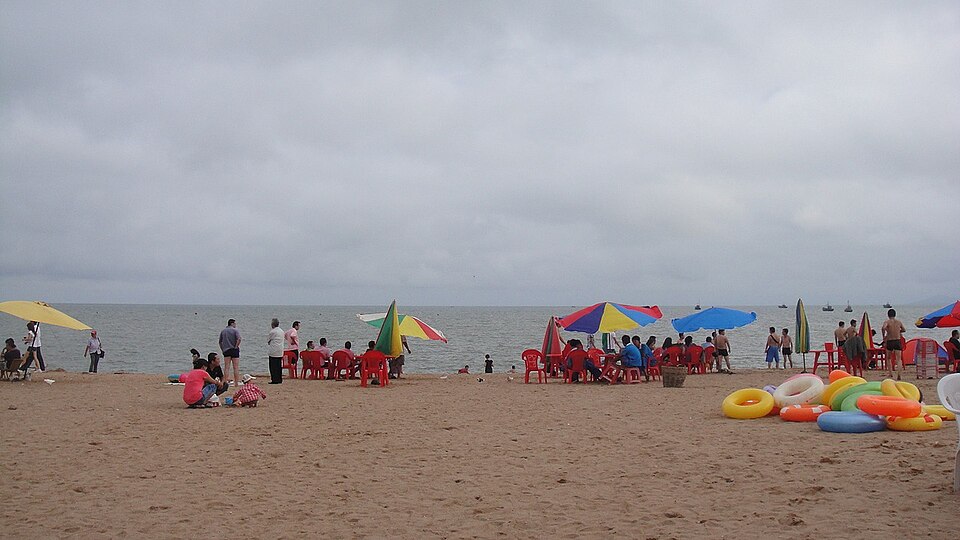
Closer to Huludao's centre, Longwan Beach is the city's own seaside strip. The Longgang peninsula, whose gourd-like shape gives Huludao ("Gourd Island") its name, makes a pleasant walk.
Juhua Island
Juhua (Chrysanthemum) Island, off the Xingcheng coast, is often described as the largest island in the Bohai Gulf. It's quiet, with fishing villages, temples and beaches, and it needs a boat. Sailings depend on season and weather, so check before you go and allow most of a day.
Jiumenkou Great Wall
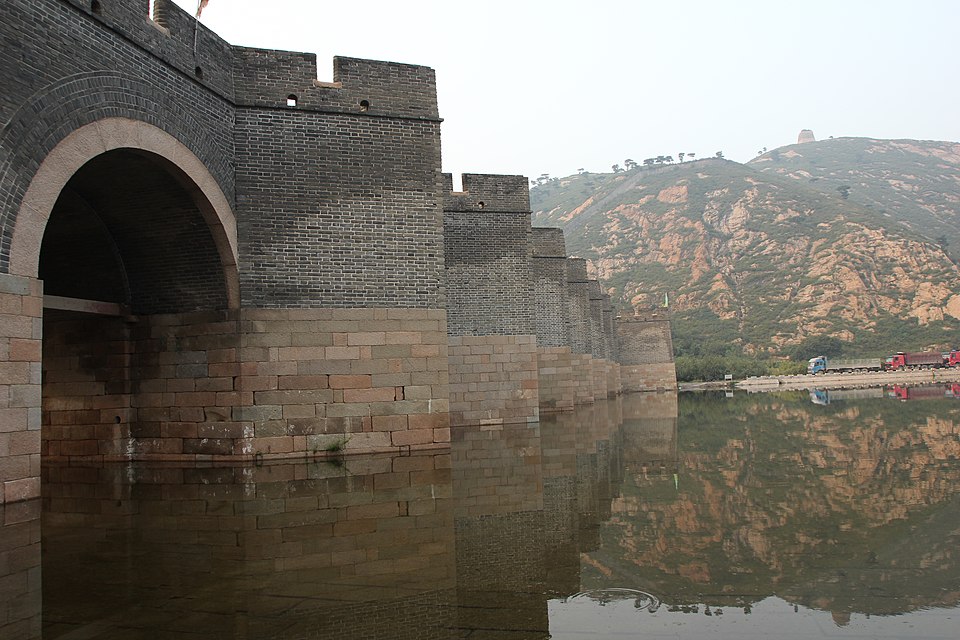
On the Hebei border, the Great Wall crosses a river on a long stone bridge with nine water gates, which gives Jiumenkou ("nine gates") its name. It is the only section of the wall built over water, and it was added to the Great Wall World Heritage listing in 2002. It's close to Shanhaiguan in Hebei, so it combines more easily with a trip to Qinhuangdao than with Xingcheng. Plan a separate day with a car.
When to come to Huludao
May to October is the comfortable season. July and August bring beach crowds and higher hotel prices; June and September are warm and quieter, which suits wall walking. Winters are cold and windy, with icy steps on the wall ramps and no beach life, though the hot springs are at their best.
Getting in and where to stay
High-speed trains stop at Huludao North, about three hours from Beijing on the fastest services, and continue to Jinzhou and Shenyang. Xingcheng has its own station for conventional trains, and is a short taxi ride from Huludao. The nearest airport is at Jinzhou. In Xingcheng, city buses link the beach, the old town and the stations; metered taxis are easy to find.
Stay in Xingcheng, near the old town or the beach, rather than in industrial Huludao.
Eating in Huludao
The Bohai coast means seafood: clams, shrimp, crab and fish, usually picked from tanks and cooked to order. Xingcheng's old streets have snack stalls and northeastern dishes such as dumplings and stews. At seafood restaurants, confirm the price per jin and the weight before anything is cooked.
How to arrange the route
Day 1: Xingcheng Ancient City in the morning, walls and Confucius Temple; beach in the afternoon; seafood dinner.
Day 2 (optional): Juhua Island by boat, or a hot spring; then on to Jinzhou for the tidal causeway at Bijia Mountain, or to Yingkou and Dalian along the coast.
Jiumenkou fits best on a Qinhuangdao trip.
What to cut if short on time
Keep the walled town. Drop Juhua Island and the beach in that order. Don't try to add Jiumenkou to a single Xingcheng day.
Things to confirm before you go
- Wall and temple access and tickets on the official notice; none are quoted here.
- Ferry times to Juhua Island and whether they're running.
- Which station your train uses (Huludao North or Xingcheng).
- Summer hotel availability.
Frequently asked questions
How many days do I need in Huludao?
One day for Xingcheng's walls and beach. Two with Juhua Island or a hot spring.
Is Xingcheng's wall original?
Yes, it is one of the few Ming town walls in China to survive complete, though parts have been restored.
Can I see the Great Wall from Huludao?
Yes, at Jiumenkou on the Hebei border, but it's a separate trip from Xingcheng.
Sources
The facts in this article were checked against the following Wikipedia and encyclopedia entries, retrieved September 29, 2026, and rechecked on October 17, 2026.
- Huludao https://en.wikipedia.org/wiki/Huludao
- Xingcheng https://en.wikipedia.org/wiki/Xingcheng
- Jiumenkou Great Wall summaries (cross-checked)
- Xingcheng https://en.wikipedia.org/wiki/Xingcheng
Tickets change; this article does not invent yuan amounts.
All photos are from Wikimedia Commons, used under CC licenses or public domain; re-use requires attribution.
- huludao-xingcheng.jpg from File:兴城古城 - panoramio.jpg, by 周李, CC BY-SA 3.0
- huludao-beach.jpg from File:Xingcheng beach, Liaoning Province, China.jpg, by Pixabay, CC0
- huludao-jiumenkou.jpg from File:Great Wall of China at Jiumenkou 01.jpg, by Johannes Böckh, CC BY-SA 3.0