Jinzhou Travel Guide: Bijia Mountain's Tide Causeway, the Liaoshen Memorial and Jinzhou Barbecue
Jinzhou, on the Bohai coast of western Liaoning, is worth a night for one natural trick and one piece of history. Bijia Mountain is a small island 35 km south of the city that you can walk to only when the tide goes out and a stone causeway rises from the sea. Back in town, the Liaoshen Campaign Memorial tells the story of the 1948 battle that decided the civil war in the northeast, and admission is free. Add a Liao-dynasty pagoda and an evening of the city's famous barbecue, and one or two days is right. Everything depends on the tide table, so check it before you book.
Bijia Mountain and the Sky Road
Bijia means "brush rest": the island's three peaks look like the stand a calligrapher rests a brush on. It is small, about 1.5 km long and 0.8 km wide, rising to 78 metres. For most of the day it is surrounded by water. When the tide falls, a natural gravel and cobble causeway, a tombolo locals call the Tian Qiao or Sky Road, emerges to link it to the shore. Its length is given as between 1.6 and 1.8 km, and it is about 9 to 10 metres wide.
How to time it
- Check the tide table for the Jinzhou Port area for your date. The causeway appears at low tide and disappears again as the water rises, so leave yourself time on the island and keep an eye on the clock for the walk back.
- Arrive before the low. You want to be at the shore when the stones start showing, not at the moment they go under.
- Have a plan B. Boats run to the island at other times, so you can still visit; the walk is what you miss.
On the island, stone steps climb the gentler north side to the Sanqing Pavilion, an unusual all-stone building holding about 50 Buddhist, Daoist and Confucian figures, with a shrine to Pangu, the creator of the world in Chinese myth, on the top floor. The south side is steep, rocky and quieter. Check the current ticket price, boat times and opening hours on the scenic area's official notice; prices are not quoted here.
Bijia is in the Jinzhou Economic and Technological Development Zone next to Jinzhou Port. Take a taxi or ride-hailing car from the city, and arrange the return before you set off if you visit off-season, when fewer cars wait at the gate.
In the city
Liaoshen Campaign Memorial
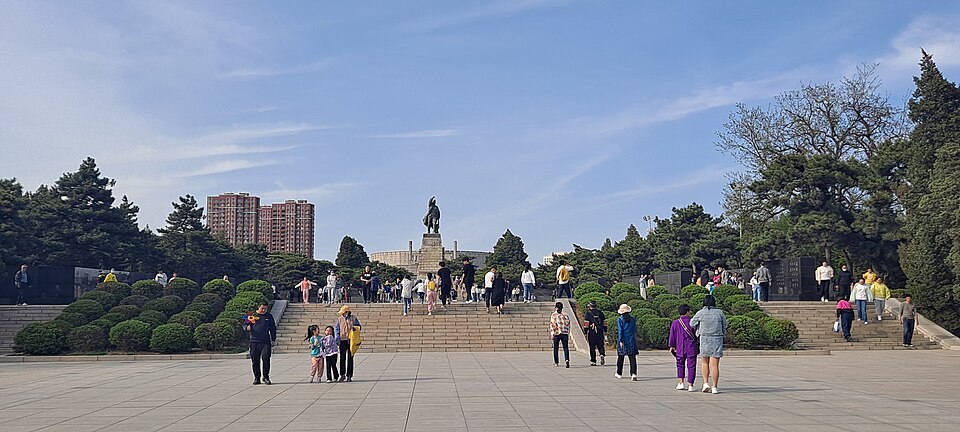
In autumn 1948 the Communist army attacked Jinzhou, the city that guards the road from Shanhai Pass into Manchuria; Mao told his commanders that taking it in a week was the key to the whole Liaoshen Campaign. The final assault came on 14 October. The memorial, at Beijing Road Section 5 in Linghe District, is a national first-grade museum with more than 21,000 items, a large panorama hall and a monument tower at the centre of the grounds. It has been free since 1 March 2008, though you may need to show ID or book; check before you go. Allow two hours.
Guangji Pagoda and Guta Park
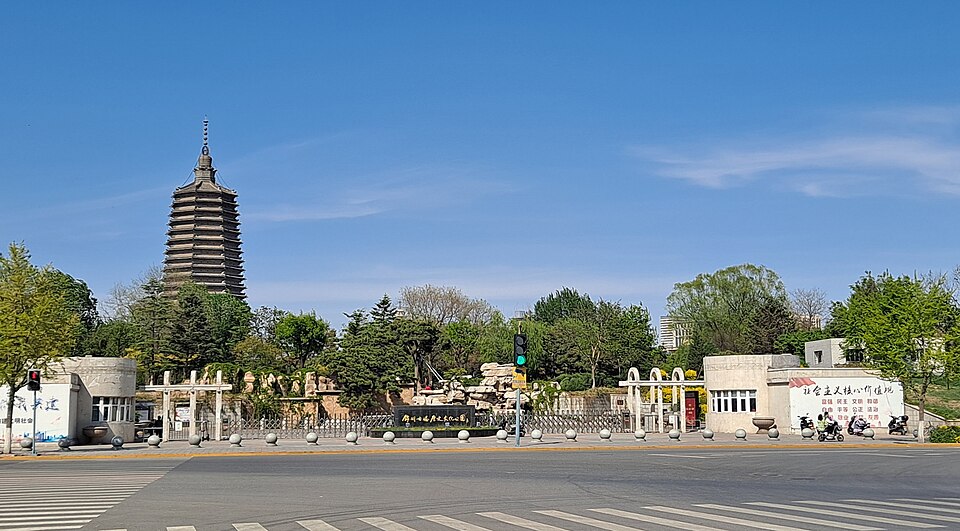
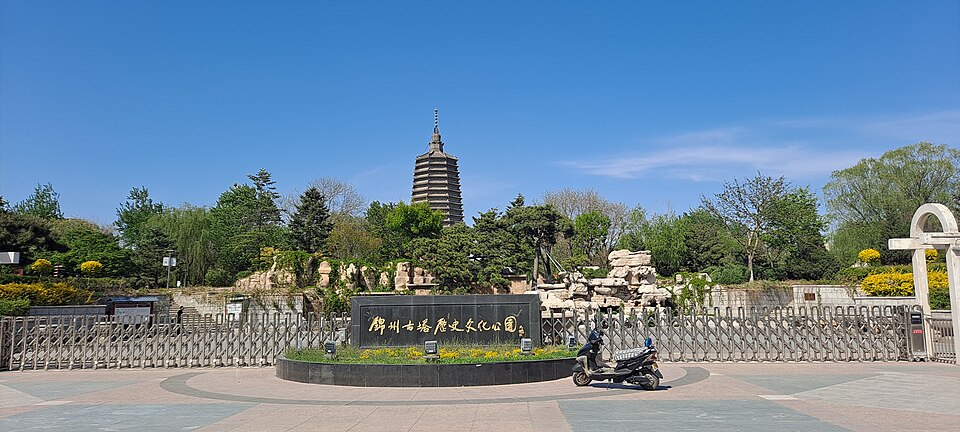
The Liao-style Guangji Pagoda, an octagonal brick tower of thirteen tiers, stands in Guta Park in the city centre beside a small temple. Locals gather here for morning exercise, which is the best time to come. Twenty minutes is enough unless you sit with a tea.
Further out: Yi County and Yiwulu Mountain
Two good stops lie north of the city and suit a second day with a driver. In Yi County, Fengguo Temple is one of the few surviving Liao-dynasty timber buildings in China; its great hall holds seven seated Buddhas, which is why locals call it the Big Buddha Temple. Nine kilometres northwest of the county town, the Wanfotang Grottoes, begun in 499 under the Northern Wei, are the earliest and largest cave temples in Liaoning. Yiwulu Mountain near Beizhen, one of the sacred guardian mountains of ancient China, has temples and walking trails up to the 866-metre Wanghai Peak.
When to come to Jinzhou
May to October for the causeway, when the weather is mild and the stones are dry. Summer weekends bring crowds to Bijia, so a weekday low tide is ideal. Winters are cold, with January averaging about −8 °C, and wet stone on the causeway can ice over.
Getting in and where to stay
- High-speed rail: Jinzhou South is on the high-speed line between Qinhuangdao and Shenyang, with through trains to Beijing. Jinzhou station handles conventional trains on the old Shenyang–Shanhaiguan line.
- Air: Jinzhou Bay Airport, 26 km from the centre, opened in December 2015 with domestic flights.
Stay in the city centre for food and the memorial; it is close to both the stations. If the low tide falls at dawn, consider a night near the development zone.
Eating in Jinzhou
Jinzhou barbecue is famous across China: skewers of lamb, beef and offal, grilled vegetables and seafood from the Bohai, eaten late with beer. Busy, smoky places full of locals are the ones to choose. Seafood restaurants near Bijia sell by weight, so ask before ordering.
How to arrange the route
One day: Morning at the Liaoshen Campaign Memorial and Guta Park, Bijia Mountain timed to the afternoon low tide, barbecue for dinner.
Two days: Add Yi County for Fengguo Temple and Wanfotang, or Yiwulu Mountain, then continue to Shenyang or west to Huludao for the Xingcheng walled town.
What to cut if short on time
If the tide doesn't work for your dates, take the boat to Bijia or skip it and spend the time at Yi County. Drop the far-flung trips before cutting the memorial, which is central and free.
Things to confirm before you go
- The tide table for your date, and the scenic area's opening hours and boat times.
- Whether the Liaoshen memorial needs a reservation or ID.
- A return ride from Bijia, especially off-season.
- Which station your train uses, Jinzhou South or Jinzhou.
Frequently asked questions
When can you walk to Bijia Mountain?
Only around low tide, when the causeway is exposed. Times change every day, so check a tide table for Jinzhou Port.
What if the tide is high when I arrive?
Boats run to the island at other times, so you can still visit. If the tide is falling, you may be able to take the boat out and walk back once the causeway appears.
Is Jinzhou worth visiting?
For a night on the way between Beijing and Shenyang, yes, especially if a low tide lines up with your visit.
Sources
The facts in this article were checked against the following sources, retrieved September 28, 2026, and rechecked on October 18, 2026.
- Jinzhou https://en.wikipedia.org/wiki/Jinzhou
- Bijia Mountain https://en.wikipedia.org/wiki/Bijia_Mountain
- Bijia Mountain (Chinese) https://zh.wikipedia.org/wiki/笔架山_(锦州)
- Liaoshen Campaign Memorial (Chinese) https://zh.wikipedia.org/wiki/辽沈战役纪念馆
- Battle of Jinzhou https://en.wikipedia.org/wiki/Battle_of_Jinzhou
- Jinzhou (Chinese, Fengguo Temple, Wanfotang, transport) https://zh.wikipedia.org/wiki/锦州市
Tickets change; this article does not quote yuan amounts.
All photos are from Wikimedia Commons, used under CC licenses; re-use requires attribution.
- jinzhou-bijia.jpg from File:Jinzhou Guta Historic and Culture Park.jpg, by EditQ, CC BY-SA 4.0
- jinzhou-bijia-path.jpg from File:锦州古塔历史文化公园.jpg, by EditQ, CC BY-SA 4.0
- jinzhou-coast.jpg from File:Liaoshen Campaign Memorial Park.jpg, by EditQ, CC BY-SA 4.0