Jiamusi Travel Guide: The Songhua River and the Road to China's Easternmost Point
Jiamusi is the main city of the Sanjiang Plain in eastern Heilongjiang, the flat, wet farmland built up by the Songhua, Heilong (Amur) and Ussuri rivers. It's a practical hub: two and a half hours from Harbin by intercity train, with a pleasant riverfront and solid northeastern food. The reason many travellers come this far, though, is further east: Fuyuan, the county on the Russian border where China sees its first sunrise. Plan a day in Jiamusi and at least one overnight in Fuyuan.
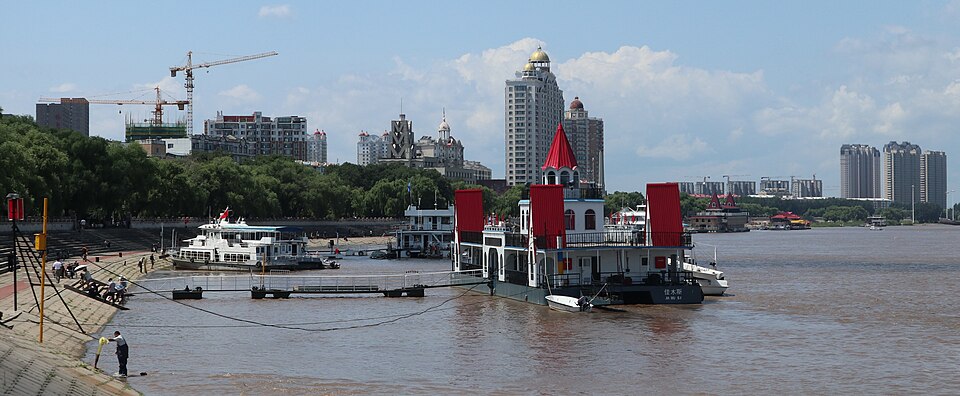
Jiamusi city
The city's name comes from a Manchu word for "inn", given in the 18th century to a small settlement of the Nanai (Hezhe) people. It grew under Japanese occupation in the 1930s as the capital of a Manchukuo province, and today it's a farming and rail centre.
What to do in a day:
- Walk the Songhua riverfront. The long embankment park on the south bank is where the city comes out on summer evenings. Locals dance, fish and swim in the river.
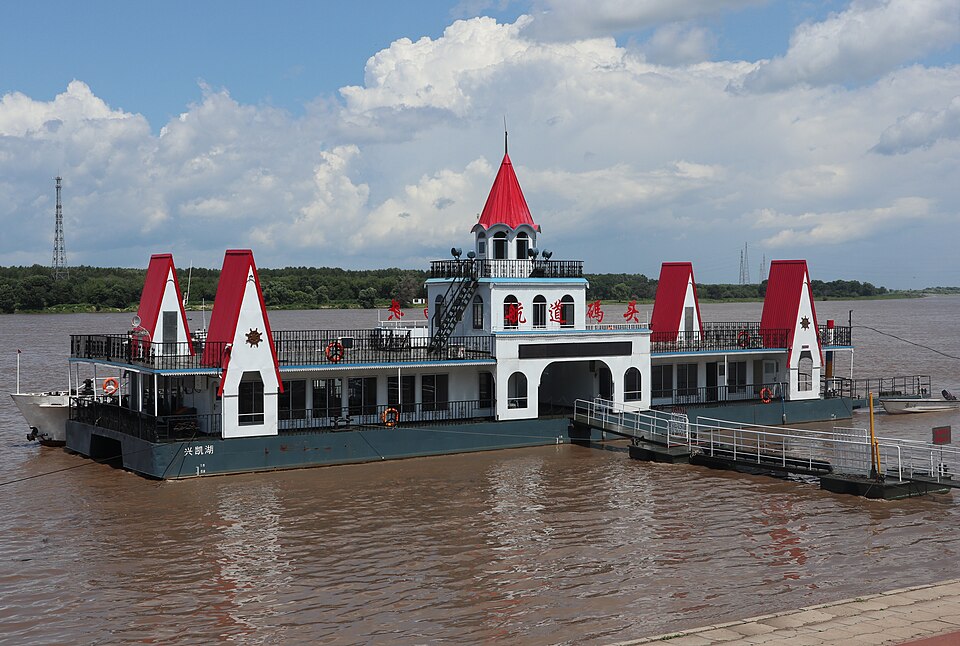
- Watch river traffic. Jiamusi Port, first built in 1919, still handles boats on the Songhua. In the ice-free season (roughly mid-April to early November), passenger boats have historically sailed upriver toward Harbin and downstream toward Tongjiang; check whether any are running before you plan around one.
- Eat well. The city is a good place to try river fish and hearty northeastern cooking before heading into thinner territory to the east.
Tongjiang and the Hezhe people
Downstream, at Tongjiang, the Songhua joins the Heilong (Amur), and the brown and black waters run side by side for a stretch. The area is home to the Hezhe, one of China's smallest ethnic groups, traditionally fishermen famous for clothing made from fish skin. Villages such as Jiejinkou keep the craft alive with small museums and workshops. Combine Tongjiang with the road to Fuyuan.
Fuyuan: the first sunrise in China
Fuyuan is China's easternmost county, at the confluence of the Heilong and Ussuri rivers opposite Khabarovsk. Two places draw visitors:
- Wusu town and the "East Pole" area, where monuments mark the easternmost point of the country and where the sun rises earliest. In midsummer that means very early: sunrise comes at around 3 am Beijing time, and the sky lightens well before. Sleep nearby if you want to see it.
- Heixiazi Island (Bolshoi Ussuriysky), divided between China and Russia under a border agreement completed in 2008. The Chinese half has wetlands, a viewing tower and border-themed exhibits. Access rules and opening times change, and ID checks are routine, so check the current notice.
Treat Fuyuan as its own trip. A same-day round trip from Jiamusi leaves little time and no chance of sunrise.
Wetlands of the Sanjiang Plain
The plain once held one of China's largest wetlands, and nature reserves near Fujin and Tongjiang protect what remains, with cranes, storks and waterfowl in the migration seasons. They suit birders with a car and a guide; casual visitors can skip them.
When to come to Jiamusi
June to September is the season, with long days (midsummer twilight lasts late into the evening), green fields and comfortable temperatures. Mosquitoes are fierce near wetlands and rivers, so bring repellent. Winters are extremely cold, with frozen rivers and short days; some travellers come specifically for a winter sunrise at Fuyuan, which needs serious cold-weather gear.
Getting in and where to stay
The Harbin–Jiamusi intercity railway, opened in 2018, cut the journey from about six hours to around two and a half. Jiamusi is also on conventional lines toward Suihua and Tumen, and a high-speed line links it south to Mudanjiang. Jiamusi Dongjiao Airport, 9 km east of the centre, has domestic flights. Fuyuan is reached by train or road eastward, a long journey across the plain, and has its own small airport; confirm schedules, which are limited.
Stay near the riverfront or the station in Jiamusi. In Fuyuan, stay in town or near Wusu if sunrise is the plan.
Eating in Jiamusi
Expect northeastern food: dumplings, stews, pickled cabbage with pork, and freshwater fish from the Songhua and Heilong. In Tongjiang and Fuyuan, Hezhe-style raw fish salad (tala) and smoked or dried fish are local specialities. Russian bread and sausage appear in shops near the border. Fish dishes are usually priced by weight, so ask first.
How to arrange the route
Day 1: Intercity train from Harbin; riverfront walk and dinner in Jiamusi.
Day 2: East to Tongjiang (rivers' confluence, Hezhe village), then on to Fuyuan.
Day 3: Sunrise at the East Pole, Heixiazi Island, then return west.
Shorter trip: just Jiamusi and the river, then on to Harbin, Hegang or Shuangyashan. For other border lakes and forests, see Jixi (Xingkai Lake) and Yichun (Heilongjiang).
What to cut if short on time
If you only have a day, stay in Jiamusi and skip Fuyuan; it can't be done justice in a rush. Drop the wetlands first on any itinerary.
Things to confirm before you go
- Train and flight times to Fuyuan, which are infrequent.
- Sunrise time on your date and access to the East Pole area.
- Opening rules and ID requirements for Heixiazi Island.
- Boat services on the Songhua, if you're hoping to travel by river.
Frequently asked questions
How many days do I need for Jiamusi and Fuyuan?
Three days covers Jiamusi, Tongjiang and an overnight in Fuyuan. One day is enough for Jiamusi alone.
Can I see Russia from Fuyuan?
Yes. The Russian bank is visible across the rivers, and part of Heixiazi Island is Russian territory. Crossing the border requires proper documents and isn't part of a normal visit.
Is Jiamusi worth visiting on its own?
For a relaxed riverside day, yes, but most of the region's highlights lie east toward Fuyuan.
Sources
The facts in this article were checked against public encyclopedia summaries, retrieved September 30, 2026, and rechecked on October 17, 2026.
- Jiamusi https://en.wikipedia.org/wiki/Jiamusi
- Fuyuan / Sanjiang Plain travel summaries (cross-checked)
Tickets change; this article does not invent yuan amounts.
All photos are from Wikimedia Commons, used under CC licenses; re-use requires attribution.
- jiamusi-songhua.jpg from File:South shore of Songhua River, Jiamusi, Aug 2019.jpg, by 颜邯, CC BY-SA 4.0
- jiamusi-fuyuan.jpg from File:抚远城区街景.jpg, by HCCB3947, CC BY-SA 4.0
- jiamusi-dock.jpg from File:Waterway dock in Jiamusi, Aug 2019.jpg, by 颜邯, CC BY-SA 4.0