Jixi Travel Guide: Xingkai Lake, Hutou Fortress and the Ussuri Border
Jixi is a coal city in the far southeast of Heilongjiang, and the city itself is a place to sleep and eat cold noodles. The reasons to come are on the Russian border, a couple of hours east: Xingkai Lake (Lake Khanka), a huge, shallow border lake with a sand ridge you can walk between its "big" and "small" halves, and in Hulin, the Hutou Fortress, the Japanese army's underground stronghold where some of the last fighting of the Second World War took place in August 1945. Give it two days, three if you add the Ussuri River and Zhenbao Island.
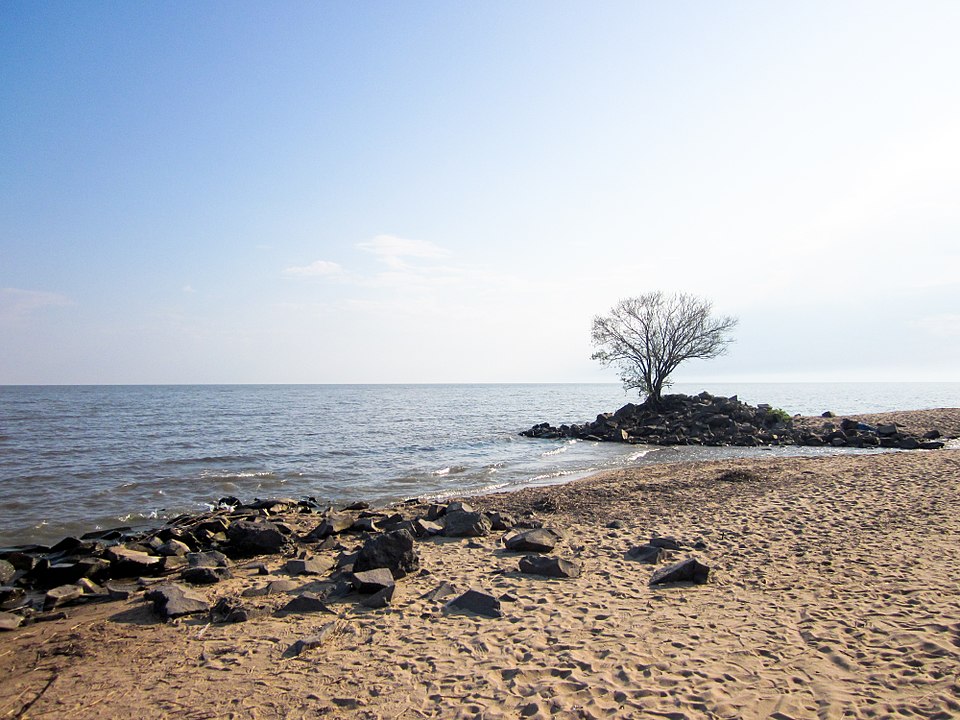
Xingkai Lake
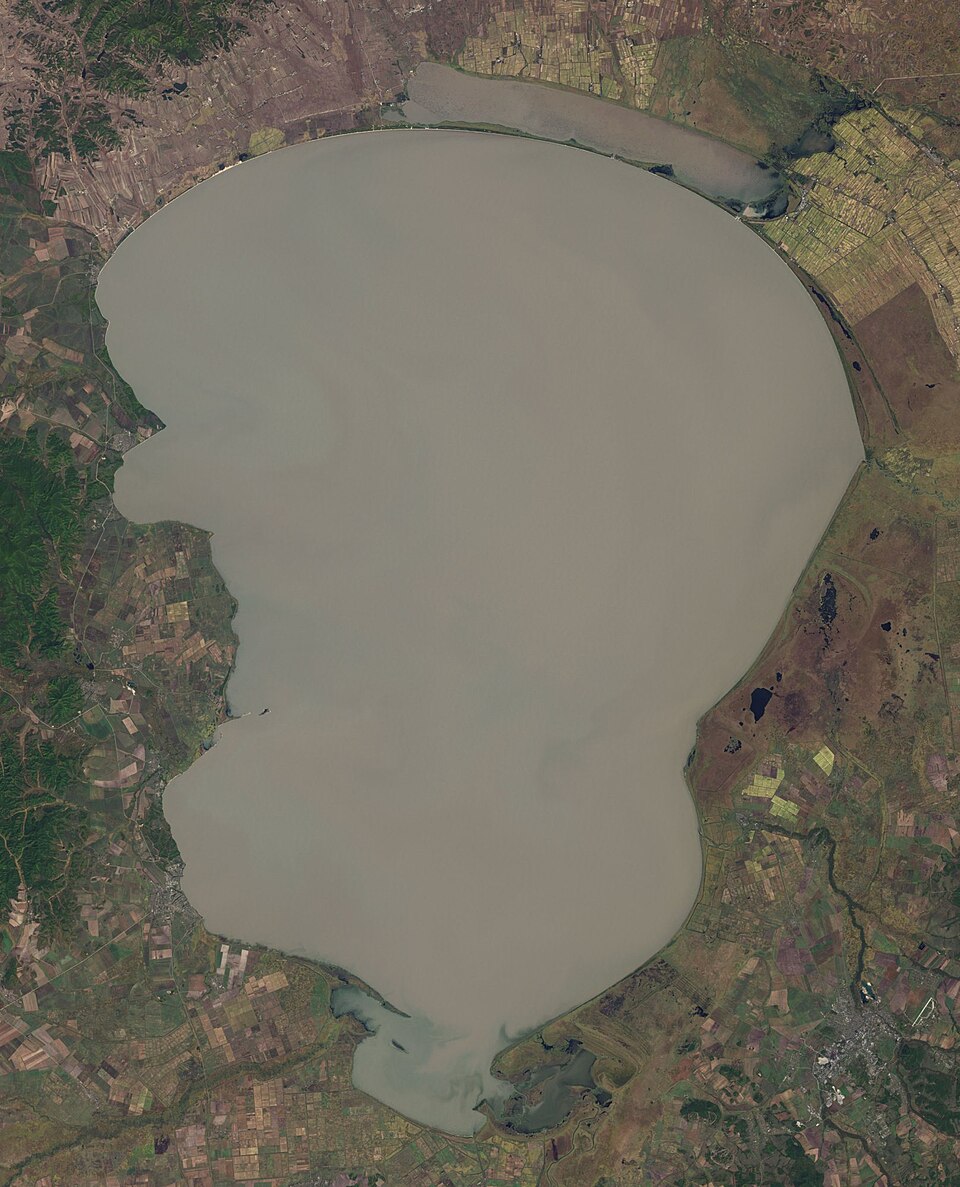
Xingkai covers about 4,380 square kilometres, but only around 28% of the water is in China; the border runs across the lake, and the southern part belongs to Russia's Primorsky Krai. It's shallow, averaging 3.5 metres, and the horizon looks like the sea. Along the north shore a sand ridge more than ten metres high separates it from Little Xingkai Lake, a separate inland lake of about 170 square kilometres that lies entirely in China. The Xinkailiu sluice area, where the two meet, is the usual visitor focus: beach on one side, reeds and calm water on the other.
How to visit
- Base: Mishan, the county-level city 35 km from the lake, is the practical base. From Jixi city it's a longer drive, so a night in Mishan or at the lake saves time.
- When: June to September for swimming and beach days, and spring and autumn for migrating birds along the marshy northwest shore. The name Khankai-Omo, "sea of bird feathers", is old.
- Border rules: This is a frontier lake. Stay inside marked zones, carry your passport, and don't plan on crossing to Russia here; that needs a proper visa and an official crossing.
Check opening, boat and ticket rules for the scenic area on the official notice; prices aren't quoted here.
Hulin: Hutou Fortress and Zhenbao Island
Hulin, a county-level city on the Ussuri River northeast of Mishan, has two sites with heavy history.
Hutou Fortress was built by the Japanese Kwantung Army from 1934 to 1939 as one of its main strongholds facing the Soviet Union, tunnelled into the hills above the river opposite the Russian town of Dalnerechensk. It stretched about 10 km east to west. Soviet forces took it on 26 August 1945, after the Japanese surrender had been announced, and it is often described as one of the last battlefields of the war. Parts of the tunnels and a museum are open; it's a national heritage site.
Zhenbao Island, in the Ussuri, was the scene of the March 1969 Sino-Soviet border clashes. It is now a nature reserve and national forest park, and visits are by arrangement with local operators.
The Ussuri River itself, the main tributary of the Amur and the border for much of its 905 km, is the scenery between the two. Allow a full day for Hulin from Mishan.
Jixi city
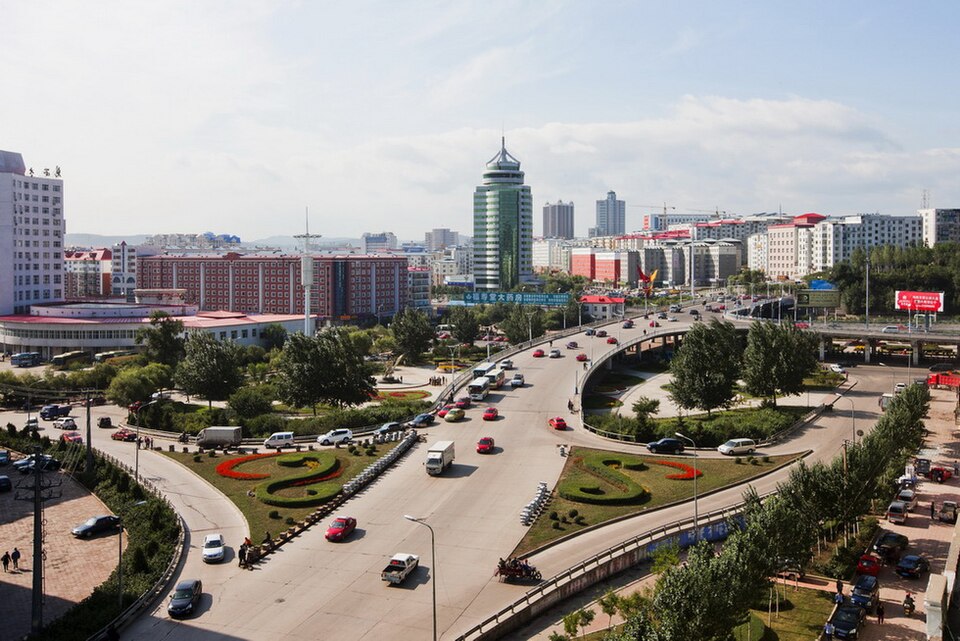
Jixi grew on coal from the 1940s and became a city in 1956. It has few sights, but it's where trains and flights arrive and where the food is best. Rail enthusiasts know it as one of the last places in China where working steam locomotives survived on mining railways.
When to come to Jixi
June to September. Summers are pleasant because the Sea of Japan keeps them fairly cool, and July averages around 22 °C. Winters are bitter: January averages about −16 °C, the lake freezes and most lakeside services close. Autumn colour comes early, in late September.
Getting in and where to stay
- High-speed rail: Jixi West is on the Mudanjiang–Jiamusi high-speed line, linking south to Mudanjiang and on to Harbin, and north to Jiamusi.
- Conventional rail: Jixi station has daily trains to Harbin, Mudanjiang, Qiqihar and Beijing, with branch lines towards the border.
- Air: Jixi Xingkaihu Airport, opened in 2009, is about 30 minutes from downtown, with flights to Beijing, Shanghai, Harbin and Qingdao.
- Road: The Jixi–Hulin expressway links the city with Mishan and Hulin. A hired car makes the lake and fortress much easier.
Sleep in Jixi on arrival, then in Mishan or at the lake.
Eating in Jixi
Jixi is famous across the northeast for cold noodles (lengmian), a Korean-Chinese fusion reflecting the region's ethnic Korean community: chewy noodles in a cold, sweet-sour broth, often with dried tofu and bellflower root. Expect northeastern stews and dumplings too. At the lake, look for qiaozuibai (topmouth culter), counted among China's four famous freshwater fish, but ask the price first since lake fish is sold by weight.
How to arrange the route
Day 1: Arrive in Jixi, cold noodles for dinner, drive or bus to Mishan.
Day 2: Xingkai Lake: the sand ridge, both lakes and the Xinkailiu area, with sunset on the big lake.
Day 3: Hulin for Hutou Fortress and the Ussuri, then back to Jixi for a train to Mudanjiang or Harbin.
What to cut if short on time
Keep one full day at Xingkai Lake. Drop Hulin if history isn't your focus, and skip sightseeing in Jixi city entirely.
Things to confirm before you go
- Lake scenic area opening dates, which are seasonal.
- Hutou Fortress museum hours and which tunnels are open.
- ID requirements in border zones; carry your passport.
- Transport from Mishan to the lake and to Hulin.
Frequently asked questions
Can I go to Russia from Xingkai Lake?
Not casually. The lake is a border, and crossing needs a Russian visa and an official port of entry. Treat it as a view.
Is Jixi worth visiting?
For Xingkai Lake in summer and the Hutou Fortress, yes. The city itself is a transit stop.
How long do I need?
Two days for the lake, three to add Hulin and the fortress.
Sources
The facts in this article were checked against the following sources, retrieved September 30, 2026, and rechecked on October 18, 2026.
- Jixi https://en.wikipedia.org/wiki/Jixi
- Lake Khanka / Xingkai Lake https://en.wikipedia.org/wiki/Lake_Khanka
- Xingkai Lake (Chinese) https://zh.wikipedia.org/wiki/兴凯湖
- Hutou Fortress (Chinese) https://zh.wikipedia.org/wiki/虎头要塞
- Zhenbao Island https://en.wikipedia.org/wiki/Zhenbao_Island
Tickets change; this article does not quote yuan amounts.
All photos are from Wikimedia Commons, used under CC licenses or public domain; re-use requires attribution.
- jixi-xingkai-beach.jpg from File:Beach of Khanka Lake.jpg, by Neux-Neux, CC BY-SA 3.0
- jixi-xingkai-satellite.jpg from File:Lake Khanka Landsat 7 2001-09-25.jpg, by Jesse Allen, Public domain
- jixi-city.jpg from File:The Tengfei Overpass in Jixi City.jpg, by Angelo Puccini, CC BY-SA 3.0