Qingdao Travel Guide: Old Town, Coast and Mount Lao in Three Days
Qingdao fits neatly into three days. Spend the first on the old German-era town and its coast: Zhanqiao Pier, the villa streets of Badaguan and the bathing beaches between them. The second goes to the beer, either the Tsingtao Beer Museum and Dengzhou Road or Underwater World by the beaches, with an evening on May Fourth Square when the light show is running. On the third, go out to Mount Lao, the Daoist mountain that drops into the Yellow Sea, which needs a timed booking and a full day. Summer is peak season, with August bringing the beer festival. Spring and autumn are quieter and, for walking, often better. The city's modern story starts in 1891, when the Qing set up coastal defences here. Germany seized Jiaozhou Bay in 1897 and built the harbour and railway, leaving the old town full of German buildings, and Tsingtao beer has been brewed here since 1903.
Getting in and where to stay
High-speed trains from Beijing, Shanghai and Jinan arrive at Qingdao North station or at the old Qingdao station by the sea, a few minutes' walk from Zhanqiao Pier. Metro Line 3 links the two stations and stops at May Fourth Square on the way. Qingdao Jiaodong International Airport lies well northwest of the city, and Metro Line 8 links it with Qingdao North station.
The old town around Zhongshan Road and Qingdao station is the best base for a first visit. Zhanqiao, the beer museum and the coast walk to Badaguan are all close, and the restaurants are older and cheaper. The new business district around May Fourth Square and Hong Kong Middle Road has the big hotels and malls, and it is better for the evening light show and the Olympic Sailing Center. Mount Lao is a day trip from either.
When to come
Qingdao has an oceanic climate, and the annual average temperature is about 12.7°C. Summers are mild for northern China, and winters are cold but not severe. June to September is peak season. The sea is warm enough to swim, and the Qingdao International Beer Festival runs in August. Hotels and trains fill up at that time, so book early. Early summer brings sea fog that can hide the coast for hours, and evenings by the water are cool, so carry a light jacket. Spring brings blossom along Badaguan's roads and autumn its coloured leaves, both with far fewer people. In winter the sea wind is strong, and large flocks of gulls gather around Zhanqiao.
Places worth visiting
Zhanqiao Pier
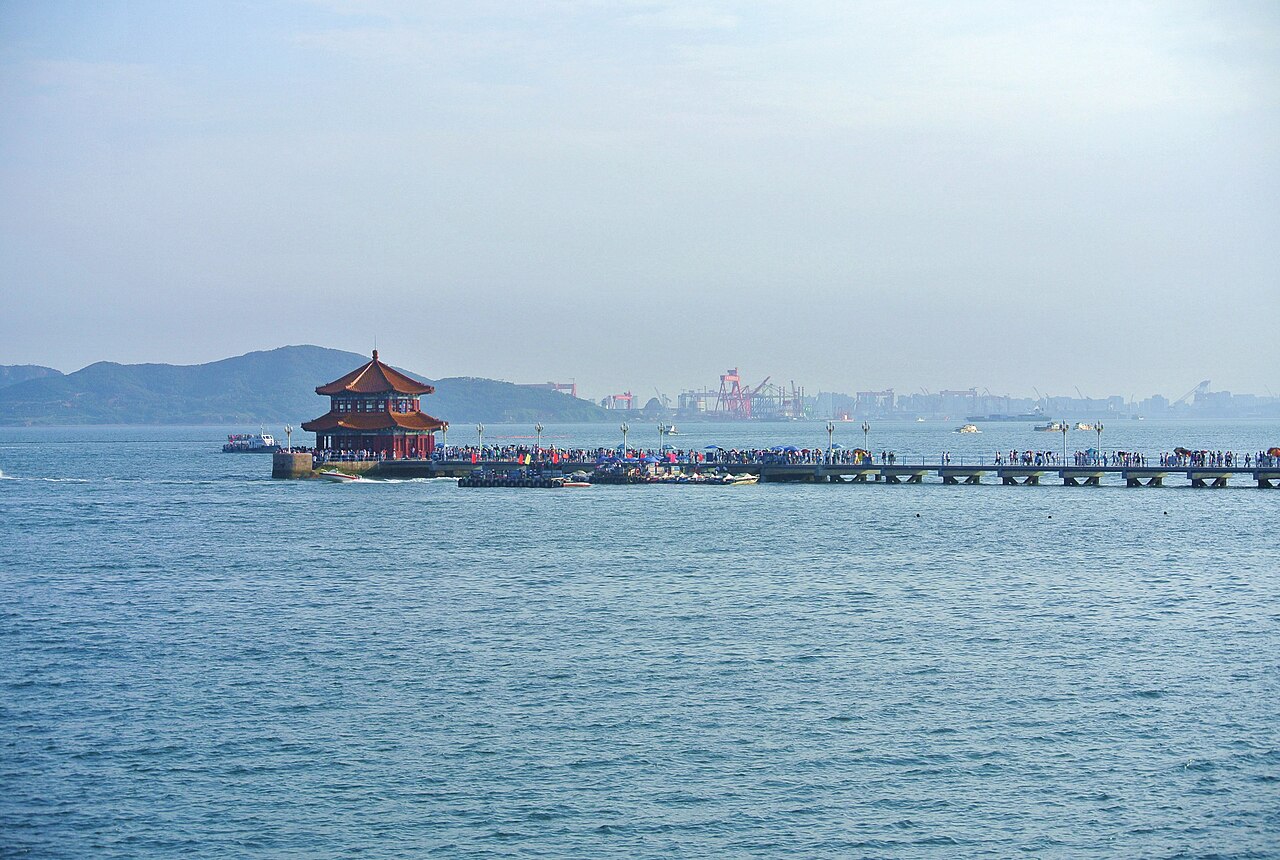
Zhanqiao is Qingdao's oldest landmark. It was built as a military wharf during Zhang Gaoyuan's garrison command (1892 to 1897) and called the "Iron Pier" in official documents. In the early 1930s Huilan Pavilion was added at its tip, the octagonal pavilion now printed on every Tsingtao label. A 2012 survey measured the pier at 390.5 metres in total, including a 216-metre solid embankment. It is free and open at all hours, a short walk from Qingdao station, and half an hour is enough. Come early for quiet, at night for the lights, or in winter for the gulls. The Zhanqiao Pier page covers its history and what is nearby.
May Fourth Square
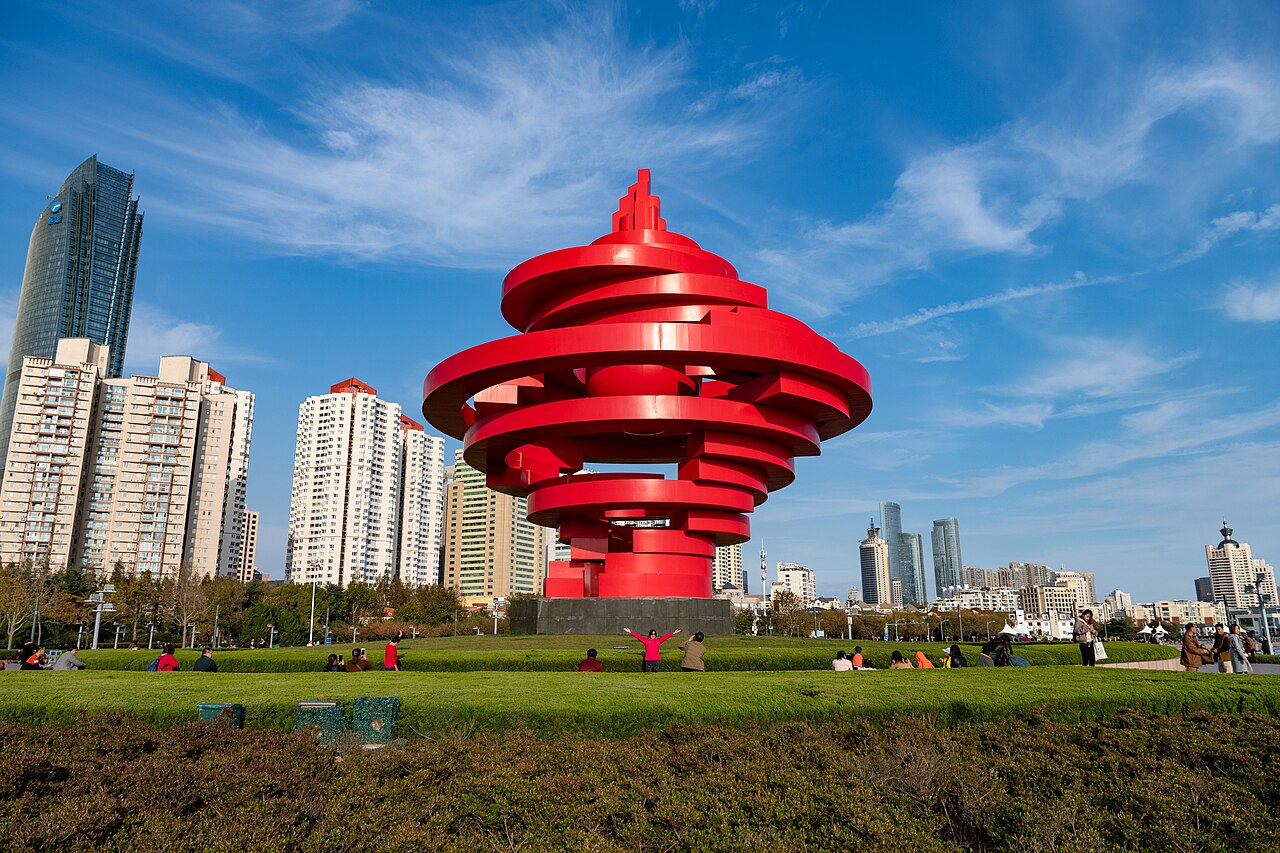
May Fourth Square, on Fushan Bay in the eastern business district, was built in the late 1990s. It is named for the 1919 May Fourth Movement, which began over the handing of Qingdao to Japan. Donghai West Road splits it in two. The southern half, on land reclaimed in 1994, holds "Wind of May", a 30-metre red steel spiral that has become the image of the modern city. The sailing events of the 2008 Beijing Olympics were held on the water just offshore. Come at dusk, walk to the Olympic Sailing Center breakwater, and stay for the Fushan Bay light show if one is scheduled. Show dates and metro access are on the May Fourth Square page.
Badaguan
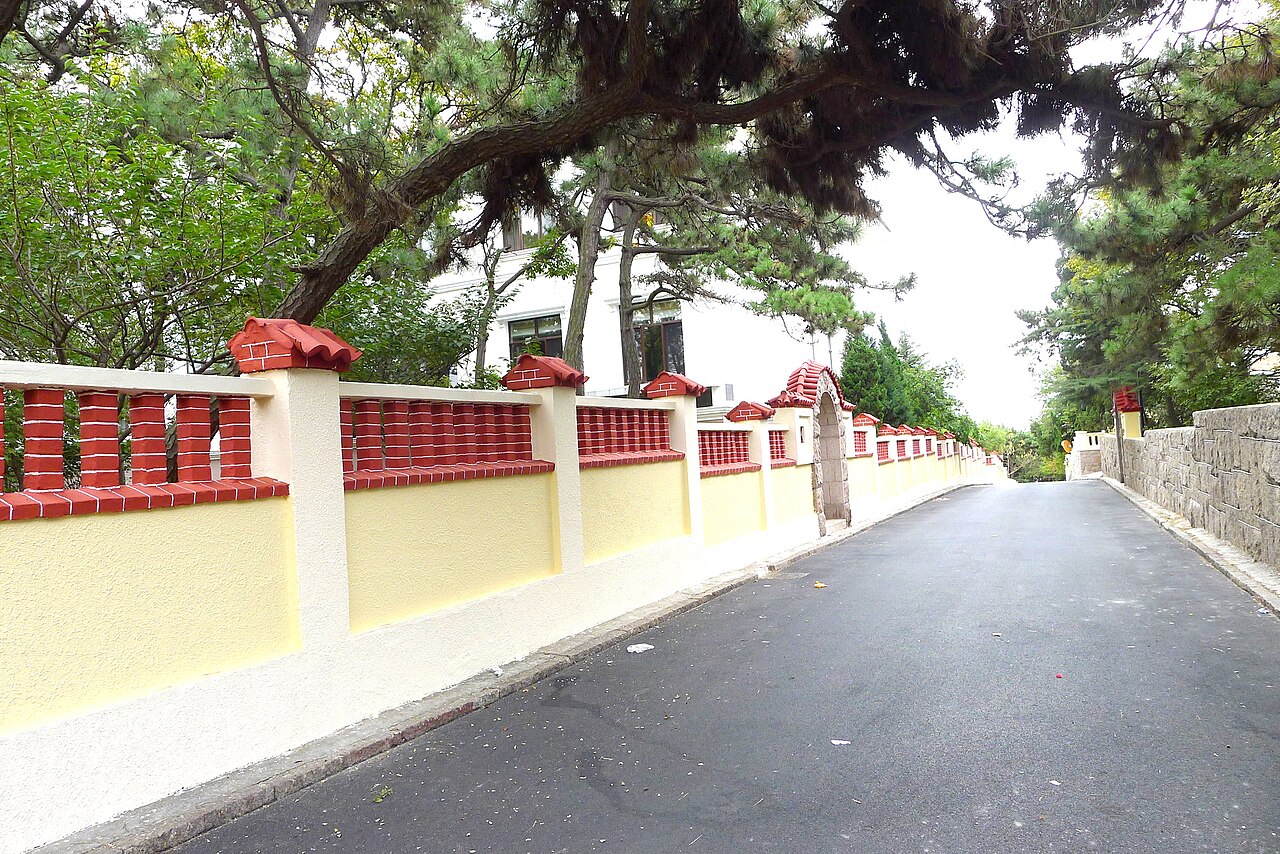
Badaguan is the villa district laid out mainly in the 1930s, about 66 hectares between the bathing beaches. Its streets are named after the great passes of ancient China, such as Jiayuguan, Shanhaiguan and Juyongguan. Each road was planted with its own tree, so peach and crabapple flower in spring, crape myrtle in summer, maples colour in autumn and cedars stay green all year. Behind the low fences stand more than 200 houses in the styles of over twenty countries. A loop of two to three hours from the No. 1 Bathing Beach takes in Huashi Lou and the Princess Building, two of the few villas you can enter. The streets are free. The Badaguan page lists which tree lines which road and suggests a walking route.
Tsingtao Beer Museum
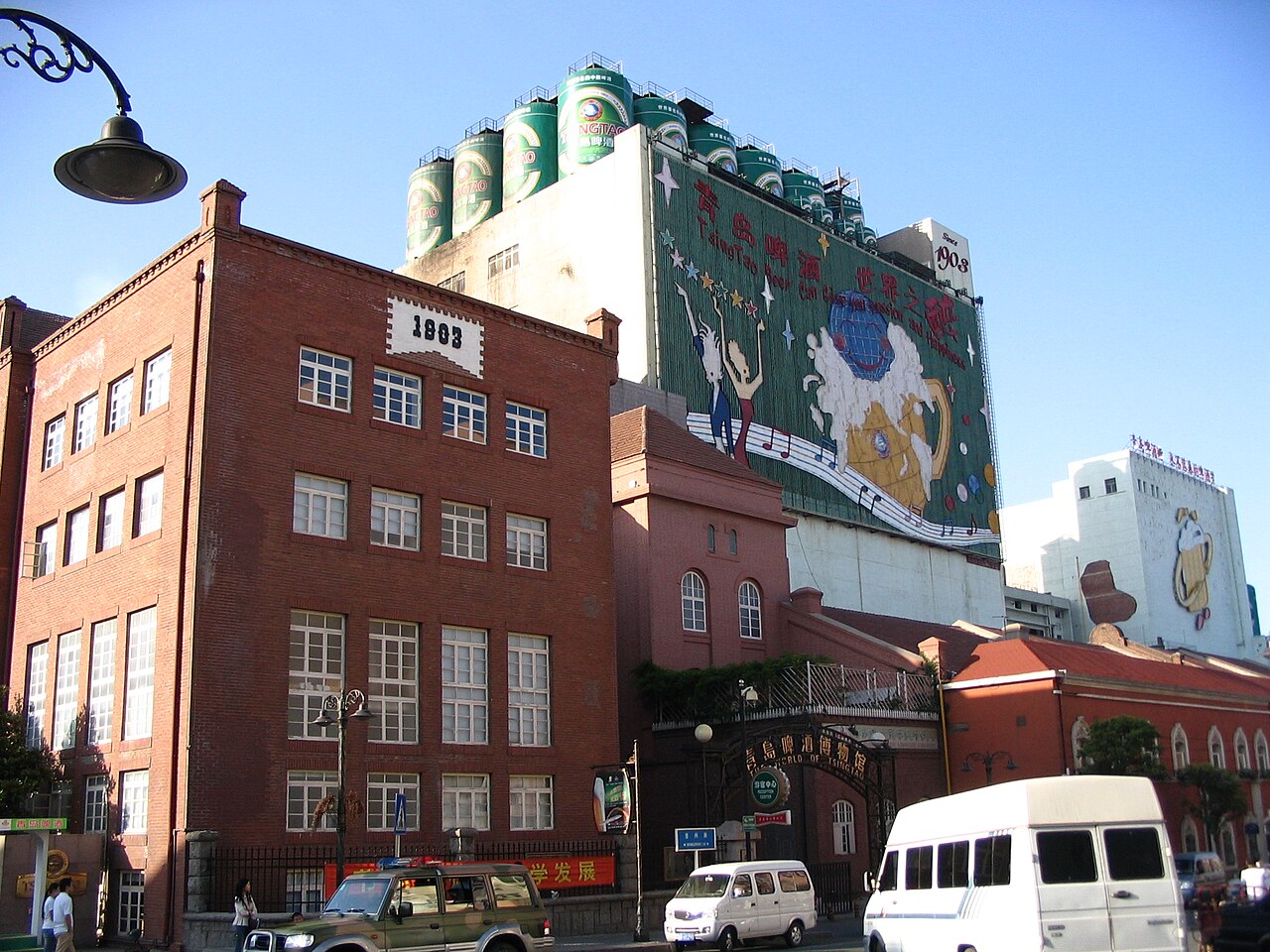
On 15 August 1903, German and British merchants founded the Germania brewery on Dengzhou Road, the forerunner of today's Tsingtao Brewery. The museum opened on the brewery's centenary, 15 August 2003, in the early brewery buildings, which are a nationally protected site. It was China's first beer museum and is rated a national first-grade museum. You walk through the old workshops and equipment, look down on the modern bottling line through glass, and finish with two small tasting glasses, one of them unfiltered, and a packet of beer nuts. Afterwards, Dengzhou Road's beer street has fresh draught and seafood. Ticket types and timed entry are on the Tsingtao Beer Museum page.
Qingdao Underwater World
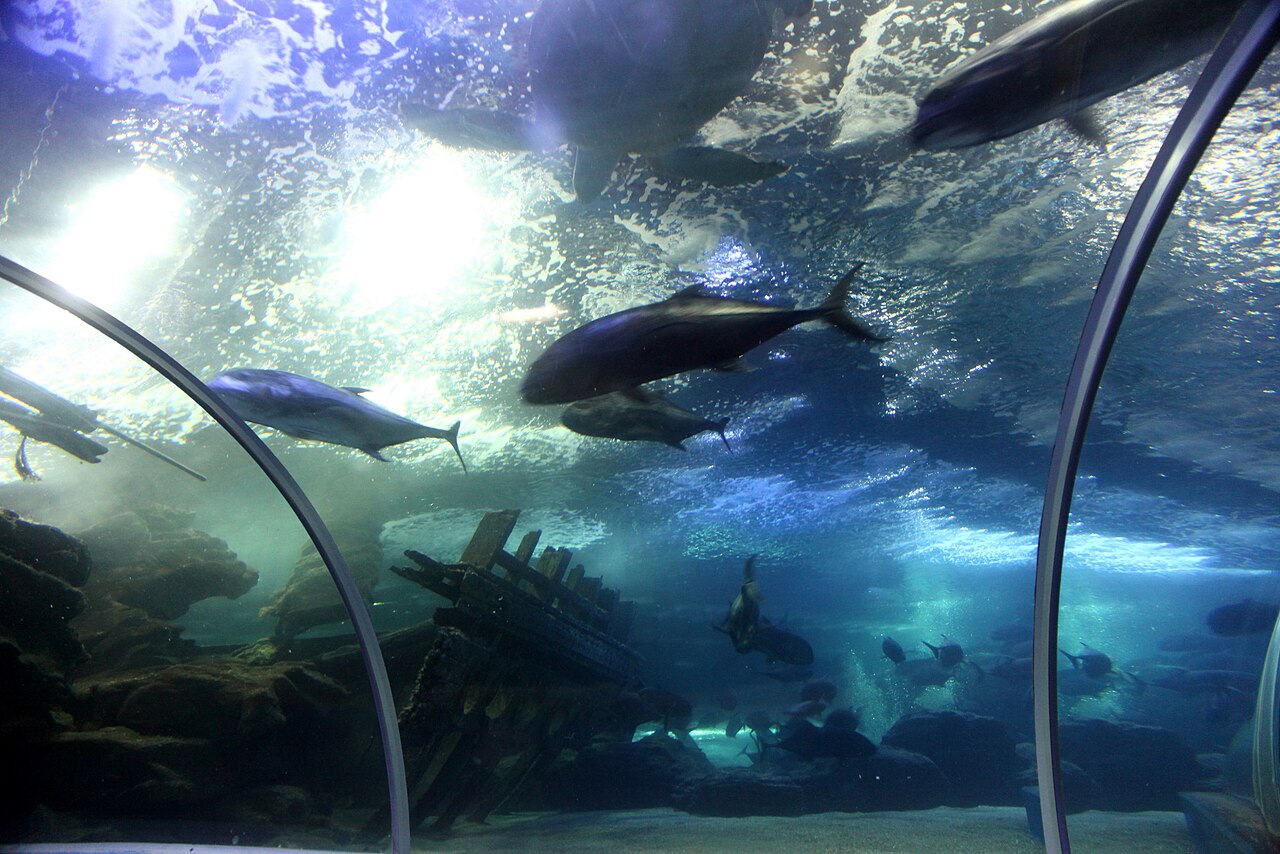
Underwater World stands by Huiquan Bay next to the No. 1 Bathing Beach. It opened on 16 July 2003 and is part of a national 5A scenic area. The complex includes the Qingdao Aquarium, built in 1932 and one of China's earliest, along with a specimen hall and a freshwater fish hall. Its best-known feature is the underwater tunnel, where a moving walkway carries you past fish and sharks on both sides and overhead. It suits families, takes about two hours, and leaves you a few steps from the beach. Tickets come as all-inclusive or single-hall options. Buy ahead for holidays and check the official notice for prices.
Mount Lao (Laoshan)
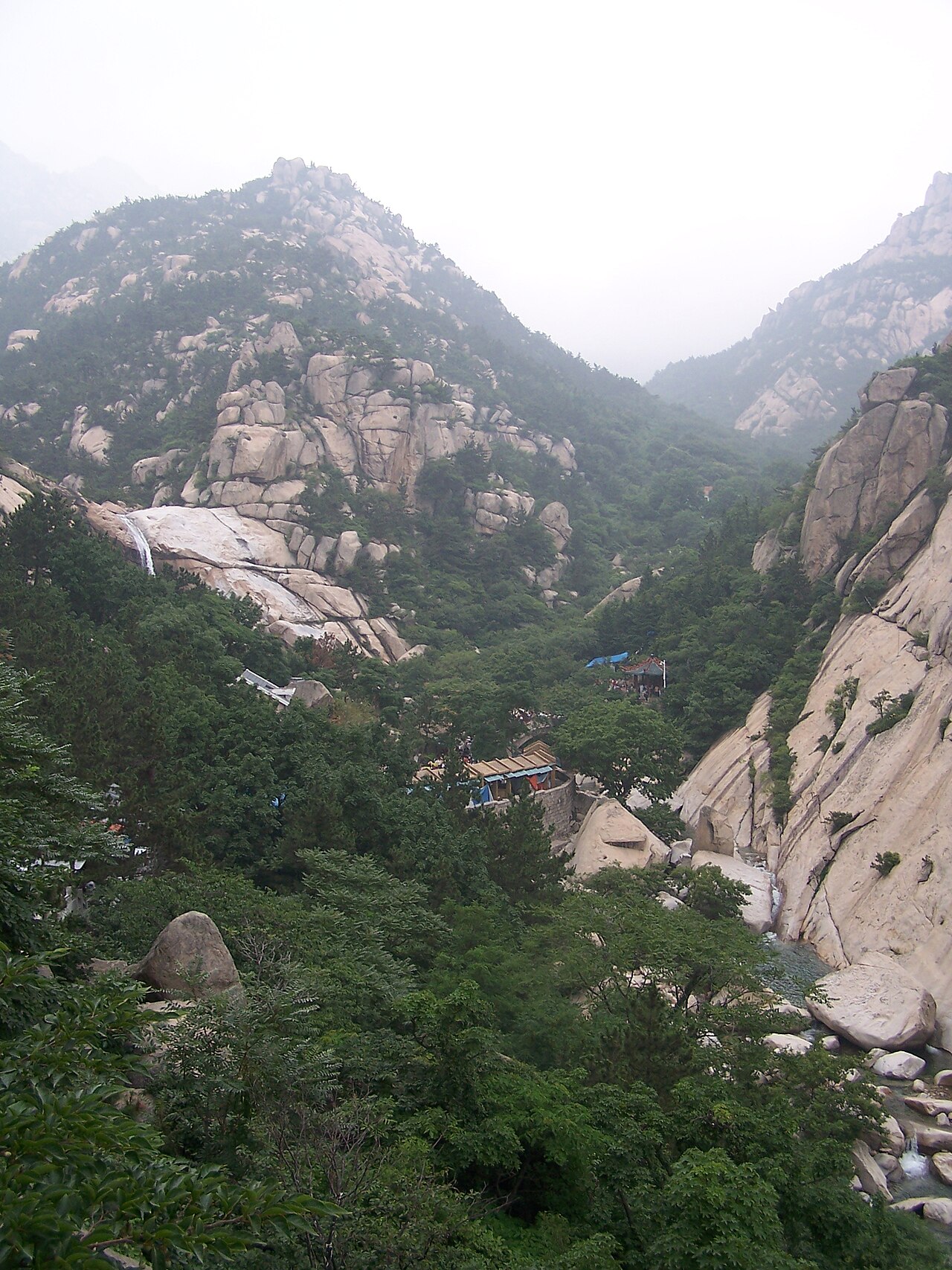
Mount Lao rises from the Yellow Sea coast in eastern Qingdao. Its main peak, Jufeng, reaches 1,132.7 metres, the third-highest in Shandong. It is a famous Daoist mountain, where the Quanzhen school still dominates and a smaller Buddhist presence survives alongside, and its Taiqing Palace is one of China's key Daoist temples. The scenic area is split into zones reached by separate shuttle buses. On a first visit, choose between the Taiqing line, with temples and coast and less climbing, and the Jufeng line, with summit views of mountain and sea together. Metro Line 4 to Dahedong reaches the south-line visitor centre in about an hour from the city. Booking is real-name and opens seven days ahead. The Mount Lao page covers zones, hours and transport. Look out for Laoshan green tea, and for the local cherries in early summer.
Eating in Qingdao
Qingdao eats seafood and drinks Tsingtao, and the summer standard is draught beer with stir-fried clams. For a proper seafood meal, look for braised sea cucumber with scallion, abalone in the shell and quick-fried sea snails. Everyday local food is mackerel dumplings, seaweed jelly and pot-stickers. Snack streets are concentrated in Shinan District, with Pichayuan in the old town to the west and Yunxiao Road in the east, so you can graze through most of the list in one evening. Locals buy draught beer by the bag from corner shops. On Dengzhou Road you can drink the fresh unfiltered beer by the glass. Seafood restaurants price by weight and prices swing widely, so confirm the price before the kitchen starts cooking.
How to arrange the route
Day one: the old town and coast. Walk Zhanqiao Pier early, then Zhongshan Road and the old town. In the afternoon, follow the coast east past Lu Xun Park and the No. 1 Bathing Beach into Badaguan, and finish at the beach for sunset.
Day two: beer and the new city. Spend the morning at the Tsingtao Beer Museum (or Underwater World if you have children), with lunch on Dengzhou Road. In the late afternoon, go to May Fourth Square, walk out to the Olympic Sailing Center, and stay for the light show.
Day three: Mount Lao. Leave early on Line 4 to Dahedong, choose Taiqing or Jufeng, and aim to be off the mountain by mid-afternoon.
If you would rather skip Mount Lao, use the third day for the beer museum and Dengzhou Road, plus a short sailing trip from the Olympic Sailing Center.
Beyond Qingdao, Dalian, across the sea on the Liaodong Peninsula, is the counterpart, another northern port with a colonial street grid. The coast east of Qingdao leads to Weihai and Yantai. Nanjing is the city most people add if the trip continues south.
Confirm before you go
- Mount Lao: booking is real-name, by zone, and opens seven days ahead. Leave early and be down by mid to late afternoon.
- The beer museum and Underwater World are crowded on holidays, so book ahead on the official channels.
- Summer and the August beer festival: book hotels and trains early.
- Light show: check the official Qingdao announcements for show nights before planning an evening at May Fourth Square.
- The sea: swim only at official bathing beaches, and bring a jacket for cool, windy evenings.
Frequently asked questions
How many days do I need in Qingdao?
Three days covers the old town, the coast, the beer museum and May Fourth Square. Add a fourth day for Mount Lao at a comfortable pace.
Is the Tsingtao Beer Museum worth it?
Yes, it is China's first beer museum. You see the 1903 brewery buildings, the tasting is included in the ticket, and Dengzhou Road's beer street is right outside.
How should I plan Mount Lao?
Allow a full day, about an hour each way from the city. Pick either the Taiqing line for temples and coast or the Jufeng line for the summit views, and book your zone in advance.
When is the best time to visit Qingdao?
June to September for swimming and the August beer festival. Choose spring or autumn for fewer crowds, Badaguan's blossom or leaves, and comfortable walking.
Sources
The background facts in this article were checked against the following Chinese Wikipedia entries, retrieved August 11, 2026. Mount Lao booking and transport details come from the scenic area's 2026 notices, as described on the Mount Lao page.
- Qingdao (city) https://zh.wikipedia.org/wiki/青岛市
- Zhanqiao Pier, Qingdao https://zh.wikipedia.org/wiki/青岛栈桥
- May Fourth Square https://zh.wikipedia.org/wiki/五四广场
- Badaguan https://zh.wikipedia.org/wiki/八大关
- Tsingtao Beer Museum https://zh.wikipedia.org/wiki/青岛啤酒博物馆
- Qingdao Underwater World https://zh.wikipedia.org/wiki/青岛海底世界
- Mount Lao https://zh.wikipedia.org/wiki/崂山
All photos are from Wikimedia Commons, used under CC licenses; re-use requires attribution.
- qingdao-zhanqiao.jpg from File 青岛栈桥 Ehemalige Landungsbrücke Qingdao.jpg, by StefanTsingtauer, taken August 16, 2015, CC BY-SA 4.0
- qingdao-wusi.jpg from File 51367-Qingdao (xiquinhosilva) - Flickr.jpg, by xiquinhosilva, CC BY 2.0
- qingdao-badaguan.jpg from File 青岛八大观街景.jpg, by Gisling, taken October 19, 2011, CC BY-SA 3.0
- qingdao-beer.jpg from File Tsingdao Brewery.jpg, by M. Weitzel, taken June 17, 2007, CC BY-SA 2.5
- qingdao-aquarium.jpg from File 青岛水族馆海底世界.JPG, by Gisling, taken October 20, 2011, CC BY-SA 3.0
- qingdao-laoshan.jpg from File 崂山.JPG, by Nescoffee, GFDL