Where Jingdezhen Shows How Porcelain Was Fired at the Ancient Kiln
The Ancient Kiln Folk Customs Expo Area (Guyao) is a ceramics heritage park at 1 Guyao Road off Cidu Avenue in central Jingdezhen. The city government describes it as the only national 5A scenic area in China built around ceramic culture, and it sits about ten minutes by car from the airport, the expressway and the railway station. The park brings together the last surviving Qing egg-shaped kiln in the city, a row of rebuilt historic kilns, working craft lines staffed by veteran potters, and a cluster of Ming and Qing buildings that show the folk life of the porcelain trade. For a first visit to Jingdezhen it is the clearest single explanation of how the town made its ware.
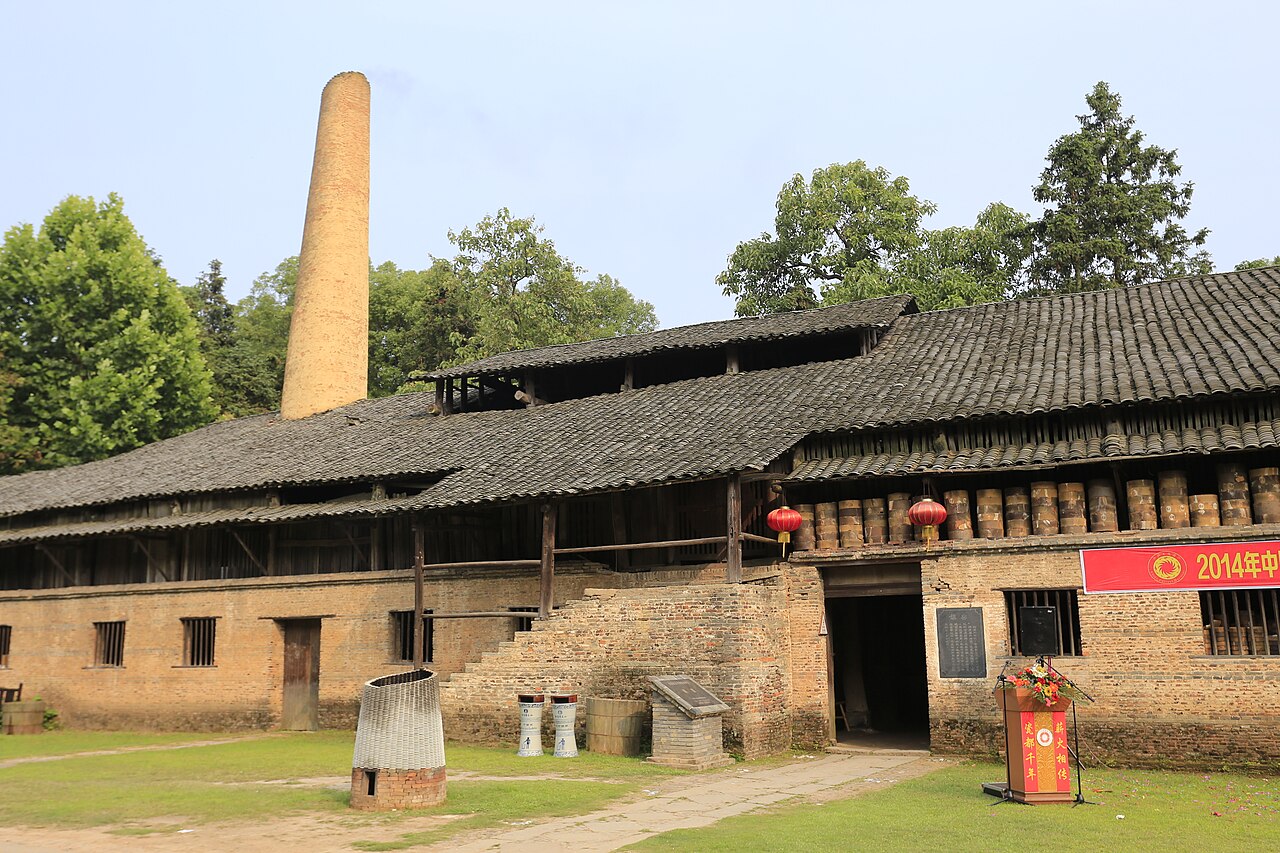
The Zhen kiln
The centrepiece is the Qing-dynasty Zhen kiln, the town's own design of egg-shaped kiln. English Wikipedia's article on Jingdezhen porcelain describes the type as shaped like half an egg on its side, with a firebox at the broad end and an arch at the narrow end leading into a separate chimney about 19 metres tall. The tall chimney increased the draught and cut a firing to around 36 hours. This design replaced the earlier gourd-shaped kilns toward the end of the Ming.
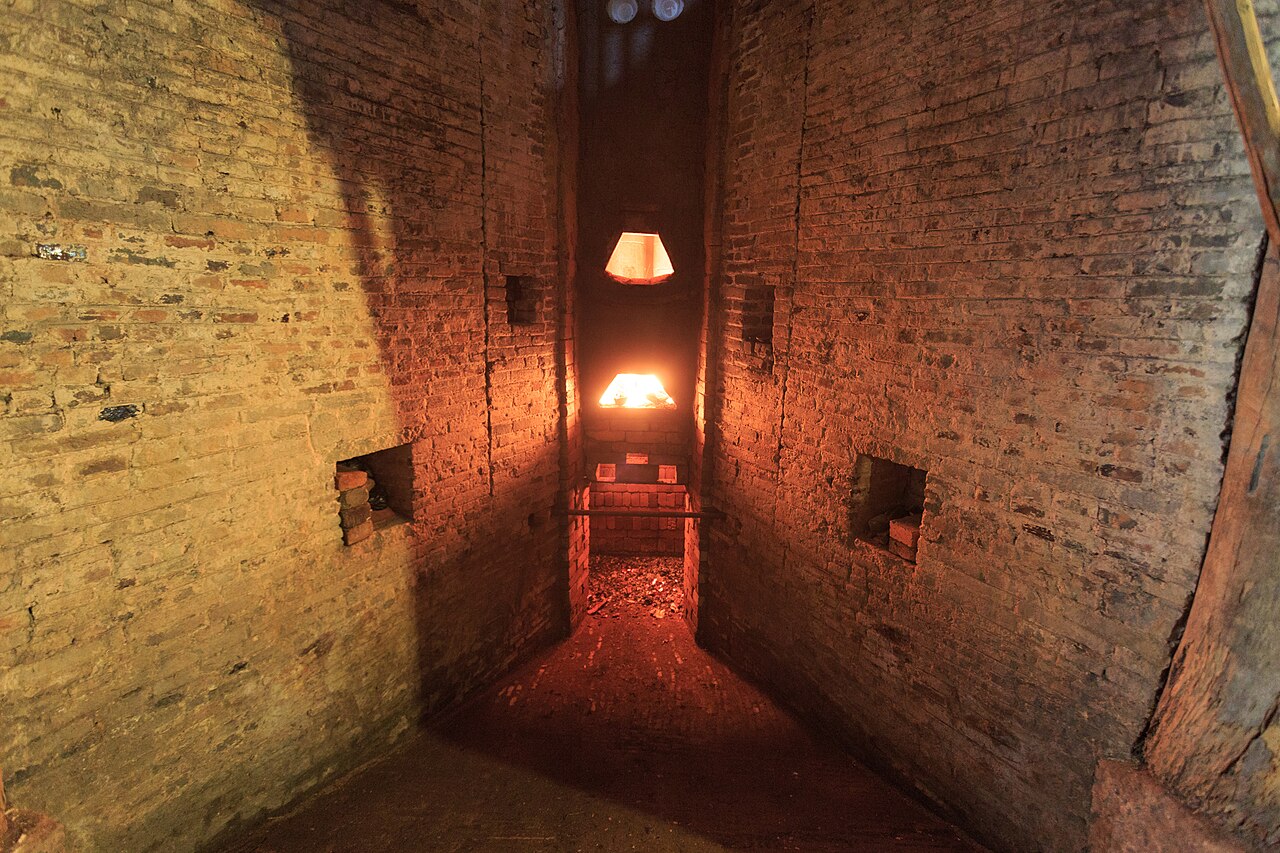
The city government says the kiln here is the only Qing egg-shaped kiln left in Jingdezhen. It was restored in 2009 and successfully refired during the international porcelain fair that October, and Guinness World Records listed it as the world's largest wood-fired porcelain kiln. The kiln sits inside a large timber kiln house, and you can look into the brick firing chamber itself.
A line of rebuilt kilns
The park then works backward through time. Between 2010 and 2012 it rebuilt and refired typical kilns of earlier periods, a Ming gourd kiln, a Yuan "steamed bun" kiln and a Song dragon kiln that climbs a slope. In 2013 and 2014 it rebuilt six types of Ming and Qing imperial kilns, each with its own purpose, from kilns for large dragon vats to kilns for coloured wares. Seen in sequence, the shapes show how firing technology changed over five centuries. China Central Television's science channel made a documentary on the project.
Workshops and craft lines
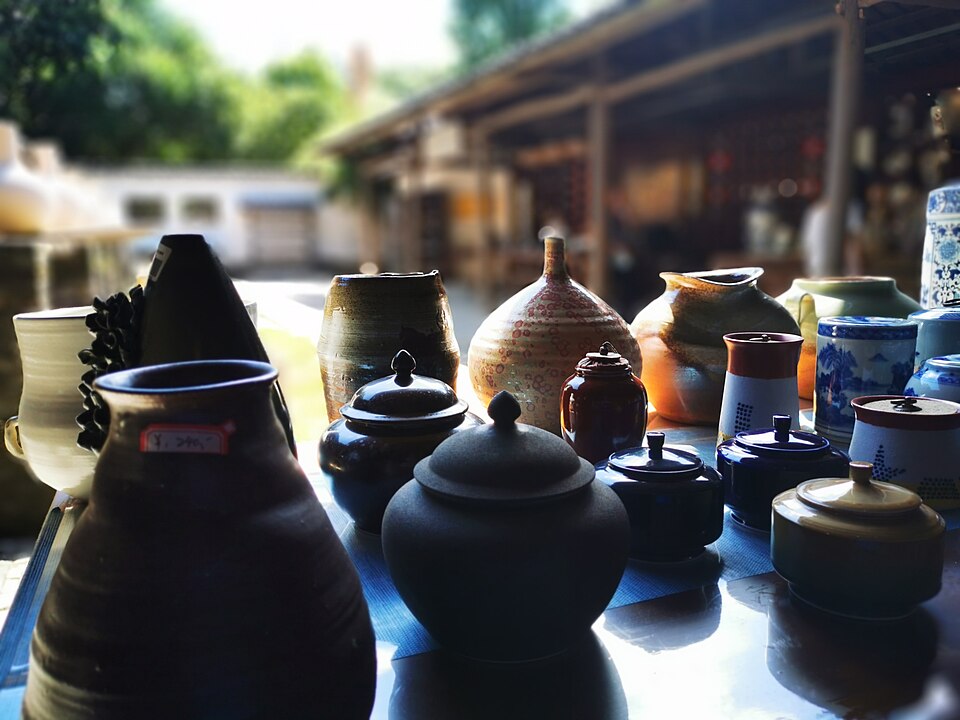
The Qing workshop compound next to the Zhen kiln houses more than 200 older craftspeople who carry out traditional production. The park's English site calls it the world's oldest working porcelain production line, and the stages of handmade production are carried out there by hand. Its traditional techniques won a gold award at China's intangible cultural heritage expo, and the park is a national demonstration base for productive protection of intangible heritage. Demonstrations depend on the day's work, and the city guide's advice to arrive early for a quieter look still holds.
The folk customs area
The other half of the park centres on a group of Ming and Qing buildings. The official site lists twelve historic buildings, a ceramic folk customs display, a Palace of the Heavenly Queen and a patriarch's temple, along with a stele corridor of ceramic tablets and a pavilion for porcelain musical instruments. Short porcelain music performances are staged here, and their times are posted on site. The kiln area also has a temple to the Wind and Fire Immortal, the patron of kiln workers, and a memorial hall for Tang Ying, the eighteenth-century supervisor of the imperial kilns.
Planning a visit
Allow two to three hours. A sensible order is the Zhen kiln first, then the workshop line, then the rebuilt kilns, and the folk buildings last. Tickets, opening hours and performance times follow the scenic area's official notice, and this page does not quote yuan amounts. Rain is common in Jiangxi, and much of the park is outdoors, so bring an umbrella. Firings are staged as special events, so do not expect one on an ordinary day.
Pairing in Jingdezhen
The Jingdezhen guide suggests the kiln park as the morning anchor. In the late afternoon, Taoxichuan shows the next chapter, a state porcelain factory from the 1950s turned into studios and a weekend market. Together they cover handmade Qing production and twentieth-century industry in one day. Buy porcelain after you have seen how it is made.
Things to confirm before you go
- Opening hours and ticket scope on the official notice.
- Times for porcelain music and craft demonstrations.
- Whether any kiln firing or festival event is scheduled.
- Packing for fragile purchases.
Frequently asked questions
What is the Zhen kiln?
It is Jingdezhen's egg-shaped wood-fired kiln of the late Ming and Qing. The example in the park is described as the only surviving Qing one in the city and was refired in 2009.
Are the kilns original?
The Zhen kiln is a historic structure restored in 2009. The Song, Yuan, Ming and imperial kilns are reconstructions built and fired between 2010 and 2014.
Can I watch potters work?
Yes, the workshop line is staffed by artisans doing traditional production. Activity varies from day to day.
How long does it take?
Two to three hours for most visitors.
Sources
Facts in this article were checked against the following sources, retrieved 10 October 2026.
- 古窑民俗博览区, Jingdezhen Municipal People's Government
- Jingdezhen Ancient Kilns and Folk Customs Expo Area, official English site
- Jingdezhen porcelain, English Wikipedia
Photos are from Wikimedia Commons under the licences shown in each caption.