Jingmen Travel Guide: Ming Xianling, Zhongxiang and Zhanghe Reservoir
Jingmen, in central Hubei between Wuhan and Yichang, has one sight of world importance: Ming Xianling, the tomb the Jiajing Emperor built for his parents outside Zhongxiang. It is part of the UNESCO-listed Imperial Tombs of the Ming and Qing Dynasties and, by most counts, the largest single Ming imperial tomb. Since December 2024 Jingmen has had high-speed trains, and Zhongxiang South is about an hour from Hankou, so the tomb works as a day trip from Wuhan or a stop on the way to Yichang. Add a night if you want a lake day at Zhanghe.
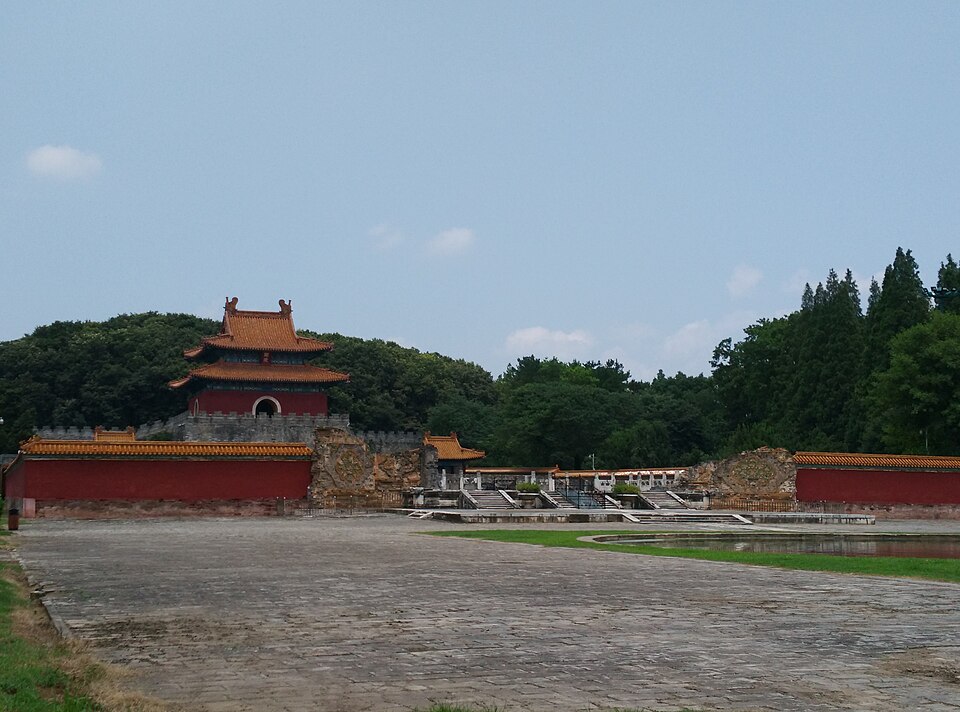
Ming Xianling: why this tomb is different
Zhu Youyuan, Prince of Xing, died in 1519 and was buried as a prince on Songlin Hill near his fief at Anlu, today's Zhongxiang. Two years later his son unexpectedly inherited the throne as the Jiajing Emperor, and a long court battle followed over whether he could honour his father as an emperor. Jiajing won, and rebuilt the prince's grave to imperial standard. When his mother died in 1538 he considered moving his father to the Ming tombs near Beijing, came to inspect the site himself, and decided instead to bury both parents here. That history explains the tomb's odd shape.
What to look for:
- Two burial mounds. The original prince's mound sits in front of a second, larger mound for the joint burial, linked by a stone causeway. No other Ming imperial tomb has this "one tomb, two mounds" plan.
- The curving spirit way. The ceremonial road runs about 1,368 metres from the dismount stele to the tower, and one 290-metre stretch swings left and right like a dragon instead of running straight.
- The nine-bend river. A stone-lined channel almost 1.7 km long winds through the grounds and is crossed five times by triple stone bridges.
- Stone figures. Twelve pairs of animals, generals and officials, carved in 1527.
Li Zicheng's rebel army burnt the wooden halls in 1642, so many buildings survive as platforms, balustrades and dragon-head drain spouts. The stonework is in good condition, and the square tower and stele pavilion have been restored.
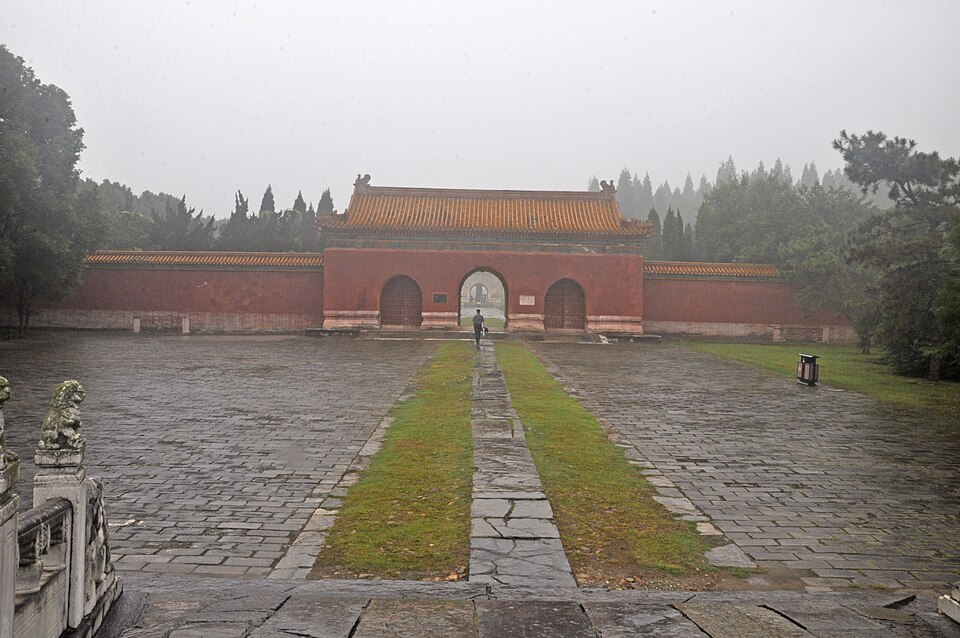
Visiting the tomb
Ming Xianling is on Chunde Hill about 7.5 km northeast of Zhongxiang city, and it was upgraded to a national 5A scenic area in February 2024. The walk from the outer gate to the rear mound and back is long, with little shade, so allow three hours and go early on hot days. Check the current ticket price and any booking rule on the official channel; prices are not quoted here. A taxi from Zhongxiang South station or Zhongxiang city is the simplest way to the gate.
Zhanghe Reservoir
Zhanghe, on the border of Dongbao District and Dangyang, is a large irrigation reservoir built between 1958 and 1965 by tens of thousands of labourers. It has 36 islands, 164 peninsulas and clear water, in which freshwater jellyfish have been recorded since 2007. It is a provincial scenic area and national wetland park pilot, best for a boat trip or a lakeside lunch on a clear spring or autumn day. One curiosity: an aircraft factory on the east shore has used the lake for seaplane test flights.
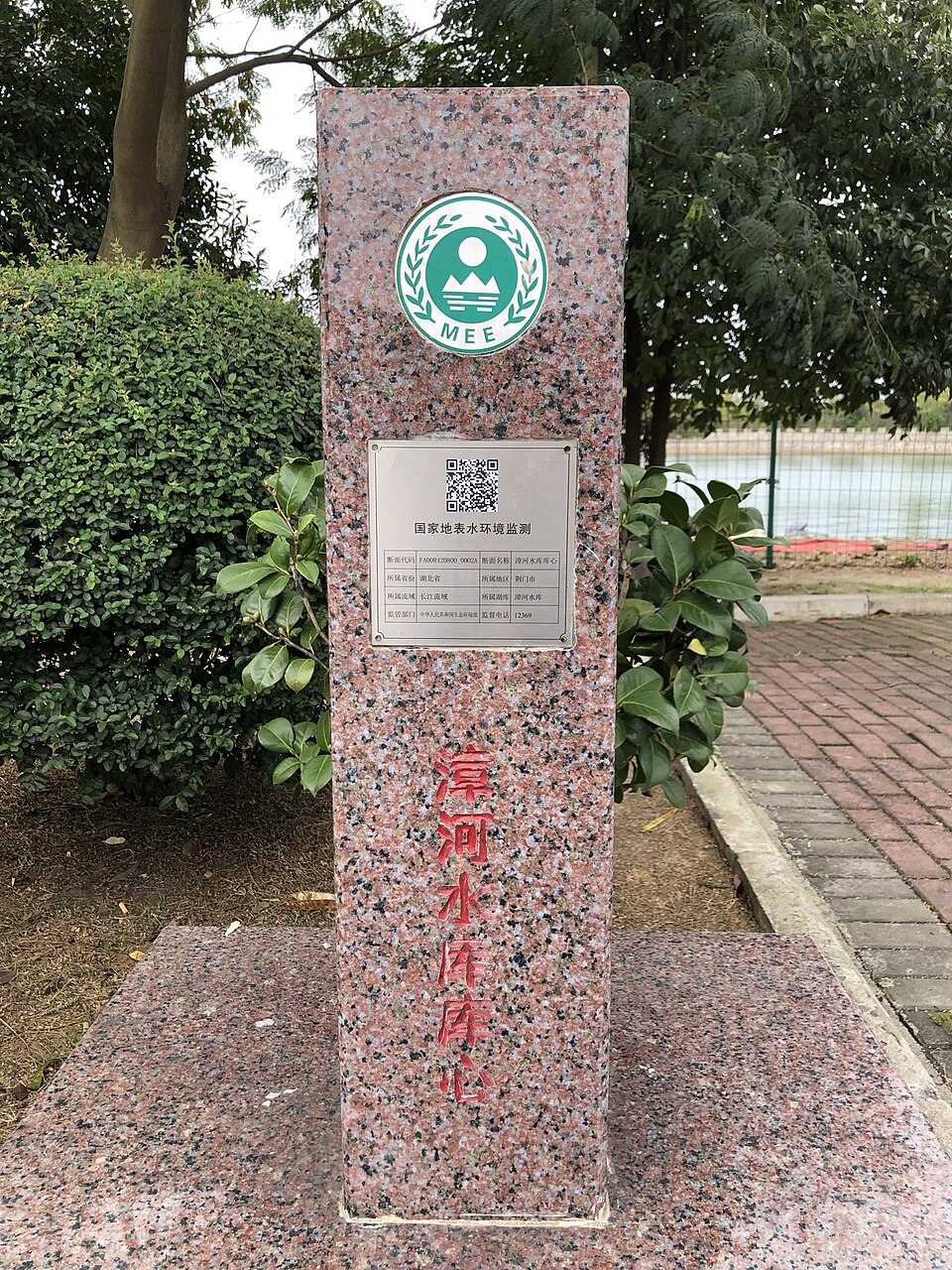
Zhanghe is pleasant but not unique. If you only have one day in Jingmen, spend it at the tomb.
Jingmen city
Dongbao District, the city centre, is a working town with a pedestrian shopping street (Zhongtian Street) and hills on the edge. It is a place to sleep and eat. The prefecture also covers Qujialing, the Neolithic site that gave its name to an early rice-farming culture of the middle Yangtze, though most visitors don't make the trip.
When to come to Jingmen
March to May and late September to November. July is hot and humid, with noon temperatures up to 38 °C, which makes the shadeless spirit way hard going. Winters dip below freezing and it snows most years. Rain is heaviest from April to September.
Getting in and where to stay
- High-speed rail: Jingmen West and Zhongxiang South are on the high-speed line between Hankou and Yichang North. The fastest trains reach Zhongxiang South from Hankou in about an hour. The Jingmen–Jingzhou line, opened on 8 December 2024, gives a half-hour link to Jingzhou.
- Conventional rail: Jingmen station, north of Changning Avenue, is on the Jiaozuo–Liuzhou railway, with slow trains north to Xiangyang.
- Air: Jingmen Zhanghe Airport opened in 2018, with a few domestic routes.
For the tomb alone, stay in Zhongxiang or just day-trip. For Zhanghe, stay in Jingmen city.
Eating in Jingmen
Central Hubei cooking is freshwater fish, lotus root, spicy stews and rice. Reservoir fish from Zhanghe turns up on lakeside menus, often sold by weight, so ask the price first. Breakfast here, as in Wuhan, means hot dry noodles or rice noodles at a street stall.
How to arrange the route
Day trip from Wuhan: Early train from Hankou to Zhongxiang South, taxi to Ming Xianling, three hours at the tomb, lunch in Zhongxiang, afternoon train back or on to Yichang.
Two days: Day one at Ming Xianling, then the 20-minute train hop from Zhongxiang South to Jingmen West. Day two at Zhanghe Reservoir, then onward by the Jingmen–Jingzhou line to see the Jingzhou city wall.
What to cut if short on time
Keep Ming Xianling. Drop Zhanghe and the city. Caves and smaller scenic areas in the prefecture aren't worth the road time on a short trip.
Things to confirm before you go
- Ming Xianling's current ticket price, hours and any booking rule.
- Train times to Zhongxiang South, which not every service stops at.
- Boat schedules at Zhanghe, which depend on season and weather.
- Sun protection and water for the spirit way in summer.
Frequently asked questions
Is Ming Xianling worth the trip?
Yes, if you like imperial architecture. The two mounds, the curving spirit way and the nine-bend river are unlike any other Ming tomb, and it is much quieter than the Ming tombs near Beijing.
How far is Ming Xianling from Wuhan?
About an hour by high-speed train from Hankou to Zhongxiang South, then a short taxi ride to the tomb.
Should I stay in Jingmen or Zhongxiang?
Zhongxiang is closer to the tomb. Jingmen city is better if you also want Zhanghe Reservoir or the train to Jingzhou.
Sources
The facts in this article were checked against the following sources, retrieved September 26, 2026, and rechecked on October 18, 2026.
- Jingmen https://en.wikipedia.org/wiki/Jingmen
- Ming Xianling (Chinese) https://zh.wikipedia.org/wiki/明显陵
- Zhanghe Reservoir (Chinese) https://zh.wikipedia.org/wiki/漳河水库
- Hubei Provincial Government, Jingmen–Jingzhou high-speed railway opens (8 December 2024) https://www.hubei.gov.cn/zwgk/hbyw/hbywqb/202412/t20241208_5441619.shtml
Tickets change; this article does not quote yuan amounts.
All photos are from Wikimedia Commons, used under CC licenses or public domain; re-use requires attribution.
- jingmen-xianling.jpg from File:明显陵.jpg, by 三猎, CC BY-SA 4.0
- jingmen-xianling-gate.jpg from File:明显陵内红门.jpg, by 三十三画生, CC BY-SA 4.0
- jingmen-zhanghe.jpg from File:Zhanghe Reservoir 01.jpg, by Fxqf, CC BY-SA 4.0