Jingzhou Travel Guide: The City Wall, Jingzhou Museum and the Three Kingdoms
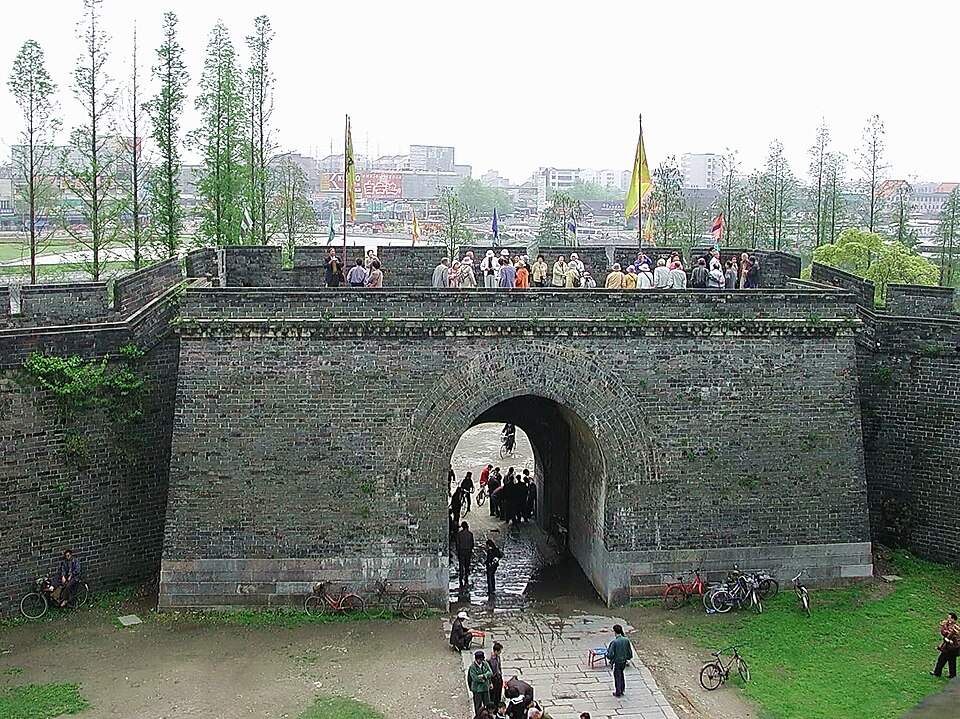
Jingzhou, on the Yangtze in southern Hubei, has one of the most complete old city walls in China, a ring of about 10.5 km of brick with six gates, still surrounded by its moat. Inside is Jingzhou Museum, known for Chu lacquerware, Warring States silk and a remarkably preserved 2,000-year-old body. Two days covers both at an easy pace; one long day is possible from Wuhan. If Romance of the Three Kingdoms means something to you, this is where Guan Yu held the city and lost it.
Why Jingzhou matters
Long before the Three Kingdoms, this was the heartland of the state of Chu, and the town was called Jiangling. Under the Han it was one of the great commercial cities, and over the following centuries a string of short-lived regimes made it their capital. Its fame in popular culture comes from the 3rd century: 72 of the 120 chapters of Romance of the Three Kingdoms involve Jingzhou, including Liu Bei "borrowing" it and Guan Yu losing it to Wu. The phrase "carelessness lost Jingzhou" is still used in Chinese for a costly slip.
Places worth visiting
The city wall
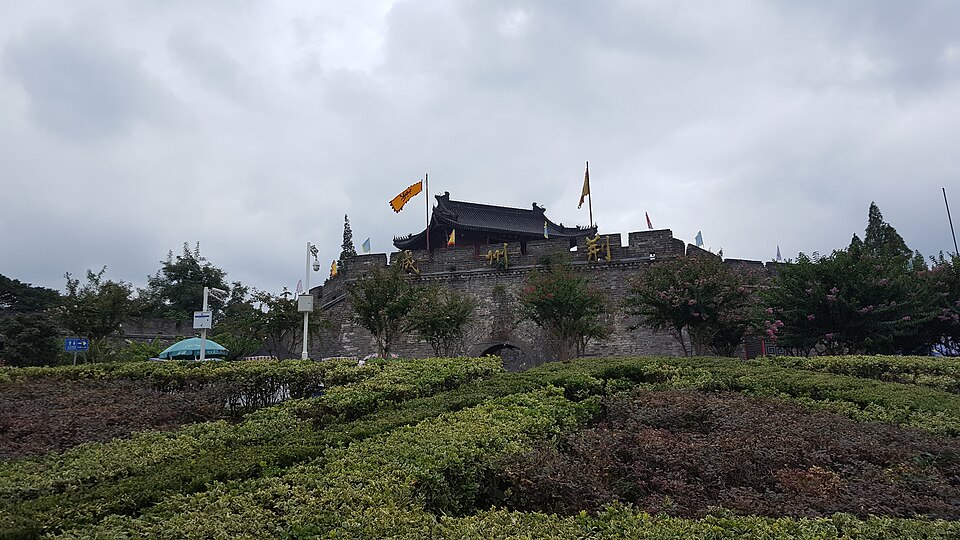
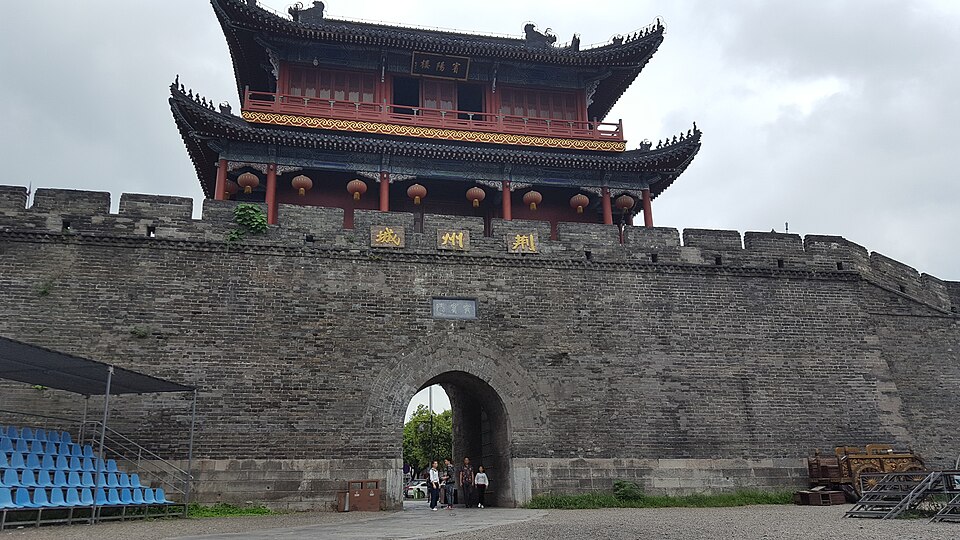
The walls you walk today were rebuilt in 1646, early in the Qing, on older foundations. They stand about 9 metres high, with brick facing over a rammed-earth core, and the mortar used lime mixed with sticky rice. Most gate towers were damaged or rebuilt over time. The Chaozong Tower over the north gate, rebuilt in 1838, is the one old tower left.
How to walk it:
- Start at the East Gate. It is the most restored stretch, with the Binyang Tower, and the easiest place to get onto the wall.
- Pick a segment. A full loop is a multi-hour walk on uneven brick with no shade. The east side and the stretch towards the south gate give the best mix of towers and moat views.
- Go early or late. Summer noon on the battlements is brutal; the low light at the end of the day is also the best for photographs.
Access points, tickets for the gate towers and opening times change, so check the notice at the gate you plan to use.
Jingzhou Museum
Plan two to three hours inside the walls at the museum. Its best-known exhibit is the body of a Western Han man, about 2,000 years old, preserved with skin and organs intact. Just as impressive, and easier for most people to look at, are the Warring States silks and lacquerware from Chu tombs around the city, which show how sophisticated Chu craft was. It is the right place to be in the middle of a hot or rainy day. Check whether you need to reserve, and the weekly closing day, before you go.
Guandi Temple and the Guan Yu story
Just inside the south gate, Jingzhou's Guandi Temple stands on the site traditionally given as Guan Yu's residence during his decade defending the city. It is counted among the four major Guan Yu shrines in China, along with Jiezhou in Shanxi, Guanling in Dangyang and Guanlin in Luoyang. Allow under an hour.
One thing not to plan around: the huge 58-metre bronze Guan Yu statue put up beside the old city in 2016 was dismantled in 2021 and is waiting to be relocated. Older blog posts still recommend it.
Shashi and the Yangtze
Modern Jingzhou grew out of two towns, the walled Jingzhou and the river port of Shashi to the east. Shashi has the Yangtze embankment, which makes a good evening walk if you're staying there.
When to come to Jingzhou
March to May and September to November. The Jianghan Plain is humid: July averages 28 °C and feels hotter on brick, and January averages about 4 °C with damp cold. Spring and autumn are made for walking the wall.
Getting in and where to stay
- High-speed rail: Jingzhou station is on the Hankou–Yichang line, with frequent trains to Wuhan and Yichang. Since 8 December 2024 the Jingmen–Jingzhou high-speed line has added a half-hour link north to Jingmen West.
- Air: Jingzhou Shashi Airport is in Shashi District, with domestic flights.
Stay inside or right beside the walls if you can. Evenings on foot are the pleasure of this city, and you avoid a taxi to and from Shashi.
Eating in Jingzhou
This is freshwater fish country. Look for Jingzhou fish cakes (yu gao), a local festive dish, braised fish from the lakes and lotus-root soups. Mornings start with rice noodles or hot dry noodles. Busy places inside the old city at lunchtime are usually a good bet; at riverside restaurants, ask the price of fish sold by weight before it's cooked.
How to arrange the route
Day 1: Morning on the wall from the East Gate. Lunch, then Jingzhou Museum through the heat of the afternoon. Evening walk inside the walls.
Day 2: Guandi Temple and the south gate, another stretch of wall, then a train to Yichang for the Three Gorges or to Jingmen for the Ming Xianling tomb.
From Wuhan in one day: Early train, wall in the morning, museum after lunch, evening train back.
What to cut if short on time
Keep one stretch of wall and the museum. Drop the full wall loop and the extra temples. Shashi is only worth it if you are staying there.
Things to confirm before you go
- Which wall gates are open for climbing and whether tower access is ticketed.
- Museum reservation rules and the weekly closing day.
- Train times on the Hankou–Yichang line for a day trip.
- Heat and sun on the wall in summer.
Frequently asked questions
How long does it take to walk the Jingzhou city wall?
The full ring is about 10.5 km and takes several hours. Most visitors walk a section from the East Gate in an hour or two.
Is the Guan Yu statue still in Jingzhou?
The 58-metre statue was taken down in 2021 and is pending relocation, so don't plan your visit around it.
Can I visit Jingzhou as a day trip from Wuhan?
Yes. Trains from Hankou to Jingzhou are frequent, so a wall-and-museum day is easy.
Sources
The facts in this article were checked against the following sources, retrieved September 19, 2026, and rechecked on October 18, 2026.
- Jingzhou https://en.wikipedia.org/wiki/Jingzhou
- Jingzhou Ancient City https://en.wikipedia.org/wiki/Jingzhou_Ancient_City
- Hubei Provincial Government, Jingmen–Jingzhou high-speed railway opens (8 December 2024) https://www.hubei.gov.cn/zwgk/hbyw/hbywqb/202412/t20241208_5441619.shtml
Tickets change; this article does not quote yuan amounts.
All photos are from Wikimedia Commons, used under CC licenses; re-use requires attribution.
- jingzhou-wall.jpg from File:荊州古城 hIstorical city wall of Jingzhou - panoramio.jpg, by lienyuan lee, CC BY 3.0
- jingzhou-east-gate.jpg from File:荆州东门古城墙.jpg, by Fxqf, CC BY-SA 4.0
- jingzhou-binyang.jpg from File:荆州古城宾阳楼.jpg, by Fxqf, CC BY-SA 4.0