Guangxi Museum, Two Thousand Years of Bronze on Minzu Avenue
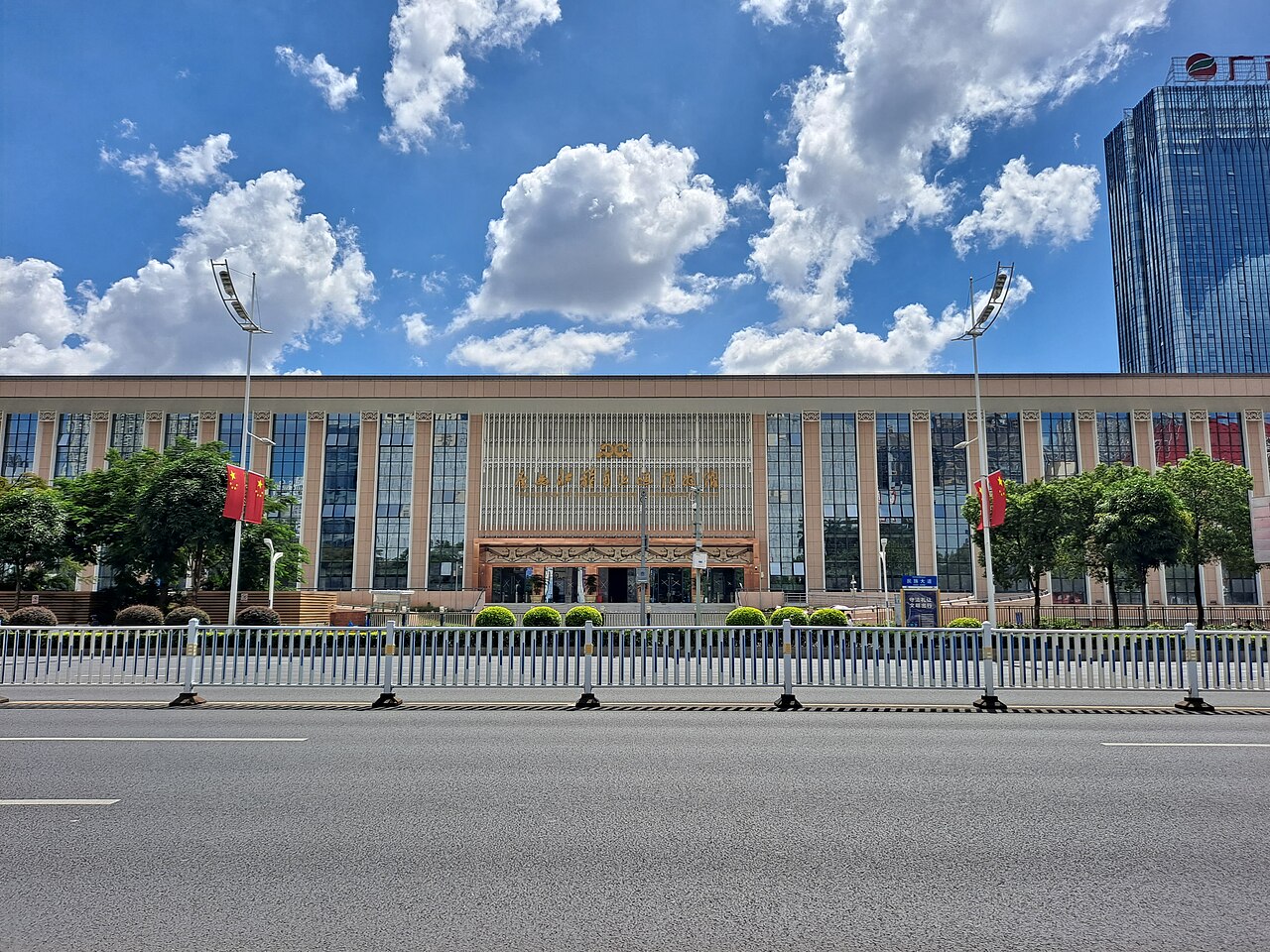
The Guangxi Zhuang Autonomous Region Museum, usually shortened to Guangxi Museum, stands at 34 Minzu Avenue on the east side of Minzu Square in central Nanning. It is the largest museum in the region and was in the first batch of national first-grade museums. The exhibition building closed in 2018 for a rebuild and reopened on 29 November 2022 with twice the floor space. Entry is free with a real-name booking, and the building is closed on Mondays. For anyone curious about the Zhuang, the old Yue peoples and Guangxi's place on the Han dynasty sea routes, it is the best single stop in the city.
From a 1934 provincial museum to the 2022 rebuild
The museum was founded in 1934 as the Guangxi Provincial Museum, with its own building and library. Chinese Wikipedia says it held more than 20,000 objects, mostly Ming and Qing, before the war with Japan forced it to move several times and lose more than ten thousand pieces. A new building opened in Nanning on 1 May 1956, and when Guangxi became an autonomous region in 1958 the museum took its present name. Staff then joined excavations across the region, which is why the collection leans toward local archaeology.
The building most Nanning people remember went up on the newly laid Minzu Avenue in 1978, for the twentieth anniversary of the autonomous region. It borrowed features from the stilt houses of southern minorities and was voted one of the ten best museum buildings in China at the time, according to the Nanning Evening News. In 1988 an open-air garden of minority village buildings opened beside it.
The rebuild kept the old profile. The Nanning Evening News report on the reopening describes the blade-like fins on the outer walls, carved Zhuang brocade patterns and the 1970s porcelain-tile murals of royal palms and kapok trees that survive inside. Floor area grew to about 33,262 square metres. Gallery space went from just over 4,000 to 10,000 square metres, and the number of objects that can be shown rose from about 600 to more than 3,000. The museum was rated a national 4A tourist site the day before it reopened.
What is in the galleries
The core exhibition is a chronological history of ancient Guangxi, the first time the museum had told the whole story in one sequence. It shows 988 objects, from the Old Stone Age to the Ming and Qing. Chinese Wikipedia mentions stone hand axes about 800,000 years old and the large stone spades of the Neolithic among the earliest pieces. A second permanent gallery covers modern revolutionary history. Three themed galleries opened at the same time. One follows the Han dynasty maritime Silk Road from Hepu, one shows the porcelain collection, and one gathers carved ivory, lacquer and other crafts, including a Qing ivory ball of concentric layers carved one inside another.
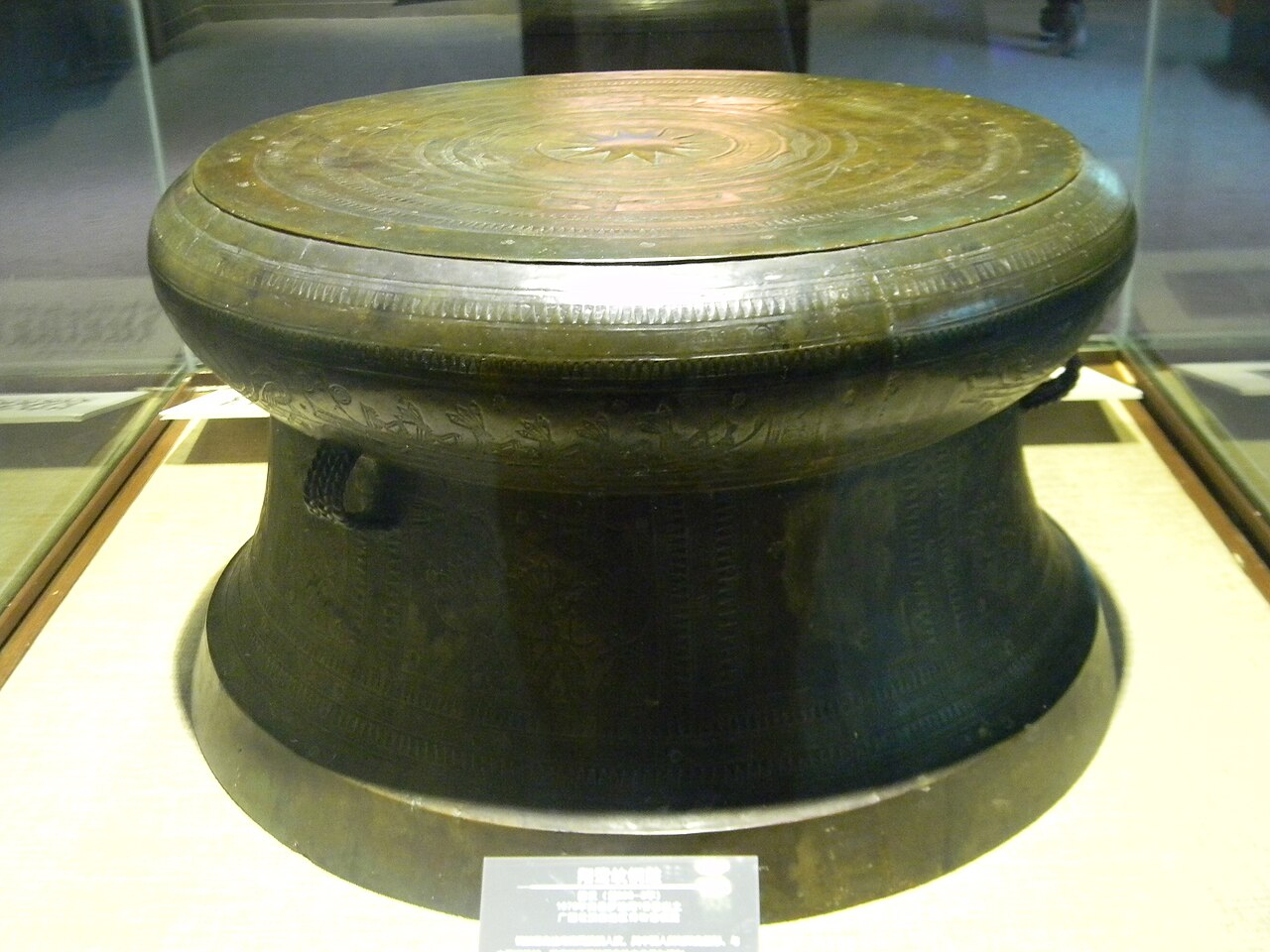
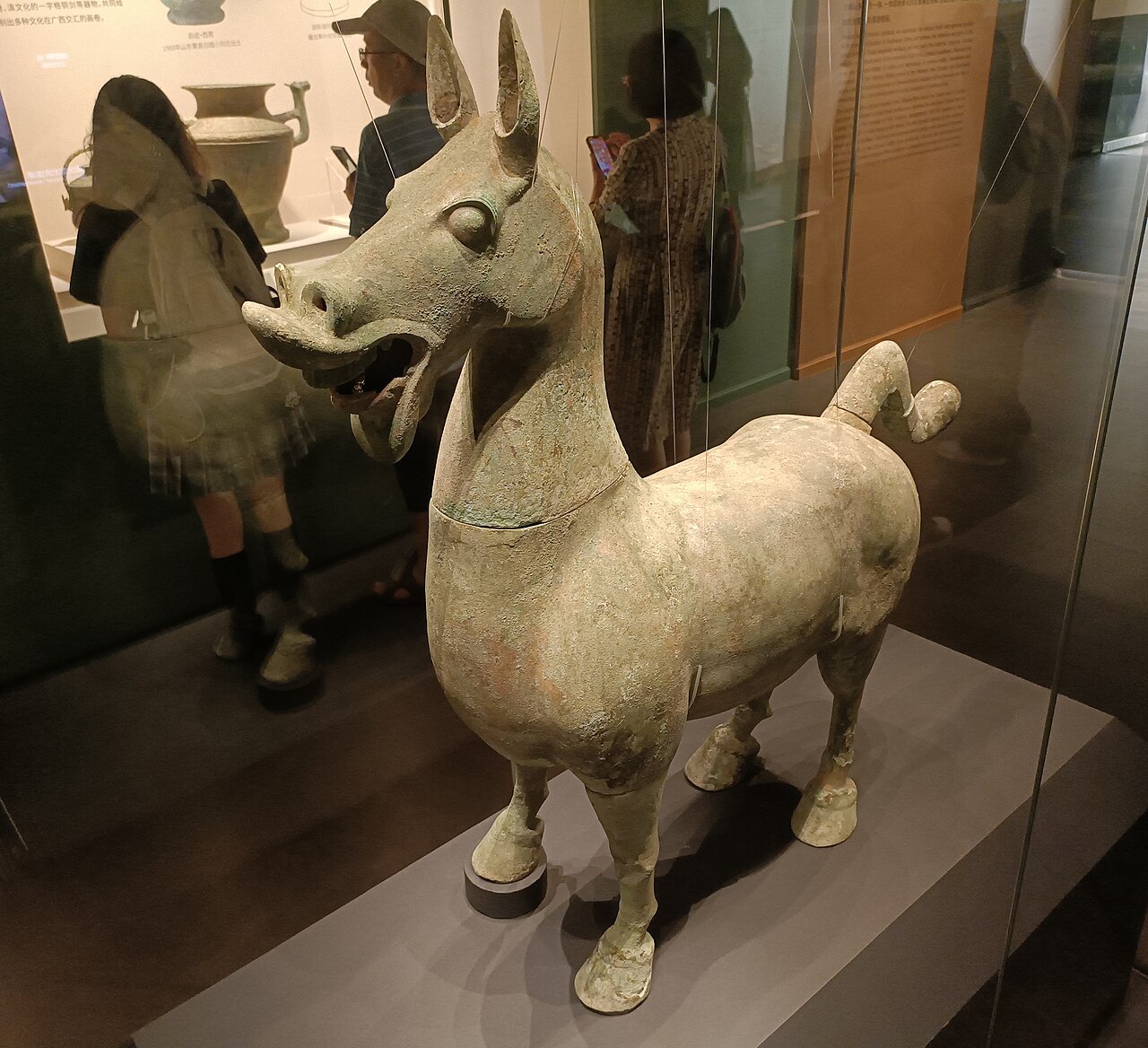
Bronze is the strength. Guangxi is one of the heartlands of the bronze drum, and the most famous example here is the Western Han drum with flying herons from Tomb 1 at Luobowan in Guixian, now Guigang, excavated in 1976. Herons and figures in feather headdresses circle its body. The same gallery shows a pair of Western Han bronze lamps shaped as feathered phoenixes, displayed together as a pair for the first time after the reopening, and a large Western Han bronze horse.
Hepu and the Han sea route
Hepu, now a county of Beihai, was a Han dynasty port where ships set out for Southeast Asia and the Indian Ocean. The Hepu gallery uses finds from the large cemetery there, such as pottery incense burners and lamps on stands shaped like foreign figures, to show the trade. A smaller bronze horse from Fengmenling Tomb 26 in Hepu, excavated in 2003 and dated to the Eastern Han, carries a label explaining that it was cast in seven separate parts and fitted together with socket joints, apparently glued, with no rivet holes. Small animal marks scratched across the joints served as assembly guides.
The open-air garden
Outside the main building, the Ethnic Cultural Relics Garden holds a wind-and-rain covered bridge, clusters of stilt houses and other buildings of Guangxi's minority peoples. The 2022 redesign arranged the garden around the Ming traveller Xu Xiake and the diary he kept on his journey through Guangxi. The garden does not need a booking and stays open into the evening. Bendibao listed 8:00 to 23:00 in 2023.
Booking, hours and getting there
The exhibition building is open Tuesday to Sunday from 9:00 to 17:00, with last entry at 16:00, and closed on Mondays except national holidays. That schedule appears on both the Guangxi culture department's museum page and Nanning Bendibao. Entry is free, but every visitor, including children and seniors, needs a real-name booking through the museum website, its WeChat account or its booking mini program. Bendibao says individuals can book up to seven days ahead, up to five people per order, and each ID can be booked once a day. Arrive within your time slot. Check the day's notice for changes around holidays.
Nanning Metro Line 1 stops at Minzu Guangchang station, and Exit B is closest. The museum car parks open to the public only in the evening on weekdays, so the metro is easier.
Allow two to three hours for the main building. Do not confuse it with the separate Anthropology Museum of Guangxi, which focuses on ethnography and is out toward Qingxiu. The Nanning guide suggests this museum for a second day, after a morning on Qingxiu Mountain.
Before you go
- Book a slot on the official channels and bring the ID you booked with.
- Plan around Monday closures.
- Leave time for the bronze drum gallery, the highlight for most visitors.
- Visit the garden in the late afternoon if you want it cooler.
Frequently asked questions
Is the Guangxi Museum free?
Yes. Entry to the exhibition building is free with a real-name booking.
What day is it closed?
Mondays, except national holidays.
What should I not miss?
The ancient civilization gallery, with the Luobowan bronze drum and the Han bronze lamps and horses, and the Hepu maritime Silk Road gallery.
How do I get there?
Take Metro Line 1 to Minzu Guangchang and leave by Exit B.
Sources
Facts in this article were checked against the following sources, retrieved 12 October 2026.
- 广西壮族自治区博物馆, Chinese Wikipedia
- 广西博物馆改扩建后重新开放, Nanning Evening News via Tencent News
- 广西壮族自治区博物馆, Guangxi Department of Culture and Tourism
- 广西博物馆开放时间, Nanning Bendibao
- 广西壮族自治区博物馆:提升公共服务, Guangxi News
Photos are from Wikimedia Commons under the licences shown in each caption.