Qingxiu Mountain, the Green Ridge on Nanning's Yong River
Qingxiu Mountain is a cluster of eighteen low ridges on a bend of the Yong River in Qingxiu District, southeast of central Nanning. Chinese Wikipedia gives the scenic area 791 hectares, with a highest point of 289 metres, and counts 1,116 species of tropical and subtropical plants inside it, 61 of them rare or endangered. It became a national 5A scenic area on 28 November 2014. For most visitors it is the city's main outdoor half-day, with a rebuilt Ming pagoda at the top, themed gardens on the slopes, and views back over the towers of the capital.
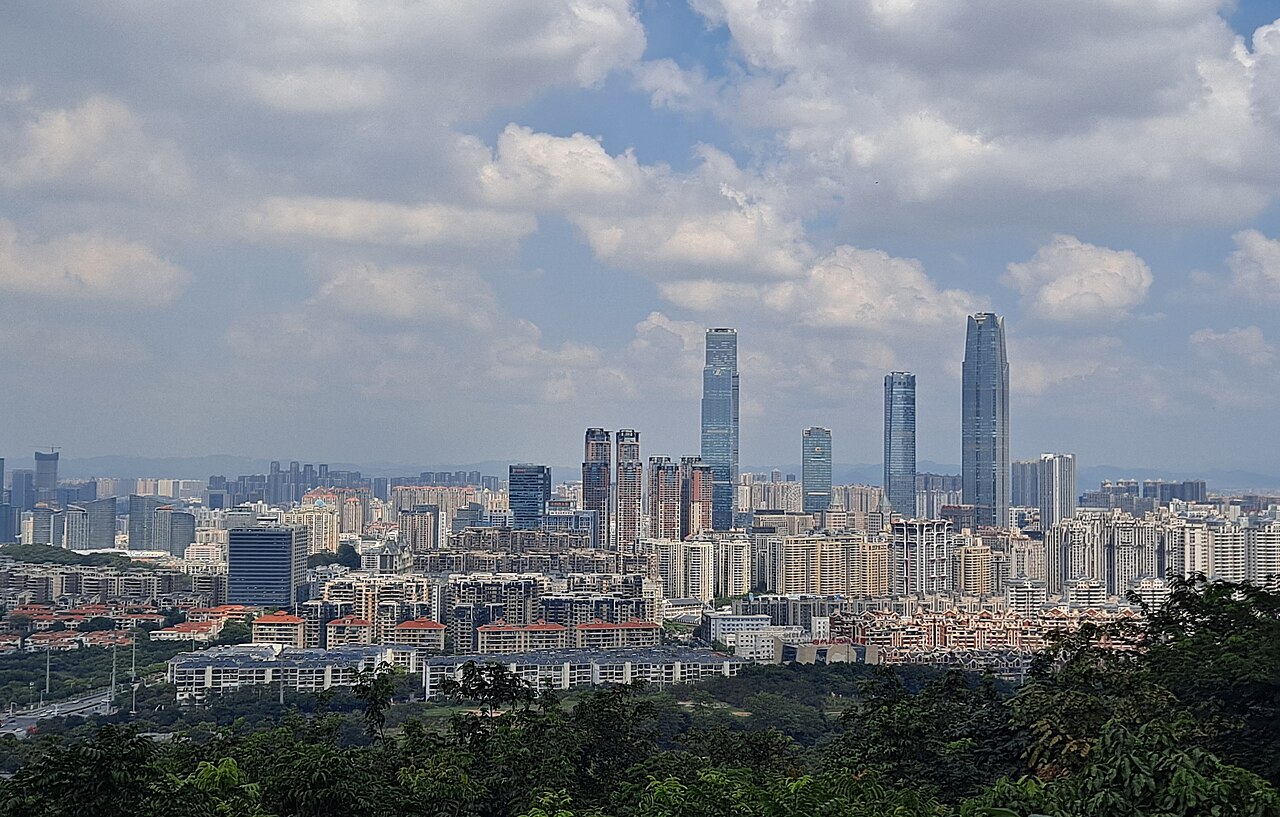
From pine plantation to city park
The hills were once known simply as Qingshan, Green Hill, and a line of verse about the wind in their pines made the list of the old eight views of Nanning. Temples and pavilions went up here in the Song and Ming dynasties and were later lost to war and fire. Before the modern park, the slopes were a forestry farm planted with masson pine.
The city decided in 1985 to turn the farm into a scenic area. A table of building dates on Chinese Wikipedia shows how fast it happened. Yuntian Pavilion, the stone Buyun Gate, the lake pavilions and a monument to the Guangxi Student Army who fought Japan all date from 1986. The Phoenix Pagoda, five storeys and 32 metres high, followed on Fenghuang Ridge in 1988. Planting changed too. Kapok, crape myrtle, bauhinia, flame trees and rows of palms replaced much of the pine, and by 1995 the park counted some 660,000 trees. Guangxi listed it as a regional scenic area in 1989, and it was in the first batch of national 4A sites in 2000.
Not every project lasted. A 1.1 kilometre cable car opened in October 1995 and drew queues on holidays for a couple of years. It ran into debt, stopped in June 2000 and was dismantled in 2004.
Longxiang Pagoda and its Ming builder
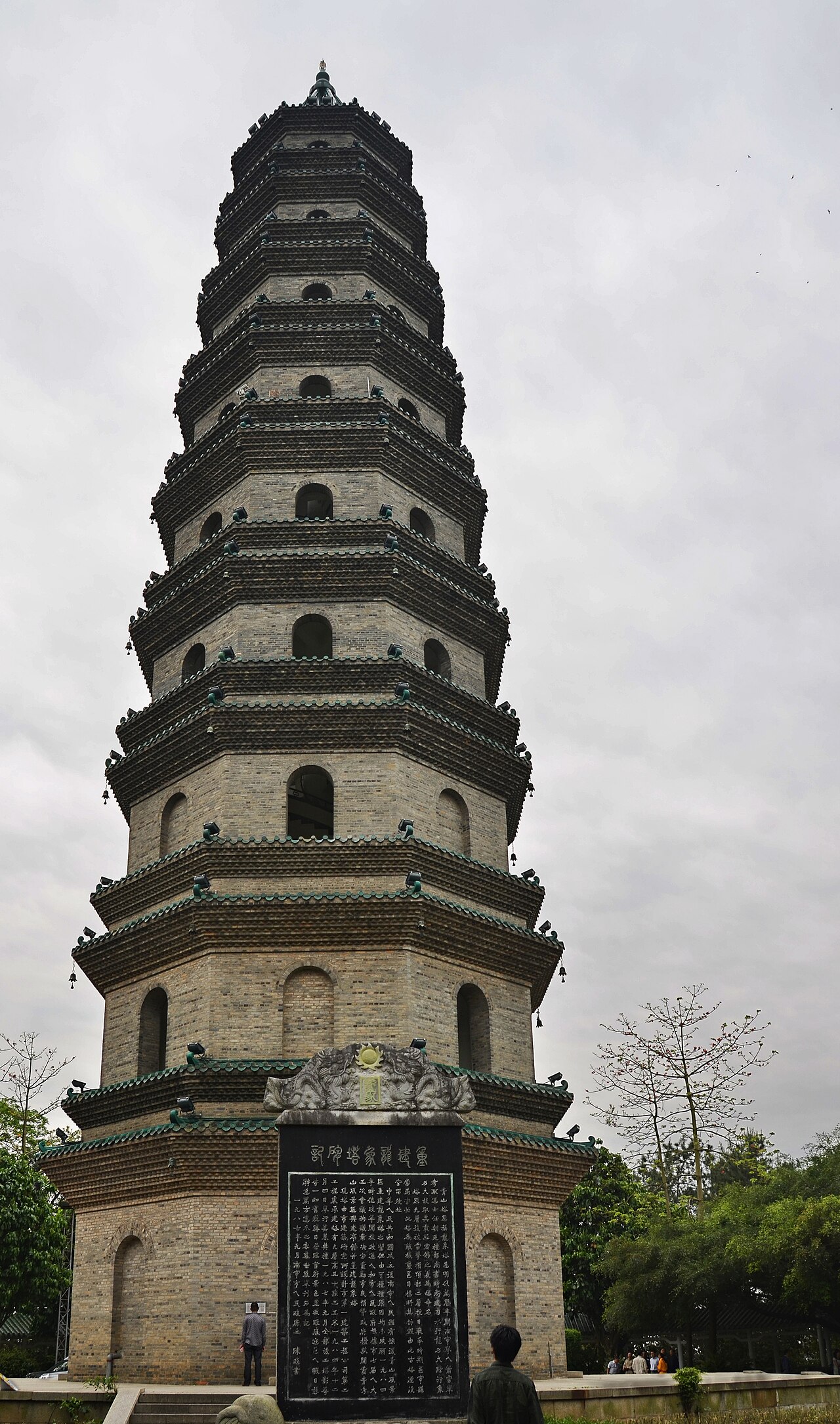
The pagoda on the summit of Qingshan Ridge is the landmark you see from across the city. Local histories reported by Tencent News and Jimu News say the first tower was built in the late Wanli years, around 1618 to 1619, by Xiao Yunju, a Nanning man who had passed the imperial examinations and risen to senior posts in the capital. The name comes from a Buddhist saying that the dragon is strongest in water and the elephant strongest on land. The original was a nine-storey octagonal brick tower. Lightning knocked off the top two storeys in the 1620s, and they were never repaired. In 1937 the county authorities pulled the rest down, worried that Japanese bombers would use it as a marker on their way to Nanning.
The city announced a rebuild at the end of 1984, and residents sent in donations. Work began on 23 June 1986. The new tower was modelled on the East Pagoda at Guiping and stands 52.35 metres high, nine storeys with green glazed eaves and 72 bronze bells, eight to each level. A spiral of 207 steps climbs inside. On 1 October 1987 the scenic area opened to the public and took back the older name Qingxiushan, and the tower took back the name Longxiang.
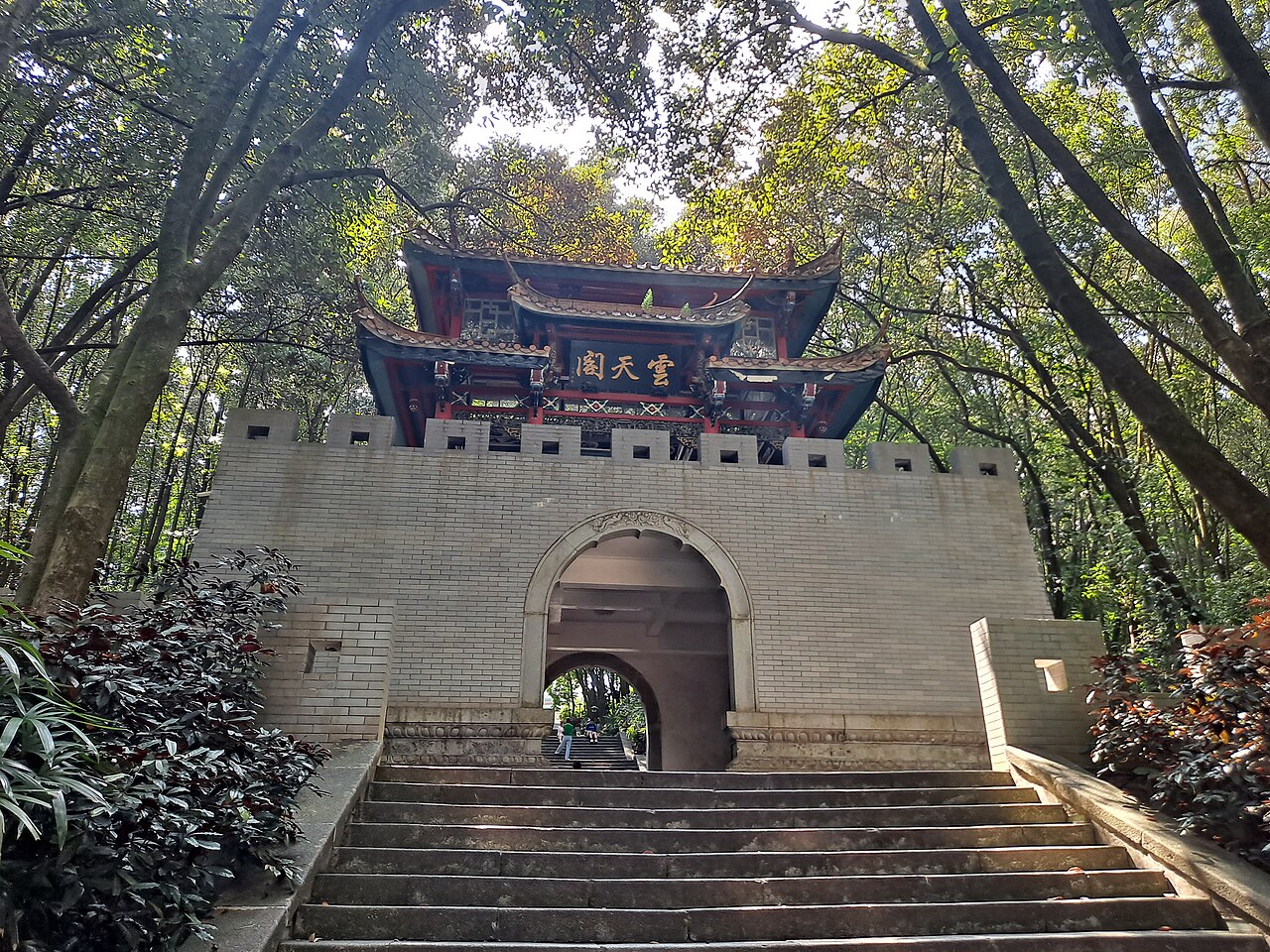
Gardens worth the walk
The plant collections are the other reason to come. The Thousand-Year Cycad Garden is the best known, a planting of old cycads that the scenic area presents as one of its signature gardens. There is a rainforest section, a palm garden, a fragrant flower garden and an orchid garden near the north gate. Tree ferns, staghorn ferns and the poisonous upas tree are among the rare species Chinese Wikipedia lists.
Nanning hosts the China-ASEAN Expo, and the park carries that link into its landscaping. Nanning Bendibao lists a China-ASEAN friendship garden, a memorial forest, a grove of trees planted by visiting leaders and a garden of national trees and flowers. A Thai garden was laid out in 1995. On the religious side, Guanyin Chan Temple and the small Shuiyue nunnery sit near the west side, and the scenic area runs extra shuttle routes to the temple at festivals such as Mid-Autumn.
Bendibao suggests several walking lines from the west gate. One heads past the sculpture group for Guangxi's twelve native ethnic groups to the cycad garden, the pagoda and the rainforest. Another goes straight to the temples. A third follows the old path past the Student Army monument and Dongquan spring up to the pagoda.
Tickets, gates and hours
Bendibao lists 20 yuan for adults and 10 yuan for students, seniors and children in 2026. People aged 65 and over and children under six or under 1.2 metres enter free with ID, and foreign visitors show a passport. Tickets are sold online and at the gates.
The gates keep different hours. A gate list reproduced from the scenic area shows the east gate open from 6:00 to 23:00, the north and West 1 gates from 8:00 to 18:00, and a couple of side gates only early in the morning and in the evening. From 1 June 2026 the daily closing time, after which no one may enter, moved from midnight to 23:00, according to a scenic area notice reported by Bendibao. Sightseeing buses and a small train run inside during the day. The scenic area bans private cars on some busy holidays, so check the day's notice before you drive.
The easiest approach is Nanning Metro Line 3 to Qingxiushan Station, then Exit B and a short walk to the west gate. Buses also serve the north and east gates.
Planning your visit
The ridges are spread out, so decide on a line before you start. A morning walk from the west gate to the cycad garden and the pagoda, with a ride back on the park bus, fills about half a day. Nanning is hot and wet from May to September, and paths get slippery after rain. The Nanning guide pairs the mountain with an evening on the food streets. If you still have energy the same day, the Guangxi Museum on Minzu Avenue fills in the history and archaeology of the region.
Before you go
- Carry ID or a passport for concession or free entry.
- Pick your gate by the hour, since several close at 18:00 or earlier.
- Bring water and rain cover in summer.
- Check holiday notices for car bans and extra shuttle routes.
Frequently asked questions
How much is the ticket for Qingxiu Mountain?
Bendibao lists 20 yuan for adults and 10 yuan for concessions in 2026, with free entry for those 65 and over and young children.
Can you climb Longxiang Pagoda?
The rebuilt pagoda has 207 spiral steps inside. Whether it is open on a given day follows the scenic area's notice.
How do I get to Qingxiu Mountain by metro?
Take Line 3 to Qingxiushan Station and use Exit B for the west gate.
How long should I spend there?
Half a day covers the pagoda and one or two gardens. The whole area is large enough to fill a day.
Sources
Facts in this article were checked against the following sources, retrieved 12 October 2026.
- 青秀山, Chinese Wikipedia
- 南宁青秀山游玩攻略, Nanning Bendibao
- 2026年南宁青秀山门票优惠政策, Nanning Bendibao
- 6月1日起南宁青秀山风景区调整闭园时间, Nanning Bendibao
- 龙象塔成为许多老南宁人心目中的地标, Jimu News
Photos are from Wikimedia Commons under the licences shown in each caption.